
Grain Conveyor Fasteners: Bucket Elevator Bolts, Chain Pins, Hanger Bearing Bolts
Three conveyor types in grain processing require different fastener solutions: bucket elevator bolts for vertical lifting with anti-loosening needs, scraper conveyor chain pins for horizontal heavy-load wear, and screw conveyor hanger bearing bolts for powder environments. Compare materials, coatings, and maintenance to avoid premature failure
RISK AUDIT // ENGINEERING DIAGNOSIS
Procurement Pitfall Guide
"In grain elevators, even a single loose bolt can halt an entire line."
QC-AUDIT // REV.5
SCALE 1:1 · 03 ITEMS
RISK-01
Abrasive Wear of Scraper Conveyor Chain Pins in Grain Dust
Corrective Measures
RISK-02
Chain Pin Wear Causes Chain Plate Deformation
Corrective Measures
RISK-03
Hanger Bearing Bolt Corrosion Causes Base Loosening
Corrective Measures
FIELD-SPECIFIC INSIGHT
Conveyor Fastener Selection: Wear, Corrosion, and Dust Resistance
Grain dust contains abrasive SiO₂ particles (Mohs hardness 7) that accelerate wear on chain pins and bolts. Each conveyor type has distinct failure modes: bucket elevator bolts risk loosening from vibration, scraper chain pins suffer abrasive wear, and hanger bearing bolts corrode and loosen. Selecting the right fastener material and coating is critical to avoid unplanned downtime
WHAT TO CHECK
- 1Bucket elevator bolts: Use grade 8
- 2Scraper conveyor chain pins: Choose surface-hardened alloy steel pins (e. G. , 20CrMnTi carburized, HRC58-62) to resist abrasive wear from grain dust; untreated pins wear 5-8 times faster
- 3Hanger bearing bolts: In high-humidity environments, Dacromet coating provides better corrosion resistance than hot-dip galvanizing; specify grade 8.8 or higher to maintain clamp load
- 4Replace fasteners with >5% surface corrosion or pitting >0. Re-torque if tension loss exceeds 15%
| Check | Why it matters | What to specify |
|---|---|---|
| Conveyor type and environment | Determines dominant failure mode: loosening, wear, or corrosion | Vertical/dusty → bucket elevator bolts; horizontal/heavy load → chain pins; powder/humid → hanger bearing bolts |
| Fastener material and hardness | Abrasive grain dust requires surface-hardened pins (HRC58-62) to extend life | Chain pins: 20CrMnTi carburized and quenched; bolts: grade 8.8 or 10.9 |
| Coating and corrosion protection | — | Dacromet for C5-M environments |
| Anti-loosening features | Vibration in bucket elevators can loosen standard nuts, causing bolt failure | Nylon insert lock nuts (PA66) or prevailing torque nuts |
| Maintenance schedule | Regular inspection prevents catastrophic failure and reduces repair costs | Inspect every 250 h; full replacement every 5 years |
All fastener specifications must be verified against equipment manufacturer drawings and ISO 898-1 mechanical property requirements
Evidence level: source-page-only
INDUSTRY TECH REFERENCE
Chain Pin Wear Ledger: Rates, Criteria, and Replacement Lines
For the pins and bushings of bucket-elevator and scraper chains. The chain runs unlubricated, so wear drives service life — check rates, accumulation, and criteria against this table.
| Item | Value | Basis / action |
|---|---|---|
| Wear rate | 0.05–0.15 mm per 1,000 h | Grain dust works into the pin–bushing clearance and acts as abrasive; the chain runs unlubricated (oil would contaminate grain) |
| Cumulative over 3–6 months of continuous running (~2,000–4,000 h) | 0.1–0.6 mm | Clearance grows → total chain length stretches |
| Elongation criterion | Retension or remove a link immediately once chain elongation exceeds 2% | Measure total chain length every quarter |
| Severe-wear criterion | Pin diameter loss of 1–2 mm counts as severe wear — replace the whole chain | Loss measured on diameter |
| Pin material | 20CrMnTi carburized and quenched, surface hardness HRC 58–62 | High hardness resists abrasive wear |
The cumulative wear over ~2,000–4,000 h of running is a magnitude estimate.
INDUSTRY TECH REFERENCE
From Dust in the Clearance to a Jumping Sprocket: Grain-Conveyor Chain Failure
Example: a bucket-elevator chain (0.5–1.5 m/s, tension on the order of 10–50 kN). Dust doesn't just abrade the surface — it grinds inside the clearance.
- 1Grain dust (Mohs hardness ~2–3) works into the sliding clearance between pin and bushing and becomes the abrasive
- 2The chain runs without oil (lubricant would contaminate the grain) — the abrasive grinds between metal surfaces over and over
- 3Wear runs at 0.05–0.15 mm per 1,000 h; over ~2,000–4,000 h of continuous running, cumulative wear reaches 0.1–0.6 mm
- 4Clearance grows → total chain length stretches → the chain jumps on the sprocket → the elevator jams
- 5Intervention window: retension or remove a link immediately once elongation exceeds 2%; replace the whole chain when pin diameter loss reaches 1–2 mm
Speed tiers follow JB/T 3926-2014; the 10–50 kN tension and the cumulative wear over ~2,000–4,000 h are magnitude estimates.
INDUSTRY TECH REFERENCE
Ordering Bucket Bolts: Anti-Loosening, Torque, and the Food-Contact Boundary
For bucket-to-chain fasteners on bucket elevators. In a dust-plus-vibration environment, the locking set and the material certificate are where inquiries most often split.
- Locking set: grade 8.8 or higher bolts with nylon-insert lock nuts (spring washers optional) — plain nuts back off on their own under vibration
- Torque: tighten M10 grade 8.8 with a torque wrench to 46–57 N·m (take 50 N·m), not by feel
- Corrosion: threads hot-dip galvanized ≥40 μm (GB/T 5267.3); inside the silo or where it contacts grain, switch to 304 (A2-70) — zinc and iron ions contaminate food
- Sealing: pre-coat bolt holes with food-grade sealant in humid, dusty spots, or fit EPDM/PTFE food-grade gaskets
- Inspection: weekly during shutdowns, tap with a hammer — a dull thud means looseness (order spares at the same time)
This slot uses no magnitude-estimate figures; M10 grade 8.8 torque follows the GB/T 3098.1 torque table.
INDUSTRY TECH REFERENCE
Hanger Bearing and Silo Wall Bolts: A Zinc-Life Ledger Across Two Coating Tiers
For fasteners in humid grain-storage spots — screw-conveyor hanger bearing bolts, silo wall plate bolts. Night condensation forms a weakly acidic film (pH 4–5); price the coating by its life first.
| Coating tier | Thickness | Life / action |
|---|---|---|
| Electroplated zinc (GB/T 5267.1) | Nominal 5–8 μm | ~0.5–1.6 years to zinc penetration (on the order of 1 year) |
| Hot-dip zinc, threaded parts (GB/T 5267.3) | ≥40 μm | ~4–8 years of protection |
| Hot-dip zinc, general parts (GB/T 13912) | 55–85 μm | 10+ years at the heavy tier |
| Stainless steel (A2-70) | — | Switch to 304 inside the silo or where it contacts grain; food plants ask for the 304 material certificate |
| Inspection | Annual, when the silo is empty | Replace whole lots where zinc loss exceeds 15% |
The 5–10 μm/yr zinc consumption is an order-of-magnitude estimate; penetration years are order-of-magnitude projections from coating thickness and consumption rate.
INDUSTRY TECH REFERENCE
Standards at a Glance: Grain Conveying and Corrosion Protection
Reference these standards when inquiring and accepting (listed for navigation only; original clauses are not reproduced).
This slot uses no magnitude-estimate figures.
PLAN COMPARISON
Three-Plan Core Parameter Comparison
Compare row by row. Click column headers to jump to plan details.
| A · Plan A · Bucket Elevator Bolts | B · Plan B · Scraper Conveyor Chain Pins | C · Plan C · Screw Conveyor Hanger Bearing Bolts | |
|---|---|---|---|
| 1. M10×40 SQUARE NECK BOLT | |||
| SPEC | Grade 8.8, Hot-Dip Galvanized | Φ20×80, Surface Hardened | Grade 8.8, Dacromet |
| GRADE | Grade 8.8 | — | Grade 8.8 |
| FINISH | HDG >=55um per ISO 1461 | HDG >=55um per ISO 1461 | HDG >=55um per ISO 1461 |
| 2. NYLON INSERT LOCK NUT | |||
| SPEC | M10, PA66 | Φ4×30, Galvanized | ZCuSn10P1 |
| MATERIAL | PA66 | — | CuSn10 |
| FINISH | HDG >=55um per ISO 1461 | HDG >=55um per ISO 1461 | HDG >=55um per ISO 1461 |
| 3. RUBBER SEALING GASKET | |||
| SPEC | EPDM, Food Grade | M12×50, Grade 10.9 | Industrial Grade, Dust-Proof |
| MATERIAL | EPDM Rubber | — | EPDM Rubber |
| GRADE | — | Grade 10.9 | — |
| FINISH | HDG >=55um per ISO 1461 | HDG >=55um per ISO 1461 | HDG >=55um per ISO 1461 |
SELECTION GUIDE
How to Choose Fasteners Based on Conveying Equipment?
| Operating condition | Recommended option | Key basis |
|---|---|---|
| Vertical lifting in dusty grain silos or feed mills (bucket elevator); ISO 12944-2 category C3 with dust and vibration exposure | Plan A — bucket elevator bolts: M10×40 square neck bolt, grade 8.8, hot-dip galvanized, paired with M10 PA66 nylon insert lock nut and EPDM food-grade rubber sealing gasket | Anti-loosening is the priority under vibration; the sealed EPDM gasket keeps dust out of the threads; grade 8.8 per ISO 898-1 mechanical properties |
| Horizontal conveying of scraper chains under heavy load and abrasive wear; ISO 12944-2 category C4 harsh | Plan B — scraper conveyor chain pins: 20CrMnTi carburized and quenched, surface hardness HRC58-62, carburized layer 0.8-1.2 mm; M12×50 chain plate connecting bolt grade 10.9 | GB/T 3077 alloy structural steel; carburized-and-quenched pins last 5-8 times longer than untreated pins against SiO₂ grain dust (Mohs hardness 7) |
| Heavy wear accumulation on scraper chains: pin diameter reduces 0.1-0.2 mm per 1000 h and chain pitch stretches from 100 mm to 103-105 mm | Measure chain pitch every 3 months and replace the entire chain when elongation exceeds 3%; automatic lubrication system extends pin life by 3 times | Replacement thresholds: >3% chain elongation, and >3% pin diameter wear or visible grooves on the surface (inspect every 3000 operating hours) |
| Powder/granular material conveying with frequent replacement (screw conveyor hanger bearings); ISO 12944-2 category C5-M extreme | Plan C — hanger bearing bolts: M12×60, grade 8.8, Dacromet, with wear-resistant copper sleeve ZCuSn10P1 and industrial dust-proof sealing felt | C5-M corrosion category requires Dacromet protection; salt spray test ≥480 h without red rust; hanger bearing is a consumable part, keep stock for quick replacement |
| Grain storage with humidity ≥70% or loosening-induced vibration (machine vibration reaching ISO 2372 grade C, >11.2 mm/s) | Use 304 stainless steel or Dacromet coating with fine thread M12×1.25 and nylon anti-loosening insert | Ordinary galvanized bolts show red rust after 3 months and reach 30% thread-failure probability after 6 months; Dacromet passes ≥480 h salt spray; preload retention rate >85% for 12 months |
Plan A · Bucket Elevator Bolts
C3 corrosion category per ISO 12944-2 with dust and vibration exposure
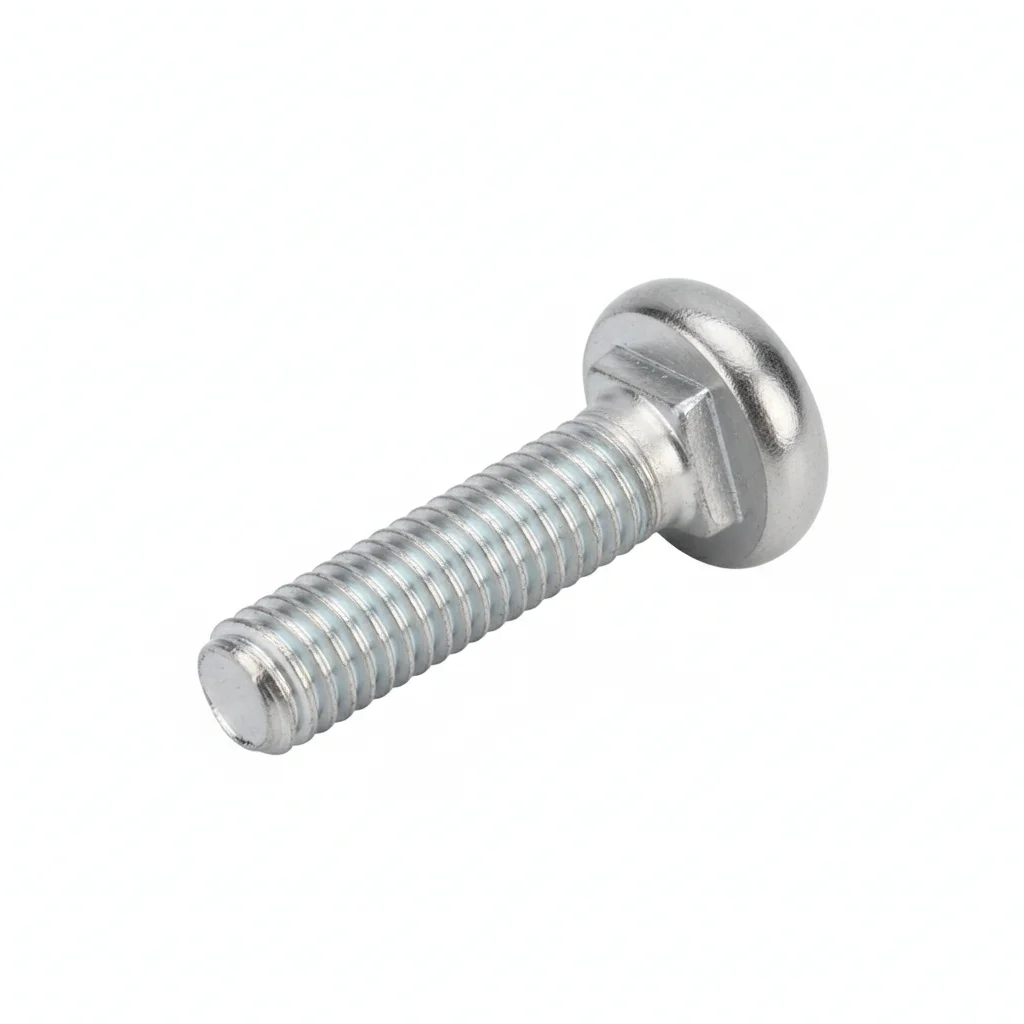
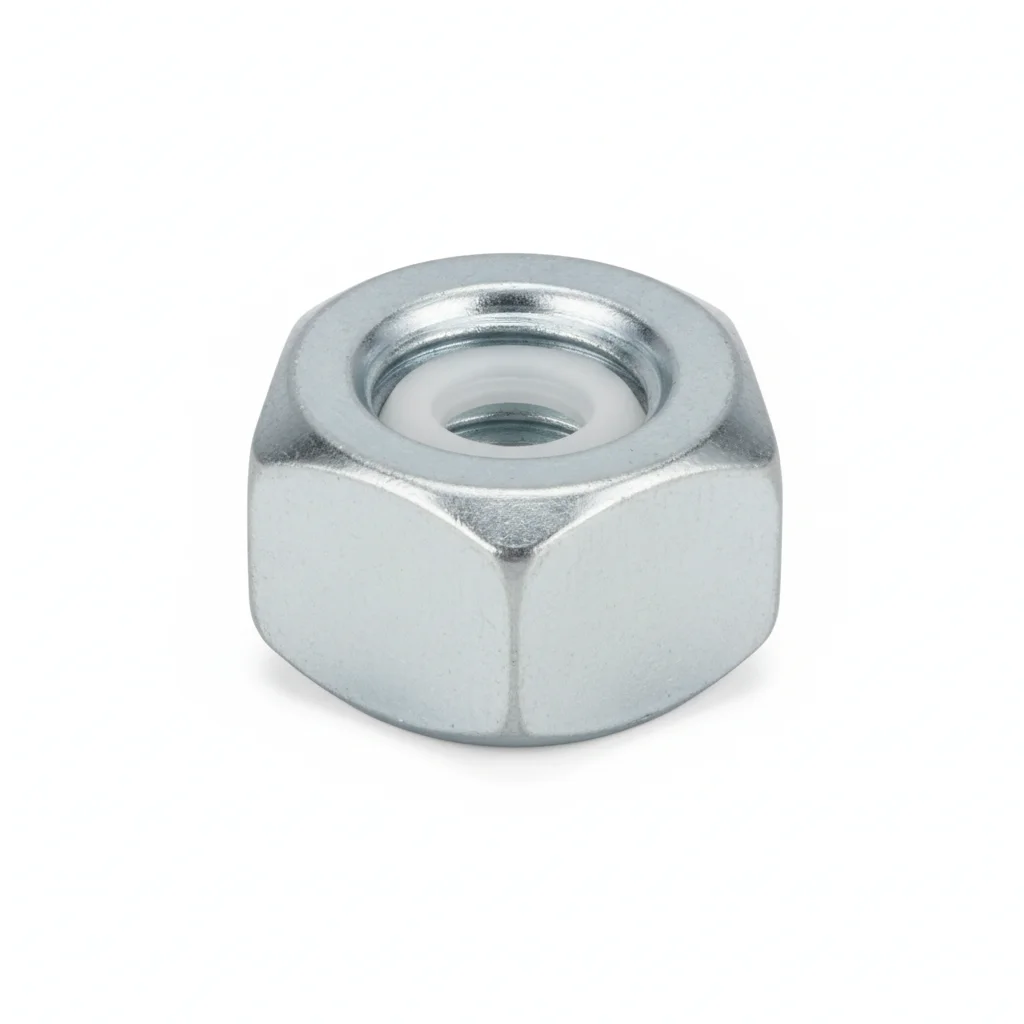
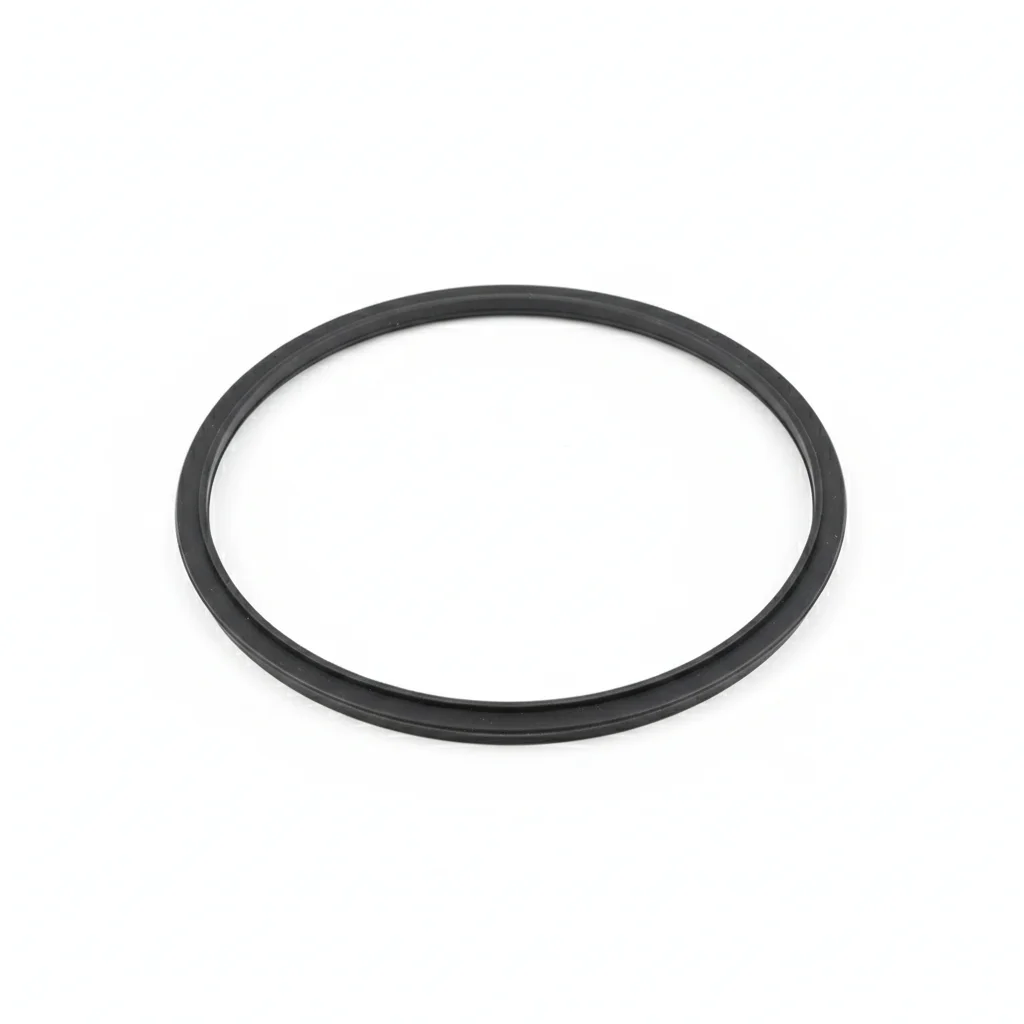
| M10×40 Square Neck Bolt | Nylon Insert Lock Nut | Rubber Sealing Gasket | |
|---|---|---|---|
| SPEC | Grade 8.8, Hot-Dip Galvanized | M10, PA66 | EPDM, Food Grade |
| MATERIAL | — | PA66 | EPDM Rubber |
| GRADE | Grade 8.8 | — | — |
| FINISH | HDG >=55um per ISO 1461 | HDG >=55um per ISO 1461 | HDG >=55um per ISO 1461 |
| CORROSION | C3 (ISO 12944-2) | C3 (ISO 12944-2) | Not applicable (polymer) |
| TEMP | -20°C to +80°C | -20°C to +80°C | -20°C to +80°C |
| WEIGHT | ~0.5 kg/piece | ~0.5 kg/piece | ~0.5 kg/piece |
| MOQ | 100 pcs | 100 pcs | 100 pcs |
| PACK | VCI paper + carton | VCI paper + carton | VCI paper + carton |
| STD | ISO 898-1, GB/T 3098.1 | ISO 898-1, GB/T 3098.1 | ISO 898-1, GB/T 3098.1 |
| USE | Hot-Dip Galvanized | PA66 | Food Grade |
PROCEDURE
- Align the M10×40 square neck bolt with the bucket lug keyway, ensuring the square neck seats fully to prevent rotation during tightening.
- Place the EPDM food-grade rubber sealing gasket under the bolt head and the PA66 nylon insert lock nut on the thread end, oriented to face the bucket interior.
- Tighten the nut in a cross-star pattern to evenly distribute clamp load, achieving a secure joint without over-torquing the Grade 8.8 bolt.
- Verify the nylon insert fully engages the threads and that the gasket is compressed evenly around the bolt hole to block dust ingress.
- Perform a final visual check for any gaps or misalignment, confirming the assembly meets the C3 corrosion protection requirement.
COMMON ERRORS
| ✕ WRONG | CONSEQUENCE | ✓ CORRECT |
|---|---|---|
| Reusing a standard hex nut instead of the PA66 nylon insert lock nut | Vibration from bucket elevator operation causes the nut to back off, leading to bucket detachment and conveyor damage. | Always fit the specified nylon insert lock nut (PA66) to provide prevailing torque and resist loosening under vibration. |
| Omitting the EPDM rubber sealing gasket to save time | Fine grain dust penetrates the threads, accelerating wear and corrosion, and contaminating the joint. | Install the food-grade EPDM gasket under the head or nut to create a dust-tight seal, protecting the fastener and product. |
| Torquing the M10×40 bolt without a calibrated wrench and relying on feel | Inconsistent clamp load leads to either premature loosening or bolt overstress, reducing the 10-15 year service life. | Use a calibrated torque wrench and follow the specified tightening sequence to achieve uniform preload across all bolts. |
MAINTENANCE
Inspect bucket elevator bolts seasonally and at each overhaul window. Re-torque any bolt that has lost more than 15% of specified tension. Replace bolts with corrosion affecting more than 5% of surface area or pitting depth exceeding 0.3mm. Verify the PA66 nylon insert still provides locking action; replace if worn. Keep spare M10×40 bolts with HDG coating (≥55µm per ISO 1461) in stock for prompt replacement.
Plan B · Scraper Conveyor Chain Pins
C4 Harsh per ISO 12944-2
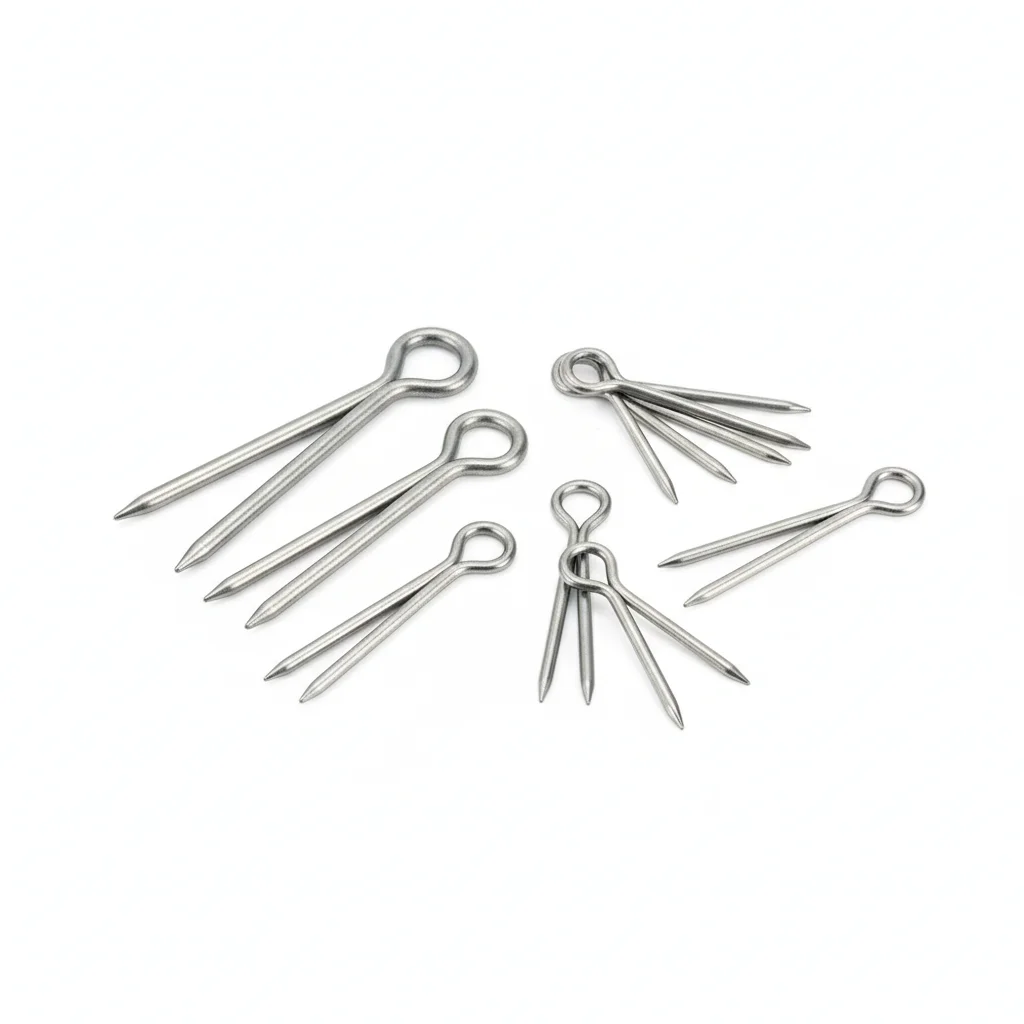
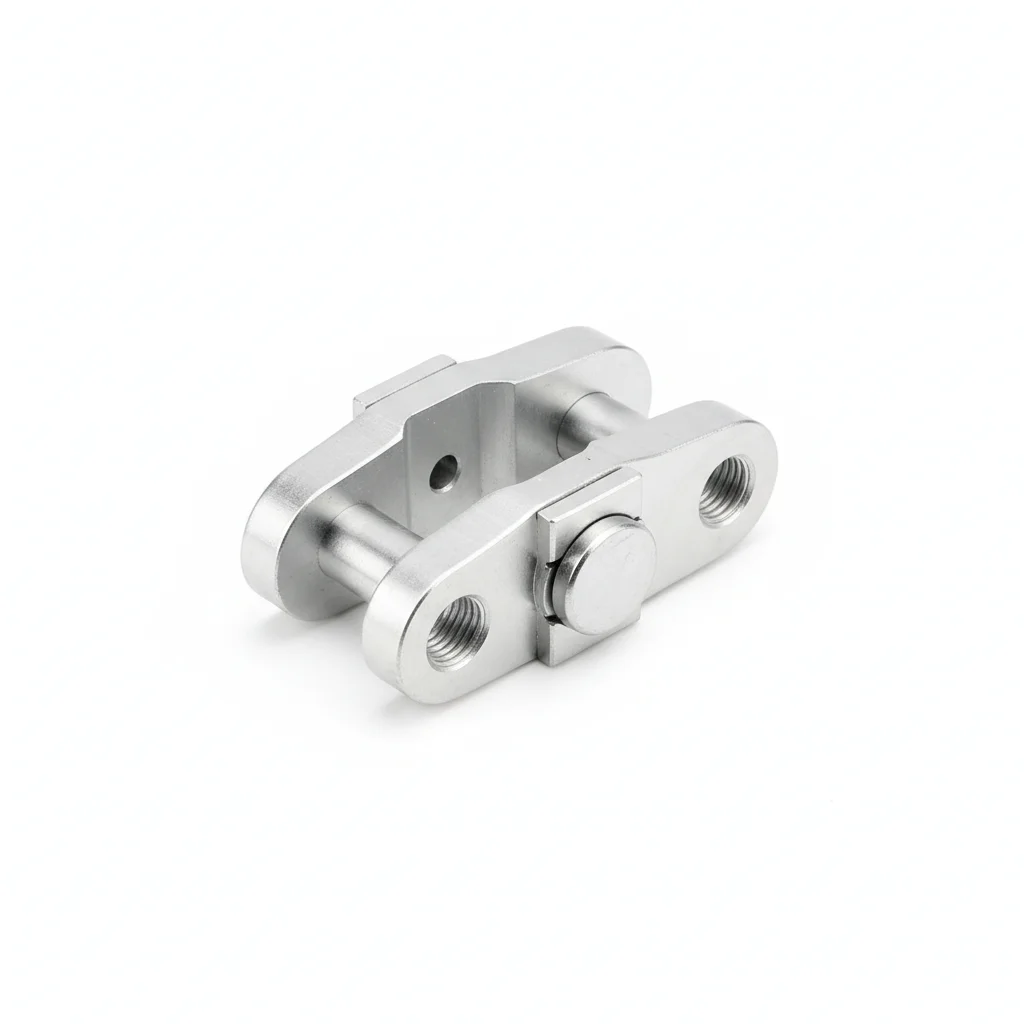
| Chain Pin | Cotter Pin | Chain Plate Connecting Bolt | |
|---|---|---|---|
| SPEC | Φ20×80, Surface Hardened | Φ4×30, Galvanized | M12×50, Grade 10.9 |
| MATERIAL | — | — | — |
| GRADE | — | — | Grade 10.9 |
| FINISH | HDG >=55um per ISO 1461 | HDG >=55um per ISO 1461 | HDG >=55um per ISO 1461 |
| CORROSION | C3 (ISO 12944-2) | C3 (ISO 12944-2) | C3 (ISO 12944-2) |
| TEMP | -20°C to +80°C | -20°C to +80°C | -20°C to +80°C |
| WEIGHT | ~0.5 kg/piece | ~0.5 kg/piece | ~0.5 kg/piece |
| MOQ | 100 pcs | 100 pcs | 100 pcs |
| PACK | VCI paper + carton | VCI paper + carton | VCI paper + carton |
| STD | ISO 898-1, GB/T 3098.1 | ISO 898-1, GB/T 3098.1 | ISO 898-1, GB/T 3098.1 |
| USE | Surface Hardened | Galvanized | Grade 10.9 |
PROCEDURE
- Clean the chain pin bores and side plates with a lint-free cloth to remove grain dust and residue; verify bore diameter is within 0.2mm of nominal.
- Insert the Φ20×80 surface-hardened chain pin through the aligned chain plates, ensuring the pin's hardened surface (HRC58-62) is fully engaged.
- Secure the pin with the Φ4×30 galvanized cotter pin, bending the prongs fully against the link to prevent snagging on scraper flights.
- Torque the M12×50 Grade 10.9 connecting bolts to the specified value in a cross pattern; use a calibrated wrench and mark each bolt after tightening.
- Rotate the assembled chain by hand through one full loop to confirm free movement and that no pin protrudes beyond the side plate.
- Apply food-grade H1 lubricant (NSF certified) to the pin-bushing interface before startup, and re-lubricate after the first 8 hours of operation.
COMMON ERRORS
| ✕ WRONG | CONSEQUENCE | ✓ CORRECT |
|---|---|---|
| Reusing a chain pin that shows visible wear or scoring from previous service | Worn pin accelerates bushing wear, increasing chain pitch elongation beyond 3% and causing sprocket jumping and scraper impacts. | Measure pin diameter with a micrometer; replace any pin worn more than 3% of original size or with a surface groove deeper than 0.2mm. |
| Tightening the M12 connecting bolts without a torque wrench, relying on feel | Inconsistent clamp load leads to bolt loosening under vibration, increasing joint wear and risk of chain separation. | Use a calibrated torque wrench and follow the specified torque for Grade 10.9 bolts; re-check after the first 8 hours of operation. |
MAINTENANCE
Inspect chain pins and connecting bolts at each overhaul window (or every 3000 operating hours as recommended). Measure chain pitch elongation; replace the entire chain if elongation exceeds 3%. Replace pins showing surface grooves or wear exceeding 3% of original diameter. Re-torque any connecting bolt that has lost more than 15% of specified tension. Lubricate pins with food-grade H1 lubricant at intervals appropriate to the dust load, using an automatic micro-lubrication system if fitted.
Plan C · Screw Conveyor Hanger Bearing Bolts
C5-M Extreme per ISO 12944-2
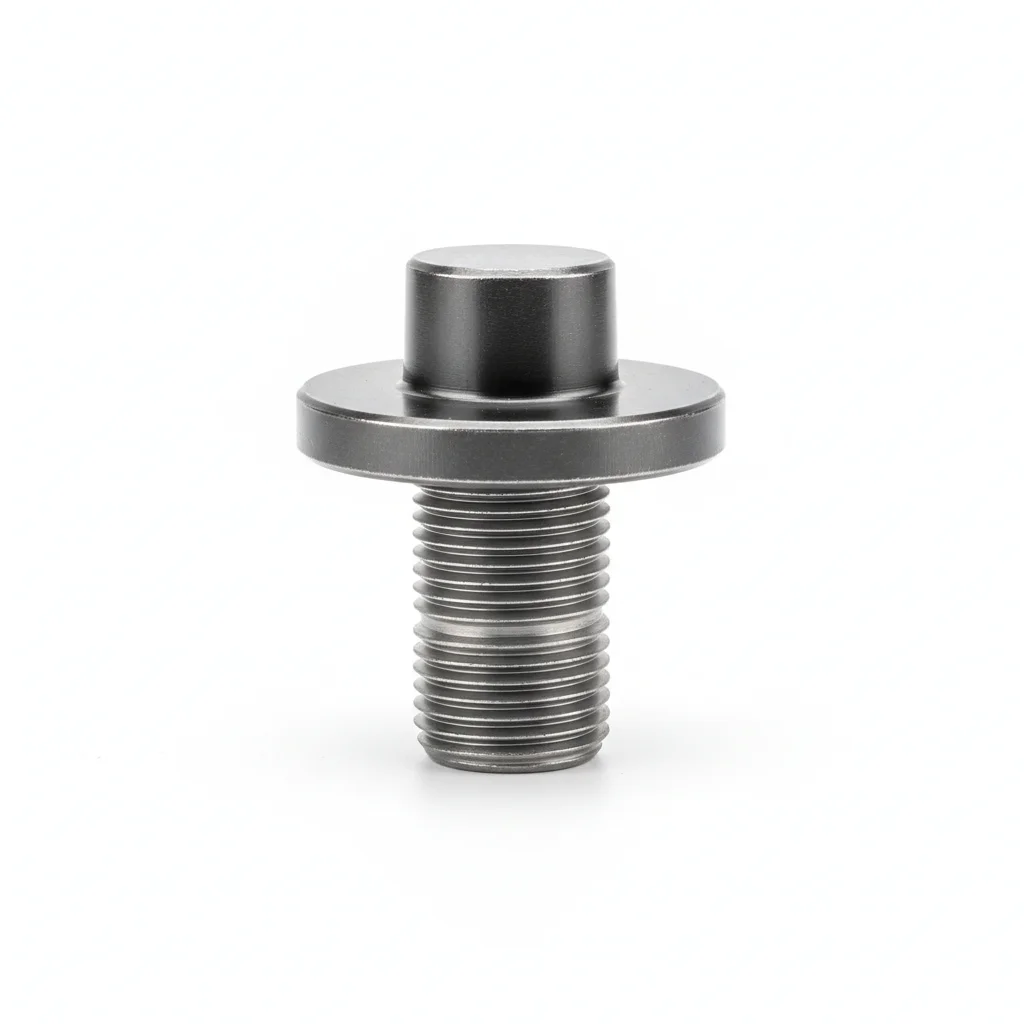
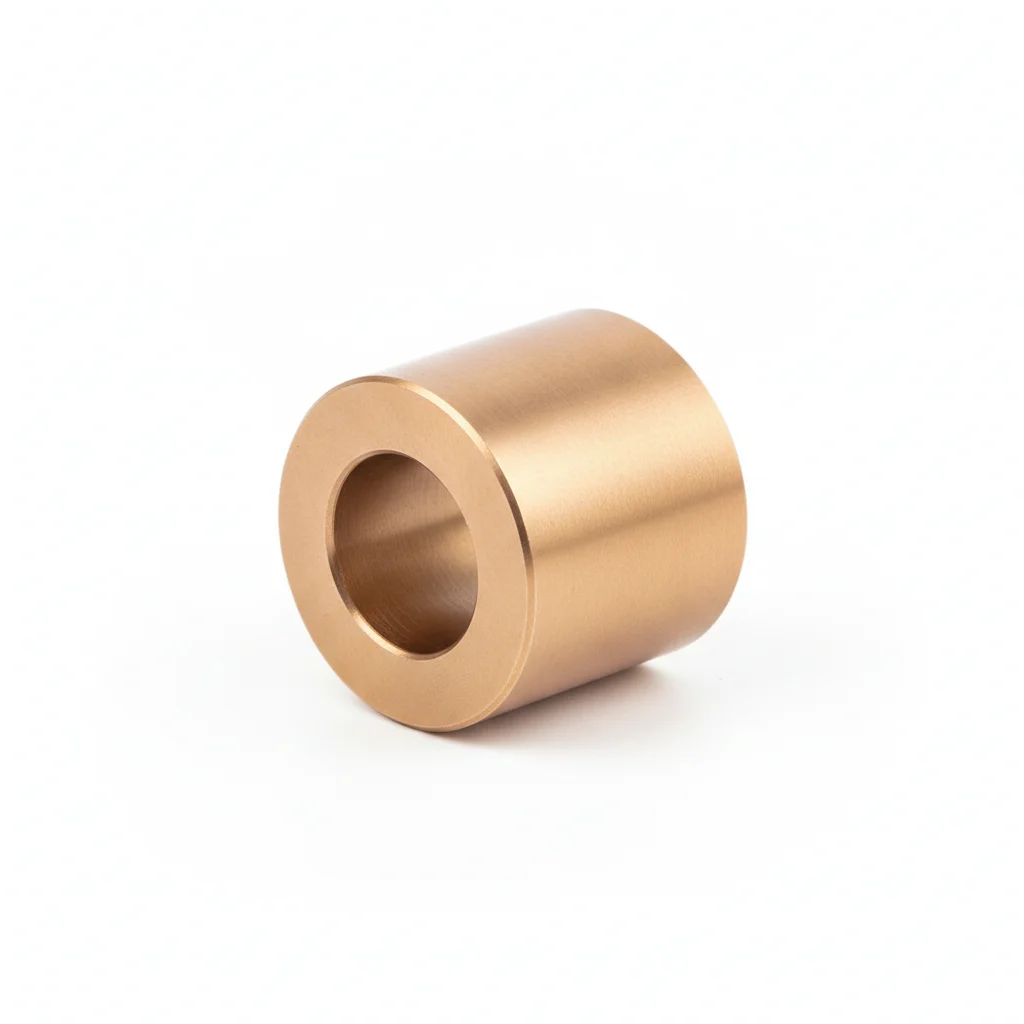
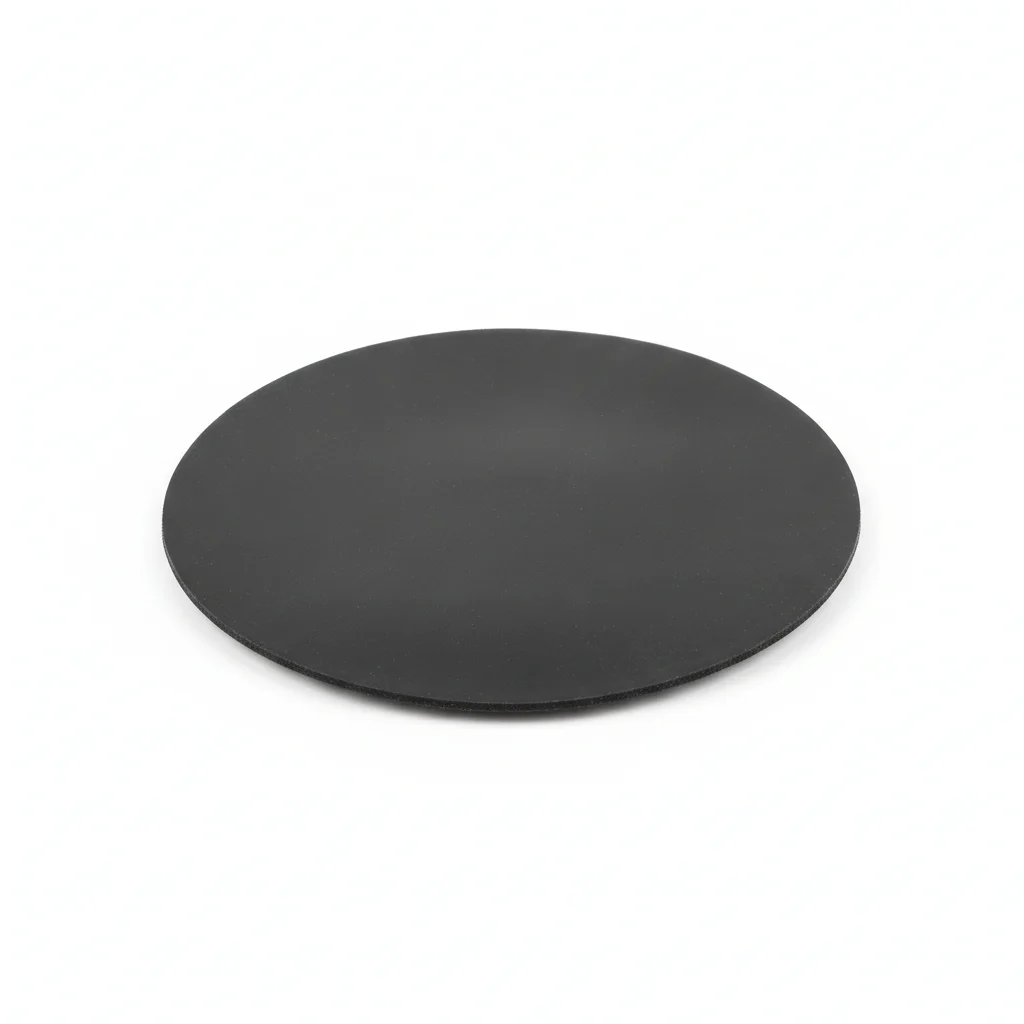
| M12×60 Hanger Bearing Bolt | Wear-Resistant Copper Sleeve | Sealing Felt | |
|---|---|---|---|
| SPEC | Grade 8.8, Dacromet | ZCuSn10P1 | Industrial Grade, Dust-Proof |
| MATERIAL | — | CuSn10 | EPDM Rubber |
| GRADE | Grade 8.8 | — | — |
| FINISH | HDG >=55um per ISO 1461 | HDG >=55um per ISO 1461 | HDG >=55um per ISO 1461 |
| CORROSION | C3 (ISO 12944-2) | C3 (ISO 12944-2) | Not applicable (polymer) |
| TEMP | -20°C to +80°C | -20°C to +80°C | -20°C to +80°C |
| WEIGHT | ~0.5 kg/piece | ~0.5 kg/piece | ~0.5 kg/piece |
| MOQ | 100 pcs | 100 pcs | 100 pcs |
| PACK | VCI paper + carton | VCI paper + carton | VCI paper + carton |
| STD | ISO 898-1, GB/T 3098.1 | ISO 898-1, GB/T 3098.1 | ISO 898-1, GB/T 3098.1 |
| USE | Dacromet | Wear-Resistant Copper Sleeve | Dust-Proof |
PROCEDURE
- Clean the hanger bearing mounting surfaces and bolt holes with a solvent to remove all grain dust and moisture; ensure surfaces are dry.
- Place the wear-resistant copper sleeve (ZCuSn10P1) over the M12×60 hanger bearing bolt, seating it fully against the bearing housing.
- Apply a thread-locking adhesive suitable for Dacromet-coated fasteners to the bolt threads, then insert the bolt through the hanger bearing and mounting bracket.
- Fit the sealing felt gasket between the bearing and the conveyor housing to block powder ingress, and position the nylon insert lock nut on the bolt.
- Tighten the nut to the specified torque using a calibrated wrench; the nylon insert provides prevailing torque to resist loosening from vibration.
- After installation, rotate the screw conveyor by hand to verify the hanger bearing is aligned and the bolt does not interfere with the flighting.
COMMON ERRORS
| ✕ WRONG | CONSEQUENCE | ✓ CORRECT |
|---|---|---|
| Using a standard galvanized bolt instead of the specified Dacromet-coated Grade 8.8 bolt | In humid grain storage (humidity ≥70%), red rust appears within 3 months; thread failure probability reaches 30% after 6 months, causing hanger bearing displacement and increased vibration. | Use Dacromet-coated bolts (salt spray resistant ≥480 hours) with fine thread M12×1.25 and nylon insert lock nuts to maintain preload. |
| Omitting the sealing felt gasket during reassembly | Fine powder and dust enter the bearing housing, accelerating wear of the copper sleeve and causing premature hanger bearing failure. | Always install the sealing felt gasket; replace it if it is compressed or damaged to maintain a dust-proof seal. |
MAINTENANCE
Inspect hanger bearing bolts and copper sleeves at each scheduled maintenance window (typically every 6-12 months; shorten to 3-6 months if the material contains hard impurities). Replace the copper sleeve when wear exceeds the allowable limit (refer to manufacturer specs). Re-torque bolts if preload loss exceeds 15%. Check for red rust on Dacromet coating; if rust appears, replace the bolt immediately. Keep spare hanger bearing bolt sets in stock for quick replacement.
REFERENCED STANDARDS
Technical Basis and Reference Standards
"Grain and Oil Machinery Bucket Elevators"
Mechanical Properties of Fasteners"Grain and Oil Storage Technical Specifications"
Alloy Structural Steels"Vertical Bucket Elevators"
Carburizing Steels"Mechanical Properties of Fasteners - Bolts"
Food Grade Lubricants"Agricultural Machinery Safety Operation Regulations"
SUPPLIER CAPABILITY
Quality, Delivery & Customization
Quality Control
- ✓MTC material certificates with every batch
- ✓Key parts sampled for hardness/salt spray/torque coefficient
- ✓100% inspection or AQL sampling before shipment
Delivery
- ✓Standard parts made to order: 7-15 days
- ✓Custom parts: 25-45 days
- ✓FOB/CIF/DDP supported
Customization
- ✓Drawing review and material matching
- ✓Non-standard sizes/heads/threads
- ✓Small-batch prototyping supported
Certification
- ✓Material certificates (MTC)
- ✓Spectrographic analysis reports
- ✓Salt spray test reports (on request)
MOQ: No MOQ for standard parts; custom parts assessed by process complexity
FAQ
Frequently Asked Questions
RELATED READING
Keep Reading & Next Step
BEYOND TECHNICAL SPECS
Finding the right factory, controlling quality, delivering on time — that's the real challenge. We cover fasteners, rubber, plastics, industrial textiles. One team, end to end.
SEE CAPABILITIES →