Slewing Bearing Bolts: Preventing Preload Loss and Corrosion
In heavy equipment, M24-M36 Grade 10.9 bolts experience impact during start-stop cycles. After 2000 hours, preload loss can cause end-face clearance and poor gear meshing. Mud and sand environments accelerate corrosion, consuming HDG within months. This page compares standard vs reinforced bolt materials and maintenance strategies to ensure joint integrity
RISK AUDIT // ENGINEERING DIAGNOSIS
Procurement Pitfall Avoidance Guide
"Field failures in slewing bearings often trace back to bolt preload loss and coating wear."
QC-AUDIT // REV.5
SCALE 1:1 · 03 ITEMS
RISK-01
Preload Loss of Slewing Bearing Bolts Under Alternating Loads
Corrective Measures
RISK-02
Wear and Corrosion of Slewing Bearing Ring Bolts in Mud and Sand Environments
Corrective Measures
RISK-03
Disassembly of Large Diameter Slewing Bearing Bolts Requires Specialized Hydraulic Tools
Corrective Measures
FIELD-SPECIFIC INSIGHT
Preload Loss & Corrosion: Critical Checks for Slewing Bearing Bolts
Slewing bearing bolts face unique challenges: alternating loads cause progressive preload loss, while mud and sand environments accelerate corrosion. Standard HDG coatings may fail within months in harsh conditions. The table below outlines key inspection points to specify in procurement and maintenance
WHAT TO CHECK
- 1M24-M36 Grade 10.9 bolts under high annual cycles: preload loss after 2000 hours; specify re-torque at 250-hour intervals
- 2HDG per ISO 1461: in mud/sand environments, coating consumed within months; consider thicker coating or alternative protection
- 3Carbon steel corrosion: cross-section reduction over time; replace bolts with pitting depth exceeding acceptable limits
- 4M30-M36 bolts require high preload torque; hydraulic tools needed for proper disassembly/assembly to avoid cheater bar breakage
| Check | Why it matters | What to specify |
|---|---|---|
| Preload loss after 2000 hours | Loss of preload increases clearance and risks gear misalignment | Require re-torque at 250-hour intervals; document torque values in CMMS |
| HDG coating condition in mud/sand | Coating degradation exposes steel to corrosion, reducing bolt strength | Specify HDG thickness per ISO 1461; for harsh environments, consider duplex coating or stainless steel |
| Corrosion pitting depth | Pitting reduces effective cross-section, increasing stress concentration and fracture risk | Inspect every 6 months |
| Torque application method | Improper torque leads to inconsistent preload and potential bolt breakage | Require hydraulic torque wrench for installation; specify torque value per standard |
Preload loss and corrosion rates depend on actual operating conditions. Field inspection intervals should be adjusted based on CMMS data
Evidence level: source-page-only
INDUSTRY TECH REFERENCE
The Duty Backdrop of Slewing Bolts: A Circulating Overturning-Moment Spectrum
Where these bolts sit decides their duty: between the upper and lower frame, a circulating overturning moment stacks onto radial shear. Read this load spectrum before any selection talk — every spec difference grows out of it.
The slewing joint ties the upper frame to the lower frame; its bolt group carries a circulating overturning moment plus radial shear — every swing and every dig reverses the moment direction. It is the machine's acknowledged highest-risk bolt group: once preload is lost, tension turns to shear-plus-bending and cracks start at the thread root. The ring it clamps is no ordinary part either: slewing rings are surface-hardened 50Mn/42CrMo steel, manufactured to the JB/T 2300-2018 product standard. Which is why failure here is almost never "not strong enough" — it is "preload gone first". Anaerobic adhesive coverage, clean thread holes and torque execution at assembly are the gates that decide this bolt group's life.
No order-of-magnitude estimates are used in this slot.
INDUSTRY TECH REFERENCE
After the Whole Group Lets Go: Frame Separation to a Full-Tear-Down Overhaul
Walk this chain and you see why slew-ring bolts cannot be managed like wear parts — the nature of the failure, the repair procedure and the spares rhythm are three different magnitudes.
- 1Where the record starts: on one excavator, all 36 M22×75 grade-10.9 40Cr bolts joining the lower frame to the slewing ring broke after 1128 hours of service — 31 carried fatigue traces, only 5 failed in instantaneous overload
- 2The severity: the upper-to-lower frame joint fails in an instant — both a stoppage and a safety event, a double loss for the OEM and the user; this is not a bolt-swap repair, it is a machine-level incident
- 3The repair escalates fully: replacing a slewing ring is a full-tear-down overhaul — lift the upper frame, slide the track frame off on the rails; a complete undercarriage replacement is the standard overhaul package (chains / carrier and idler wheels / drive sprockets)
- 4Spares follow the overhaul rhythm: slew-ring bolts and track-shoe bolts are overhaul-class parts, bought with the overhaul package or as OEM parts — a different line of pricing logic from wear-rate consumables like bucket teeth
- 5The downtime anchor: unplanned downtime in industry averages about $125,000/hour (2023 ABB/Sapio survey of 3,215 maintenance decision-makers, all-industry basis) — every hour spent delaying the overhaul decision accumulates against that anchor
The final line on waiting hours is an inference from the ≈$125,000/hour anchor, carrying no new figure. No order-of-magnitude estimates are used in this slot.
INDUSTRY TECH REFERENCE
Three Selection Tiers: Which Criteria Are Proven, Which Await Confirmation
Three duty tiers — conventional, heavy/corrosive and extreme — map to the three plan tiers. Lay each tier's failure focus and evidence source on the table: accept by evidence where evidence exists, confirm unsourced parameters against project standards — and never cite figures without a source.
| Duty tier | Failure focus | Traceable criteria | Items without a public source (registered gap — confirm per project/OEM) |
|---|---|---|---|
| Conventional (excavator class) | Fatigue fracture under alternating load | Record-proven combination: M22×75, grade 10.9, 40Cr; strength grade per GB/T 3098.1-2010, material per GB/T 3077-2015 | Fixed re-inspection intervals (e.g. 500 h-type claims) have no authoritative public value — do not schedule on circulating figures; follow the OEM guide's inspection regime |
| Heavy / corrosive (port crane class) | Nut galling, coating corrosion | No parameter-level public data for this tier so far | Existing parameters such as 35CrMoA, grades 10/12 and salt-spray hours lack a public source — confirm against project standards or OEM specs before they go into the RFQ |
| Extreme / special (high-temperature metallurgy class) | Washer fretting wear | No parameter-level public data for this tier so far | Temperature thresholds, washer-thickness criteria (75%-type) and hardness ranges (HRC-type) lack a public source — do not accept against single values; follow OEM drawings/specs |
The pending parameters in the table (35CrMoA, grades 10/12, salt-spray hours, 45# steel, HRC ranges, washer thickness, 500-hour rechecks) have no publicly authoritative basis — confirm against project standards/OEM specifications before use. GB/T 3098.1-2010 and GB/T 3077-2015 are current standards. No order-of-magnitude estimates are used in this slot.
INDUSTRY TECH REFERENCE
Slewing-Connection References: Product Standard, Methodology, and the Drawing-Defined Boundary
Line up three references before quoting: the ring per its product standard, installation and maintenance per the methodology, and the connection bolts per OEM drawings — each in its own lane.
JB/T 2300-2018 is a current public standard; verify ASME SRB-1 against the original document when relying on it. Standard numbers are given for procurement navigation with their scope only, without reproducing standard clauses. No order-of-magnitude estimates are used in this slot.
PLAN COMPARISON
Three-Plan Core Parameter Comparison
Compare row by row. Click column headers to jump to plan details.
| A · Plan A · Standard Type | B · Plan B · Reinforced Type | C · Plan C · Premium Type | |
|---|---|---|---|
| 1. SLEWING BEARING BOLT | |||
| SPEC | Grade 10.9/12.9 M16-M42 | Grade 10/12 M16-M42 | M16-M42 |
| MATERIAL | 42CrMo | 35CrMoA | 45# Steel |
| FINISH | HDG >=55um per ISO 1461 | HDG >=55um per ISO 1461 | HDG >=55um per ISO 1461 |
SELECTION GUIDE
Selecting the Right Bolt Plan for Your Duty Cycle
| Operating condition | Recommended option | Key basis |
|---|---|---|
| Conventional working conditions (C3 per ISO 12944-2) | Plan A · Standard Type: slewing bearing bolt Grade 10.9/12.9 M16-M42 (42CrMo) | ISO 898-1 (mechanical properties of fasteners); 42CrMo is standard for conventional conditions; hydraulic tensioning preload with ±5% accuracy; full retightening after the first 100 hours, then every 500 hours |
| Heavy load / corrosive conditions (C4 harsh per ISO 12944-2) | Plan B · Reinforced Type: slewing bearing nut Grade 10/12 M16-M42 (35CrMoA) | ISO 898-1 (mechanical properties); a 55μm galvanized layer is consumed within 6 months in mud and sand; specify Dacromet coating or hot-dip galvanizing ≥85μm; carbon steel corrodes at 0.15mm/year |
| Extreme / special conditions (C5-M extreme per ISO 12944-2) | Plan C · Premium Type: slewing bearing washer M16-M42 (45# steel) | ISO 898-1 (mechanical properties); M30-M36 preload torque of 1500-3000 Nm requires hydraulic tensioners instead of wrenches; apply copper-based anti-seize compound; re-inspect every 500 hours, investigate if torque loss exceeds 15% |
Plan A · Standard Type
C3 per ISO 12944-2
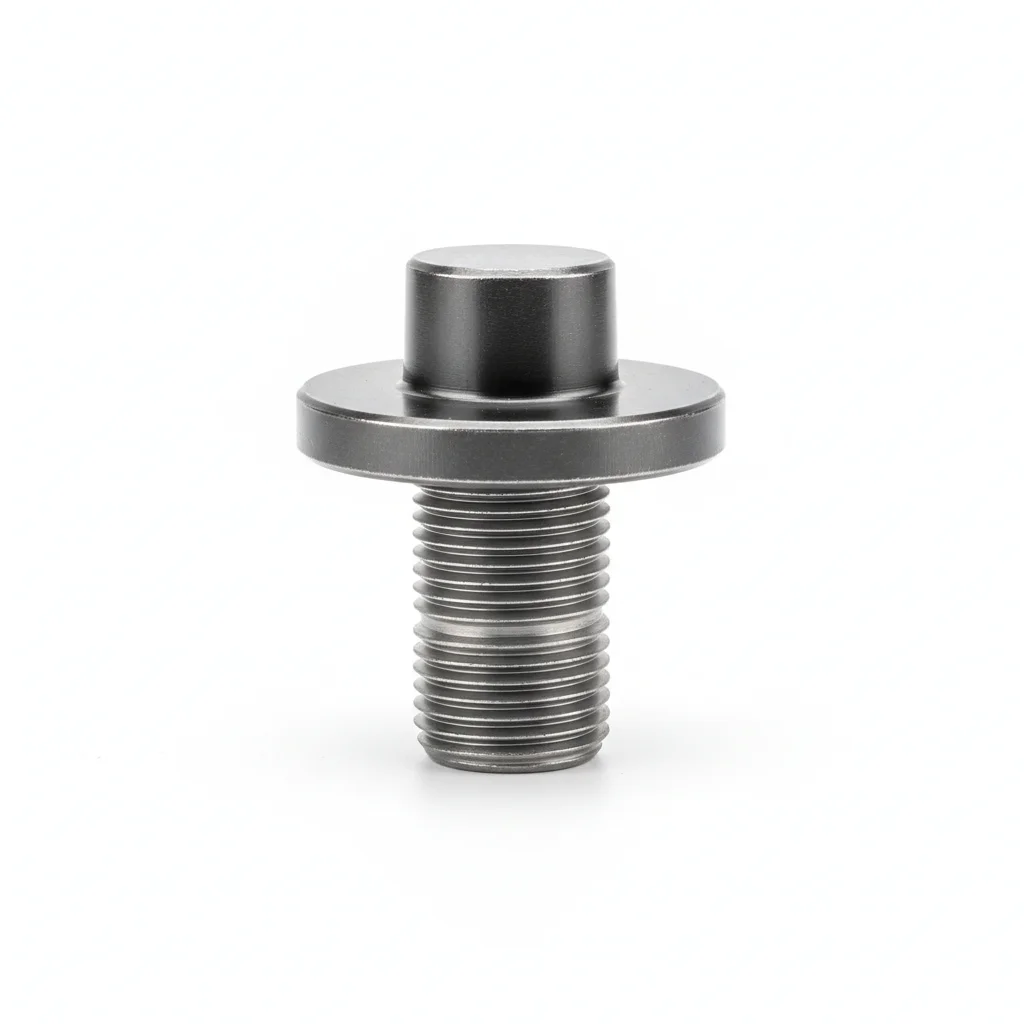
| Slewing Bearing Bolt | |
|---|---|
| SPEC | Grade 10.9/12.9 M16-M42 |
| MATERIAL | 42CrMo |
| GRADE | — |
| FINISH | HDG >=55um per ISO 1461 |
| CORROSION | C3 (ISO 12944-2) |
| TEMP | -20°C to +80°C |
| WEIGHT | ~0.5 kg/piece |
| MOQ | 100 pcs |
| PACK | VCI paper + carton |
| STD | ISO 898-1, GB/T 3098.1 |
| USE | Heavy Equipment |
PROCEDURE
- Clean the bearing race and bolt holes with isopropyl alcohol, then verify the mounting face is flat within 0.1 mm per 100 mm.
- Apply a thin layer of anti-seize compound to the bolt threads and the washer face. Place the Grade 10.9 bolt with its hardened washer.
- Tighten the M24–M36 bolts in a star pattern to the specified preload using a hydraulic tensioner, achieving ±5% accuracy per the tensioner's calibration.
- After the first 100 hours of operation, retighten all bolts to the specified preload without loosening them first, following the same star pattern.
- Mark each bolt head and nut with torque seal paint after final tensioning, and record the preload values in the maintenance log.
COMMON ERRORS
| ✕ WRONG | CONSEQUENCE | ✓ CORRECT |
|---|---|---|
| Using a cheater bar instead of a hydraulic tensioner to reach the 1500–3000 Nm preload torque on M30–M36 bolts. | The cheater bar can slip or break, causing injury, and the preload will be inconsistent, leading to uneven load distribution and premature preload loss. | Use a hydraulic tensioner calibrated to ±5% accuracy for all M30–M36 bolts, and follow the specified star-pattern sequence. |
| Ignoring the initial preload loss after 2000 hours and not retightening the bolts. | Preload can drop by 15–30%, causing end-face clearance above 0.5 mm, which leads to poor gear meshing and potential bearing failure. | Schedule a full retightening after the first 100 hours, then at every 500-hour interval, and verify preload with a torque audit. |
MAINTENANCE
Re-torque all bolts after the first 100 hours, then at every 500-hour interval. Check preload loss with a torque wrench; if loss exceeds 15%, investigate and retighten. Inspect for corrosion and pitting—replace bolts if pitting depth exceeds 0.3 mm or if corrosion affects more than 5% of the surface area.
Plan B · Reinforced Type
C4 Harsh per ISO 12944-2
| Slewing Bearing Nut | |
|---|---|
| SPEC | Grade 10/12 M16-M42 |
| MATERIAL | 35CrMoA |
| GRADE | — |
| FINISH | HDG >=55um per ISO 1461 |
| CORROSION | C3 (ISO 12944-2) |
| TEMP | -20°C to +80°C |
| WEIGHT | ~0.5 kg/piece |
| MOQ | 100 pcs |
| PACK | VCI paper + carton |
| STD | ISO 898-1, GB/T 3098.1 |
| USE | Heavy Equipment |
PROCEDURE
- Thoroughly remove mud and sand residues from the bearing ring and bolt holes using high-pressure water or air, then degrease the threads with acetone; verify surface roughness Ra <3.2um.
- Apply a heavy-duty anti-seize compound rated for -20°C to +150°C to the threads and bearing surfaces; use PTFE-coated washers to reduce friction scatter.
- Hand-start the Grade 10/12 35CrMoA bolts and tighten in a cross-pattern to 50% of final torque, then to 100% using a calibrated hydraulic wrench; record torque values and ambient temperature.
- After the first 100 hours of operation, retighten all bolts to the specified torque to compensate for initial settling.
- Apply a protective wax or grease coating over the exposed bolt ends and nut faces to shield against mud and moisture ingress.
- Install a corrosion monitoring coupon near the joint to track environmental aggressiveness.
COMMON ERRORS
| ✕ WRONG | CONSEQUENCE | ✓ CORRECT |
|---|---|---|
| Using a standard Grade 10.9 bolt instead of the reinforced 35CrMoA Grade 10/12 specified for heavy corrosive duty | Higher susceptibility to stress corrosion cracking and fatigue failure under alternating loads, leading to premature bolt fracture and bearing misalignment. | Confirm material grade and strength class from the MTC; use 35CrMoA with appropriate heat treatment for the corrosive heavy-load environment. |
| Tightening with a manual torque wrench without verifying calibration in a muddy, remote site | Inconsistent preload leading to uneven load distribution; some bolts may exceed yield while others remain loose, accelerating preload loss. | Use a calibrated hydraulic torque wrench and verify calibration certificate before use; follow the specified cross-pattern sequence. |
MAINTENANCE
Inspect bolts every 250 operating hours or 6 months, whichever comes first; re-torque any bolt below 80% of specified torque. Replace bolts showing corrosion pitting deeper than 0.3mm or affecting more than 5% of surface area. At each overhaul window (typically every 3 years), perform full disassembly and inspect a 20% sample; replace all critical fasteners every 5 years regardless of condition. Document all findings in CMMS.
Plan C · Premium Type
C5-M Extreme per ISO 12944-2
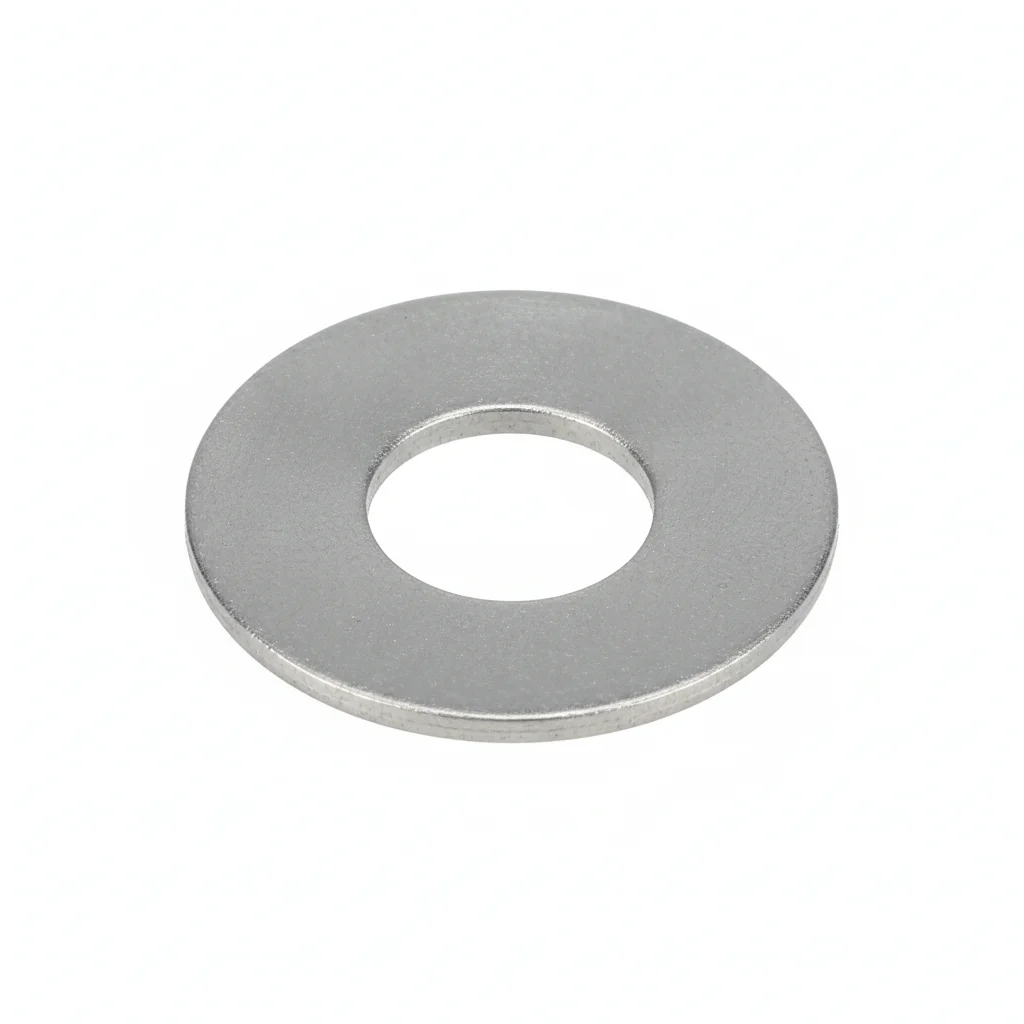
| Slewing Bearing Washer | |
|---|---|
| SPEC | M16-M42 |
| MATERIAL | 45# Steel |
| GRADE | — |
| FINISH | HDG >=55um per ISO 1461 |
| CORROSION | C3 (ISO 12944-2) |
| TEMP | -20°C to +80°C |
| WEIGHT | ~0.5 kg/piece |
| MOQ | 100 pcs |
| PACK | VCI paper + carton |
| STD | ISO 898-1, GB/T 3098.1 |
| USE | Heavy Equipment |
PROCEDURE
- Degrease bolts and mating surfaces with MEK solvent; verify surface roughness Ra <1.6um to ensure proper sealing of protective coatings.
- Apply marine-grade anti-corrosion compound rated -50°C to +200°C to threads and under-head areas; use PTFE-encapsulated washers for consistent friction.
- Align the bearing ring precisely within 0.3mm tolerance; use hydraulic tensioners to stretch bolts to the specified preload, then tighten nuts to lock.
- Perform positive material identification (PMI) on a 10% sample to verify alloy composition; document results for compliance audit.
- After the first 100 hours of operation, check preload with ultrasonic or strain-gauge methods; retension if loss exceeds 15%.
- Apply a protective sealant over the entire joint perimeter and install permanent condition monitoring instrumentation (e.g., strain gauges or load washers) to track preload in real time.
COMMON ERRORS
| ✕ WRONG | CONSEQUENCE | ✓ CORRECT |
|---|---|---|
| Using bolts with standard HDG coating in a highly corrosive environment without additional barrier protection | HDG layer consumed within months, exposing steel to rapid corrosion (0.15mm/year) and reducing load-carrying cross-section by >10% in 2-3 years, leading to bolt failure. | Specify a premium coating system such as Dacromet or duplex coating (HDG plus topcoat) for extreme environments, and verify coating thickness meets specification. |
| Relying on torque control alone for installation without verifying actual preload | Friction variations can cause preload scatter of ±30%, leading to some bolts overloaded and others loose, increasing risk of fatigue failure. | Use hydraulic tensioners to control preload directly, or verify with ultrasonic measurement after torquing; document actual preload values. |
MAINTENANCE
Inspect bolts every 250 operating hours or 6 months, whichever comes first; re-torque any bolt below 80% of specified torque. Replace bolts showing corrosion pitting deeper than 0.3mm or affecting more than 5% of surface area. At each overhaul window (typically every 3 years), perform full disassembly and inspect a 20% sample; replace all critical fasteners every 5 years regardless of condition. Document all findings in CMMS.
REFERENCED STANDARDS
Technical Basis and Standards
SUPPLIER CAPABILITY
Quality, Delivery & Customization
Quality Control
- ✓MTC material certificates with every batch
- ✓Key parts sampled for hardness/salt spray/torque coefficient
- ✓100% inspection or AQL sampling before shipment
Delivery
- ✓Standard parts made to order: 7-15 days
- ✓Custom parts: 25-45 days
- ✓FOB/CIF/DDP supported
Customization
- ✓Drawing review and material matching
- ✓Non-standard sizes/heads/threads
- ✓Small-batch prototyping supported
Certification
- ✓Material certificates (MTC)
- ✓Spectrographic analysis reports
- ✓Salt spray test reports (on request)
MOQ: No MOQ for standard parts; custom parts assessed by process complexity
FAQ
FAQ
RELATED READING
Keep Reading & Next Step
BEYOND TECHNICAL SPECS
Finding the right factory, controlling quality, delivering on time — that's the real challenge. We cover fasteners, rubber, plastics, industrial textiles. One team, end to end.
SEE CAPABILITIES →