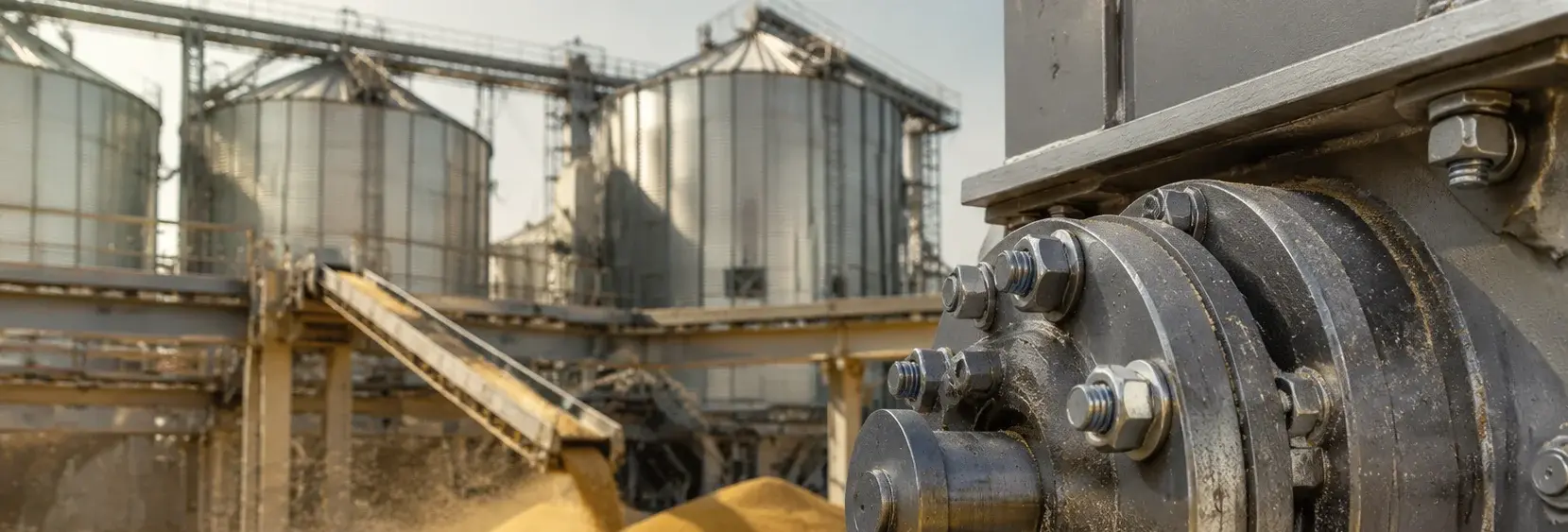
Screening Equipment Fasteners: Preventing Eccentric Block & Screen Plate Failures
At 300-500 RPM, a 5kg eccentric block generates ~3500N centrifugal force. If the M16 12.9 grade bolt loosens, the block can fly off at >30m/s, penetrating the housing and causing severe injury. Screen plate batten bolts loosening leads to unscreened grain mixing into finished product. This page compares A·Standard (42CrMoA, 12.9 grade) and B·Heavy Duty (316L, food grade) solutions with maintenance schedules to prevent these failure chains
RISK AUDIT // ENGINEERING DIAGNOSIS
Procurement Pitfall Guide
"On the production floor, these incidents happen every day."
QC-AUDIT // REV.5
SCALE 1:1 · 03 ITEMS
RISK-01
Eccentric Block Fastening Bolts Loosen and Fly Off Under High Centrifugal Force
Corrective Measures
RISK-02
Screen Plate Batten Bolts Loosen During Vibration Causing Screen Plate Lifting
Corrective Measures
RISK-03
Vibration Motor Mounting Bolt Loosening Due to Resonance
Corrective Measures
FIELD-SPECIFIC INSIGHT
Critical Fastener Checks for Screening Equipment
The most overlooked risk in rotary screen maintenance is the triple locking requirement for eccentric block bolts. A single M16 fine thread bolt failure can lead to a projectile that endangers personnel and halts production. Below are the key inspection points derived from the failure modes described on this page
WHAT TO CHECK
- 1Eccentric block bolts (M16-M20 fine thread, 12.9 grade) must use triple locking: fine thread + double nut + shaft end cotter pin; single locking fails under 3500N centrifugal force
- 2Screen plate batten bolts (M10-M12, A2-70 or 316L) must be re-torqued if tension drops below 80% of specified torque; loosening causes screen plate lift and product contamination
- 3Vibration motor mounting bolts (M20 10.9 grade) require preload above 70% to avoid resonance-induced fracture within 20 start/stop cycles; motor displacement of 0.5-1mm indicates phase angle deviation
- 4Inspection every 250 operating hours or 6 months: replace fasteners with corrosion >5% surface area or pitting depth >0.3mm; full disassembly of 20% sample every 3 years
| Check | Why it matters | What to specify |
|---|---|---|
| Eccentric block bolt locking integrity | Loosening leads to block flying off at >30m/s, penetrating housing, causing injury and stoppage | Triple locking: fine thread + double nut + cotter pin; use 12.9 grade 42CrMoA bolts |
| Screen plate batten bolt tension | Loosening causes screen plate lift, unscreened grain mixing, batch failure | Re-torque if below 80% specified torque; use A2-70 (304) or 316L for food grade |
| Vibration motor bolt preload | Preload decay below 70% leads to fracture within 20 start/stop cycles; motor displacement causes screen body shaking | M20 10.9 grade bolts; preload maintained above 70%; inspect for displacement >0 |
| Corrosion and pitting depth | Corrosion >5% area or pitting >0.3mm weakens fastener, risk of sudden failure | Replace fasteners meeting these criteria; use HDG >=55µm per ISO 1461 |
Maintenance schedules and torque values should be verified against equipment manufacturer specifications. The maximum allowable tension loss is 15%
Evidence level: source-page-only
INDUSTRY TECH REFERENCE
Three Fixing Points on a Screening Machine: Size, Locking, and Inspection
For the screening machine itself — the eccentric block, the screen-plate battens, and the batten gaskets. Each spot has its own spec; walk this table row by row at acceptance.
| Location | Size / material | Locking / protection | Torque / inspection |
|---|---|---|---|
| Eccentric-block bolts | M10–M12, grade 8.8 or higher | nylon-insert lock nut + spring washer | M10 grade 8.8 set with a torque wrench (46–57 N·m; take 50 N·m in practice); every week after shutdown tap and listen — a dull thud means loose; re-tighten to spec |
| Screen-plate batten bolts | food contact: 304 stainless (A2-70) | zinc and iron ions must not enter the grain | surface Ra <3.2 μm so nothing lodges and grows; replace at once when rust appears — never grind it off (a roughened surface traps more residue) |
| Batten gaskets | food-grade EPDM/PTFE | oil- and temperature-resistant | order together with the batten bolts |
Speed and alternating load are duty data; M10 torque follows the GB/T 3098.1 torque table; no new magnitude estimates are introduced.
INDUSTRY TECH REFERENCE
Three Fastener-Failure Axes on a Grain Line: Which One Is the Screening Machine On
On one grain line, three machines kill their bolts in three different ways — identify the axis first, then pick the solution; don't spec a screening machine with a dryer's criteria.
Dryer-tower fasteners fail by humid + weak-acid corrosion (hot air at 50–85°C plus a condensate film — this is the #1 failure cause for dryer fasteners); bucket-elevator pins fail by grain-dust abrasion (dust at Mohs 2–3 works into the pin–bushing clearance as abrasive, and the chain runs dry because oil would contaminate the grain); the screening machine is different — the motor spins the eccentric block at 960–1450 rpm, centrifugal force reaches several thousand newtons and reverses every revolution, so the M10–M12 bolts carry an alternating tensile load and the dominant failure axis is vibration loosening: with installation torque below spec the joint backs off within hours, and a flying eccentric block can pierce the housing and injure people. So spec screen-machine bolts on three things — grade (8.8 or higher), locking parts (nylon-insert lock nut + spring washer), and torque (set with a torque wrench, M10 grade 8.8 at 50 N·m) — not on coating thickness or heat-resistant steel.
"Several thousand newtons" is order-of-magnitude wording, not flagged as an estimate.
INDUSTRY TECH REFERENCE
Screening-Machine Fastener Duty List: Know the Duty Before Picking Material
A screening machine shakes by spinning an eccentric block — the only piece of grain-line equipment that pours centrifugal force into its bolts. Lock in these duty facts before ordering.
"Several thousand newtons" is order-of-magnitude wording; no new estimate figures are added.
INDUSTRY TECH REFERENCE
Eccentric-Block Bolt Locking: Four Specs Set Together
For the fixing bolts of a screening-machine eccentric block. This one spot relies on four stacked measures — grade, locking parts, torque, and re-tightening — set as one package, never on a single one.
- Grade: 8.8 or higher (M10–M12) — lower grades give way first under alternating load
- Locking parts: nylon-insert lock nut + spring washer — plain nuts back off on their own under vibration; never rely on initial preload alone
- Torque: M10 grade 8.8 set with a torque wrench to 46–57 N·m (50 N·m in practice) — write it into the installation spec instead of going by feel
- Re-tightening: every week after shutdown, tap the bolt head and listen — a dull thud means it has loosened; re-torque to spec and re-check the locking parts
Grade, locking parts, torque, and re-tightening are all specified, with M10 torque per the GB/T 3098.1 torque table; no new magnitude estimates are introduced.
PLAN COMPARISON
Three-Plan Core Parameter Comparison
Compare row by row. Click column headers to jump to plan details.
| A · A·Standard | B · B·Heavy Duty/Long Life | C · Plan C · Export Food Grade | |
|---|---|---|---|
| 1. ECCENTRIC BLOCK BOLT | |||
| SPEC | M16-M20 Fine Thread | M20 Fine Thread | M20 Fine Thread |
| MATERIAL | 42CrMoA | 42CrMoA+NL20 | 42CrMoA+NL20 |
| GRADE | 12.9 Grade | 12.9 Grade | 12.9 Grade |
| FINISH | HDG >=55um per ISO 1461 | HDG >=55um per ISO 1461 | HDG >=55um per ISO 1461 |
| 2. SCREEN PLATE BATTEN BOLT | |||
| SPEC | M10-M12 | Customized per Screen Plate | Customized per Screen Plate |
| MATERIAL | 304 | 316L | 316L |
| GRADE | A2-70 | — | — |
| FINISH | HDG >=55um per ISO 1461 | HDG >=55um per ISO 1461 | HDG >=55um per ISO 1461 |
SELECTION GUIDE
Selection Guide
| Operating condition | Recommended option | Key basis |
|---|---|---|
| General screening duty | Plan A — eccentric block bolt 42CrMoA, 12.9 grade, M16-M20 fine thread, triple locking (fine thread + double nut + shaft end cotter pin), dynamic balancing G6.3 after installation; screen plate batten bolt 304 (A2-70) | ISO 898-1; GB/T 3098.1; ISO 1940; ISO 12944-2 (C3) |
| Large rotary screen / food-grade screening | Plan B — eccentric block bolt 42CrMoA+NL20, 12.9 grade, M20 fine thread + wedge lock washer; screen plate batten 316L (food grade) | VDI 2230; GB/T 3098.1; ISO 12944-2 (C4) |
| High corrosion / export to Europe & America / harsh environment food processing equipment | Plan C — full range 316L + FDA/EU dual certified food grade materials: eccentric block bolt 42CrMoA+NL20, 12.9 grade, M20 fine thread + 316L screen plate batten | VDI 2230; GB/T 3098.1; ISO 12944-2 (C5-M) |
| Rotary screen eccentric block (300-500 RPM; F=mω²r — a 5 kg block at 500 RPM ≈3500 N); M16 12.9 grade bolt loosening → block flies off >30 m/s → penetrates screen housing → severe injury to personnel | 12.9 grade + fine thread + double nut + shaft end retaining ring + cotter pin (at least triple locking); dynamic balancing after installation (G6.3 grade or higher); quarterly inspection — replace immediately if micro-cracks appear on the threads | ISO 1940; GB/T 3098.1; VDI 2230 |
| Screen plate batten bolts loosen under vibration → screen plate lifts → unscreened grain leaks into finished product; vibration motor bolts (excitation force 50-200 kN) pass resonance zone at start/stop (frequency 10-15 Hz, instantaneous impact up to 2.5 times the design value ≈500 kN); M20 10.9 grade preload decay below 70% → fracture within 20 start/stop cycles; motor displacement 0.5-1 mm → 3-5° phase angle deviation | Batten bolts: spring washer + nylon lock nut double locking; spacing ≤300 mm; rubber-hammer tap test on the four corners before each shift; motor bolts: hydraulic tensioner preloading to the design value (70% of bolt yield strength), spring washers + nylon lock nuts, resonance frequency monitoring auto-adjustment system | VDI 2230; ISO 898-1; GB/T 3098.1 |
A·Standard
C3 Standard per ISO 12944-2
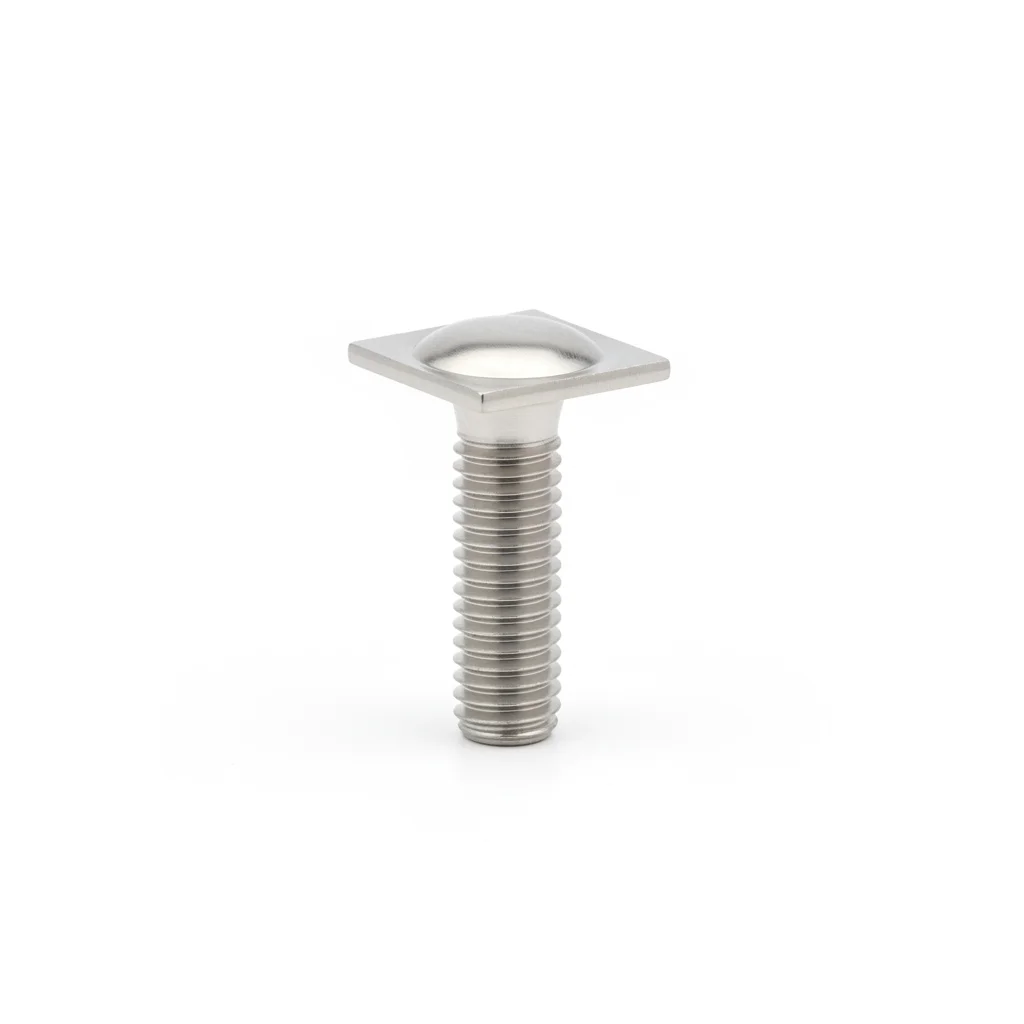
| Eccentric Block Bolt | Screen Plate Batten Bolt | |
|---|---|---|
| SPEC | M16-M20 Fine Thread | M10-M12 |
| MATERIAL | 42CrMoA | 304 |
| GRADE | 12.9 Grade | A2-70 |
| FINISH | HDG >=55um per ISO 1461 | HDG >=55um per ISO 1461 |
| CORROSION | C3 (ISO 12944-2) | C3 (ISO 12944-2) |
| TEMP | -20°C to +80°C | -20°C to +80°C |
| WEIGHT | ~0.5 kg/piece | ~0.5 kg/piece |
| MOQ | 100 pcs | 100 pcs |
| PACK | VCI paper + carton | VCI paper + carton |
| STD | ISO 898-1, GB/T 3098.1 | ISO 898-1, GB/T 3098.1 |
| USE | Eccentric Block Fastening | Screen Plate Fixing |
PROCEDURE
- Degrease the eccentric block keyway and seat with isopropyl alcohol, then check that the seating surface is flat within 0.1 mm per 100 mm using a straightedge.
- Apply a thin layer of anti-seize compound to the fine threads of the M16-M20 12.9 grade bolt, then fit a hardened washer under the bolt head.
- Insert the bolt through the eccentric block and shaft, add a second nut as a jam nut, and hand-tighten the assembly.
- Tighten the inner nut to the torque specified in the maintenance manual, then snug the outer jam nut against it; finally, install the cotter pin through the shaft end hole and spread its legs.
- After tightening, mark the nut and bolt with a torque seal paint line and perform a dynamic balance check to G6.3 grade or better per ISO 1940.
COMMON ERRORS
| ✕ WRONG | CONSEQUENCE | ✓ CORRECT |
|---|---|---|
| Using a single nut without a jam nut or cotter pin on the eccentric block bolt | Under 3500N centrifugal force at 500 RPM, the bolt can loosen, allowing the block to slide outward and shear the retaining ring, leading to the block flying off at >30m/s. | Always use triple locking: fine thread, double nut (jam nut), and a shaft end cotter pin. |
| Tightening the screen plate batten bolts without a spring washer or nylon lock nut | Vibration causes the bolts to loosen, the screen plate lifts, and unscreened material leaks into the finished product. | Use a spring washer plus a nylon lock nut on each batten bolt, and space battens no more than 300mm apart. |
MAINTENANCE
At each quarterly shutdown, tap the eccentric block bolts with a hammer—a dull sound indicates looseness; retorque if tension has dropped below 80% of the specified value. Also tap the four corners of the screen plate with a rubber hammer before each shift; a dull sound signals a loose batten bolt. Replace any fastener showing micro-cracks on threads or corrosion affecting more than 5% of the surface area or pitting deeper than 0.3mm.
B·Heavy Duty/Long Life
C4 Harsh per ISO 12944-2
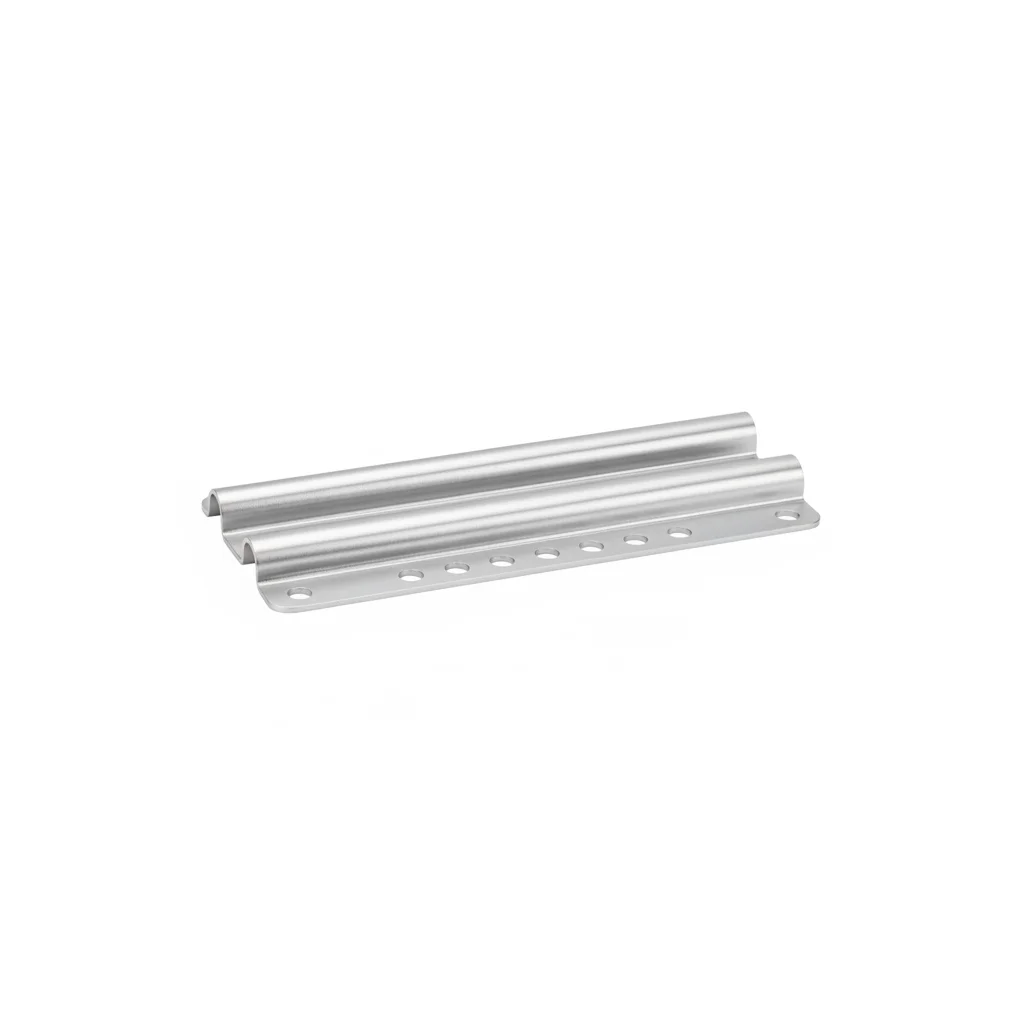
| Eccentric Block Bolt | Screen Plate Batten | |
|---|---|---|
| SPEC | M20 Fine Thread | Customized per Screen Plate |
| MATERIAL | 42CrMoA+NL20 | 316L |
| GRADE | 12.9 Grade | — |
| FINISH | HDG >=55um per ISO 1461 | HDG >=55um per ISO 1461 |
| CORROSION | C3 (ISO 12944-2) | C3 (ISO 12944-2) |
| TEMP | -20°C to +80°C | -20°C to +80°C |
| WEIGHT | ~0.5 kg/piece | ~0.5 kg/piece |
| MOQ | 100 pcs | 100 pcs |
| PACK | VCI paper + carton | VCI paper + carton |
| STD | ISO 898-1, GB/T 3098.1 | ISO 898-1, GB/T 3098.1 |
| USE | Large Rotary Screen | Food Grade Screening |
PROCEDURE
- Degrease the M20 fine-thread 42CrMoA+NL20 bolt and 316L batten surfaces with acetone to remove all oils and contaminants, ensuring a clean base for assembly.
- Apply a corrosion-inhibiting joint compound suitable for -20°C to +80°C service, and use PTFE-coated washers under both head and nut to reduce friction and prevent galling.
- Align the eccentric block and screen plate precisely, then tighten the bolts in a cross-pattern sequence to evenly distribute clamping force, verifying with a calibrated torque wrench.
- Perform a pull-test on 5% of the installed bolts to 80% of proof load, and replace any bolt that does not meet the acceptance threshold.
- Apply a weatherproof protective coating over the installed fasteners and place corrosion monitoring coupons near critical joints for ongoing assessment.
COMMON ERRORS
| ✕ WRONG | CONSEQUENCE | ✓ CORRECT |
|---|---|---|
| Reusing old 316L batten bolts when replacing a screen plate | Old bolts have thread fatigue, leading to inconsistent clamping force and premature loosening of the new plate. | Always install new 316L batten bolts with each screen plate replacement to ensure uniform clamp and prevent leakage. |
| Tightening M20 eccentric block bolts without verifying thread lubrication | Inconsistent friction leads to incorrect preload, risking loosening under 3500N centrifugal force. | Apply a specified anti-seize lubricant to the threads and use a calibrated torque wrench to achieve accurate preload. |
MAINTENANCE
Inspect the M20 fine-thread 12.9 grade bolts and 316L battens every 250 operating hours or 6 months, whichever comes first. Re-torque any bolt that has lost more than 20% of specified torque. Replace fasteners showing corrosion over >5% surface area or pitting deeper than 0.3mm. Schedule full disassembly of a 20% sample every 3 years and replace all critical fasteners every 5 years, logging all findings in CMMS. Keep tension loss within 15%.
Plan C · Export Food Grade
C5-M Extreme per ISO 12944-2
| Eccentric Block Bolt | Screen Plate Batten | |
|---|---|---|
| SPEC | M20 Fine Thread | Customized per Screen Plate |
| MATERIAL | 42CrMoA+NL20 | 316L |
| GRADE | 12.9 Grade | — |
| FINISH | HDG >=55um per ISO 1461 | HDG >=55um per ISO 1461 |
| CORROSION | C3 (ISO 12944-2) | C3 (ISO 12944-2) |
| TEMP | -20°C to +80°C | -20°C to +80°C |
| WEIGHT | ~0.5 kg/piece | ~0.5 kg/piece |
| MOQ | 100 pcs | 100 pcs |
| PACK | VCI paper + carton | VCI paper + carton |
| STD | ISO 898-1, GB/T 3098.1 | ISO 898-1, GB/T 3098.1 |
| USE | Large Rotary Screen | Food Grade Screening |
PROCEDURE
- Degrease the M20 fine-thread 42CrMoA+NL20 bolt and 316L batten surfaces with MEK solvent to achieve a surface roughness Ra <1.6um, ensuring maximum adhesion of protective coatings.
- Apply a marine-grade anti-corrosion compound rated for -50°C to 200°C and use PTFE-encapsulated washers to provide superior corrosion resistance and consistent clamping.
- Align the eccentric block and screen plate within 0.3mm, then tighten using a hydraulic tensioner to achieve precise preload, verifying 10% of bolts with PMI testing for material compliance.
- Conduct dye penetrant NDT on 10% of the installed bolts to detect any surface cracks, replacing any that show indications.
- Apply a protective sealant over the fastener heads and install permanent condition monitoring instrumentation to track bolt tension and corrosion in real time.
COMMON ERRORS
| ✕ WRONG | CONSEQUENCE | ✓ CORRECT |
|---|---|---|
| Using non-food-grade lubricants on 316L battens in food processing | Contaminates the food product and violates FDA/EU regulations, risking export rejection. | Use only FDA-approved anti-seize compounds and ensure all materials meet food-grade standards. |
| Skipping PMI verification on 42CrMoA+NL20 bolts | Material mix-up can lead to bolt failure under extreme loads, risking projectile ejection. | Perform PMI on a 10% sample of each batch to confirm alloy composition before installation. |
MAINTENANCE
Conduct inspections every 250 operating hours or 6 months, whichever comes first. Re-torque any bolt below 80% of specified torque. Replace fasteners with corrosion exceeding 5% surface area or pitting depth over 0.3mm. Every 3 years, perform full disassembly and inspection of a 20% sample; every 5 years, replace all critical fasteners irrespective of condition. Document all actions in CMMS, including environmental data, and ensure tension loss does not exceed 15%.
REFERENCED STANDARDS
References
SUPPLIER CAPABILITY
Quality, Delivery & Customization
Quality Control
- ✓MTC material certificates with every batch
- ✓Key parts sampled for hardness/salt spray/torque coefficient
- ✓100% inspection or AQL sampling before shipment
Delivery
- ✓Standard parts made to order: 7-15 days
- ✓Custom parts: 25-45 days
- ✓FOB/CIF/DDP supported
Customization
- ✓Drawing review and material matching
- ✓Non-standard sizes/heads/threads
- ✓Small-batch prototyping supported
Certification
- ✓Material certificates (MTC)
- ✓Spectrographic analysis reports
- ✓Salt spray test reports (on request)
MOQ: No MOQ for standard parts; custom parts assessed by process complexity
FAQ
FAQ
RELATED READING
Keep Reading & Next Step
BEYOND TECHNICAL SPECS
Finding the right factory, controlling quality, delivering on time — that's the real challenge. We cover fasteners, rubber, plastics, industrial textiles. One team, end to end.
SEE CAPABILITIES →