Belt Joint & Pulley Lagging Fasteners: Failure Risks and Selection
The belt joint is the weakest link: repeated bending stress causes bolt preload decay, leading to sequential breakage and belt tear. Lagging bolts under shear stress can detach, causing pulley damage. This page compares mechanical joint bolts and lagging fixing bolts for standard and high-tension conveyors, with material, grade, and coating options to mitigate these risks
RISK AUDIT // ENGINEERING DIAGNOSIS
Procurement Pitfall Guide
"Avoid these common failures in belt joints and pulley lagging."
QC-AUDIT // REV.5
SCALE 1:1 · 03 ITEMS
RISK-01
Mechanical joint bolts fatigue and loosen under repeated belt bending
Corrective Measures
RISK-02
Lagging bolts loosen, causing lagging to detach and be pulled into the pulley
Corrective Measures
RISK-03
Fastener corrosion failure in high temperature and high humidity environments
Corrective Measures
FIELD-SPECIFIC INSIGHT
Critical Inspection Points for Belt Joint and Lagging Fasteners
Belt joint bolts and lagging fixing bolts operate under cyclic bending and shear stress. The most overlooked difference is the anti-loosening mechanism: standard bolts rely on preload, while self-locking bolts with wedge washers maintain clamping force under vibration
WHAT TO CHECK
- 1Joint bolts: Grade 12.9 (42CrMoA) for high-tension belts; Grade 10.9 for standard. Specify self-locking design for long-distance conveyors
- 2Lagging bolts: Countersunk head M10-M16, Grade 10.9 minimum. Ensure countersink depth matches lagging thickness to avoid shear failure
- 3Anti-loosening: Wedge washers (Dacromet coated) for high-vibration applications; standard HDG for moderate conditions
- 4Consider Dacromet for C4 or high-humidity environments
- 5Replace bolts with >5% surface corrosion. Full replacement every 5 years
| Check | Why it matters | What to specify |
|---|---|---|
| Bolt grade and material | Grade 12.9 provides higher tensile strength for high-tension belts; Grade 10.9 sufficient for standard. Wrong grade leads to premature fatigue failure | 42CrMoA, Grade 12.9 for long-distance; 42CrMo, Grade 10.9 for standard. Certify per ISO 898-1 |
| Anti-loosening feature | Standard bolts loosen under cyclic bending; self-locking bolts with wedge washers maintain preload and prevent sequential failure | Self-locking joint bolts or wedge anti-loosening washers for high-tension or vibrating conveyors |
| Surface finish and coating thickness | Corrosion reduces bolt strength; Thinner coating or alternative needed for C4 | Dacromet for C4 or high humidity. Request coating thickness certificate |
| Countersunk bolt head depth | Insufficient depth causes bolt head to protrude, leading to shear failure and lagging detachment | Countersunk depth must match lagging thickness; verify with drawing or sample |
| Maintenance schedule | Regular torque inspection prevents loosening; replacement intervals avoid fatigue failure | Replace bolts with >5% corrosion; full replacement every 5 years |
All specifications must be verified against project-specific environmental classification (ISO 12944-2) and belt tension requirements. Material certificates and coating thickness reports should be requested
Evidence level: source-page-only
INDUSTRY TECH REFERENCE
Joint & Fastener Standards: Which Reference for Testing, Which for Sizing
Match your RFQ and acceptance against these numbers first — splice fatigue testing, clip static strength, steel-cord splices, and the applicable belt bodies each answer to a different reference.
The listed standards are all public standards, shown by number and scope for procurement navigation only; specific acceptance values follow the current standard text. No order-of-magnitude estimates are used in this slot.
INDUSTRY TECH REFERENCE
The Joint-Bending Fatigue Chain: Every Pulley Pass Adds Damage
Joint-bolt fatigue is not bad luck — every pulley pass is one bending cycle and the damage is quantifiable. Follow the chain to find where to verify and where to intervene.
- 1Every pulley pass bends the splice zone once — repeated bending is the dominant fatigue load on the joint
- 2Under repeated bending the joint bolts/pins enter shear fatigue: cracks initiate at the thread root or the pin section and preload decays step by step (DIN 22110-3 reproduces this on a test rig with 10,000 sawtooth cycles and 18 pulley passes per cycle, rating fatigue strength on the Wöhler curve)
- 3With preload gone the clip body lifts or pulls out and the splice opens — the joint becomes the weakest point of the belt, its dynamic splice efficiency below the belt body
- 4The splice tears and the belt breaks → unscheduled stoppage of the whole line. A conveyor is the throat of continuous production: Kennecott's copper output fell 36% from 2022 to 2023, attributed to conveyor problems
- 5Intervention point: size on dynamic splice efficiency, not static strength alone (DIN 22101:2011 already folds dynamic efficiency into belt rating selection); when joint life collapses, check belt spec, tension, and tracking first — do not rush to replace the clips
No order-of-magnitude estimates are used in this slot.
INDUSTRY TECH REFERENCE
Clip Metal by Medium: Six Tiers to Match
For the metal behind belt clips and their bolts. Judge the medium first, then the tier — a wrong alloy fails faster than a wrong size: too hard it cracks under impact, too soft it wears through, and ordinary carbon steel fails by corrosion in acid or chemical service.
| Medium / duty | Metal tier | Note |
|---|---|---|
| Normal dry, low-corrosion duty | Steel / galvanized steel | Baseline tier; carbon steel is explicitly not recommended for acid or chemical-corrosion service |
| Grain / explosive-dust environment | Everdur (copper-silicon alloy) | Spark-free — the OEM-stated option; guards against dust ignition |
| Mine water / chemical attack | RustAlloy (low-chromium stainless) | The tier for mine water and chemical attack |
| High abrasion, no impact | MegAlloy (high-abrasion alloy) | Abrasion-led tier; it can still crack under feed impact — re-check against impact first |
| Selection order | Pick the clip type on three parameters first, then the metal | The three parameters are belt rated tension, belt thickness, and minimum pulley diameter; metal comes second, not first |
| Acceptance stance | Medium-based alloy selection is an OEM-stated acceptance item | Failure means line stoppage plus fire risk — price by the system-downtime risk, not the unit price |
No order-of-magnitude estimates are used in this slot.
INDUSTRY TECH REFERENCE
Steel-Cord Belts: Why Mechanical Joints Are Off the Table
High-tension steel-cord belts usually run long, high-capacity lines — settle the joint type before ordering, because mechanical joints have no option at this tier.
Mechanical joints cover only the mid-to-low tension range of fabric-cord belts: taking bolt solid plate fasteners as the example, the rating runs 150-620 PIW (300-1080 kN/m), for belt thickness 5-50 mm and minimum pulley diameters 300-1220 mm. Steel-cord belts are outside this range — cord strength is carried by the steel ropes, which clip pins cannot grip; mechanical joints and cold vulcanizing are both excluded, leaving hot vulcanizing as the only option. Vulcanized splices step up in 1-5 grades by belt strength, up to a five-step splice at St10000 with step lengths of no less than 100 times the rope diameter, requiring dedicated hot-press equipment and skilled crews. Note also that the simple splices in the ISO 15236 series (Fir Tree, Organ Pipe, Finger) apply only to low-utilization, high-safety-factor service — not a workaround for vulcanizing.
No order-of-magnitude estimates are used in this slot.
INDUSTRY TECH REFERENCE
The Joint Procurement Ledger: Price It in Downtime Hours, Not Unit Price
Joint bolts and belt clips cost little per piece, but a failure stops the whole line — or starts a fire. Run purchasing and supplier-change decisions on these ledgers.
- Downtime prices output directly: unplanned downtime across industry averages about $125,000 per hour (2023 survey of 3,215 maintenance decision-makers, industry-wide)
- Conveyor problems eat output directly: Kennecott's copper output fell 36% from 2022 to 2023, attributed to conveyor issues
- Planned maintenance is always cheaper than breakdown repair; once a machine is past the "just maintain it well" stage, repeated small fixes are a death by a thousand flies — move to a full rebuild-or-replace decision
- Demand measured data before switching suppliers: an "equivalent replacement" belt with poor friction performance cut joint life from 18 months to 4 months
- Price on system-downtime risk, not unit price; the OEM-stated "pick the metal by medium" is an acceptance item — write it into the RFQ
No order-of-magnitude estimates are used in this slot.
PLAN COMPARISON
Three-Plan Core Parameter Comparison
Compare row by row. Click column headers to jump to plan details.
| A · A · Standard Conveyor | B · B · Long Distance / High Tension | C · Plan C · Heavy Load / Dusty Environment | |
|---|---|---|---|
| 1. JOINT BOLT | |||
| SPEC | M12-M20 | M16-M24 | M16-M24 |
| MATERIAL | 42CrMoA | 42CrMoA | 42CrMoA |
| GRADE | Grade 12.9 | Grade 12.9 | Grade 12.9 |
| FINISH | HDG, >=55um per ISO 1461 | HDG, >=55um per ISO 1461 | HDG, >=55um per ISO 1461 |
| 2. LAGGING COUNTERSUNK BOLT | |||
| SPEC | M10-M16 | M10-M16 | M10-M16 |
| MATERIAL | 42CrMo | Carbon Steel Quenched + Dacromet | Carbon Steel Quenched + Dacromet |
| GRADE | Grade 10.9 | Dacromet | Dacromet |
| FINISH | HDG, >=55um per ISO 1461 | HDG, >=55um per ISO 1461 | HDG, >=55um per ISO 1461 |
SELECTION GUIDE
Choose the Right Fastener Plan
| Operating condition | Recommended option | Key basis |
|---|---|---|
| General conveyor, C3 standard environment (ISO 12944-2) | Plan A: joint bolt Grade 12.9 (42CrMoA, M12-M20) + lagging countersunk bolt Grade 10.9 (M10-M16), countersink depth ≥60% of lagging thickness | ISO 898-1 fastener grades; DIN 22101 conveyor belt design; ISO 12944-2 C3 |
| Long-distance / high-tension conveyor, C4 harsh environment (ISO 12944-2) | Plan B: self-locking joint bolt Grade 12.9 (42CrMoA, M16-M24) + wedge anti-loosening washer (carbon steel quenched + Dacromet, M10-M16) | ISO 898-1; DIN 22101; wedge-type anti-loosening washer maintains preload under vibration |
| Mine/port heavy load + dust, C4 harsh environment (ISO 12944-2) | Plan C: self-locking joint bolt Grade 12.9 (M16-M24) + wedge anti-loosening washer (Dacromet) + IP65 sealed bearing | DIN 22101 conveyor belt design; ISO 12944-2 C4; Dacromet for C4 or high-humidity environments |
A · Standard Conveyor
C3 standard environment per ISO 12944-2
| Joint Bolt | Lagging Countersunk Bolt | |
|---|---|---|
| SPEC | M12-M20 | M10-M16 |
| MATERIAL | 42CrMoA | 42CrMo |
| GRADE | Grade 12.9 | Grade 10.9 |
| FINISH | HDG, >=55um per ISO 1461 | HDG, >=55um per ISO 1461 |
| CORROSION | C3 (ISO 12944-2) | C3 (ISO 12944-2) |
| TEMP | -20°C to +80°C | -20°C to +80°C |
| WEIGHT | ~0.5 kg/piece | ~0.5 kg/piece |
| MOQ | 100 pcs | 100 pcs |
| PACK | VCI paper + carton | VCI paper + carton |
| STD | ISO 898-1, GB/T 3098.1 | ISO 898-1, GB/T 3098.1 |
| USE | Belt Mechanical Joint | Pulley Lagging Fixing |
PROCEDURE
- Clean the belt joint area and bolt holes with a lint-free cloth and solvent to remove any grease or debris.
- Insert the Grade 12.9 joint bolt (M12-M20, 42CrMoA) through the joint plates, aligning the holes within the specified tolerance.
- Hand-tighten the nut, then use a calibrated torque wrench to tighten to the specified torque value, ensuring even clamping across the joint.
- Apply a thread-locking adhesive (impact-resistant type) to the nut threads before final tightening to secure against vibration-induced loosening.
- After tightening, mark the bolt head and nut with a paint pen to visually indicate any future rotation during routine inspections.
COMMON ERRORS
| ✕ WRONG | CONSEQUENCE | ✓ CORRECT |
|---|---|---|
| Using Grade 8.8 bolts instead of Grade 12.9 for mechanical joints | The bolts may fracture within days due to fatigue from repeated bending stress, leading to belt joint failure and costly downtime. | Always use Grade 12.9 bolts (42CrMoA) for belt joints, as specified in ISO 898-1, to withstand the cyclic bending stresses. |
| Installing lagging countersunk bolts without checking countersink depth | If the countersink is too shallow, the bolt head protrudes and is scraped by the belt, causing lagging detachment and pulley damage. | Ensure countersink depth is at least 60% of lagging thickness, leaving the remaining 40% for wear, and verify with a depth gauge before installation. |
MAINTENANCE
Inspect joint bolt torque every 2 weeks (a key preventive task). Listen for any 'slapping sound' when the belt joint passes over the pulley—if heard, stop immediately and inspect. For lagging, tap the lagging surface by hand every 3 months; a hollow sound indicates debonding. Replace bolts showing >5% surface corrosion, and consider full replacement every 5 years.
B · Long Distance / High Tension
C4 harsh environment per ISO 12944-2 (long-distance high-tension service)
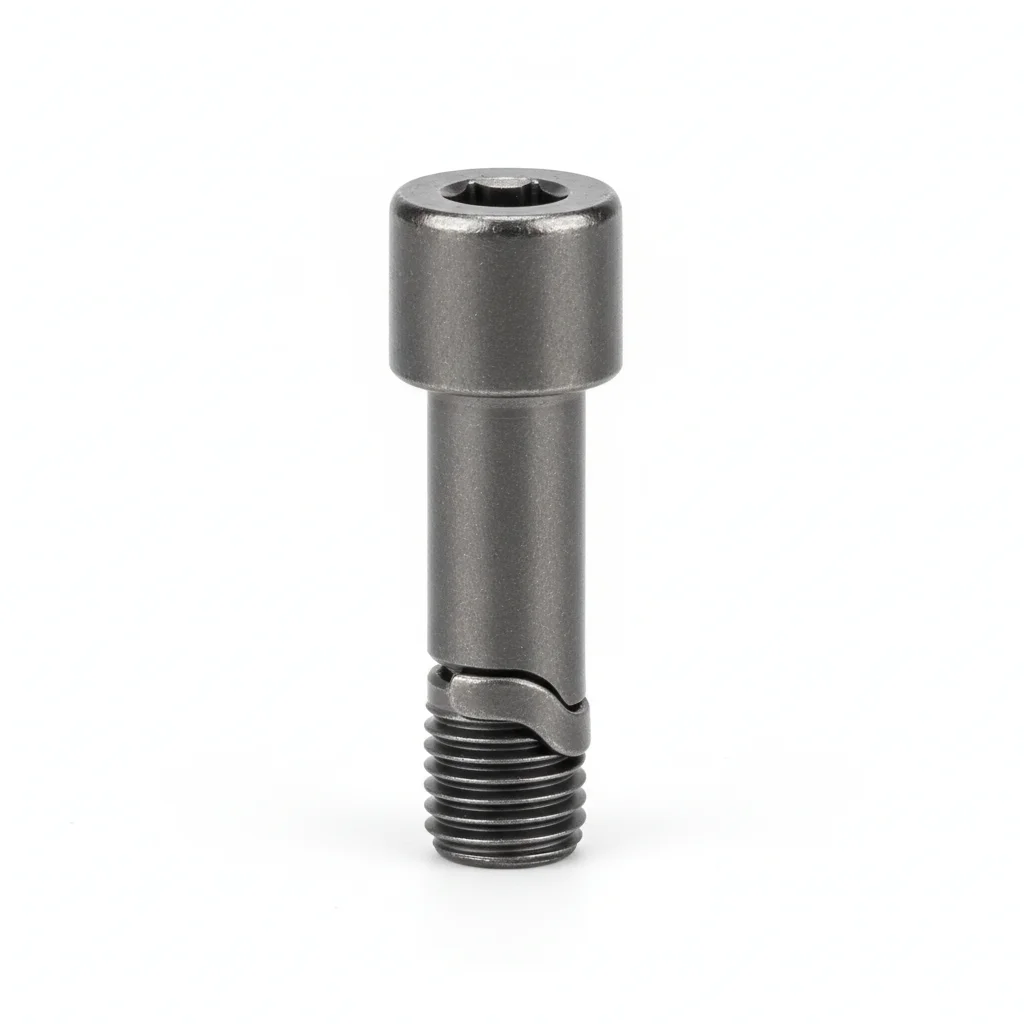
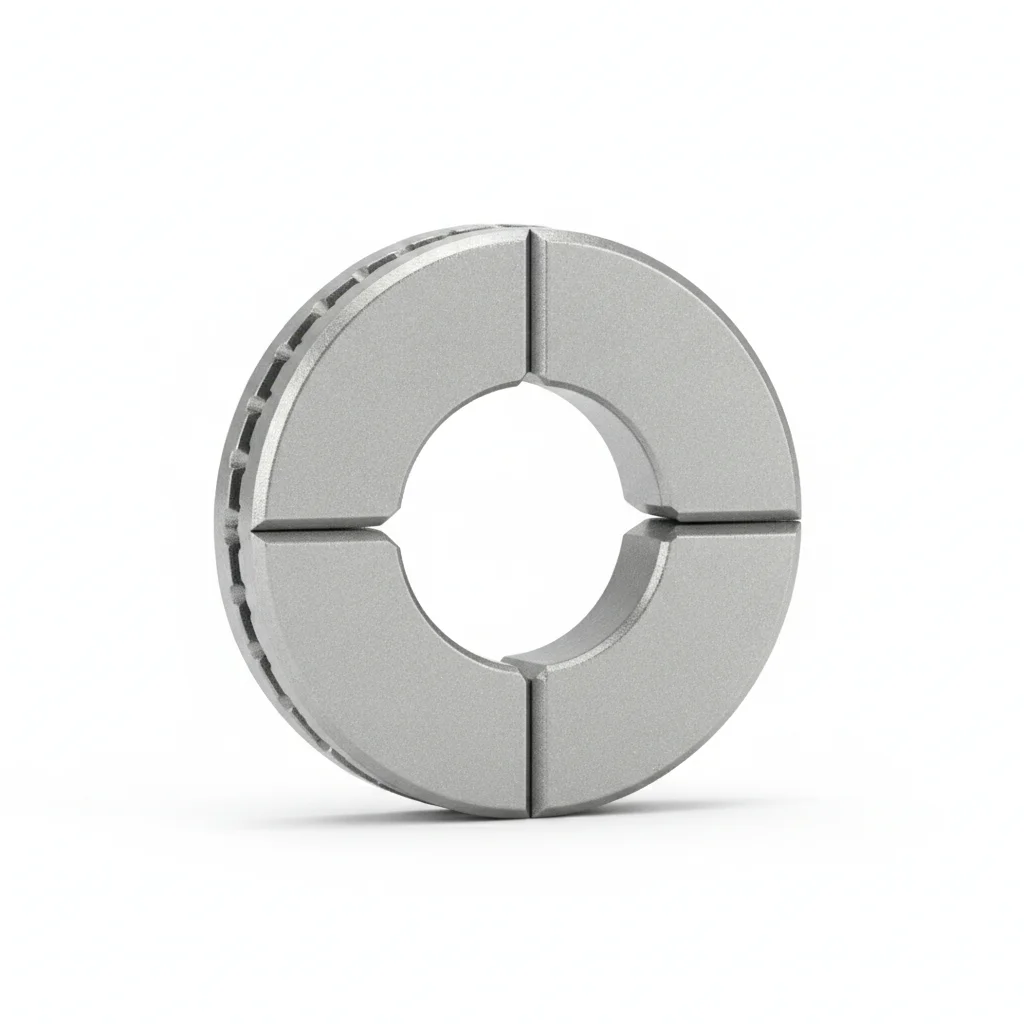
| Self-Locking Joint Bolt | Wedge Anti-Loosening Washer (M10-M16) | |
|---|---|---|
| SPEC | M16-M24 | M10-M16 |
| MATERIAL | 42CrMoA | Carbon Steel Quenched + Dacromet |
| GRADE | Grade 12.9 | Dacromet |
| FINISH | HDG, >=55um per ISO 1461 | HDG, >=55um per ISO 1461 |
| CORROSION | C3 (ISO 12944-2) | C3 (ISO 12944-2) |
| TEMP | -20°C to +80°C | -20°C to +80°C |
| WEIGHT | ~0.5 kg/piece | ~0.5 kg/piece |
| MOQ | 100 pcs | 100 pcs |
| PACK | VCI paper + carton | VCI paper + carton |
| STD | ISO 898-1, GB/T 3098.1 | ISO 898-1, GB/T 3098.1 |
| USE | Long Distance High Tension Belt Joint | Anti-loosening for all lagging bolts |
PROCEDURE
- 1. Clean the belt joint area and pulley surface with acetone to remove grease and dust; verify surface roughness Ra <3.2 µm.
- 2. Insert self-locking joint bolts (M16-M24, Grade 12.9) through the joint plates, ensuring the serrated head seats fully; for lagging, position wedge anti-loosening washers under the countersunk bolt heads.
- 3. Tighten bolts progressively in a crisscross pattern to the specified torque (refer to ISO 898-1 for M16-M24 values) using a calibrated wrench; check 10% of bolts with an independent torque verification tool.
- 4. Apply thread-locking adhesive (impact-resistant type) to each bolt thread before final tightening; for lagging bolts, verify countersink depth ≥60% of lagging thickness.
- 5. Perform a pull-test on 5% of installed bolts to 80% of proof load; replace any bolt that slips or fails, then re-torque the joint.
- 6. Mark each bolt head with torque seal paint and record installation data (torque values, batch numbers) for traceability.
COMMON ERRORS
| ✕ WRONG | CONSEQUENCE | ✓ CORRECT |
|---|---|---|
| Reusing old wedge washers or mixing them with standard flat washers | Wedge washers lose their locking ramp geometry, allowing the lagging bolts to loosen under vibration and shear, leading to lagging detachment and pulley jam. | Use new Dacromet-coated wedge washers (M10-M16) with each bolt; ensure the ramp orientation matches the tightening direction. |
| Overtightening the self-locking joint bolts beyond the specified torque to 'make sure' | Exceeding Grade 12.9 yield strength causes bolt elongation or fracture, weakening the joint and risking belt tear. | Tighten to the torque range given in the product spec (refer to ISO 898-1); use a torque wrench and verify with a torque verification tool. |
| Ignoring the 'slapping sound' at the joint and continuing operation | The sound indicates joint loosening or bolt fracture; continued operation accelerates damage, leading to belt tear and unplanned downtime. | Stop the conveyor immediately and inspect joint bolts; re-torque any loose bolts and replace any fractured ones before resuming. |
MAINTENANCE
Inspect joint bolt torque and lagging integrity every 2 weeks (listen for slapping sound); check wedge washers for wear and corrosion every 3 months. Replace bolts with >5% surface corrosion. Full replacement of critical fasteners every 5 years. Document all torque checks and replacements.
Plan C · Heavy Load / Dusty Environment
C4 harsh environment per ISO 12944-2 (mine/port heavy load with dust)
| Self-Locking Joint Bolt | Wedge Anti-Loosening Washer (M10-M16) | |
|---|---|---|
| SPEC | M16-M24 | M10-M16 |
| MATERIAL | 42CrMoA | Carbon Steel Quenched + Dacromet |
| GRADE | Grade 12.9 | Dacromet |
| FINISH | HDG, >=55um per ISO 1461 | HDG, >=55um per ISO 1461 |
| CORROSION | C3 (ISO 12944-2) | C3 (ISO 12944-2) |
| TEMP | -20°C to +80°C | -20°C to +80°C |
| WEIGHT | ~0.5 kg/piece | ~0.5 kg/piece |
| MOQ | 100 pcs | 100 pcs |
| PACK | VCI paper + carton | VCI paper + carton |
| STD | ISO 898-1, GB/T 3098.1 | ISO 898-1, GB/T 3098.1 |
| USE | Extreme Conditions / Highest Protection | Extreme Conditions / Highest Protection |
PROCEDURE
- 1. Degrease all bolt holes and mating surfaces with solvent; ensure surfaces are free of dust and moisture to achieve proper seating.
- 2. For lagging, install countersunk bolts (M10-M16, Grade 10.9) with wedge anti-loosening washers; verify countersink depth ≥60% of lagging thickness for shear resistance.
- 3. Tighten joint bolts (M16-M24, Grade 12.9) and lagging bolts to the specified torque (per ISO 898-1) using a calibrated wrench; check 10% with an independent torque tool.
- 4. Apply thread-locking adhesive (impact-resistant type) to all bolts; for lagging bolts, use a wedge washer with Dacromet coating for corrosion resistance.
- 5. Conduct a pull-test on 5% of installed bolts to 80% of proof load; replace any that fail, then re-torque.
- 6. Seal exposed bolt heads with a protective coating (e.g., Dacromet touch-up) and install dust covers over critical joints if feasible.
COMMON ERRORS
| ✕ WRONG | CONSEQUENCE | ✓ CORRECT |
|---|---|---|
| Using standard bolts instead of self-locking joint bolts in dusty high-vibration environments | Standard bolts loosen under cyclic bending and vibration, leading to sequential breakage and belt tear; dust accelerates wear. | Use self-locking joint bolts (Grade 12.9) with serrated head design to maintain clamp force under vibration. |
| Installing lagging bolts with insufficient countersink depth | Bolt head protrudes, causing shear failure and lagging detachment; lagging can be pulled into the pulley, jamming the bearing. | Ensure countersink depth is at least 60% of lagging thickness (remaining 40% for wear); verify with a depth gauge. |
| Skipping the wedge washer on lagging bolts in corrosive environments | Without wedge washers, bolts loosen from vibration; corrosion (C4) reduces bolt strength, leading to premature failure. | Always use wedge anti-loosening washers (Dacromet coated) for lagging bolts; replace washers if corrosion >5% surface area. |
MAINTENANCE
Inspect joint bolts and lagging every 2 weeks for loosening (listen for slapping sound); check for corrosion and dust ingress every 3 months. Replace bolts with >5% surface corrosion. Full replacement of all critical fasteners every 5 years. Document all inspections and replacements.
REFERENCED STANDARDS
References
SUPPLIER CAPABILITY
Quality, Delivery & Customization
Quality Control
- ✓MTC material certificates with every batch
- ✓Key parts sampled for hardness/salt spray/torque coefficient
- ✓100% inspection or AQL sampling before shipment
Delivery
- ✓Standard parts made to order: 7-15 days
- ✓Custom parts: 25-45 days
- ✓FOB/CIF/DDP supported
Customization
- ✓Drawing review and material matching
- ✓Non-standard sizes/heads/threads
- ✓Small-batch prototyping supported
Certification
- ✓Material certificates (MTC)
- ✓Spectrographic analysis reports
- ✓Salt spray test reports (on request)
MOQ: No MOQ for standard parts; custom parts assessed by process complexity
FAQ
Frequently Asked Questions
RELATED READING
Keep Reading & Next Step
BEYOND TECHNICAL SPECS
Finding the right factory, controlling quality, delivering on time — that's the real challenge. We cover fasteners, rubber, plastics, industrial textiles. One team, end to end.
SEE CAPABILITIES →