Idler Bearing Housing Fasteners: Material & Coating Comparison
A single loose bearing housing bolt can cause idler displacement, belt misalignment, and belt scrapping. Compare fastener materials (Carbon Steel Dacromet, 42CrMo, 304, 316L), grades (8.8, 10
FIELD-SPECIFIC INSIGHT
3 Critical Checks for Idler Bearing Fastener Selection
In conveyor idlers, fastener failure often starts at the thread root under vibration. The choice between Grade 8.8 and 10.9, and between carbon steel and stainless circlips, directly impacts fatigue life and corrosion resistance. Below are the key differences to specify in your procurement
WHAT TO CHECK
- 1Bearing housing bolt: Grade 8.8 carbon steel Dacromet for general conveying; Grade 10.9 42CrMo for heavy load/dusty environments to resist fatigue fracture
- 2Labyrinth seal circlip: 65Mn carbon steel for standard use; 304 stainless for dust/moisture; 316L for extreme corrosion—insufficient radial stiffness leads to ejection and bearing contamination
- 3Shaft end retaining ring: Use cotter pin or nylon nut for anti-loosening; cost-reduced designs risk axial bearing movement and seizure
| Check | Why it matters | What to specify |
|---|---|---|
| Bolt grade vs. Load | Grade 8.10 | Specify Grade 10.9 for heavy load conveyors; include wedge lock washers |
| Circlip material vs. Environment | 65Mn corrodes in moisture; 304 resists dust/moisture; 316L for extreme C5-M environments | Match circlip material to ISO 12944-2 corrosivity category (C3, C4, C5-M) |
| Coating thickness and standard | Thinner coatings risk pitting >0 | — |
| Retaining ring anti-loosening | Vibration loosens plain circlips; axial bearing movement leads to seizure within days | Specify cotter pin or nylon-insert lock nut for shaft end retention |
All fastener torque values and inspection intervals must be documented per CMMS. Maximum allowable tension loss: 15%
Evidence level: source-page-only
RISK AUDIT // ENGINEERING DIAGNOSIS
Procurement Pitfall Guide
"Vibration, seal ejection, and shaft-end loosening: the three failure modes that stop an idler—and how to buy against them."
QC-AUDIT // REV.5
SCALE 1:1 · 03 ITEMS
RISK-01
Idler Bearing Housing Bolt Fatigue Fracture Under Vibration
Corrective Measures
RISK-02
Labyrinth Seal Circlip Ejection Leading to Bearing Water and Dust Ingress
Corrective Measures
RISK-03
Idler Shaft End Retaining Ring Detachment Leading to Bearing Axial Movement
Corrective Measures
INDUSTRY TECH REFERENCE
Retaining-Ring & Idler Standards for Bearing-Housing Fasteners
Check these references first in RFQs and acceptance. Retaining rings follow the current editions — the 1986 versions are withdrawn; idler selection follows CEMA 502 methodology; whole-machine acceptance follows GB/T 10595; underground duty adds MSHA requirements.
The listed standards are all public standards, shown by number and scope for procurement navigation only; specific acceptance values follow the current standard text. No order-of-magnitude estimates are used in this slot.
INDUSTRY TECH REFERENCE
Idler Zones at a Glance: Spacing, L10 Ratings, and Failure Signals
Fit the bearing-housing fasteners to the idler zone: spacing sets the load per idler, the L10 rating sets the bearing tier, and the failure signals set the inspection schedule. One table aligns all three.
| Zone | Spacing | L10 rating (@500 rpm) | Failure signals and inspection |
|---|---|---|---|
| Carry idlers (line main body) | 0.9–1.5 m (3–5 ft) | Series B/C 30,000 h; series D/E 60,000 h | Seized roller = ignition source; listen/temperature check the whole line |
| Return idlers | about 3 m (10 ft) | Series B/C 30,000 h; series D/E 60,000 h | Seizure → belt-bottom sliding wear and trapped spillage; same-line checks |
| Impact idlers at loading points | densified to one per 0.3 m (1 ft); roller diameter ≥6 in | Series B/C 30,000 h; series D/E 60,000 h | Highest fastener fatigue risk in the impact zone; priority re-tightening and checks |
No order-of-magnitude estimates are used in this slot.
INDUSTRY TECH REFERENCE
From a Broken Bearing-Housing Bolt to a Line Fire
A failed bearing-housing fastener does not break the belt directly — it first turns one idler into a dead roller, and the dead roller sets the belt on fire. Walk the chain to see where to intervene at each step.
- 1Start: the bearing-housing bolt fatigues, fractures, or loosens under vibration and cyclic load — a line has thousands of idlers, each spinning at a speed set by the belt (RPM = belt speed in fpm × 12 / (roller diameter × π)), every one of them in a cyclic load
- 2The broken bolt lets the idler drop or lose its fixture → the roller seizes — seized idlers are the most common ignition source in conveyor fires
- 3The belt slides and rubs on the dead roller, heating locally — drum friction tests cap surface temperature at 500°C, and rubber reaches its ignition point
- 4The belt is not just the thing ignited — it is the main fuel carrier, and a fire can spread along kilometers of roadway
- 5Case: June 2018, Port Kembla, Australia — one failed idler bearing caused a belt fire that took 70 firefighters several days to put out
- 6Interception: listening/temperature rounds stop the dead roller before ignition; underground regulations mandate slip and sequence switches (§75.1102) plus CO sensors (§75.1103); bearing-housing bolts go on the routine re-tightening round
No order-of-magnitude estimates are used in this slot.
INDUSTRY TECH REFERENCE
Idler-Area Inspection: Three Lines — Listen, Measure, Sensor Coverage
Seized idlers are the number-one ignition source on a line, and the inspection needs no high tech — listening and temperature checks find the dead roller, and underground duty adds mandated sensors.
- Listen/temperature: does the roller turn, any abnormal noise, any hot surface — a line has thousands of idlers and any seized one is an ignition source
- Underground mandates (30 CFR Part 75 Subpart L): slip and sequence switches (§75.1102) plus automatic fire sensors reading CO (§75.1103, spaced ≤1000 ft along the belt entry, densified to ≤350 ft below 50 fpm air velocity)
- Sensor upkeep: calibration every ≤31 days, functional tests every ≤7 days (MSHA requirement)
- Drive protection: temperature-actuated sprinklers (foam) cover the drive pulley and 50 ft of flame-resistant belt downstream
- Anti-static: belt cover surface resistance below 300 MΩ to prevent electrostatic ignition of dust
- Belt drift is not the belt's fault first: loose frame/training-idler fasteners are a common root cause — correct the idlers before replacing the belt, and fold bearing-housing bolts into the routine re-tightening round
No order-of-magnitude estimates are used in this slot.
INDUSTRY TECH REFERENCE
The Bolt on an Idler: Priced by Downtime Risk, Not Unit Cost
Set the pricing logic straight before ordering: an idler bearing-housing fastener costs almost nothing per piece, yet it guards the switch that stops the whole line.
A conveyor line is the throat of continuous production, and stoppages are priced against output — Kennecott's copper output fell 36% year-on-year from 2022 to 2023, attributed to conveyor problems. Industry-wide, unplanned downtime runs about $125,000 per hour (2023 survey of 3,215 maintenance decision-makers). Contrast that with Port Kembla in 2018, where a single failed idler bearing caused a belt fire that 70 firefighters fought for days. That is why idler bolts, circlips, and retaining rings are priced by system downtime risk, not unit cost — the difference between class 8.8 and 10.9, or carbon steel and stainless, is not a few cents; it is the probability of keeping the whole line running. The practitioner view points the same way: planned maintenance is always cheaper than breakdown repair.
No order-of-magnitude estimates are used in this slot.
PLAN COMPARISON
Three-Plan Core Parameter Comparison
Compare row by row. Click column headers to jump to plan details.
| A · A · General Material Conveying | B · B · Heavy Load/Dusty Environment | C · Plan C · Heavy Load/Dusty Environment | |
|---|---|---|---|
| 1. BEARING HOUSING BOLT | |||
| SPEC | M10-M16 | M12-M16 | M12-M16 |
| MATERIAL | Carbon Steel Dacromet | 42CrMo | 42CrMo |
| GRADE | Grade 8.8 | 10.9 | 10.9 |
| FINISH | HDG >=55um per ISO 1461 | HDG >=55um per ISO 1461 | HDG >=55um per ISO 1461 |
| 2. LABYRINTH SEAL CIRCLIP | |||
| SPEC | Per Bearing Model | Per Bearing Model | Per Bearing Model |
| MATERIAL | EPDM Rubber | 304 | 316L |
| FINISH | HDG >=55um per ISO 1461 | HDG >=55um per ISO 1461 | HDG >=55um per ISO 1461 |
A · General Material Conveying
C3 (ISO 12944-2), -20°C to +80°C, HDG ≥55μm
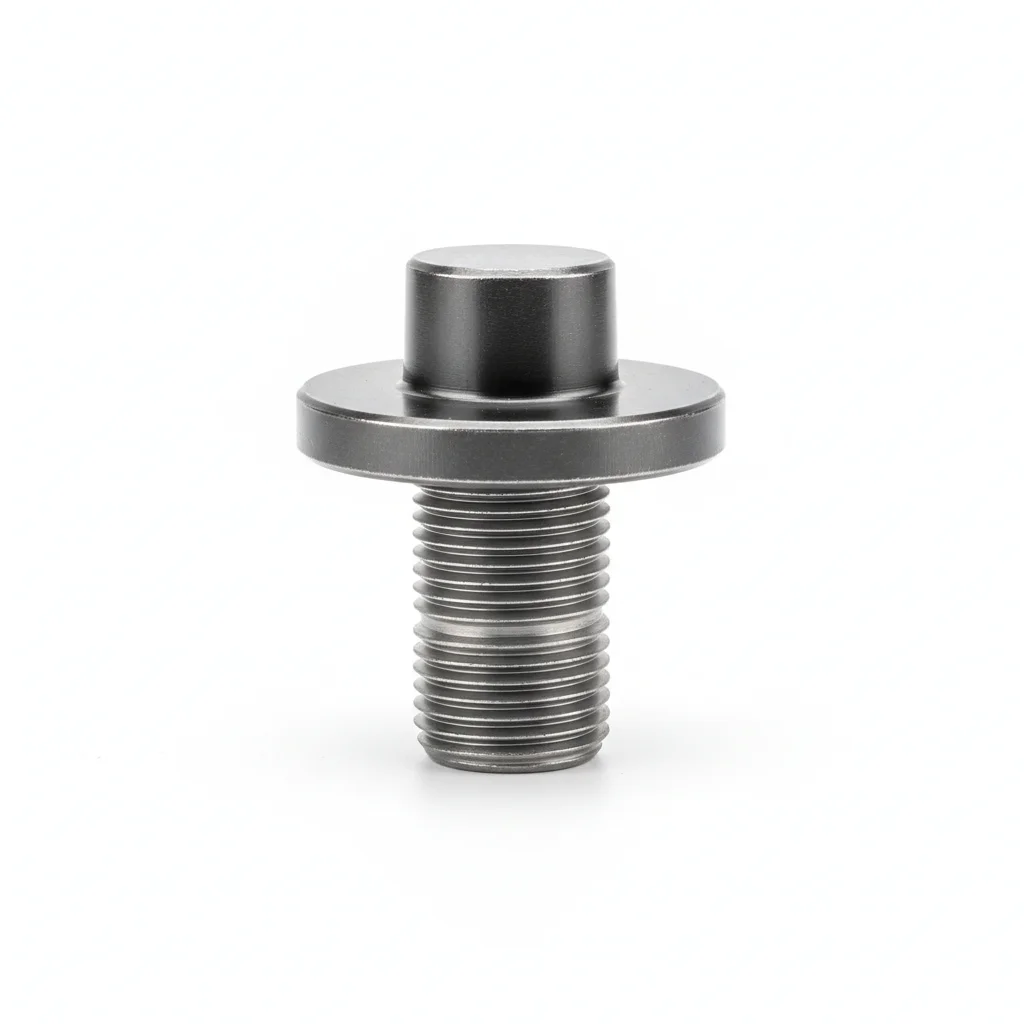
| Bearing Housing Bolt | Labyrinth Seal Circlip | |
|---|---|---|
| SPEC | M10-M16 | Per Bearing Model |
| MATERIAL | Carbon Steel Dacromet | EPDM Rubber |
| GRADE | Grade 8.8 | — |
| FINISH | HDG >=55um per ISO 1461 | HDG >=55um per ISO 1461 |
| CORROSION | C3 (ISO 12944-2) | Not applicable (polymer) |
| TEMP | -20°C to +80°C | -20°C to +80°C |
| WEIGHT | ~0.5 kg/piece | ~0.5 kg/piece |
| MOQ | 100 pcs | 100 pcs |
| PACK | VCI paper + carton | VCI paper + carton |
| STD | ISO 898-1, GB/T 3098.1 | ISO 898-1, GB/T 3098.1 |
| USE | Idler Bearing Housing Fixation | Idler Seal Fixation |
PROCEDURE
- Degrease bearing housing and bolt threads with isopropyl alcohol; verify the housing face is free of burrs and within 0.1mm flatness per 100mm.
- Place a spring washer under the Grade 8.8 bolt head and fit a nylon lock nut; for high-vibration nodes, add a wedge lock washer under the nut.
- Hand-start all bolts, then tighten in a star pattern to seat the joint; use a calibrated torque wrench and confirm each bolt reaches the specified torque without exceeding it.
- Check that the labyrinth seal circlip is fully seated in its groove; using needle-nose pliers, confirm no more than 0.5mm axial play.
- Mark each bolt head and nut with a torque seal paint line; record torque values and the circlip play check in the QA log.
COMMON ERRORS
| ✕ WRONG | CONSEQUENCE | ✓ CORRECT |
|---|---|---|
| Reusing old bearing housing bolts or circlips from a previous idler | Worn threads or a fatigued circlip can loosen under the 200-600rpm vibration, leading to bearing housing displacement and belt misalignment. | Fit new Grade 8.8 bolts and a new 65Mn circlip each time an idler is replaced; verify the circlip's radial stiffness before assembly. |
| Overtightening the circlip or forcing it into the groove with a screwdriver | Deforms the circlip, reducing its radial stiffness and causing ejection under centrifugal force, which lets dust and moisture into the bearing. | Use circlip pliers to compress the circlip evenly; confirm it snaps fully into the groove with no more than 0.5mm play. |
| Omitting the wedge lock washer on critical vibration nodes | Without a wedge-locking mechanism, transverse vibration can cause the nut to rotate loose, allowing the bearing housing bolt to fracture at the thread root. | Install a wedge lock washer under the nut on each bearing housing bolt, especially on idlers subject to belt joint impacts. |
MAINTENANCE
During quarterly inspections, tap the bearing housing lightly with a hammer—a dull sound with residual vibration indicates looseness; re-torque any bolt that has loosened. If looseness recurs twice at the same idler position, upgrade to Grade 10.9 bolts. Rotate each idler by hand; it should spin freely without abnormal noise, and check that the circlip remains seated with no more than 0.5mm play. Replace circlips in batches every 2 years to avoid elastic degradation from thermal cycling.
B · Heavy Load/Dusty Environment
C4 Harsh per ISO 12944-2
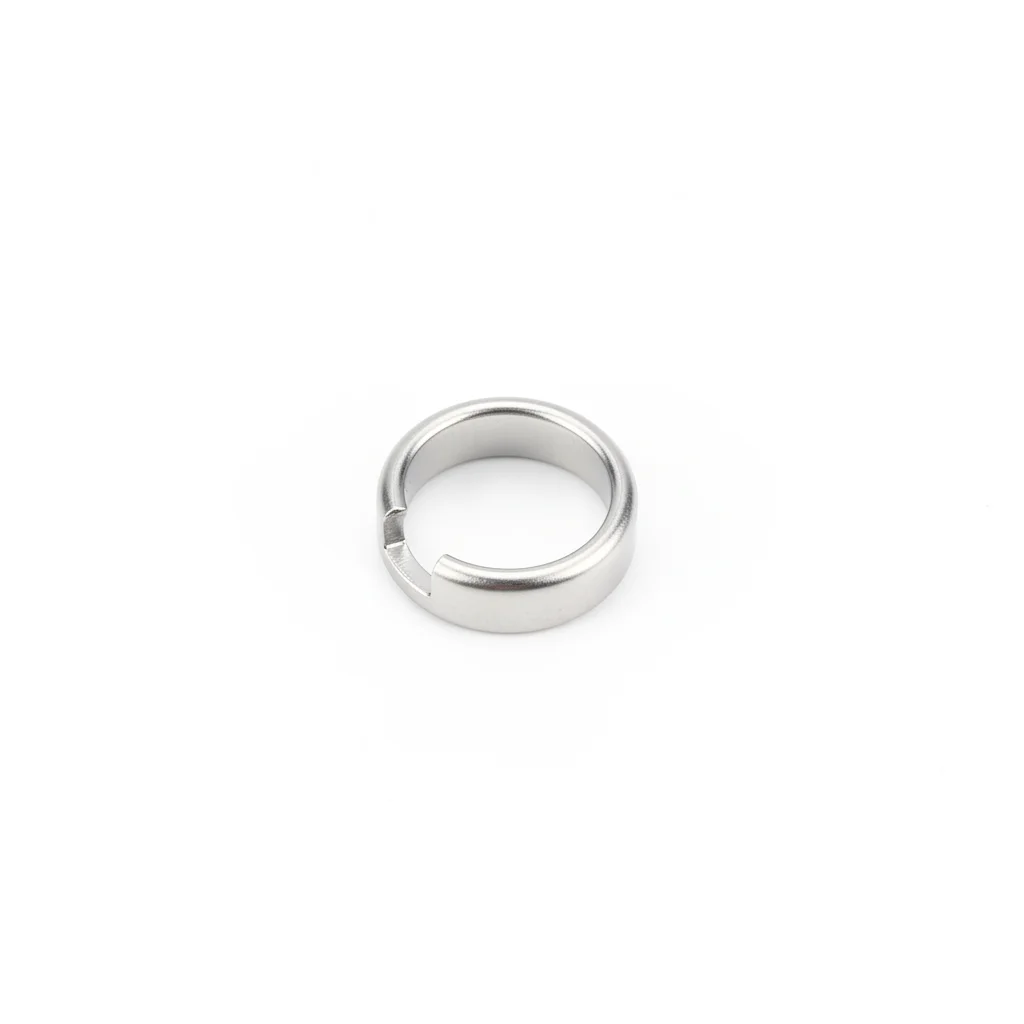
| Bearing Housing Bolt | Circlip | |
|---|---|---|
| SPEC | M12-M16 | Per Bearing Model |
| MATERIAL | 42CrMo | 304 |
| GRADE | 10.9 | — |
| FINISH | HDG >=55um per ISO 1461 | HDG >=55um per ISO 1461 |
| CORROSION | C3 (ISO 12944-2) | C3 (ISO 12944-2) |
| TEMP | -20°C to +80°C | -20°C to +80°C |
| WEIGHT | ~0.5 kg/piece | ~0.5 kg/piece |
| MOQ | 100 pcs | 100 pcs |
| PACK | VCI paper + carton | VCI paper + carton |
| STD | ISO 898-1, GB/T 3098.1 | ISO 898-1, GB/T 3098.1 |
| USE | Heavy Load Conveyor Idler | Dust/Moisture Environment |
PROCEDURE
- Clean bearing housing faces and bolt threads with acetone to remove grease and dust; ensure surfaces are dry before assembly.
- Fit each M12-M16 42CrMo Grade 10.9 bolt with a wedge lock washer under the head and a 304 stainless circlip for the labyrinth seal; verify circlip is fully seated in its groove with no more than 0.5mm play.
- Hand-tighten bolts in a cross pattern, then use a calibrated torque wrench to reach the specified torque for Grade 10.9 (per ISO 898-1); apply threadlocker to the last two threads if re-use is not planned.
- After torquing, mark each bolt head and nut with a paint stripe to visually detect any loosening during operation.
- Rotate the idler by hand to confirm free spin without binding; listen for any abnormal noise indicating misalignment or circlip interference.
COMMON ERRORS
| ✕ WRONG | CONSEQUENCE | ✓ CORRECT |
|---|---|---|
| Reusing old 304 circlips that have lost radial stiffness from prior vibration cycles | Circlip may eject under centrifugal force, allowing dust and moisture into the bearing, leading to seizure within days. | Always install new 304 circlips; verify they snap firmly into the groove and have no more than 0.5mm axial play. |
| Torquing 42CrMo Grade 10.9 bolts without a calibrated wrench, guessing by feel | Under-torque leads to joint loosening under vibration; over-torque may yield the bolt, reducing clamp load and fatigue life. | Use a calibrated torque wrench set to the specified value for Grade 10.9 (per ISO 898-1) and follow a cross-tightening sequence. |
MAINTENANCE
During quarterly inspections, tap the bearing housing with a hammer and listen for a dull sound indicating looseness; if a bolt is loose, re-torque it to specification. Replace any 304 circlip that shows signs of corrosion pitting or loss of spring tension. At each overhaul window, disassemble a 10% sample of bearing housing bolts and inspect for thread root cracks using dye penetrant; replace any showing indications.
Plan C · Heavy Load/Dusty Environment
C5-M Extreme per ISO 12944-2
| Bearing Housing Bolt | Circlip | |
|---|---|---|
| SPEC | M12-M16 | Per Bearing Model |
| MATERIAL | 42CrMo | 316L |
| GRADE | 10.9 | — |
| FINISH | HDG >=55um per ISO 1461 | HDG >=55um per ISO 1461 |
| CORROSION | C3 (ISO 12944-2) | C3 (ISO 12944-2) |
| TEMP | -20°C to +80°C | -20°C to +80°C |
| WEIGHT | ~0.5 kg/piece | ~0.5 kg/piece |
| MOQ | 100 pcs | 100 pcs |
| PACK | VCI paper + carton | VCI paper + carton |
| STD | ISO 898-1, GB/T 3098.1 | ISO 898-1, GB/T 3098.1 |
| USE | Extreme Conditions / Maximum Protection | Extreme Conditions / Maximum Protection |
PROCEDURE
- Degrease all mating surfaces with MEK solvent and allow to fully evaporate; verify surface roughness Ra <1.6um to ensure proper sealing.
- Apply a marine-grade anti-corrosion compound rated for extreme temperatures to the bolt threads and under the head; use PTFE-encapsulated washers to prevent galvanic corrosion between 42CrMo bolts and 316L circlips.
- Position the bearing housing and insert M12-M16 42CrMo Grade 10.9 bolts; fit 316L circlips onto the labyrinth seal, ensuring they are fully seated in the groove with no more than 0.5mm play.
- Tighten bolts in a cross pattern using a hydraulic tensioner to achieve the precise preload for Grade 10.9; verify 10% of bolts with PMI to confirm material grade.
- Perform dye penetrant testing on a 10% sample of installed bolts and circlips to detect any surface cracks; replace any defective components.
- Apply a protective sealant over the bolt heads and circlip areas to create a barrier against moisture and dust ingress.
COMMON ERRORS
| ✕ WRONG | CONSEQUENCE | ✓ CORRECT |
|---|---|---|
| Using carbon steel circlips in a C5-M environment where 316L is specified | Rapid corrosion leads to circlip failure and bearing contamination, causing idler seizure within weeks. | Always use 316L stainless circlips for extreme corrosion environments; verify material grade before installation. |
| Skipping dye penetrant testing on critical fasteners after installation | Undetected micro-cracks from handling or prior fatigue can propagate under vibration, leading to sudden bolt fracture. | Perform dye penetrant testing on a 10% sample of bolts and circlips after installation; replace any with crack indications. |
MAINTENANCE
At each overhaul window, perform dye penetrant testing on a 10% sample of bearing housing bolts and circlips; replace any showing crack indications. Check torque on all bolts with a calibrated wrench and re-torque any below 80% of specified value. Inspect 316L circlips for pitting or crevice corrosion; replace if corrosion depth exceeds 0.3mm. Document all findings in the CMMS with date and inspector ID.
SELECTION GUIDE
Fastener Plans for Idler Bearing Housings
| Operating condition | Recommended option | Key basis |
|---|---|---|
| General material conveying (C3 per ISO 12944-2, -20°C to +80°C, HDG ≥55μm) | Plan A — bearing housing bolts: M10-M16 carbon steel Dacromet grade 8.8 + nylon lock nuts + spring washers; 65Mn carbon steel circlip for standard use | ISO 898-1 fastener grades; ISO 12944-2 C3; ISO 1537 conveyor idlers |
| Heavy load/dusty environment (C4 harsh per ISO 12944-2) | Plan B — bearing housing bolts: M12-M16 42CrMo grade 10.9 + wedge lock washers; 304 circlip for dust/moisture environment | ISO 12944-2 C4; ISO 898-1 fastener grades; ISO 1537 conveyor idlers |
| Extreme conditions, mine/port heavy load + dust (C5-M per ISO 12944-2) | Plan C — bearing housing bolts: M12-M16 42CrMo grade 10.9, with grade 12.9 + wedge lock washer + IP65 sealed bearing option; 316L circlip for extreme corrosion | ISO 12944-2 C5-M; ISO 1537 conveyor idlers; DIN 22112 idler bearings |
| Bolt fatigue under vibration (idlers rotate at 200-600rpm; M12 grade 8.8 develops thread-root fatigue cracks after 10^7 cycles, idler detachment) | Wedge lock washers + grade 8.8 extend fatigue life by 3-5 times; upgrade to grade 10.9 if looseness occurs twice consecutively at the same idler; quarterly hammer-tap check of the bearing housing | ISO 898-1 fastener grades; ISO 1537 conveyor idlers |
| Labyrinth seal circlip ejection under centrifugal force and vibration leading to bearing water/dust ingress; shaft end retaining ring detachment leading to bearing axial movement | Circlip: 65Mn spring steel, cross-section thickened by 20%, fully seated with no more than 0.5mm play (needle-nose pliers check); shaft end retaining ring: double anti-loosening with cotter pin or nylon lock nut — friction-only locking is not suitable for conveyor idlers; quarterly hand-rotation inspection | ISO 1537 conveyor idlers; DIN 22112 idler bearings |
REFERENCED STANDARDS
References
SUPPLIER CAPABILITY
Quality, Delivery & Customization
Quality Control
- ✓MTC material certificates with every batch
- ✓Key parts sampled for hardness/salt spray/torque coefficient
- ✓100% inspection or AQL sampling before shipment
Delivery
- ✓Standard parts made to order: 7-15 days
- ✓Custom parts: 25-45 days
- ✓FOB/CIF/DDP supported
Customization
- ✓Drawing review and material matching
- ✓Non-standard sizes/heads/threads
- ✓Small-batch prototyping supported
Certification
- ✓Material certificates (MTC)
- ✓Spectrographic analysis reports
- ✓Salt spray test reports (on request)
MOQ: No MOQ for standard parts; custom parts assessed by process complexity
FAQ
FAQ
RELATED READING
Keep Reading & Next Step
NEXT: SELECTION & RFQ
Belt Joint & Pulley Lagging FastenersFollow this page's selection path to the same-scenario RFQ page.
RELATED TOPIC
Belt Joint FastenersRELATED TOPIC
Pulley LaggingBEYOND TECHNICAL SPECS
Finding the right factory, controlling quality, delivering on time — that's the real challenge. We cover fasteners, rubber, plastics, industrial textiles. One team, end to end.
SEE CAPABILITIES →