Pipe Bolts for High-Temperature Piping: Failure Risks and Prevention
In high-temperature steam pipelines (300-450°C), 35CrMoA pipe bolts experience creep relaxation leading to preload loss and flange leakage, and thread seizure during disassembly due to oxide layer diffusion welding. Proper material selection, anti-seize compound application, and inspection intervals are critical to avoid unplanned shutdowns
RISK AUDIT // ENGINEERING DIAGNOSIS
Procurement Pitfall Guide
"High-temperature pipe failures often trace back to overlooked thread seizure and creep relaxation—issues that standard torque tables don't address."
QC-AUDIT // REV.5
SCALE 1:1 · 03 ITEMS
RISK-01
Double-end stud not coated with anti-seize compound causing thread galling during disassembly
Corrective Measures
RISK-02
High-temperature creep relaxation of pipe bolts in steam pipelines
Corrective Measures
RISK-03
Seizure and rusting of high-temperature pipe bolts during hot disassembly
Corrective Measures
FIELD-SPECIFIC INSIGHT
High-Temperature Pipe Bolt Failure Checklist
For pipe bolts in steam or high-temperature piping, the most overlooked risks are thread seizure during hot disassembly and creep relaxation over time. These are not covered by standard torque tables and require specific material and maintenance specifications
WHAT TO CHECK
- 1Creep relaxation of 35CrMoA at 300-450°C can cause preload loss of 20-40% after 5000 hours; specify re-torque intervals based on creep rate (approx. 1e-8/h) rather than fixed calendar schedule
- 2During hot disassembly, if loosening torque exceeds 5-8 times tightening torque, forced removal risks fracture >30%; use hydraulic wrenches or flame heating instead of impact tools
- 3For flanges in cyclic temperature service, specify bolt material with higher creep resistance (e. G. , 25Cr2MoVA) or increase bolt size to compensate for preload loss
| Check | Why it matters | What to specify |
|---|---|---|
| Anti-seize compound applied? | Prevents thread galling and seizure during disassembly; reduces disassembly torque from 3-5x to near installation torque | Apply to all threads and nut face |
| Creep relaxation accounted for? | Preload loss of 20-40% after 5000 hours can cause flange leakage and steam erosion | Re-torque after first thermal cycle and at intervals based on creep rate; consider using Belleville washers to maintain preload |
| Disassembly procedure defined? | Forced removal of seized bolts can damage flange or require cutting, increasing downtime | Use hydraulic torque wrench or controlled heating; replace bolts if disassembly torque exceeds 5x installation torque |
| Material certificate for high-temp properties? | 35CrMoA creep strength varies with heat treatment; verify tensile and impact properties at operating temperature | Request mill certificate with elevated-temperature yield strength and creep data per ASTM E139 |
The failure data (creep rate, preload loss, torque ratios) are based on typical 35CrMoA performance at 300-450°C. Actual values depend on exact material grade, heat treatment, and operating conditions. Always verify with material supplier and conduct periodic torque audits
Evidence level: source-page-only
INDUSTRY TECH REFERENCE
Pick the Material by Temperature: The Six-Tier Selection Spectrum for Industrial Pipe Bolts
Pipe-bolt material is not chosen by 'the higher the grade, the better' — it is matched to flange working temperature: each temperature tier has its material ceiling, and going above it moves the joint into the creep or graphitization risk zone. Put the temperature on the RFQ first, then the grade.
No order-of-magnitude estimates are used in this slot.
INDUSTRY TECH REFERENCE
High-Temperature Creep Siphons the Preload: From Bolt Relaxation to Flange Leak
Bolt failure in steam and hot-oil lines is not a sudden snap — the preload is slowly siphoned away by creep until the gasket can no longer hold. Every link in this chain carries a checkable number.
- 1Stress decay at fixed elongation: bolts in the high-temperature zone keep their elastic elongation, but time-dependent creep relaxation steadily drops the bolt stress; the relaxation rate rises exponentially with temperature and grows with initial stress (ASME PVP research)
- 2The standard already anticipates this: ASTM A193 supplementary requirement S8 relaxation test — 454°C × 100 h with 345 MPa initial and ≥117 MPa residual passes, i.e. up to about 66% relaxation is permitted within 100 h
- 3Chain reaction: falling bolt stress → gasket stress drops below the sealing threshold → flange leak; gasket, bolts and flange form one spring system, and bolt relaxation plus gasket creep together decide the residual gasket stress (the EN 1591-1 / EN 13555 method derives the required bolt load from gasket parameters)
- 4The misjudgment trap: after a hot leak, crews add torque on site, usually 'tighten until it stops leaking' — hot-state torque values are almost undocumented, the gasket can be crushed on the spot, and differential shrinkage after cooling overloads it further
- 5The interception: the ASME B31.3 bolt stress table requires lower bolt stress for joints meant to seal long-term without retightening (note 15 — the tabulated value is not immunity from relaxation); retighten per procedure after startup (startup retorque), and use hydraulic tensioning for large sizes to control load directly
No order-of-magnitude estimates are used in this slot.
INDUSTRY TECH REFERENCE
Controlling Bolt Preload: Four Hard Baselines — Friction Loss, Lubrication and Target Stress
The same torque wrench and the same bolt batch can still produce preload that differs by more than 30% — the assembly side is the largest controllable variable in flange leakage. Put these four baselines into the RFQ and the pre-job briefing; they beat two extra turns.
- Friction takes the lion's share: 85-95% of applied torque is consumed by thread and bearing-surface friction; under 15% actually becomes preload
- Lubrication changes the outcome: an unlubricated bolt can waste about 50% more torque — the same wrench can produce preload that differs by more than 30%; alloy and stainless bolts with a design temperature above 100°C or below 0°C, or in outdoor or corrosive duty, must get a molybdenum-disulfide/graphite anti-seize coating on the threads (GB 50235-2010 clause 7.3.6)
- Target stress has a regulatory baseline: TSG 31-2025 note 3-9 — installation target stress may reach 50-70% of yield; the Bolt Science practice counts direct stress at about 75% of yield and combined torsion-plus-tension stress at 90% of yield
- Tool accuracy has a real ceiling: the best field torque equipment still lands within 5-15%, so the torque method inherently scatters
- Hydraulic tensioning bypasses friction: large bolts are loaded directly to avoid friction scatter; GC1-class and severe-cycling lines are required by TSG 31-2025 to use maximum bolt-installation-load control, following the procedures in GB/T 20801 and GB/T 32270
No order-of-magnitude estimates are used in this slot.
INDUSTRY TECH REFERENCE
Hot and Cold Tightening: The Statutory Operating Baselines for High-Temp and Cryogenic Flange Bolts
Hot bolts are not 'tighten when loose', and cold is not 'tighten anyway' — hot/cold tightening is a written procedure in GB 50235-2010 clause 7.3.7, with defined timing, temperatures and pressure ceilings. Executing the table on site is both compliance and the acceptance basis.
| Scenario | Trigger | Procedure key points | Pressure / timing limits |
|---|---|---|---|
| Hot tightening (high-temperature flange commissioning) | Operating temperature above 350°C | First pass at 350°C, second at operating temperature; run 2 h at operating temperature first | Internal pressure cap: 0.3 MPa when design pressure ≤6.0 MPa, 0.5 MPa above 6.0 MPa |
| Cold tightening (cryogenic lines) | Operating temperature below -70°C (LNG / air separation) | First pass at -70°C, second at operating temperature | Must be done after depressurization |
| Plant-level hot-bolting regime (sample) | ≥65°C or ≥1.6 MPa | Work permit + chief-engineer approval + dedicated supervision; first pass limited to 1/3 turn per bolt, second to 1/2 turn | Single-plant sample regime; parameters vary by plant |
| Retorque terminology and risk | Startup/shutdown or frequent temperature cycling | ASME PCC-1 now uses startup retorque instead of hot torque; hot-state torque values are almost undocumented | 'Tighten until it stops leaking' can crush the gasket, and differential shrinkage after cooling overloads it again |
No order-of-magnitude estimates are used in this slot.
INDUSTRY TECH REFERENCE
Buying Pipe Bolts: License Boundary, Heat-Lot Traceability and the Dual Grade Track
Acceptance of pipe bolts rests not on a license but on the material certificate and heat-lot traceability — the special-equipment licensing catalogue does not issue certificates for studs. Align three things before talking unit price.
First, the license boundary. Fasteners are pressure-piping components, but they are outside the element-manufacturing license (TS) scope of the special-equipment production license catalogue — flange makers need the TS certificate, stud makers do not; 'no license' is not a valid reason to reject studs. Second, heat-lot traceability. TSG 31-2025 requires studs to be Charpy-impact tested by heat lot with quality certificates — the acceptance handle is the material certificate (MTC) plus a traceable heat lot, not a piece of license paper. Third, the dual grade track. Chinese projects specify 35CrMo / 25Cr2MoV / 0Cr18Ni9; foreign and export projects specify A193 B7 / B16 / B8M — B7 ≈ 42CrMo and B16 ≈ 25Cr2MoV are market approximations with no official cross-reference clause, so quotes should be able to answer both tracks. The economic backdrop: unplanned downtime averages about $125,000/hour (a 2023 survey of 3,215 maintenance decision-makers, all-industry basis) — flange leaks are priced in stop-hours, so a sound MTC and disciplined assembly service are not a cost but insurance.
No order-of-magnitude estimates are used in this slot.
PLAN COMPARISON
Three-Plan Core Parameter Comparison
Compare row by row. Click column headers to jump to plan details.
| A · Plan A · Standard Type | B · Plan B · Reinforced Type | C · Plan C · Premium Type | |
|---|---|---|---|
| 1. STUD BOLT | |||
| SPEC | Grade 8.8/10.9 M12-M36 | M12-M36 | M6-M20 |
| MATERIAL | 35CrMoA / 304 Stainless Steel | Grade 8.8 / 304 Stainless Steel | Grade 8.8/10.9 / 304 Stainless Steel |
| FINISH | HDG >=55um per ISO 1461 | HDG >=55um per ISO 1461 | HDG >=55um per ISO 1461 |
SELECTION GUIDE
Choosing the right pipe bolt plan for your operating conditions?
| Operating condition | Recommended option | Key basis |
|---|---|---|
| Normal working conditions (C3 standard per ISO 12944-2) | Plan A · Standard Type: stud bolt Grade 8.8/10.9 M12-M36 (35CrMoA / 304 stainless steel) | EN 1591-1 (flange joint design rules); ASME B16.5 (pipe flanges and flanged fittings) |
| Heavy load / corrosive conditions (C4 harsh per ISO 12944-2) | Plan B · Reinforced Type: hex bolt M12-M36 (Grade 8.8 / 304 stainless steel) | ISO 12944-2 C4; ASME B16.5 |
| Extreme / special conditions (C5-M per ISO 12944-2) | Plan C · Premium Type: socket head cap screw M6-M20 (Grade 8.8/10.9 / 304 stainless steel) | ISO 12944-2 C5-M; ASME B16.5 |
| High-temperature steam piping at 300-450°C: 35CrMoA creep relaxation (creep rate approx. 1e-8/h, elongation 0.1-0.3mm after 5000 hours, preload loss 20-40% → flange leakage and steam erosion grooves) | Select 25Cr2MoVA or Inconel 718; use disc spring washers to compensate for preload loss; perform the first hot tightening after 500 hours of operation | EN 1591-1; ASTM E139 (elevated-temperature creep data on request) |
| Thread seizure / galling during hot disassembly: dense Fe3O4 oxide layer + diffusion welding of 35CrMoA stud and nut at 400°C; disassembly torque 3-5 times installation torque (3000-5000Nm for M36), loosening torque 5-8 times tightening torque, forced removal fracture rate >30% | Apply nickel-based high-temperature anti-seize compound (temperature resistance 600°C+) before installation; use hydraulic tensioners instead of the torque method; design flange holes as through holes | ASME B16.5; EN 1591-1 |
Plan A · Standard Type
C3 Standard per ISO 12944-2
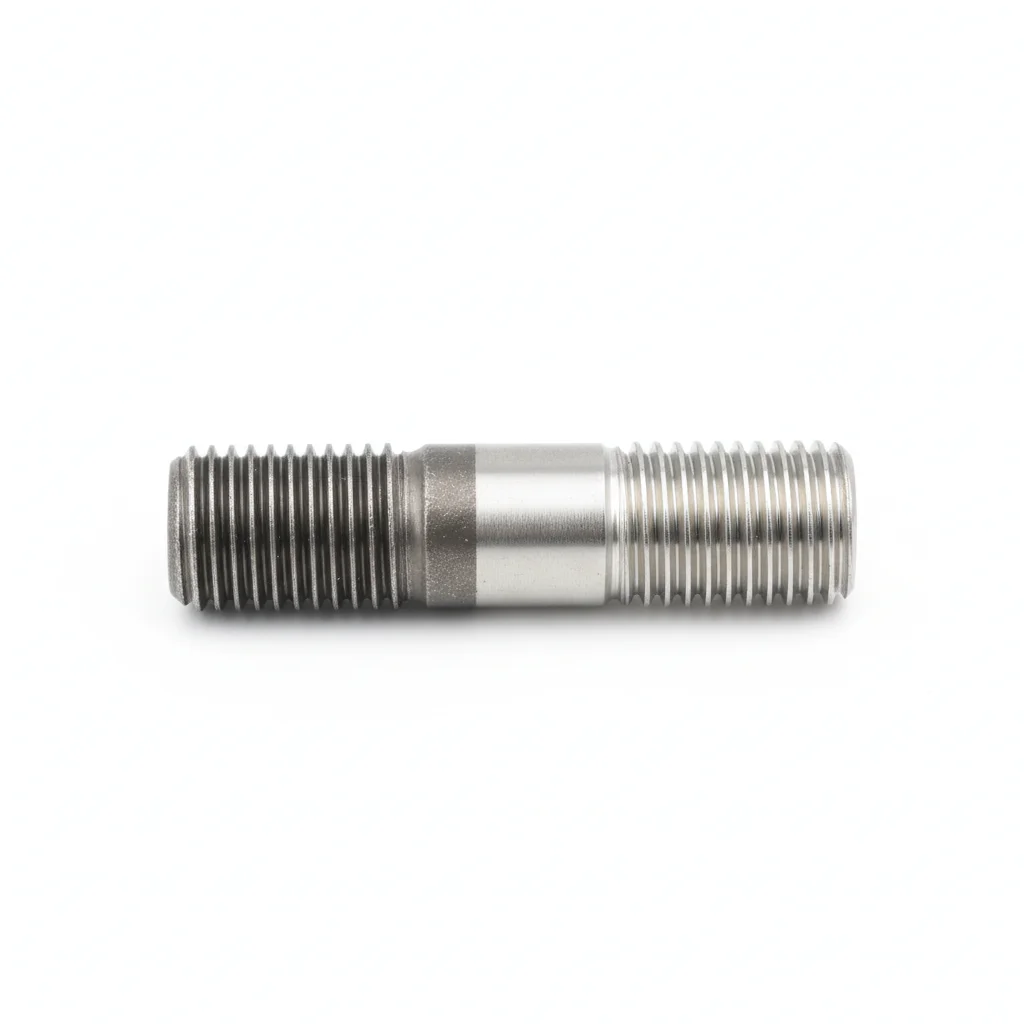
| stud bolt | |
|---|---|
| SPEC | Grade 8.8/10.9 M12-M36 |
| MATERIAL | 35CrMoA / 304 Stainless Steel |
| GRADE | — |
| FINISH | HDG >=55um per ISO 1461 |
| CORROSION | C3 (ISO 12944-2) |
| TEMP | -20°C to +80°C |
| WEIGHT | ~0.5 kg/piece |
| MOQ | 100 pcs |
| PACK | VCI paper + carton |
| STD | ISO 898-1, GB/T 3098.1 |
| USE | Industrial Piping |
PROCEDURE
- Clean stud and nut threads with isopropyl alcohol (99.9%) and inspect for surface damage; verify flange face flatness within 0.1mm per 100mm.
- Apply nickel-based high-temperature anti-seize compound (rated 600°C+) to all threads and nut face to prevent diffusion welding.
- Assemble joint with stud bolts, placing flat washers under nut and head; hand-tighten nuts to seat components.
- Tighten in a star pattern using a calibrated torque wrench, gradually increasing torque to the specified value (e.g., 42 Nm for M12 8.8) without exceeding it.
- After initial tightening, mark the nut and stud with torque seal paint for visual verification; photograph the completed assembly for QA records.
COMMON ERRORS
| ✕ WRONG | CONSEQUENCE | ✓ CORRECT |
|---|---|---|
| Installing high-temperature pipe bolts without anti-seize compound | At 300-450°C, oxide layers on threads diffuse and weld together, causing seizure during disassembly; disassembly torque can reach 3-5 times installation torque, risking bolt fracture or flange damage. | Coat all threads and nut faces with nickel-based anti-seize compound rated for 600°C+ before assembly to prevent galling and ensure easier disassembly. |
| Using standard torque values without accounting for high-temperature creep relaxation | Creep relaxation of 35CrMoA at 300-450°C can cause preload loss of 20-40% after 5000 hours, leading to flange leakage and steam erosion. | Specify a re-torque schedule based on creep rate (approx. 1e-8/h) and perform hot tightening after the first 500 hours of operation to maintain preload. |
MAINTENANCE
Inspect bolts at each overhaul window (typically after 3-5 years of service) for signs of creep or corrosion; measure preload loss if possible and re-torque if relaxation exceeds allowable limits. Replace bolts that show thread damage or corrosion affecting more than 5% of surface area. At major overhauls, disassemble a sample of bolts to check for seizure and apply fresh anti-seize compound before reassembly.
Plan B · Reinforced Type
C4 Harsh per ISO 12944-2
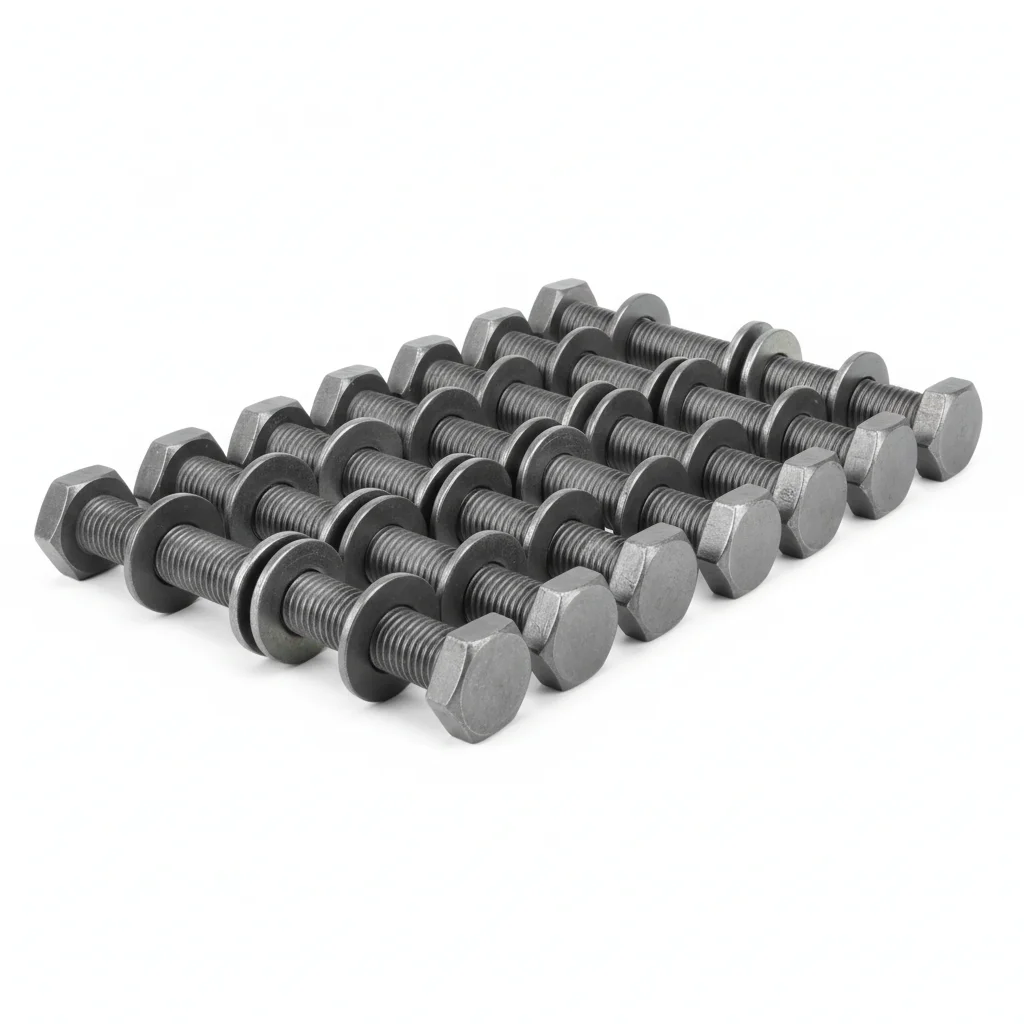
| Hex Bolt | |
|---|---|
| SPEC | M12-M36 |
| MATERIAL | Grade 8.8 / 304 Stainless Steel |
| GRADE | — |
| FINISH | HDG >=55um per ISO 1461 |
| CORROSION | C3 (ISO 12944-2) |
| TEMP | -20°C to +80°C |
| WEIGHT | ~0.5 kg/piece |
| MOQ | 100 pcs |
| PACK | VCI paper + carton |
| STD | ISO 898-1, GB/T 3098.1 |
| USE | Industrial Piping |
PROCEDURE
- Clean stud and nut threads with acetone to remove oil and debris, ensuring surfaces are free from contaminants before applying anti-seize.
- Apply a nickel-based anti-seize compound rated for continuous service at 600°C+ to all thread engagements and the nut face, per the high-temperature pipe bolt guidance.
- Hand-start the nut onto the stud, verifying thread alignment to avoid cross-threading; then use a calibrated torque wrench to tighten in a cross-pattern sequence to the specified torque value.
- After the initial tightening, perform a hot retightening pass once the line reaches operating temperature (300-450°C) to compensate for initial creep relaxation, following the recommended first hot tightening after 500 hours of operation.
- Mark the nut and stud with a paint stripe after final tightening to enable visual detection of any loosening during service.
COMMON ERRORS
| ✕ WRONG | CONSEQUENCE | ✓ CORRECT |
|---|---|---|
| Using a standard anti-seize compound not rated for high temperatures (e.g., copper-based) on 35CrMoA studs. | The compound degrades above 300°C, leading to thread galling and seizure during disassembly; disassembly torque can reach 3-5 times installation torque, and forced removal may fracture bolts. | Apply a nickel-based high-temperature anti-seize compound with temperature resistance 600°C+ to all threads before assembly. |
| Neglecting to re-torque bolting after the first thermal cycle. | Creep relaxation of 35CrMoA at 300-450°C can cause preload loss of 20-40% after 5000 hours, leading to flange leakage and steam erosion. | Perform a hot retightening after the first 500 hours of operation and at intervals based on observed creep rate, rather than a fixed calendar schedule. |
MAINTENANCE
Inspect flange joints at each scheduled overhaul window, checking for signs of leakage or loosening (e.g., missing paint marks). Re-torque any bolt that shows evidence of relaxation, and verify preload using ultrasonic or hydraulic tensioning methods. Replace studs if thread damage or corrosion is detected, and always apply fresh anti-seize compound on reassembly.
Plan C · Premium Type
C5-M Extreme per ISO 12944-2
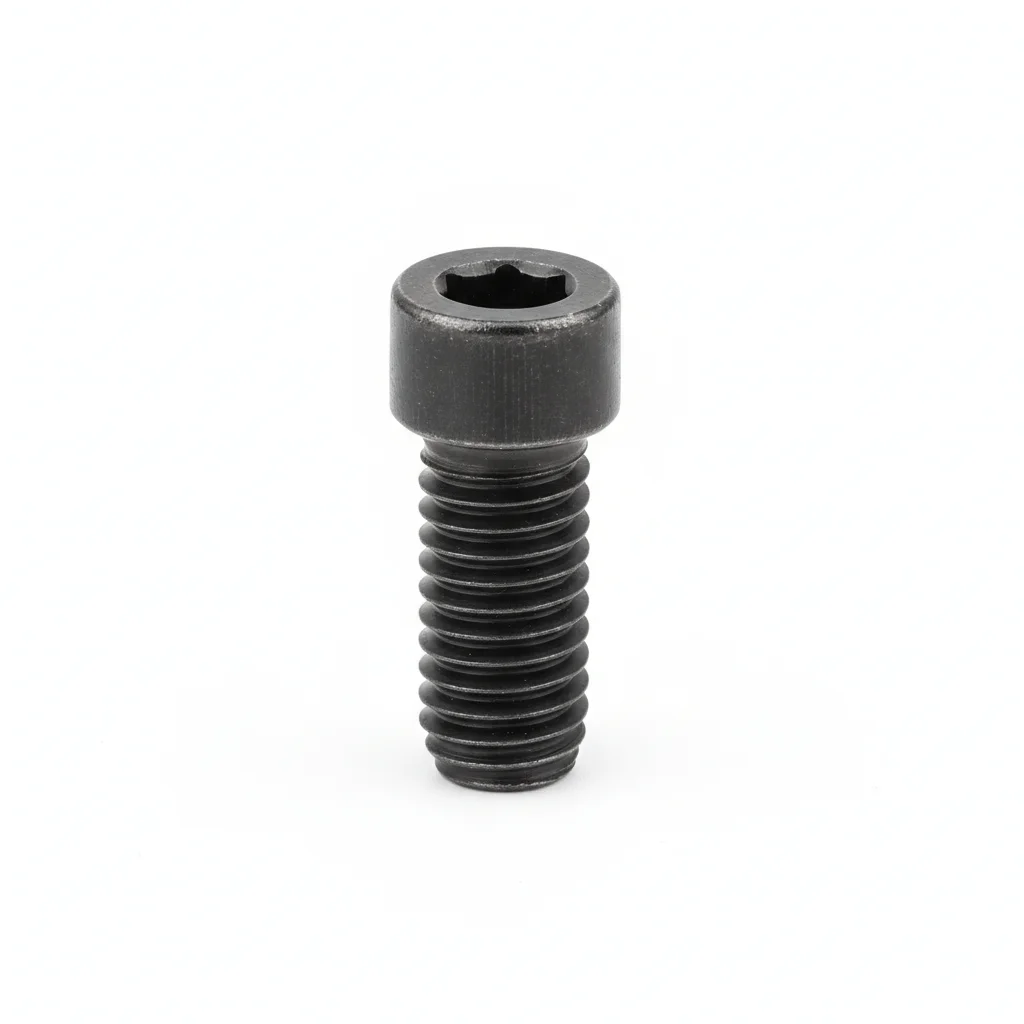
| Socket Head Cap Screw | |
|---|---|
| SPEC | M6-M20 |
| MATERIAL | Grade 8.8/10.9 / 304 Stainless Steel |
| GRADE | — |
| FINISH | HDG >=55um per ISO 1461 |
| CORROSION | C3 (ISO 12944-2) |
| TEMP | -20°C to +80°C |
| WEIGHT | ~0.5 kg/piece |
| MOQ | 100 pcs |
| PACK | VCI paper + carton |
| STD | ISO 898-1, GB/T 3098.1 |
| USE | Industrial Piping |
PROCEDURE
- Degrease socket head cap screw threads and mating flange holes with MEK solvent, then verify surface roughness Ra <1.6um to ensure proper seating.
- Apply a marine-grade anti-corrosion compound rated for -50°C to 200°C to all threads and under the head, and use PTFE-encapsulated washers to minimize friction variation.
- Insert the screws and tighten using a hydraulic tensioner to achieve the specified preload, following a cross-pattern sequence to ensure even clamp load.
- After initial tensioning, perform a second pass to verify preload consistency; use a calibrated torque wrench as a backup check where required.
- Apply a protective sealant over the exposed screw heads and flange interface to prevent corrosion ingress, and install condition monitoring instrumentation (e.g., strain gauges) on critical joints for continuous assessment.
COMMON ERRORS
| ✕ WRONG | CONSEQUENCE | ✓ CORRECT |
|---|---|---|
| Using a socket head cap screw without verifying its elevated-temperature properties for the 300-450°C service. | Material may undergo accelerated creep or loss of hardness, leading to premature preload loss and potential joint failure. | Specify a premium material such as 25Cr2MoVA or Inconel 718, and request mill certificates with elevated-temperature yield and creep data per ASTM E139. |
| Omitting the use of disc spring washers or other preload compensation devices. | Creep relaxation can cause flange leakage over time, as preload loss is not compensated, leading to steam erosion and unplanned shutdowns. | Incorporate disc spring washers or use a bolt design that accommodates thermal expansion to maintain preload within acceptable limits. |
MAINTENANCE
Perform ultrasonic or strain-gauge verification of bolt preload at each major overhaul (typically every 5-10 years). Replace any bolt showing signs of creep elongation (e.g., >0.3mm) or cracking, as detected by NDT. Reapply anti-seize compound on all threads during reassembly, and document torque and preload values for trending analysis.
REFERENCED STANDARDS
Technical Basis and Standards
SUPPLIER CAPABILITY
Quality, Delivery & Customization
Quality Control
- ✓MTC material certificates with every batch
- ✓Key parts sampled for hardness/salt spray/torque coefficient
- ✓100% inspection or AQL sampling before shipment
Delivery
- ✓Standard parts made to order: 7-15 days
- ✓Custom parts: 25-45 days
- ✓FOB/CIF/DDP supported
Customization
- ✓Drawing review and material matching
- ✓Non-standard sizes/heads/threads
- ✓Small-batch prototyping supported
Certification
- ✓Material certificates (MTC)
- ✓Spectrographic analysis reports
- ✓Salt spray test reports (on request)
MOQ: No MOQ for standard parts; custom parts assessed by process complexity
FAQ
FAQ
RELATED READING
Keep Reading & Next Step
BEYOND TECHNICAL SPECS
Finding the right factory, controlling quality, delivering on time — that's the real challenge. We cover fasteners, rubber, plastics, industrial textiles. One team, end to end.
SEE CAPABILITIES →