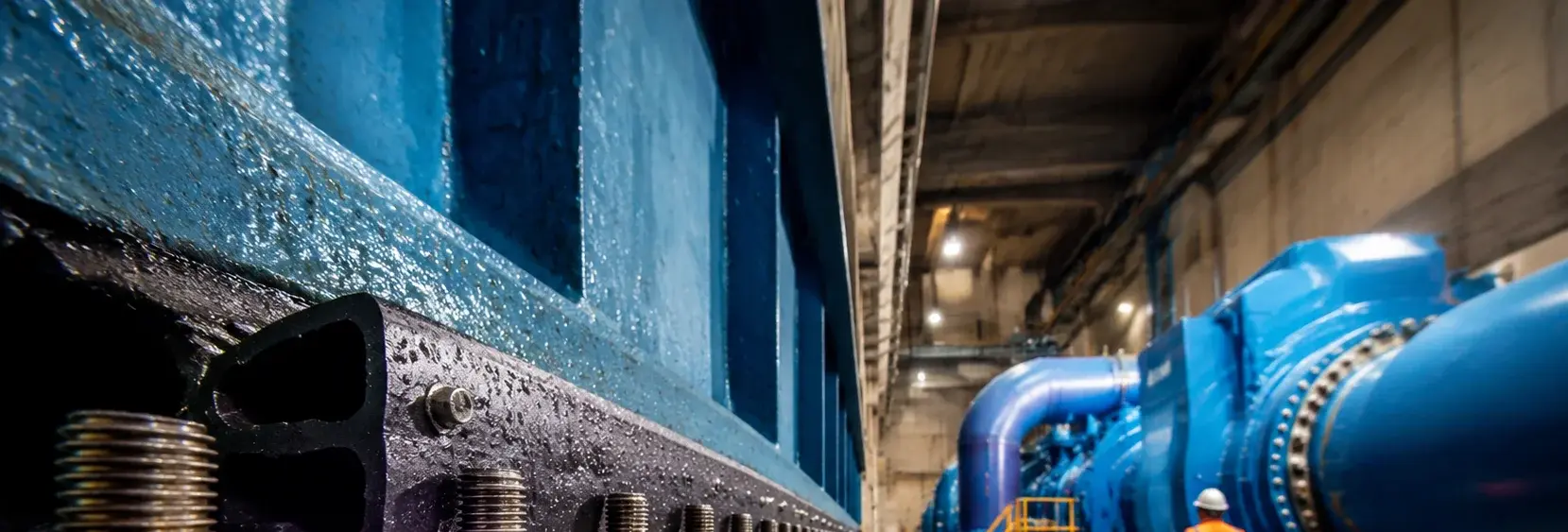
Gate Seals for Hydropower: P-Type vs Ω-Type Comparison
Gate water seals are the last line of defense against reservoir leakage. P-type seals suit medium/small gates (<20m², head <30m), while Ω-type seals handle large flood gates (>50m², head >50m). Key risks: rubber compression set over 5-8 years reduces rebound from 15mm to <5mm, and copper water stop corrosion at concrete interfaces creates leakage paths
RISK AUDIT // ENGINEERING DIAGNOSIS
Procurement Pitfall Guide
"Procurement pitfalls: compression set and interface corrosion"
QC-AUDIT // REV.5
SCALE 1:1 · 03 ITEMS
RISK-01
P-type water seal aging and insufficient compression rebound cause gate leakage
Corrective Measures
RISK-02
Corrosion and leakage at the interface between copper water stop and concrete
Corrective Measures
RISK-03
Gate seal rubber undergoes permanent deformation under long-term static water pressure, causing leakage
Corrective Measures
FIELD-SPECIFIC INSIGHT
Gate Seal Procurement Checklist: Compression Set & Interface Corrosion
Gate seal failure often stems not from material grade but from two overlooked factors: long-term compression set of rubber and galvanic corrosion at the copper-concrete interface. Specifying only hardness (Shore A) is insufficient; you must also define compression set limits and interface protection
WHAT TO CHECK
- 1Higher values accelerate leakage
- 2For copper water stops, require a bituminous or epoxy coating on the embedded surface to prevent Ca(OH)₂ reaction and gap formation
- 3Fixing bolts (316L A4-80) must be torqued to 80% of specified value; re-torque every 6 months to maintain seal compression
- 4For gates >50m², use Ω-type seals with Shore 65-70 to resist higher water pressure; verify rebound height after 1000h compression test
| Check | Why it matters | What to specify |
|---|---|---|
| Compression set of rubber seal | Excessive set reduces sealing force, causing leakage under head pressure | — |
| Copper water stop interface coating | Uncoated copper reacts with concrete alkalis, creating leakage paths | Bituminous or epoxy coating on embedded surfaces |
| Bolt torque retention | Loose bolts reduce seal compression; vibration and creep cause loosening | Initial torque per ISO 898-1; re-torque to 80% every 6 months |
| Seal rebound height after aging | Rebound <5mm after 5-8 years indicates end of service life | Replace when <5mm |
Data based on SL 74 and DL/T 949. Compression set limits are typical; verify with manufacturer for specific rubber compounds
Evidence level: standard-backed
INDUSTRY TECH REFERENCE
Gate Water-Stop Fixings: Pick Material by Site Condition First
Gate water-stop fixings live in condensation and the wet-dry zone — settle material and coating by site condition before size and price.
| Site condition | Effect on the fixings | Specify |
|---|---|---|
| Powerhouse condensation (80–95% RH year-round) | Bare carbon steel corrodes badly within six months | 304/316L, or hot-dip galvanizing + sealing wax |
| Acidic tropical peat water (pH 4–6) | Corrosion accelerates markedly | 316L or higher; avoid carbon steel |
| Dry-season drawdown, wet-season surge (water-level zone) | Wet-dry cycling is worse than full immersion | Design corrosion protection for the wet-dry zone |
| Remote mountain plant | Poor access, long spare-parts supply chain | Oversize critical fixings + on-site spares set |
INDUSTRY TECH REFERENCE
How Wet-Dry Cycling Wears Down a Gate Seal, Step by Step
Example: a gate at a tropical mountain plant — dry-season drawdown and wet-season surge put the seal in the harshest corrosion zone.
- 1Dry-season drawdown exposes the water seal and stop-water fixings to air
- 2Wet-season surge cycles the zone between wet and dry — corrosion worse than full immersion
- 3Acidic tropical peat water (pH 4–6) keeps attacking clamp plates and fixing bolts through residual water and condensation
- 4Coating fails first; renew the fixings at overhaul (M10–M16, hot-dip galvanized or stainless)
- 5Response: protect for the wet-dry zone; use 316L or HDG + sealing wax on fixings; keep an on-site spares set at remote plants
INDUSTRY TECH REFERENCE
Ordering Seals for a Mountain Plant: Plan Spares and Coating First
Gate seals and stop-water fixings are overhaul consumables; at a mountain plant every order takes long to arrive — fix coating and spares in the same purchase order.
- Stop-water fixings (M10–M16): hot-dip galvanized or stainless as standard; add sealing wax in high-humidity powerhouse sections
- For tropical peat-water plants (pH 4–6), specify 316L — no carbon steel
- Stock by overhaul cycle: renew stop-water fixings and seals at each overhaul, in one order
- At remote plants, require oversizing on critical points and keep an on-site spares set
PLAN COMPARISON
Three-Plan Core Parameter Comparison
Compare row by row. Click column headers to jump to plan details.
| A · Plan A · P-Type Water Seal for Medium/Small Gates | B · Plan B · Ω-Type Water Seal for Large Gates | C · Plan C · Extreme Environment / Offshore Configuration | |
|---|---|---|---|
| 1. P-TYPE RUBBER WATER SEAL | |||
| SPEC | P60-P120 | Ω100-Ω200 | M24-M42 |
| MATERIAL | EPDM Rubber | EPDM Rubber | 2205 Duplex Stainless Steel |
| GRADE | Shore 60-65 | Shore 65-70 | — |
| FINISH | HDG >=55um per ISO 1461 | HDG >=55um per ISO 1461 | HDG >=55um per ISO 1461 |
| 2. COPPER WATER STOP | |||
| SPEC | Thickness 1.0-1.5mm | Thickness 1.5mm | Custom |
| MATERIAL | Copper | Copper | EPDM Rubber |
| GRADE | — | Lap Welding | — |
| FINISH | HDG >=55um per ISO 1461 | HDG >=55um per ISO 1461 | HDG >=55um per ISO 1461 |
| 3. FIXING BOLT | |||
| SPEC | M16-M24 | M20-M30 | Custom Section |
| MATERIAL | 316L | 316L | EPDM Rubber |
| GRADE | A4-80 | A4-80 | Temperature Resistance 300°C |
| FINISH | HDG >=55um per ISO 1461 | HDG >=55um per ISO 1461 | HDG >=55um per ISO 1461 |
| 4. FLAT WASHER | |||
| SPEC | M10-M12 | M10-M12 | Thickness 1.5mm |
| MATERIAL | 304 Stainless | 304 Stainless | 316L + Copper |
| GRADE | A2 | A2 | — |
| FINISH | Passivated | Passivated | HDG >=55um per ISO 1461 |
| 5. FLAT WASHER | |||
| SPEC | M10-M12 | M10-M12 | 50kg/set |
| MATERIAL | 304 Stainless | 304 Stainless | Epoxy |
| GRADE | A2 | A2 | — |
| FINISH | Passivated | Passivated | HDG >=55um per ISO 1461 |
SELECTION GUIDE
Still Unsure Which Gate Seal Fits?
| Operating condition | Recommended option | Key basis |
|---|---|---|
| Gate opening <20m², head <30m (medium/small gates) | Plan A – P-type water seal (EPDM, Shore 60-65) | SL 74, DL/T 949 (gate steel/rubber seal design) |
| Gate opening >50m², head >50m (large flood discharge gates) | Plan B – Ω-type water seal (EPDM, Shore 65-70), greater compression allowance and better self-sealing | SL 74, DL/T 949 |
| Rubber seal under long-term static compression (5-8 years) losing rebound | Specify EPDM (compression set <15% at 70°C/22h), pre-compress 1.1-1.2× design value; replace when rebound <5mm | ASTM D395 (rubber compression set) |
| Copper water stop embedded in concrete dam expansion joint | Coat both sides with epoxy coal tar paint before pouring; weld overlaps by copper welding (silver brazing), not tin soldering | SL 74, ASTM D395 |
| Water seal fixing bolt loosening under vibration/creep | Initial torque per ISO 898-1; re-torque to 80% of specified value every 6 months | ISO 898-1 |
Plan A · P-Type Water Seal for Medium/Small Gates
C3 Standard per ISO 12944-2
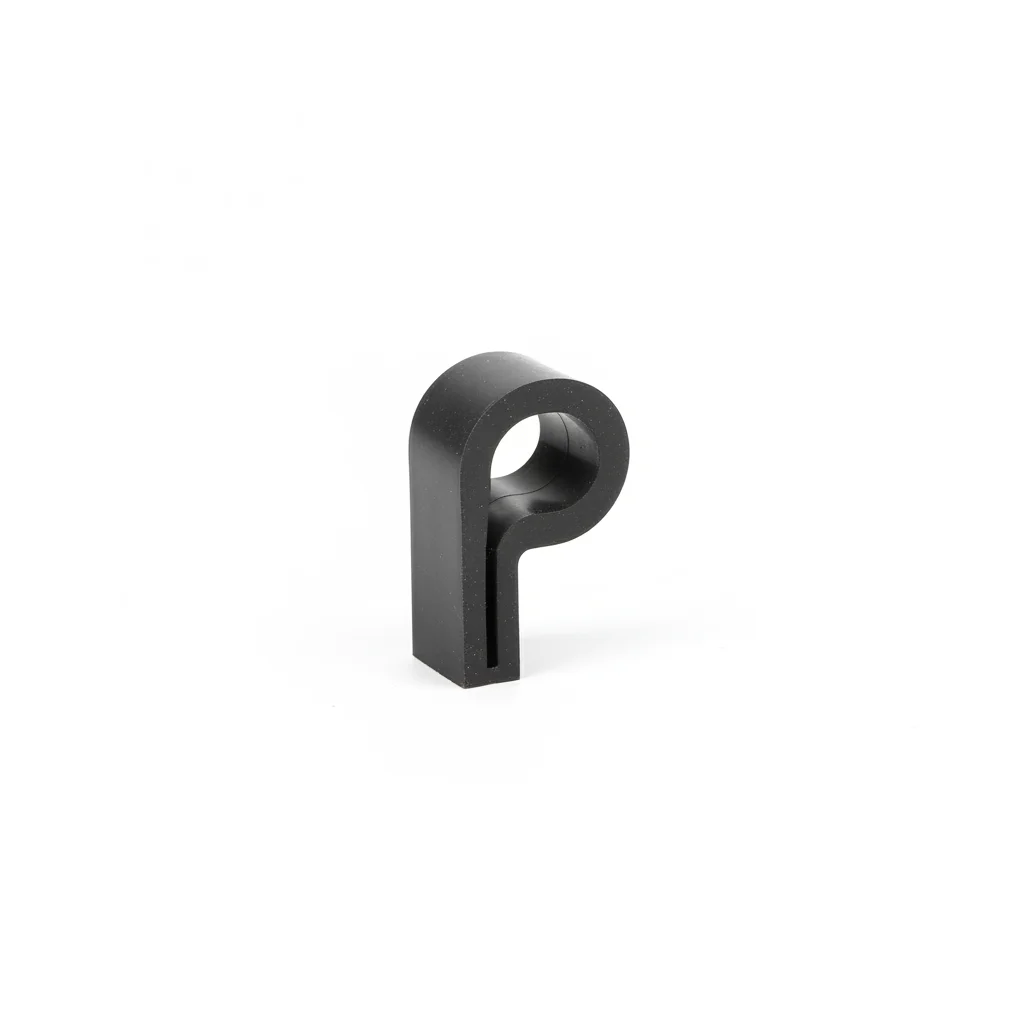
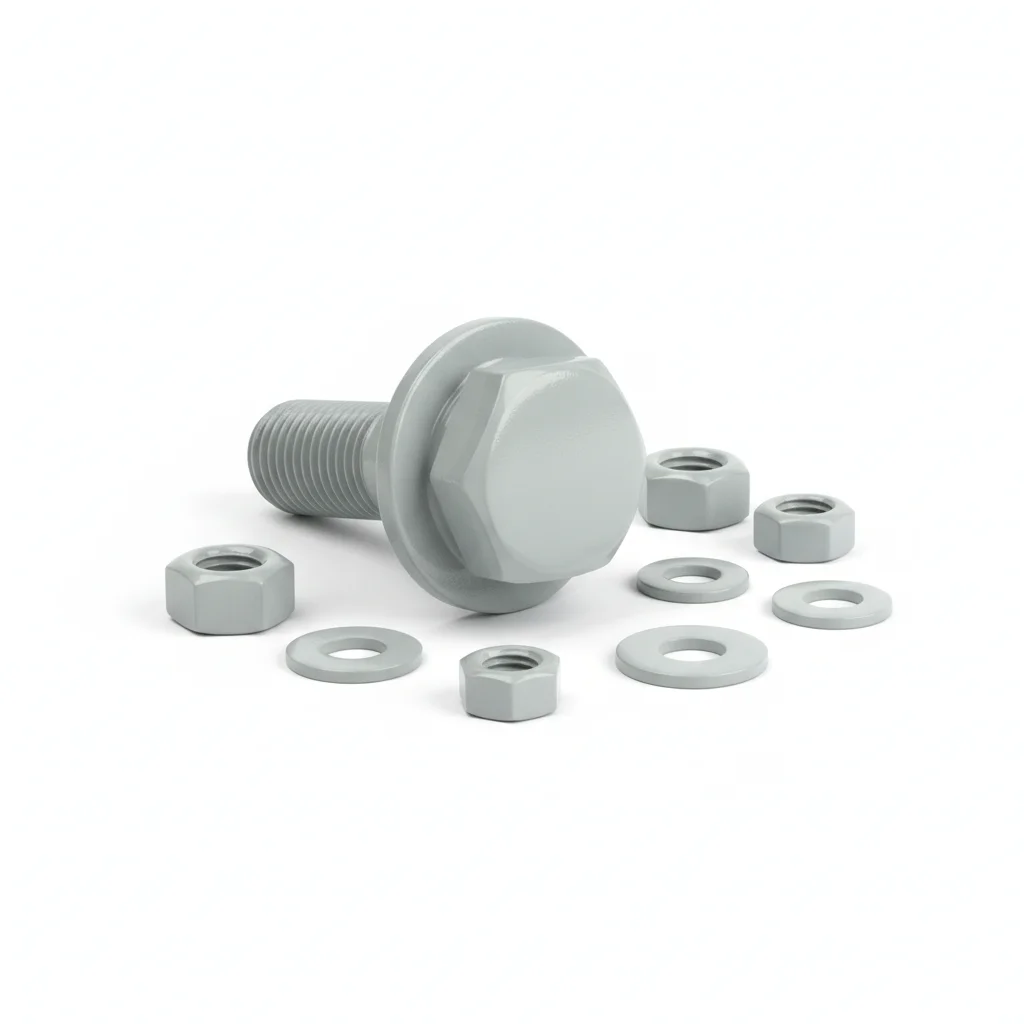
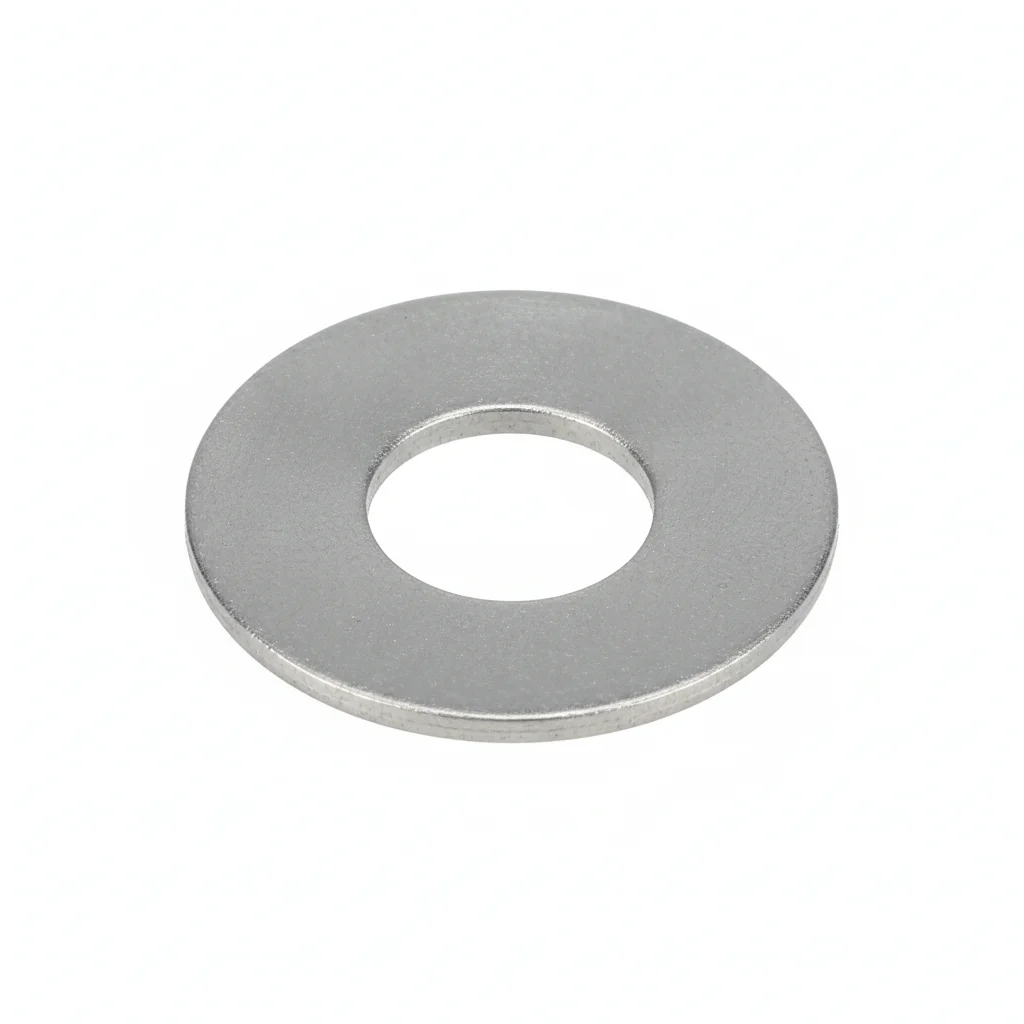
| P-Type Rubber Water Seal | Copper Water Stop | Fixing Bolt | Flat Washer | Flat Washer | |
|---|---|---|---|---|---|
| SPEC | P60-P120 | Thickness 1.0-1.5mm | M16-M24 | M10-M12 | M10-M12 |
| MATERIAL | EPDM Rubber | Copper | 316L | 304 Stainless | 304 Stainless |
| GRADE | Shore 60-65 | — | A4-80 | A2 | A2 |
| FINISH | HDG >=55um per ISO 1461 | HDG >=55um per ISO 1461 | HDG >=55um per ISO 1461 | Passivated | Passivated |
| CORROSION | Not applicable (polymer) | C3 (ISO 12944-2) | C3 (ISO 12944-2) | C3 (ISO 12944-2) | C3 (ISO 12944-2) |
| TEMP | -20°C to +80°C | -20°C to +80°C | -20°C to +80°C | -20°C to +80°C | -20°C to +80°C |
| WEIGHT | ~0.5 kg/piece | ~0.5 kg/piece | ~0.5 kg/piece | ~0.005kg | ~0.005kg |
| MOQ | 100 pcs | 100 pcs | 100 pcs | 500 pcs | 500 pcs |
| PACK | VCI paper + carton | VCI paper + carton | VCI paper + carton | Plastic bag | Plastic bag |
| STD | ISO 898-1, GB/T 3098.1 | ISO 898-1, GB/T 3098.1 | ISO 898-1, GB/T 3098.1 | ISO 7089 | ISO 7089 |
| USE | Service Gate / Trash Rack | Concrete Dam Expansion Joint | Water Seal Clamp Plate Fixing | Load distribution | Load distribution |
PROCEDURE
- Clean the gate sealing surface with isopropyl alcohol (99.9%) and verify flatness within 0.1mm per 100mm to ensure even seal compression.
- Apply a thin layer of neutral silicone grease to the P-type seal groove to ease installation and prevent tearing.
- Position the P60-P120 EPDM seal in the groove, aligning the fixing bolt holes with the clamp plate.
- Insert M16-M24 316L A4-80 fixing bolts with flat washers, tighten in a star pattern to the torque specified in the QA plan, and verify alignment within 0.5mm.
- Inspect seal seating and bolt torque on a 5% sample using a calibrated wrench; document results in the QA log.
COMMON ERRORS
| ✕ WRONG | CONSEQUENCE | ✓ CORRECT |
|---|---|---|
| Using a harder EPDM compound (Shore >70) for a small gate seal | Insufficient compression under low head (<30m) leads to leakage paths along the gate edge. | Select P-type EPDM with Shore 60-65 as specified, and verify the compression set per DL/T 949 before installation. |
| Installing the P-type seal without pre-compression allowance | The seal may not achieve the required initial squeeze, accelerating leakage as compression set accumulates over 5-8 years. | Pre-compress the seal to 1.1-1.2 times the design value during installation, and check that the rebound height is within the initial 15mm tolerance. |
MAINTENANCE
Annually inspect the P-type seal for surface cracking and measure the rebound height with calipers; replace when reduction exceeds 30%. Check the fixing bolts (316L A4-80) for loosening and re-torque if below 80% of specified value. Monitor leakage at the gate seal line each season to detect early compression set.
Plan B · Ω-Type Water Seal for Large Gates
C4 Harsh per ISO 12944-2
| Ω-Type Rubber Water Seal | Double Copper Water Stop | Fixing Bolt | Flat Washer | Flat Washer | |
|---|---|---|---|---|---|
| SPEC | Ω100-Ω200 | Thickness 1.5mm | M20-M30 | M10-M12 | M10-M12 |
| MATERIAL | EPDM Rubber | Copper | 316L | 304 Stainless | 304 Stainless |
| GRADE | Shore 65-70 | Lap Welding | A4-80 | A2 | A2 |
| FINISH | HDG >=55um per ISO 1461 | HDG >=55um per ISO 1461 | HDG >=55um per ISO 1461 | Passivated | Passivated |
| CORROSION | Not applicable (polymer) | C3 (ISO 12944-2) | C3 (ISO 12944-2) | C3 (ISO 12944-2) | C3 (ISO 12944-2) |
| TEMP | -20°C to +80°C | -20°C to +80°C | -20°C to +80°C | -20°C to +80°C | -20°C to +80°C |
| WEIGHT | ~0.5 kg/piece | ~0.5 kg/piece | ~0.5 kg/piece | ~0.005kg | ~0.005kg |
| MOQ | 100 pcs | 100 pcs | 100 pcs | 500 pcs | 500 pcs |
| PACK | VCI paper + carton | VCI paper + carton | VCI paper + carton | Plastic bag | Plastic bag |
| STD | ISO 898-1, GB/T 3098.1 | ISO 898-1, GB/T 3098.1 | ISO 898-1, GB/T 3098.1 | ISO 7089 | ISO 7089 |
| USE | Large Flood Discharge Gate | High Dam Expansion Joint | Deep Water Gate Fixing | Load distribution | Load distribution |
PROCEDURE
- Degrease sealing surfaces with acetone; verify surface roughness Ra <3.2um.
- Apply anti-corrosion joint compound rated -20 to 150C; use PTFE-coated washers.
- Verify alignment per specification; tighten in cross-pattern sequence; check 10% with verification tool; log with environmental data.
- Pull-test 5% random sample to 80% of proof load; replace any below acceptance threshold.
- Apply weatherproof protective coating; install corrosion monitoring coupon adjacent to critical joints.
COMMON ERRORS
| ✕ WRONG | CONSEQUENCE | ✓ CORRECT |
|---|---|---|
| Using tin solder for copper water stop overlaps instead of copper welding | Insufficient joint strength and galvanic corrosion underwater, leading to leakage paths at expansion joints. | Use copper welding (silver brazing) for all water stop overlaps. |
| Omitting epoxy coal tar coating on copper water stop before concrete pouring | Concrete alkalis (Ca(OH)₂) react with copper, creating gaps that form leakage paths between dam sections. | Coat both sides of copper water stop with epoxy coal tar paint before concrete placement. |
MAINTENANCE
Check water seal rebound height every 5 years; replace if reduction exceeds 30% from initial value. Monitor seepage volume at expansion joints annually. Verify bolt torque at each overhaul window, re-torquing any below 80% of specified torque.
Plan C · Extreme Environment / Offshore Configuration
C5-M Extreme per ISO 12944-2
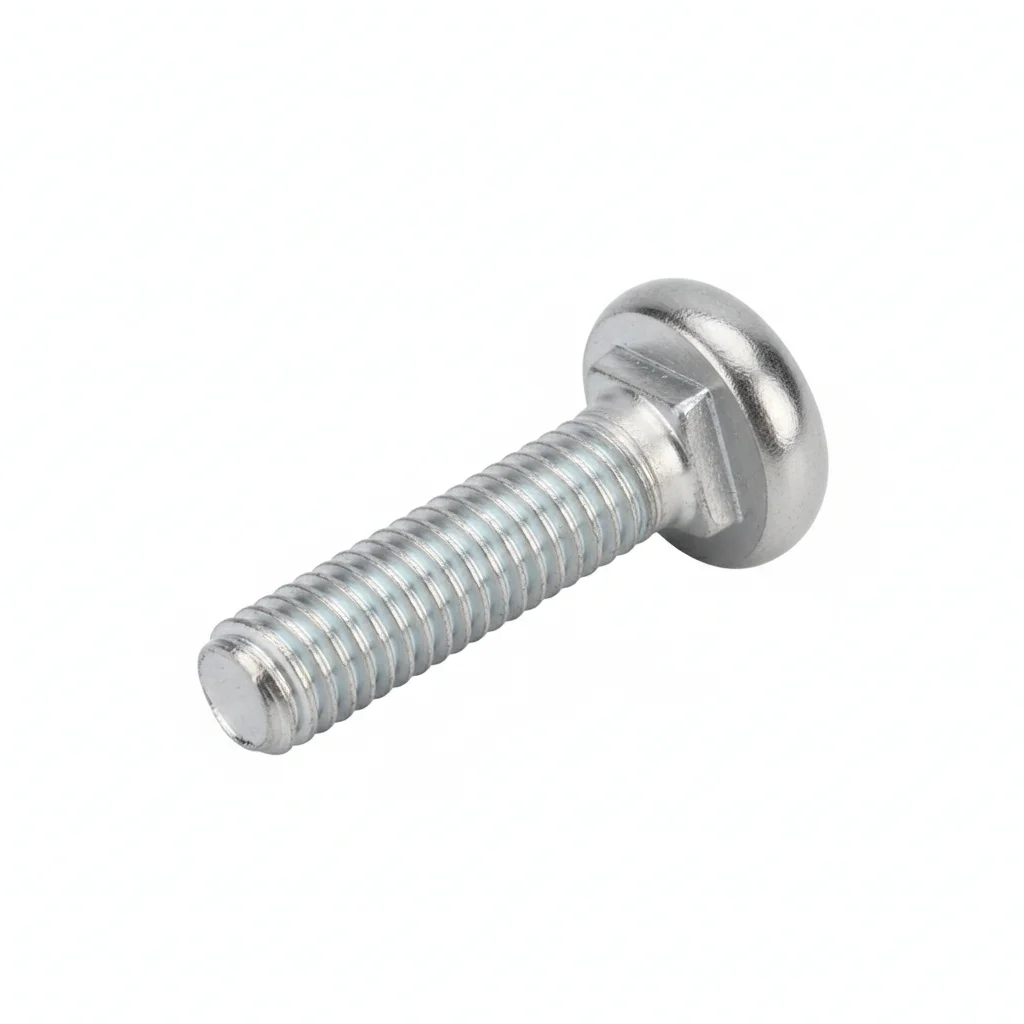
| Gate Bolt | Titanium Alloy Water Seal Clamp Plate | Seal Strip | Copper Water Stop | Underwater Epoxy Grout | |
|---|---|---|---|---|---|
| SPEC | M24-M42 | Custom | Custom Section | Thickness 1.5mm | 50kg/set |
| MATERIAL | 2205 Duplex Stainless Steel | EPDM Rubber | EPDM Rubber | 316L + Copper | Epoxy |
| GRADE | — | — | Temperature Resistance 300°C | — | — |
| FINISH | HDG >=55um per ISO 1461 | HDG >=55um per ISO 1461 | HDG >=55um per ISO 1461 | HDG >=55um per ISO 1461 | HDG >=55um per ISO 1461 |
| CORROSION | C3 (ISO 12944-2) | Not applicable (polymer) | Not applicable (polymer) | C3 (ISO 12944-2) | C3 (ISO 12944-2) |
| TEMP | -20°C to +80°C | -20°C to +80°C | -20°C to +80°C | -20°C to +80°C | -20°C to +80°C |
| WEIGHT | ~0.5 kg/piece | ~0.5 kg/piece | ~0.5 kg/piece | ~0.5 kg/piece | ~0.5 kg/piece |
| MOQ | 100 pcs | 100 pcs | 100 pcs | 100 pcs | 100 pcs |
| PACK | VCI paper + carton | VCI paper + carton | VCI paper + carton | VCI paper + carton | VCI paper + carton |
| STD | ISO 898-1, GB/T 3098.1 | ISO 898-1, GB/T 3098.1 | ISO 898-1, GB/T 3098.1 | ISO 898-1, GB/T 3098.1 | ISO 898-1, GB/T 3098.1 |
| USE | Deep Water Gate | Highest Corrosion Protection | High Temperature / Chemical Water Seal | High Dam Expansion Joint | Gate Foundation Anchoring |
PROCEDURE
- Degrease with MEK solvent; verify surface roughness Ra <1.6um.
- Apply marine-grade anti-corrosion compound rated -50 to 200C; use PTFE-encapsulated washers.
- Verify alignment to within 0.3mm; tighten with hydraulic tensioner; PMI verify 10% sample; document for compliance audit.
- NDT test 10% sample with dye penetrant; replace any showing crack indications.
- Apply protective sealant per specification; install permanent condition monitoring instrumentation.
COMMON ERRORS
| ✕ WRONG | CONSEQUENCE | ✓ CORRECT |
|---|---|---|
| Using standard 316L fasteners in C5-M offshore environment without duplex or titanium alloy | Accelerated pitting and crevice corrosion, leading to premature fastener failure and gate seal leakage. | Specify 2205 duplex stainless steel or titanium alloy per plan for critical submerged gate applications. |
| Selecting EPDM seal strip without verifying temperature resistance for high-temperature water | Seal degrades and loses elasticity, causing leakage under thermal cycling. | Use seal strip rated for temperature resistance up to 300°C as specified in this plan. |
MAINTENANCE
Inspect at each overhaul window; verify seal rebound height every 5 years and replace if reduction exceeds 30% from initial value. Monitor seepage at expansion joints annually. For submerged fasteners, perform NDT dye penetrant checks on 10% sample at each major service interval; re-torque any bolt below 80% of specified torque.
REFERENCED STANDARDS
Referenced Standards
SUPPLIER CAPABILITY
Quality, Delivery & Customization
Quality Control
- ✓MTC material certificates with every batch
- ✓Key parts sampled for hardness/salt spray/torque coefficient
- ✓100% inspection or AQL sampling before shipment
Delivery
- ✓Standard parts made to order: 7-15 days
- ✓Custom parts: 25-45 days
- ✓FOB/CIF/DDP supported
Customization
- ✓Drawing review and material matching
- ✓Non-standard sizes/heads/threads
- ✓Small-batch prototyping supported
Certification
- ✓Material certificates (MTC)
- ✓Spectrographic analysis reports
- ✓Salt spray test reports (on request)
MOQ: No MOQ for standard parts; custom parts assessed by process complexity
FAQ
FAQ
RELATED READING
Keep Reading & Next Step
BEYOND TECHNICAL SPECS
Finding the right factory, controlling quality, delivering on time — that's the real challenge. We cover fasteners, rubber, plastics, industrial textiles. One team, end to end.
SEE CAPABILITIES →