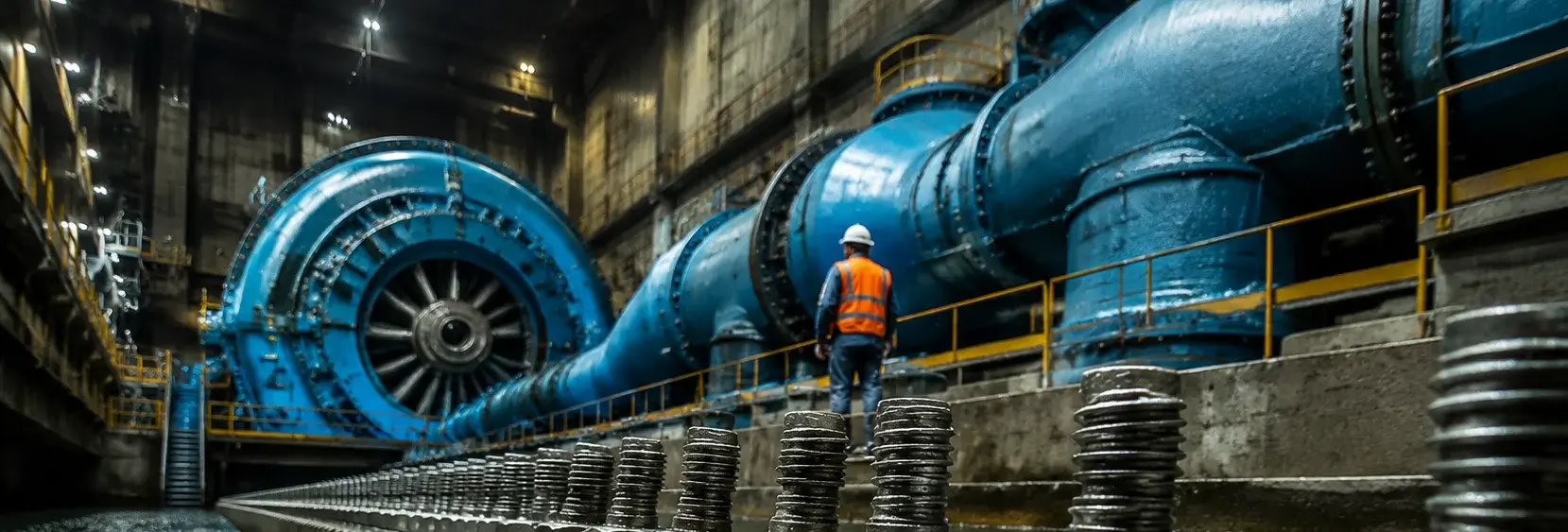
Trash Rack Bolt Failure: Fatigue, Loosening & Abrasion
Trash rack bolts are submerged long-term in water and subject to water flow impact. Ordinary bolts rust within 3 months, break within 1 year → trash rack tilts → debris enters → turbine blades damaged → costly shutdown. This page explains the three main failure modes and how to specify fasteners to prevent them
RISK AUDIT // ENGINEERING DIAGNOSIS
Procurement Pitfall Guide
"On the intake deck, three failure modes decide your fastener life."
QC-AUDIT // REV.5
SCALE 1:1 · 03 ITEMS
RISK-01
Fatigue Fracture of Trash Rack Bolts Under Water Impact
Corrective Measures
RISK-02
Loosening of Trash Rack Grille Clips Under Flow Pulsation
Corrective Measures
RISK-03
Sediment Abrasion Causes Section Thinning Failure of Trash Rack Bolts
Corrective Measures
FIELD-SPECIFIC INSIGHT
Three Failure Modes to Check Before Specifying Trash Rack Fasteners
Trash rack fasteners fail not just from corrosion but from three distinct mechanisms: fatigue fracture under broadband random vibration, loosening from flow pulsation, and section thinning from sediment abrasion. Each requires a different specification response
WHAT TO CHECK
- 1Fatigue fracture: bolts experience 10⁷ vibration cycles from water impact at 3-8 m/s; specify 316L A4-80 and inspect thread roots for cracks
- 2Loosening: vortex shedding at 1-5 Hz causes alternating shear on clips; use wedge-locking washers or thread-locking compound for high-head applications
- 3Abrasion: sediment concentration 10-50 kg/m³ can reduce M16 bolt effective diameter by 20-30% in 3-5 years
| Check | Why it matters | What to specify |
|---|---|---|
| Fatigue crack at thread root | Crack propagates under vibration until sudden fracture, causing trash rack tilt and debris ingress | Grade A4-80 (316L) with rolled threads; NDT inspection every 6 months |
| Preload loss in clips | Loosened clips allow bar movement, increasing wear and risk of bar detachment | Wedge-locking washers (NL12-NL36) or thread-locking compound (Loctite 277); re-torque if below 80% of specified torque |
| Section loss from abrasion | Reduced load-bearing area leads to overload failure; uneven wear causes eccentric loading | Replace bolts when pitting depth >0 |
Inspection intervals: every 250 operating hours or 6 months. Full replacement every 5 years for critical fasteners
Evidence level: source-page-only
INDUSTRY TECH REFERENCE
Trash-Rack Bolts: Size, Material, and Cycle by Water Condition
Trash-rack bolts split into three tiers by water condition — material, oversize allowance, and replacement cycle; check each before ordering.
| Water condition / location | Material | Size | Replacement cycle |
|---|---|---|---|
| Intake grille fixing (normal rivers) | 304/316L | M12–M24 | 3–5 years |
| High-sediment rivers (Himalayan snowmelt / tropical storm runoff) | 316L + oversize allowance | Oversized vs. design | 3–5 years (shortened cycle) |
| Acidic water (tropical peat water pH 4–6) | 316L or higher | M12–M24 | 3–5 years |
INDUSTRY TECH REFERENCE
How Sediment Thins a Trash-Rack Bolt, Little by Little
Example: a high-sediment plant fed by Himalayan snowmelt or tropical storm runoff.
- 1Sediment-laden flow scours the rack continuously; bolts take direct hits from grit and floating debris
- 2Threads and shanks erode year by year; the effective section thins little by little
- 3With a thinner section, load capacity drops and the bolt fails earlier than its design life
- 4Act early: manage to a 3–5-year replacement cycle instead of waiting until thinning is extreme
- 5Response: oversize allowance on high-sediment rivers, 316L material, shortened 3–5-year cycle
INDUSTRY TECH REFERENCE
Trash-Rack Bolt Ordering for High-Sediment Rivers: Decide These First
Trash-rack bolts are O&M consumables and wear faster on high-sediment rivers — settle material, oversize, and cycle in one order.
- Material by water: 304/316L for normal rivers; specify 316L for high-sediment or acidic water (pH 4–6)
- Oversize relative to design — never buy to theoretical minimum size for abrasive service
- Stock to the 3–5-year replacement cycle; keep an on-site spares set at remote plants
- Capability boundary: trash-rack fixing bolts (M12–M24, 304/316L) are supplied; large turbine bodies, penstock shells, and generating units are not
PLAN COMPARISON
Three-Plan Core Parameter Comparison
Compare row by row. Click column headers to jump to plan details.
| A · Plan A · 316L Standard Trash Rack Fastening | B · Plan B · High Head/Large Intake Reinforcement | C · Plan C · Extreme Environment/Offshore Configuration | |
|---|---|---|---|
| 1. TRASH RACK FIXING BOLT | |||
| SPEC | M12-M24 | M24-M36 | M16-M30 |
| MATERIAL | 316L | 316L | 2205 Duplex Steel |
| GRADE | A4-80 | A4-80 | PREN≥34 |
| FINISH | HDG >=55um per ISO 1461 | HDG >=55um per ISO 1461 | HDG >=55um per ISO 1461 |
| 2. GRILLE FIXING CLIP | |||
| SPEC | Customized by bar diameter | NL12-NL36 | Customized by bar |
| MATERIAL | 316L Cast | 316L | 2205 Cast |
| GRADE | / | / | — |
| FINISH | HDG >=55um per ISO 1461 | HDG >=55um per ISO 1461 | HDG >=55um per ISO 1461 |
| 3. UNDERWATER THREAD-LOCKING COMPOUND | |||
| SPEC | Loctite 277/Equivalent | M10-M12 | M12-M20 |
| MATERIAL | / | 304 Stainless | Ti6Al4V |
| GRADE | / | A2 | — |
| FINISH | HDG >=55um per ISO 1461 | Passivated | HDG >=55um per ISO 1461 |
| 4. FLAT WASHER | |||
| SPEC | M10-M12 | M10-M12 | Loctite 277/Equivalent |
| MATERIAL | 304 Stainless | 304 Stainless | — |
| GRADE | A2 | A2 | — |
| FINISH | Passivated | Passivated | HDG >=55um per ISO 1461 |
| 5. FLAT WASHER | |||
| SPEC | M10-M12 | M10-M12 | NL12-NL30 |
| MATERIAL | 304 Stainless | 304 Stainless | 316L |
| GRADE | A2 | A2 | — |
| FINISH | Passivated | Passivated | HDG >=55um per ISO 1461 |
SELECTION GUIDE
Still Unsure Which Plan Fits Your Intake?
| Operating condition | Recommended option | Key basis |
|---|---|---|
| Medium-low head (< 50m) | Plan A — 316L Standard: A4-80 bolts (M12-M24) + underwater thread-locking compound (Loctite 277) | ISO 3506 |
| High head (> 50m) | Plan B — Large Spec: A4-80 bolts (M24-M36) + wedge-locking washers (NL12-NL36) | ISO 3506, DL/T 5039 |
| Water impact at 3-8 m/s (fatigue risk) | Grade A4-80 (316L) with rolled threads; NDT inspection every 6 months | ISO 3506 |
| Flow pulsation / vortex shedding (1-5 Hz) on grille clips | 316L cast one-piece clips, or bolted clips with wedge-locking washers + thread-locking compound | DL/T 5039 |
| Sediment-laden rivers (10-50 kg/m³) | Use 316L (3-5x more abrasion resistant) or upsize bolt (M20 for M16); replace when thinning exceeds 1mm (~7% section loss) | Site inspection criteria: replace when thinning exceeds 1mm |
Plan A · 316L Standard Trash Rack Fastening
C3 Standard per ISO 12944-2
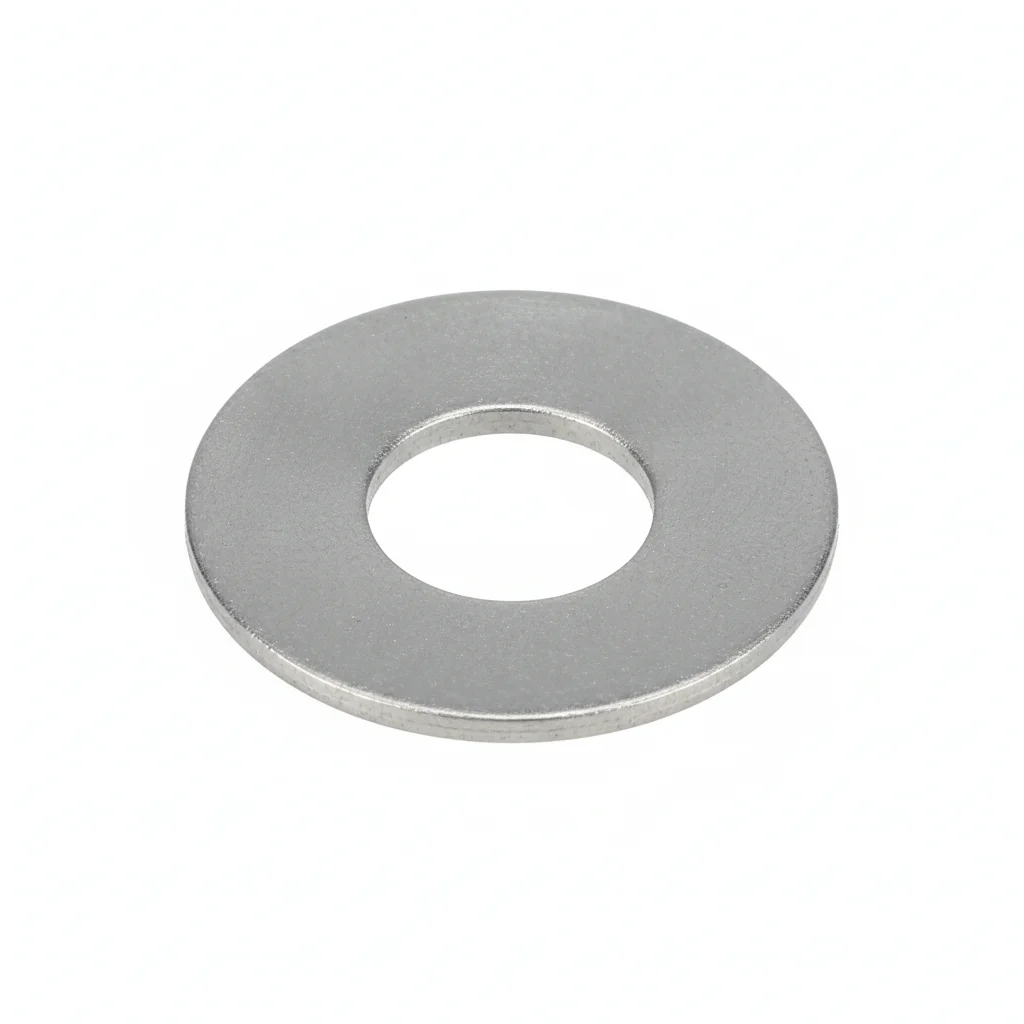
| Trash Rack Fixing Bolt | Grille Fixing Clip | Underwater Thread-Locking Compound | Flat Washer | Flat Washer | |
|---|---|---|---|---|---|
| SPEC | M12-M24 | Customized by bar diameter | Loctite 277/Equivalent | M10-M12 | M10-M12 |
| MATERIAL | 316L | 316L Cast | / | 304 Stainless | 304 Stainless |
| GRADE | A4-80 | / | / | A2 | A2 |
| FINISH | HDG >=55um per ISO 1461 | HDG >=55um per ISO 1461 | HDG >=55um per ISO 1461 | Passivated | Passivated |
| CORROSION | C3 (ISO 12944-2) | C3 (ISO 12944-2) | C3 (ISO 12944-2) | C3 (ISO 12944-2) | C3 (ISO 12944-2) |
| TEMP | -20°C to +80°C | -20°C to +80°C | -20°C to +80°C | -20°C to +80°C | -20°C to +80°C |
| WEIGHT | ~0.5 kg/piece | ~0.5 kg/piece | ~0.5 kg/piece | ~0.005kg | ~0.005kg |
| MOQ | 100 pcs | 100 pcs | 100 pcs | 500 pcs | 500 pcs |
| PACK | VCI paper + carton | VCI paper + carton | VCI paper + carton | Plastic bag | Plastic bag |
| STD | ISO 898-1, GB/T 3098.1 | ISO 898-1, GB/T 3098.1 | ISO 898-1, GB/T 3098.1 | ISO 7089 | ISO 7089 |
| USE | Connection between trash rack and intake structure | Fixing bars to crossbeams | Bolt anti-loosening | Load distribution | Load distribution |
PROCEDURE
- Clean the M12-M24 bolt threads and mating surfaces with a solvent to remove grease and debris; verify the contact area is dry before applying the underwater thread-locking compound.
- Apply the Loctite 277/Equivalent compound to the bolt threads, then insert the bolt through the trash rack flange and into the intake structure anchor.
- Place the flat washer (M10-M12) under the nut, then hand-tighten the nut until snug.
- Tighten the nut to the specified torque in a star pattern to ensure even clamping; use a calibrated torque wrench and record the final torque value.
- After tightening, mark the nut and bolt with a torque seal paint to indicate proper installation and allow visual check for loosening.
COMMON ERRORS
| ✕ WRONG | CONSEQUENCE | ✓ CORRECT |
|---|---|---|
| Using a carbon steel bolt instead of 316L A4-80 in a C3 corrosion environment | Rust forms within 3 months and fatigue fracture can occur within 1 year under water flow impact, risking trash rack tilt and turbine damage. | Select 316L stainless steel bolts with grade A4-80 per ISO 3506, and ensure the surface finish meets HDG >=55um per ISO 1461 if specified. |
| Applying standard anaerobic thread-locking adhesive instead of an underwater-grade compound | The adhesive may not cure underwater, leading to bolt loosening from flow pulsation and preload loss. | Use a specialized underwater thread-locking compound like Loctite 277/Equivalent, which is designed to cure in wet conditions. |
| Skipping the tap test on grille clip bolts during routine inspections | Loose bolts go undetected, allowing bar movement and accelerated wear or detachment. | Perform a tap test on each clip bolt at every inspection; a distinct sound indicates looseness and requires re-tightening or replacement. |
MAINTENANCE
Inspect bottom bolts (most stressed position) every 3 years during the dry season; replace if cracks appear or diameter reduction >0.5mm. Perform a tap test on each clip bolt every 2 years during inspection. Re-torque any bolt that shows signs of loosening.
Plan B · High Head/Large Intake Reinforcement
C4 Harsh per ISO 12944-2
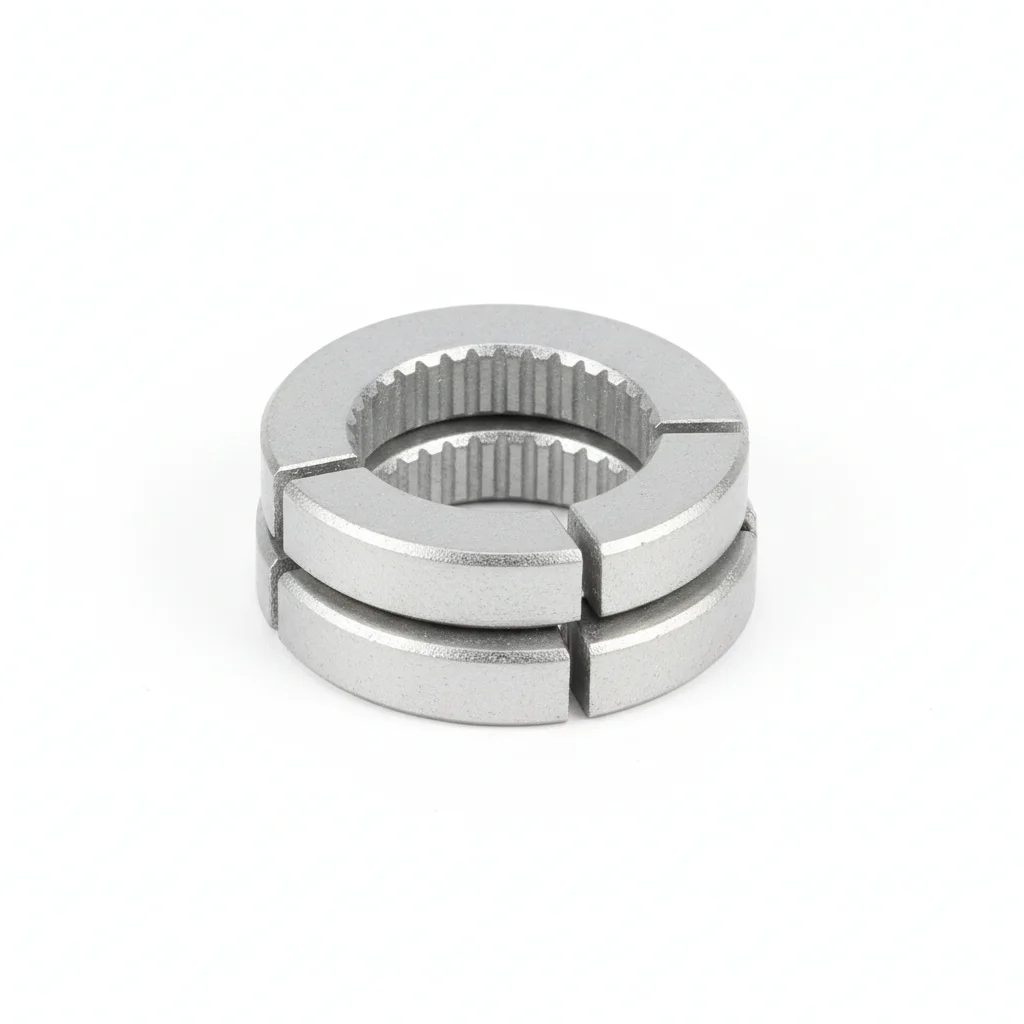
| Large Specification Bolt | Wedge-Locking Washer | Flat Washer | Flat Washer | Flat Washer | |
|---|---|---|---|---|---|
| SPEC | M24-M36 | NL12-NL36 | M10-M12 | M10-M12 | M10-M12 |
| MATERIAL | 316L | 316L | 304 Stainless | 304 Stainless | 304 Stainless |
| GRADE | A4-80 | / | A2 | A2 | A2 |
| FINISH | HDG >=55um per ISO 1461 | HDG >=55um per ISO 1461 | Passivated | Passivated | Passivated |
| CORROSION | C3 (ISO 12944-2) | C3 (ISO 12944-2) | C3 (ISO 12944-2) | C3 (ISO 12944-2) | C3 (ISO 12944-2) |
| TEMP | -20°C to +80°C | -20°C to +80°C | -20°C to +80°C | -20°C to +80°C | -20°C to +80°C |
| WEIGHT | ~0.5 kg/piece | ~0.5 kg/piece | ~0.005kg | ~0.005kg | ~0.005kg |
| MOQ | 100 pcs | 100 pcs | 500 pcs | 500 pcs | 500 pcs |
| PACK | VCI paper + carton | VCI paper + carton | Plastic bag | Plastic bag | Plastic bag |
| STD | ISO 898-1, GB/T 3098.1 | ISO 898-1, GB/T 3098.1 | ISO 7089 | ISO 7089 | ISO 7089 |
| USE | High head main fixing point | Anti-loosening in high vibration water flow | Load distribution | Load distribution | Load distribution |
PROCEDURE
- Clean M24-M36 316L bolts and mating surfaces with acetone, ensuring no oil film remains; verify surface roughness below 3.2 µm Ra.
- Apply Loctite 277 thread-locking compound to the bolt threads, then assemble with a 316L wedge-locking washer (NL12-NL36) under the nut.
- Tighten in a cross-pattern to the specified preload, using a calibrated torque wrench; for M36, consider hydraulic tensioning to achieve uniform clamp load.
- Mark each bolt and nut with a torque seal after final tightening, and record torque values in the QA log for traceability.
- Perform a tap test on a 10% sample of installed bolts to confirm they are snug; any dull sound indicates a loose bolt requiring re-torque.
COMMON ERRORS
| ✕ WRONG | CONSEQUENCE | ✓ CORRECT |
|---|---|---|
| Reusing old 316L bolts that have already been tightened and exposed to water flow | Work-hardened threads and micro-cracks reduce fatigue life, leading to premature fracture under high-head vibration. | Use new A4-80 bolts for each installation; if reuse is unavoidable, inspect threads with dye penetrant and replace any with indications. |
| Installing wedge-locking washers with the serrations facing the wrong direction | The locking wedges fail to engage, allowing the nut to rotate loose under 1-5 Hz flow pulsation. | Orient the wedge-locking washer so the tapered teeth mesh between the nut and the workpiece, as per manufacturer instructions. |
MAINTENANCE
At each overhaul window, verify torque on all M24-M36 bolts and re-torque any below 80% of specified preload. Inspect wedge-locking washers for permanent deformation and replace if flattened. During annual dry-season inspections, measure bolt diameter for abrasion loss; replace if section reduction exceeds 1 mm. For high-head intakes, perform ultrasonic testing on a 10% sample of bolts to detect thread-root cracks.
Plan C · Extreme Environment/Offshore Configuration
C5-M Extreme per ISO 12944-2
| Trash Rack Bolt | Clip | Titanium Alloy Grille Bolt | Underwater Epoxy Locking Compound | Wedge-Locking Washer | |
|---|---|---|---|---|---|
| SPEC | M16-M30 | Customized by bar | M12-M20 | Loctite 277/Equivalent | NL12-NL30 |
| MATERIAL | 2205 Duplex Steel | 2205 Cast | Ti6Al4V | — | 316L |
| GRADE | PREN≥34 | — | — | — | — |
| FINISH | HDG >=55um per ISO 1461 | HDG >=55um per ISO 1461 | HDG >=55um per ISO 1461 | HDG >=55um per ISO 1461 | HDG >=55um per ISO 1461 |
| CORROSION | C3 (ISO 12944-2) | C3 (ISO 12944-2) | C3 (ISO 12944-2) | C3 (ISO 12944-2) | C3 (ISO 12944-2) |
| TEMP | -20°C to +80°C | -20°C to +80°C | -20°C to +80°C | -20°C to +80°C | -20°C to +80°C |
| WEIGHT | ~0.5 kg/piece | ~0.5 kg/piece | ~0.5 kg/piece | ~0.5 kg/piece | ~0.5 kg/piece |
| MOQ | 100 pcs | 100 pcs | 100 pcs | 100 pcs | 100 pcs |
| PACK | VCI paper + carton | VCI paper + carton | VCI paper + carton | VCI paper + carton | VCI paper + carton |
| STD | ISO 898-1, GB/T 3098.1 | ISO 898-1, GB/T 3098.1 | ISO 898-1, GB/T 3098.1 | ISO 898-1, GB/T 3098.1 | ISO 898-1, GB/T 3098.1 |
| USE | Deep-sea trash rack | Deep-sea grille fixing | Highest corrosion protection grade | Deep-sea bolt anti-loosening | Anti-loosening in high vibration water flow |
PROCEDURE
- Degrease 2205 duplex or Ti6Al4V bolts with MEK and passivate surfaces to ensure a clean, corrosion-resistant finish.
- Apply underwater epoxy locking compound to threads, then assemble with PTFE-encapsulated washers to prevent galvanic corrosion in seawater.
- Tighten using hydraulic tensioning to achieve precise preload, avoiding thread galling common in duplex and titanium alloys.
- Verify alloy grade on a 10% sample using PMI (Positive Material Identification) to confirm PREN≥34 for 2205.
- Apply a marine-grade sealant over the bolt head and nut to exclude water, and install corrosion monitoring coupons nearby.
COMMON ERRORS
| ✕ WRONG | CONSEQUENCE | ✓ CORRECT |
|---|---|---|
| Mixing 2205 duplex bolts with 316L clips in the same assembly | Galvanic corrosion accelerates attack on the 316L component in seawater, reducing its section within 2-3 years. | Use 2205 duplex for both bolts and clips, or electrically isolate dissimilar metals with PTFE washers. |
| Tightening titanium alloy bolts with standard torque without lubrication | High friction causes galling and seizing, leading to under-preload and loosening under vibration. | Apply anti-seize compound specified for titanium (e.g., molybdenum disulfide) and use slow, controlled tightening. |
MAINTENANCE
Inspect bolts annually for pitting and crevice corrosion, especially in the thread roots; replace if pitting depth exceeds 0.3 mm. Every 5 years, perform full disassembly and dye-penetrant inspection on a 20% sample of critical bolts. Monitor corrosion coupons and replace fasteners if section loss exceeds 1 mm. Use ROV-based visual inspection for underwater bolts during the dry season.
SUPPLIER CAPABILITY
Quality, Delivery & Customization
Quality Control
- ✓MTC material certificates with every batch
- ✓Key parts sampled for hardness/salt spray/torque coefficient
- ✓100% inspection or AQL sampling before shipment
Delivery
- ✓Standard parts made to order: 7-15 days
- ✓Custom parts: 25-45 days
- ✓FOB/CIF/DDP supported
Customization
- ✓Drawing review and material matching
- ✓Non-standard sizes/heads/threads
- ✓Small-batch prototyping supported
Certification
- ✓Material certificates (MTC)
- ✓Spectrographic analysis reports
- ✓Salt spray test reports (on request)
MOQ: No MOQ for standard parts; custom parts assessed by process complexity
FAQ
FAQ
RELATED READING
Keep Reading & Next Step
BEYOND TECHNICAL SPECS
Finding the right factory, controlling quality, delivering on time — that's the real challenge. We cover fasteners, rubber, plastics, industrial textiles. One team, end to end.
SEE CAPABILITIES →