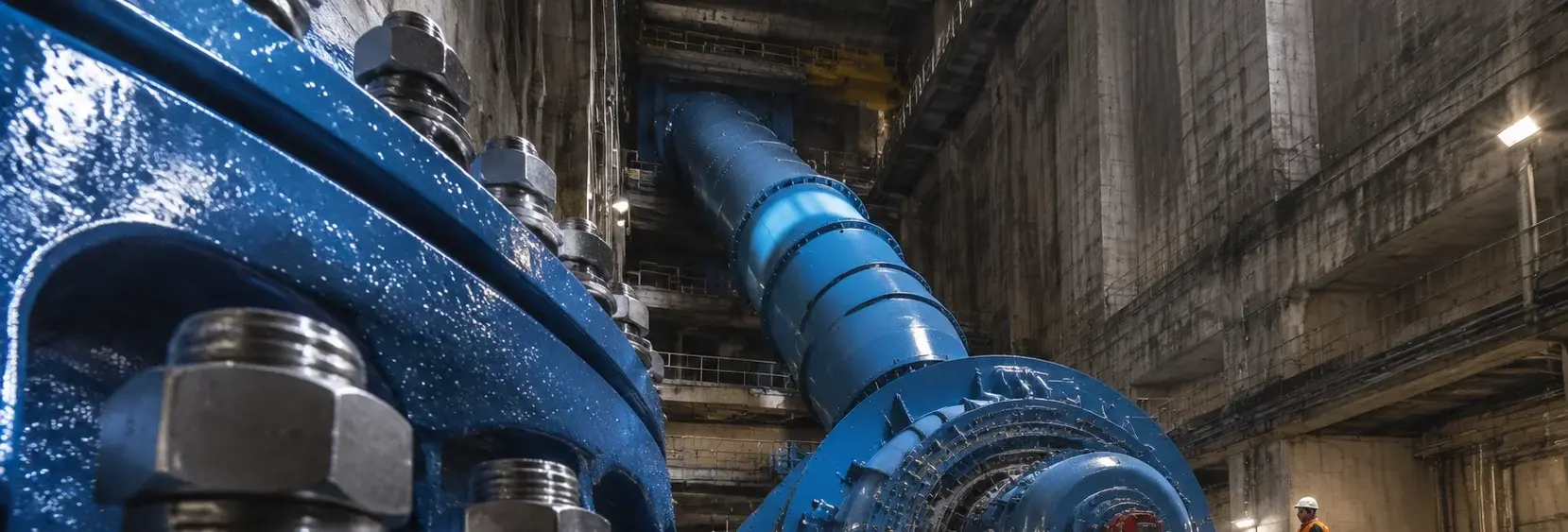
Pump & Auxiliary Fasteners for Hydropower
The auxiliary system of hydropower stations—technical water supply/drainage pumps, leakage drainage pumps, fire pumps, cooling water pumps—is the 'logistics force' ensuring the safe operation of hydro-turbine generator units. Pump anchor bolts, due to long-term vibration fatigue fracture → pump body displacement → coupling misalignment → bearing burnout → cooling water interruption → forced unit shutdown.
RISK AUDIT // ENGINEERING DIAGNOSIS
Procurement Pitfall Guide
"Reverse water hammer, vibration-induced ferrule leakage, and start-stop preload loss—these failure chains are specific to hydropower pump auxiliary systems."
QC-AUDIT // REV.5
SCALE 1:1 · 03 ITEMS
RISK-01
Pump Impeller Nut Loosening During Reverse Water Hammer
Corrective Measures
RISK-02
Cooling Water Pipe Ferrule Connector Leaking Under Vibration
Corrective Measures
RISK-03
Pump Foundation Bolt Preload Loss Under Start-Stop Water Hammer Impact
Corrective Measures
FIELD-SPECIFIC INSIGHT
Critical Failure Chains in Hydropower Pump Fasteners
Three distinct failure mechanisms threaten pump auxiliary system reliability: reverse water hammer loosening of impeller nuts, vibration-induced ferrule connector leakage, and start-stop preload loss in foundation bolts. Each requires a different specification approach.
WHAT TO CHECK
- 1Impeller lock nut: Reverse water hammer pressure up to 3x working pressure creates reverse torque; friction-only nuts fail → specify wedge anti-loosening washer or positive locking (e.g., cotter pin).
- 2Ferrule connector: 12.5-25Hz vibration causes micromotion cutting of pipe wall → specify double ferrule design with 316L material and verify cutting edge hardness.
- 3Foundation bolt: 200-500 start-stop cycles/year leads to >30% preload loss in 5 years → specify re-torque interval at 250 operating hours and use tension-indicating washers.
| Check | Why it matters | What to specify |
|---|---|---|
| Impeller nut locking method | Reverse water hammer can loosen friction-only nuts, causing axial impeller movement and casing wear. | Wedge anti-loosen washer (NL12-NL24) or positive locking device per pump model. |
| Ferrule connector material and design | Vibration at 12.5-25Hz causes ferrule cutting edge to thin pipe wall, leading to cooling water leakage and insulation failure. | Double ferrule connector, 316L, with cutting edge hardness per manufacturer spec. |
| Foundation bolt preload retention | Start-stop cycles >2000 in 5 years reduce preload >30%, causing pump vibration and bearing wear. | Re-torque at 250 operating hours; use tension-indicating washers; maximum allowable tension loss 15%. |
| Corrosion protection for seawater cooling | Seawater accelerates pitting and crevice corrosion on fasteners, reducing fatigue life. | 316L or 2205 duplex stainless steel; HDG thickness per ISO 1461 for carbon steel. |
All torque values and inspection intervals must be verified against pump manufacturer's manual. Data based on typical hydropower conditions; site-specific vibration analysis recommended.
Evidence level: source-page-only
INDUSTRY TECH REFERENCE
Pump & Auxiliary Consumables: How Often to Replace
Auxiliary-pump fasteners and seals are mostly replaced on a time basis — seal bolts, gland bolts, and auxiliary bolts each have their own cycle; don't wait for a failure to break the pump down.
| Part | Size / material | Replacement cycle |
|---|---|---|
| Pump mechanical-seal bolts | — | 2–3 years |
| Valve gland bolts | — | 3–5 years |
| Turbine auxiliary bolts (cooling / lubrication pumps) | M10–M20, 304 | Seal: 2–3 years |
Replacement cycles and bolt sizes are magnitude estimates.
INDUSTRY TECH REFERENCE
How Acidic Water Corrodes Auxiliary Flanges
Example: technical supply/drainage pumps and cooling-water pump flanges at a tropical plant.
- 1Tropical peat water runs acidic (pH 4–6) and auxiliary pumps and pipe flanges sit in it continuously
- 2Some rivers also carry high sulfide or chloride loads, accelerating corrosion further
- 3Flange bolts and sealing faces corrode first, weeping starts, and the unit has to be shut down
- 4Response: specify 316L or higher outright — skip carbon steel
INDUSTRY TECH REFERENCE
Stocking Pump Bolts at a Mountain Plant
At remote plants every order takes long to arrive — stock consumables by cycle instead of arranging emergency freight after a shutdown.
Stock to the replacement cycle: mechanical-seal bolts at 2–3 years and gland bolts at 3–5 years, ordered together at overhaul; oversize critical fixings; and keep an on-site spares set. With poor mountain roads and a long supply chain, emergency deliveries are rarely realistic.
PLAN COMPARISON
Three-Plan Core Parameter Comparison
Compare row by row. Click column headers to jump to plan details.
| A · Plan A · Standard Auxiliary Fastening | B · Plan B · Large Unit/Seawater Cooling | C · Plan C · Extreme Environment/Offshore Configuration | |
|---|---|---|---|
| 1. PUMP BODY BOLT | |||
| SPEC | M12-M24 | M16-M24 | M16-M24 |
| MATERIAL | 316L | 42CrMoA | 316L |
| GRADE | A4-70 | Grade 10.9 Dacromet | A4-80 |
| FINISH | HDG >=55um per ISO 1461 | HDG >=55um per ISO 1461 | HDG >=55um per ISO 1461 |
| 2. IMPELLER LOCK NUT | |||
| SPEC | Per pump model | NL12-NL24 | Per pump model |
| MATERIAL | 316L | 316L | 2205 Duplex Stainless Steel |
| GRADE | A4-70 | / | — |
| FINISH | HDG >=55um per ISO 1461 | HDG >=55um per ISO 1461 | HDG >=55um per ISO 1461 |
| 3. DOUBLE FERRULE CONNECTOR | |||
| SPEC | DN10-DN20 | M10-M12 | DN10-DN20 |
| MATERIAL | 316L | 304 Stainless | 316L |
| GRADE | / | A2 | — |
| FINISH | HDG >=55um per ISO 1461 | Passivated | HDG >=55um per ISO 1461 |
| 4. FLAT WASHER | |||
| SPEC | M10-M12 | M10-M12 | M16-M24 |
| MATERIAL | 304 Stainless | 304 Stainless | Ti6Al4V |
| GRADE | A2 | A2 | — |
| FINISH | Passivated | Passivated | HDG >=55um per ISO 1461 |
| 5. FLAT WASHER | |||
| SPEC | M10-M12 | M10-M12 | Per pump model |
| MATERIAL | 304 Stainless | 304 Stainless | FFKM |
| GRADE | A2 | A2 | Temperature resistant 300°C |
| FINISH | Passivated | Passivated | HDG >=55um per ISO 1461 |
SELECTION GUIDE
Still Unsure Which Plan Fits Your Pump Layout?
| Operating condition | Recommended option | Key basis |
|---|---|---|
| Standard auxiliary pump | Plan A · Standard Auxiliary Fastening: 316L (A4-70) | ISO 3506, ISO 5199; C3 (ISO 12944-2) |
| Large unit / seawater cooling | Plan B · Grade 10.9 (42CrMoA Dacromet) + 316L wedge anti-loosening washer | C4 Harsh per ISO 12944-2 |
| Extreme / offshore (C5-M) | Plan C · Full 316L or 2205 duplex or titanium alloy (Ti6Al4V) | C5-M Extreme per ISO 12944-2 |
Plan A · Standard Auxiliary Fastening
C3 (ISO 12944-2) with 316L A4-70 fasteners
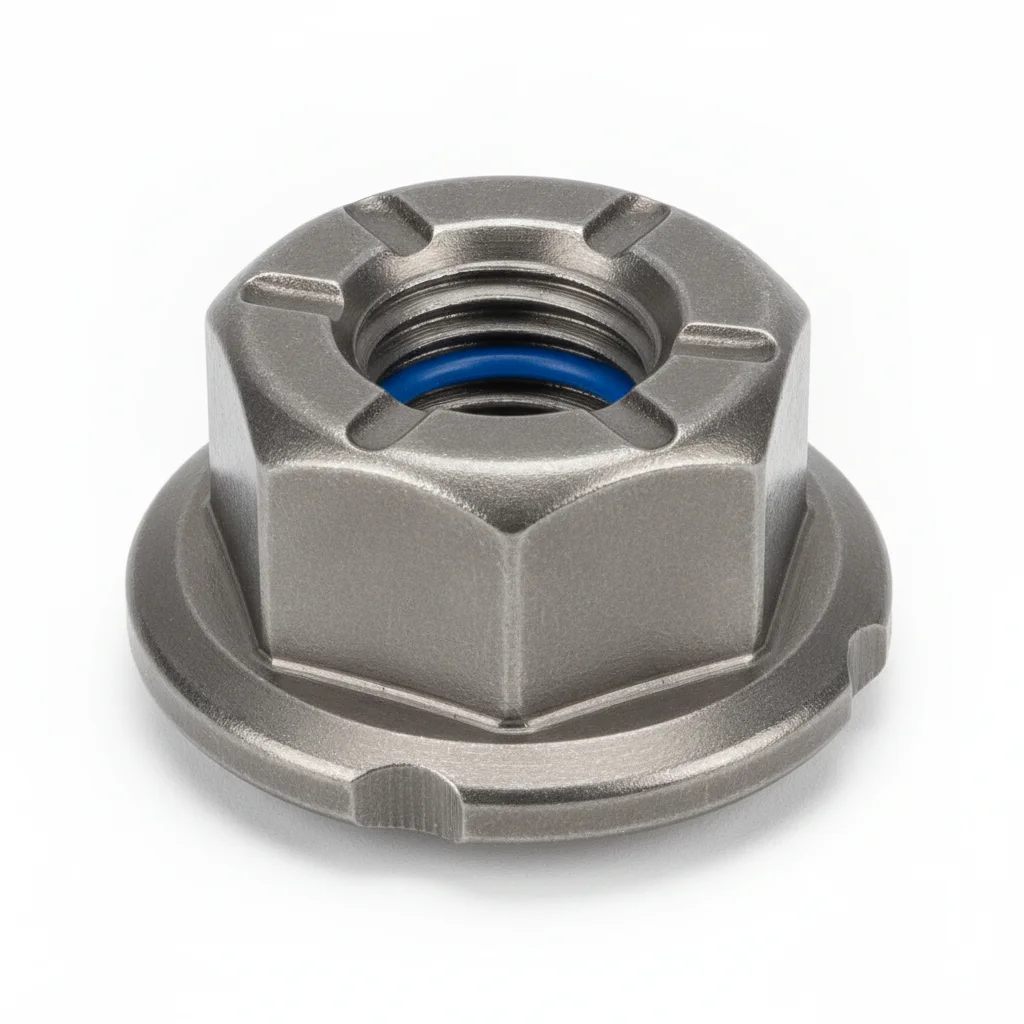
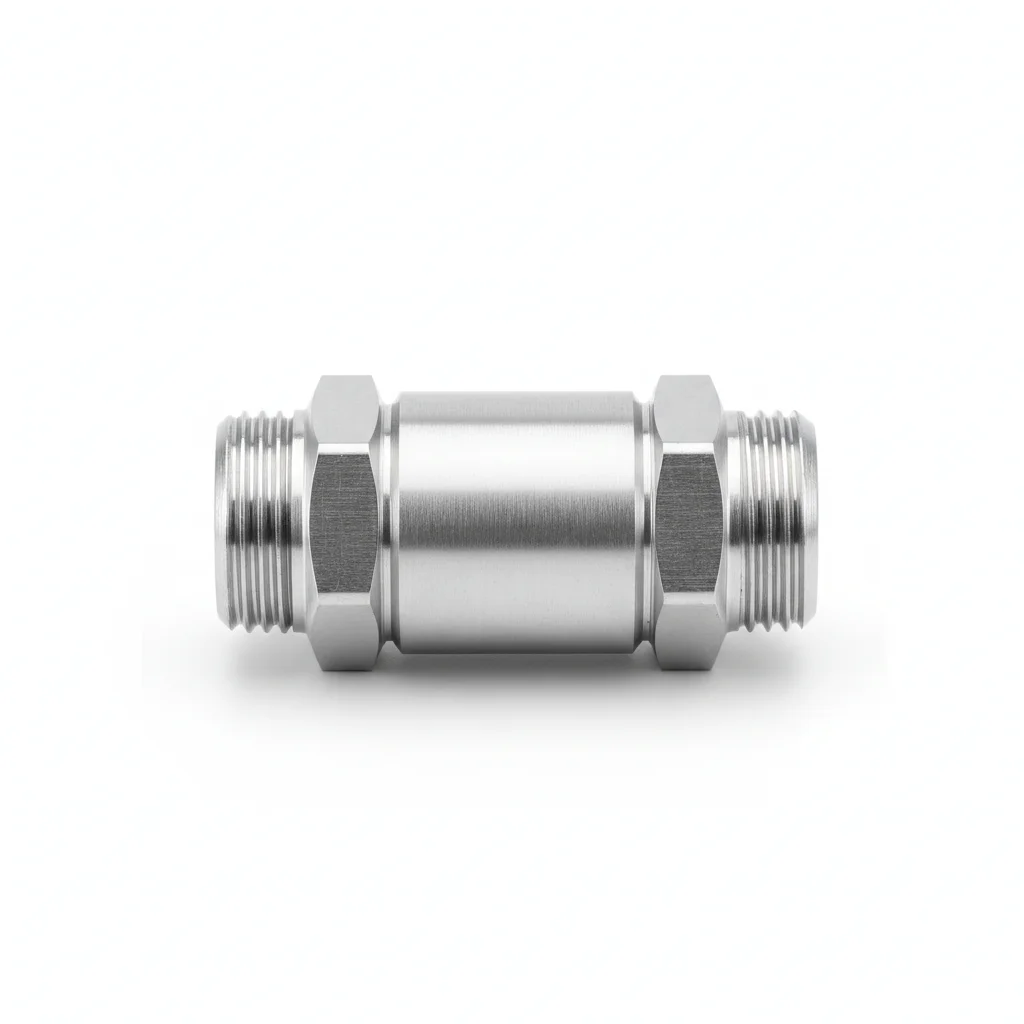
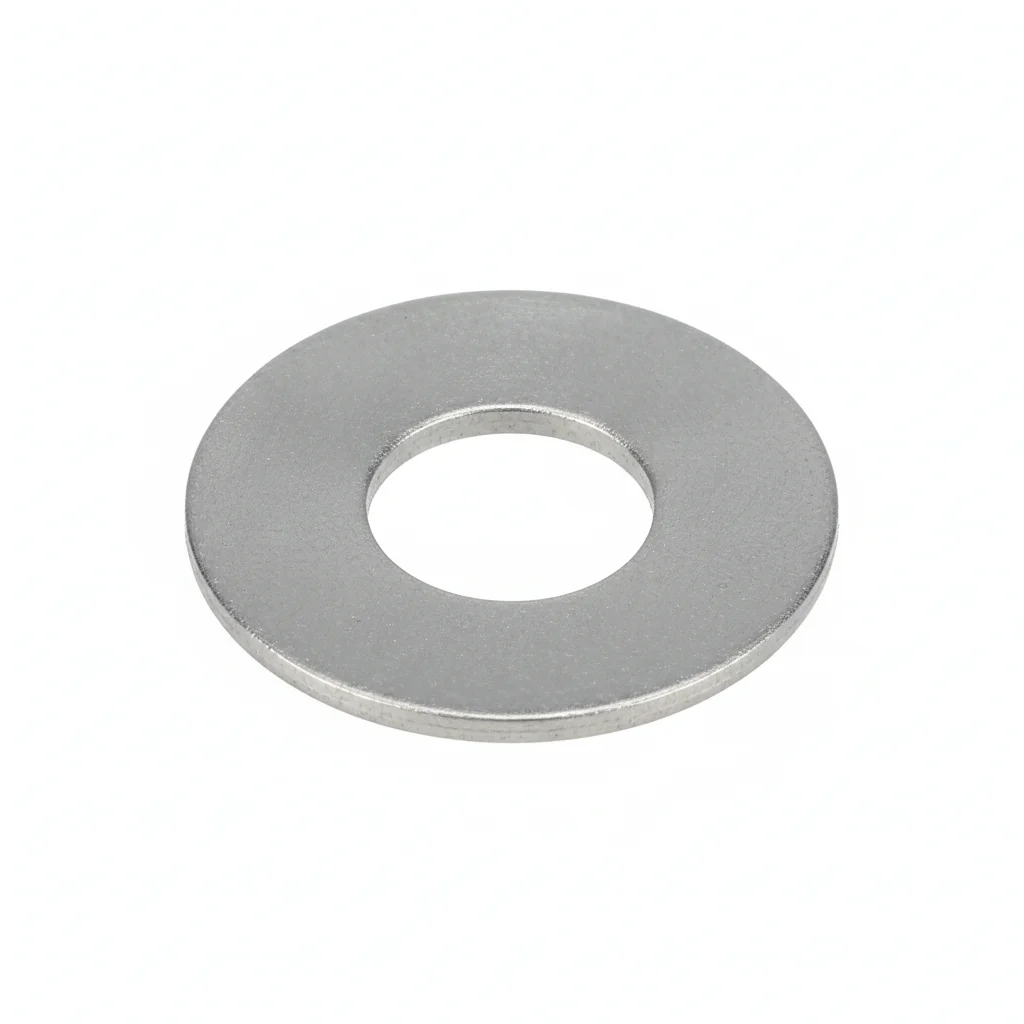
| Pump Body Bolt | Impeller Lock Nut | Double Ferrule Connector | Flat Washer | Flat Washer | |
|---|---|---|---|---|---|
| SPEC | M12-M24 | Per pump model | DN10-DN20 | M10-M12 | M10-M12 |
| MATERIAL | 316L | 316L | 316L | 304 Stainless | 304 Stainless |
| GRADE | A4-70 | A4-70 | / | A2 | A2 |
| FINISH | HDG >=55um per ISO 1461 | HDG >=55um per ISO 1461 | HDG >=55um per ISO 1461 | Passivated | Passivated |
| CORROSION | C3 (ISO 12944-2) | C3 (ISO 12944-2) | C3 (ISO 12944-2) | C3 (ISO 12944-2) | C3 (ISO 12944-2) |
| TEMP | -20°C to +80°C | -20°C to +80°C | -20°C to +80°C | -20°C to +80°C | -20°C to +80°C |
| WEIGHT | ~0.5 kg/piece | ~0.5 kg/piece | ~0.5 kg/piece | ~0.005kg | ~0.005kg |
| MOQ | 100 pcs | 100 pcs | 100 pcs | 500 pcs | 500 pcs |
| PACK | VCI paper + carton | VCI paper + carton | VCI paper + carton | Plastic bag | Plastic bag |
| STD | ISO 898-1, GB/T 3098.1 | ISO 898-1, GB/T 3098.1 | ISO 898-1, GB/T 3098.1 | ISO 7089 | ISO 7089 |
| USE | Pump body-base connection | Impeller and pump shaft locking | Cooling water pipe connection | Load distribution | Load distribution |
PROCEDURE
- Degrease mating faces and confirm the 316L surface is free of any chloride contamination before assembly.
- Apply a water-resistant thread-locking compound to the impeller lock nut threads, then seat the lock washer tab into the shaft keyway.
- Tighten multi-stage pump intermediate bolts symmetrically from the middle outward, stepping torque per the manufacturer's sequence.
- Verify the ferrule pre-assembly depth against the connector manufacturer's mark; too shallow or too deep compromises the seal.
- Mark each tightened fastener with torque seal paint and log the torque value and operator ID for the QA record.
COMMON ERRORS
| ✕ WRONG | CONSEQUENCE | ✓ CORRECT |
|---|---|---|
| Installing the impeller nut with only friction-based locking, omitting the lock washer and thread-locking compound | A reverse water hammer can back the nut off, allowing axial impeller movement that wears the casing and wear rings, increasing vibration and reducing efficiency. | Use the lock washer plus a water-resistant thread-locking compound, and inspect the thread root for fatigue cracks during the 3-year overhaul. |
| Tightening the ferrule connector without checking the pre-assembly depth mark | If the ferrule cuts too deep, the pipe wall thins and leaks; if too shallow, the seal fails under 12.5–25 Hz vibration, letting cooling water reach the generator windings. | Follow the manufacturer's ferrule pre-assembly marking exactly and visually check for wet marks or white scale during the annual inspection. |
| Using ordinary spring washers on foundation bolts subject to start-stop water hammer | Spring washers cannot maintain preload under pulsating loads; preload loss exceeds 30% after 5 years, causing pump vibration and accelerated bearing wear. | Specify Grade 10.9 bolts with disc spring washers and re-torque when preload loss exceeds 15% per the annual check. |
MAINTENANCE
At each overhaul window (manufacturer-recommended interval), disassemble the impeller nut to inspect for thread-root fatigue cracks. Annually, check foundation bolt preload and retighten any bolt with loss >15%, and visually inspect ferrule connectors for 'wet marks' or white scale as early micro-leakage signs. Replace 316L fasteners if corrosion exceeds 5% of surface area or pitting depth >0.3 mm.
Plan B · Large Unit/Seawater Cooling
C4 Harsh per ISO 12944-2
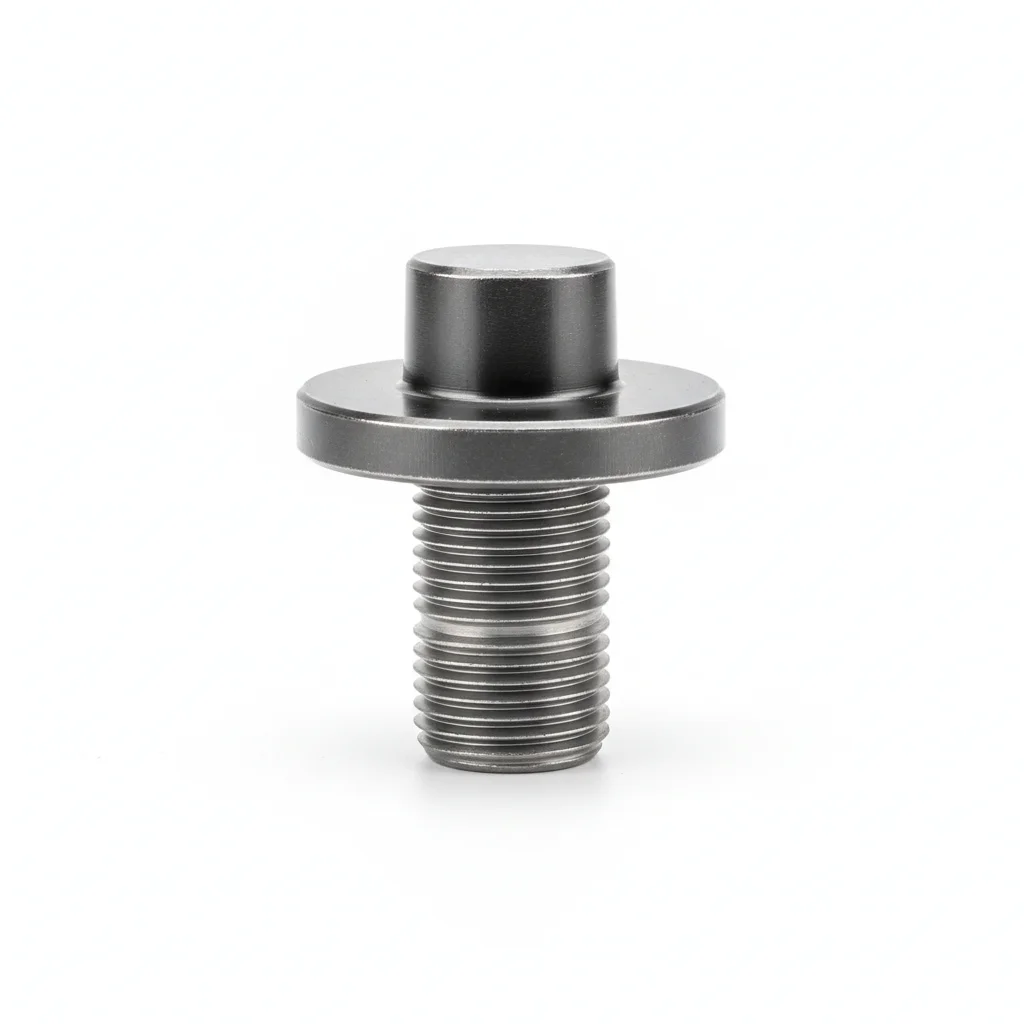
| Bearing Housing Bolt | Wedge Anti-Loosening Washer | Flat Washer | Flat Washer | Flat Washer | |
|---|---|---|---|---|---|
| SPEC | M16-M24 | NL12-NL24 | M10-M12 | M10-M12 | M10-M12 |
| MATERIAL | 42CrMoA | 316L | 304 Stainless | 304 Stainless | 304 Stainless |
| GRADE | Grade 10.9 Dacromet | / | A2 | A2 | A2 |
| FINISH | HDG >=55um per ISO 1461 | HDG >=55um per ISO 1461 | Passivated | Passivated | Passivated |
| CORROSION | C3 (ISO 12944-2) | C3 (ISO 12944-2) | C3 (ISO 12944-2) | C3 (ISO 12944-2) | C3 (ISO 12944-2) |
| TEMP | -20°C to +80°C | -20°C to +80°C | -20°C to +80°C | -20°C to +80°C | -20°C to +80°C |
| WEIGHT | ~0.5 kg/piece | ~0.5 kg/piece | ~0.005kg | ~0.005kg | ~0.005kg |
| MOQ | 100 pcs | 100 pcs | 500 pcs | 500 pcs | 500 pcs |
| PACK | VCI paper + carton | VCI paper + carton | Plastic bag | Plastic bag | Plastic bag |
| STD | ISO 898-1, GB/T 3098.1 | ISO 898-1, GB/T 3098.1 | ISO 7089 | ISO 7089 | ISO 7089 |
| USE | Large pump bearing housing | All critical bolts | Load distribution | Load distribution | Load distribution |
PROCEDURE
- Degrease the bearing housing flange and bolt threads with acetone, then confirm surface roughness is below Ra 3.2 μm to suit the 42CrMoA Grade 10.9 Dacromet bolts.
- Apply anti-seize compound rated for -20°C to +80°C to the threads of M16-M24 bolts, and place a wedge anti-loosening washer (NL12-NL24) under each nut.
- Align the bearing housing to the pump base within 0.5 mm, then tighten the bolts in a cross-pattern sequence to the torque specified for Grade 10.9, verifying with a calibrated wrench.
- Spot-check 10% of the installed bolts with a torque verification tool and log the values along with ambient temperature and humidity data.
- Pull-test a 5% random sample to 80% of the proof load; replace any bolt that does not meet the acceptance threshold.
- Apply a weatherproof protective coating over the bolt heads and install a corrosion monitoring coupon near the critical bearing housing joints.
COMMON ERRORS
| ✕ WRONG | CONSEQUENCE | ✓ CORRECT |
|---|---|---|
| Using a plain washer instead of a wedge anti-loosening washer under the bearing housing bolts | Vibration from the pump can back off the nut, leading to loosening of the bearing housing and eventual bearing misalignment. | Install wedge anti-loosening washers (NL12-NL24) under all critical bearing housing bolt nuts to maintain preload under vibration. |
| Tightening the bearing housing bolts without following the specified cross-pattern sequence | Uneven clamping can distort the bearing housing, causing premature bearing wear and seal leakage. | Tighten in a cross-pattern sequence in at least three passes, gradually increasing to the final torque. |
MAINTENANCE
Inspect the bearing housing bolts at each overhaul window or seasonally, whichever comes first. Re-torque any bolt that has lost more than 15% of its specified preload. Replace bolts showing corrosion pitting deeper than 0.3 mm or affecting more than 5% of the surface area. Every 3 years, perform a full disassembly and inspection of a 20% sample of the fasteners. Document all findings in the CMMS with date, inspector ID, and corrective actions.
Plan C · Extreme Environment/Offshore Configuration
C5-M Extreme per ISO 12944-2
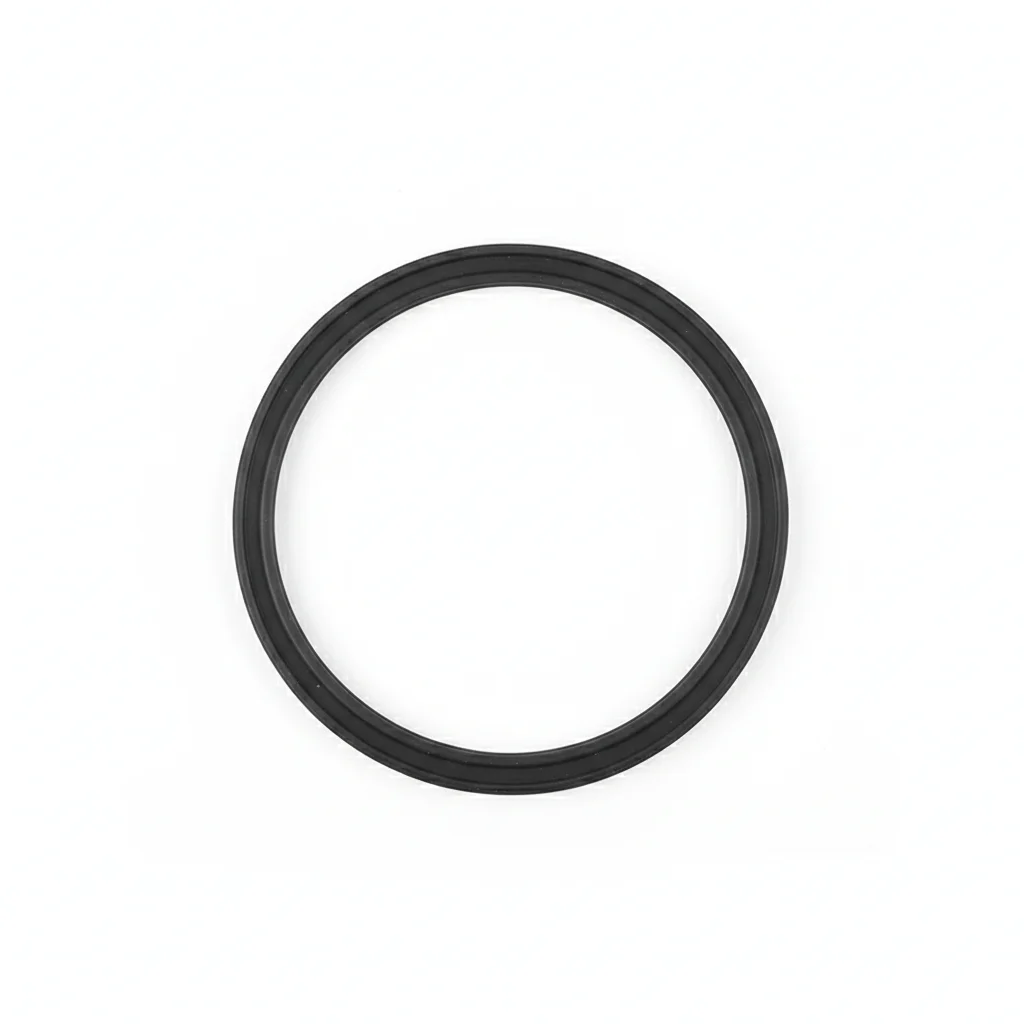
| Pump Body Bolt | Impeller Nut | Ferrule Connector | Titanium Alloy Bearing Housing Bolt | O-Ring | |
|---|---|---|---|---|---|
| SPEC | M16-M24 | Per pump model | DN10-DN20 | M16-M24 | Per pump model |
| MATERIAL | 316L | 2205 Duplex Stainless Steel | 316L | Ti6Al4V | FFKM |
| GRADE | A4-80 | — | — | — | Temperature resistant 300°C |
| FINISH | HDG >=55um per ISO 1461 | HDG >=55um per ISO 1461 | HDG >=55um per ISO 1461 | HDG >=55um per ISO 1461 | HDG >=55um per ISO 1461 |
| CORROSION | C3 (ISO 12944-2) | C3 (ISO 12944-2) | C3 (ISO 12944-2) | C3 (ISO 12944-2) | C3 (ISO 12944-2) |
| TEMP | -20°C to +80°C | -20°C to +80°C | -20°C to +80°C | -20°C to +80°C | -20°C to +80°C |
| WEIGHT | ~0.5 kg/piece | ~0.5 kg/piece | ~0.5 kg/piece | ~0.5 kg/piece | ~0.5 kg/piece |
| MOQ | 100 pcs | 100 pcs | 100 pcs | 100 pcs | 100 pcs |
| PACK | VCI paper + carton | VCI paper + carton | VCI paper + carton | VCI paper + carton | VCI paper + carton |
| STD | ISO 898-1, GB/T 3098.1 | ISO 898-1, GB/T 3098.1 | ISO 898-1, GB/T 3098.1 | ISO 898-1, GB/T 3098.1 | ISO 898-1, GB/T 3098.1 |
| USE | Seawater medium pump body | Seawater pump impeller locking | Seawater cooling pipeline | Long-term immersion in seawater pump | Seawater pump sealing |
PROCEDURE
- Degrease the seawater pump flange and bolt threads with MEK, and verify surface roughness is below Ra 1.6 μm to suit the 316L A4-80 and 2205 duplex materials.
- Apply a marine-grade anti-corrosion compound rated for -50°C to +200°C to the threads of all M16-M24 bolts, and place PTFE-encapsulated washers under heads and nuts.
- Align the pump body to within 0.3 mm, then tighten the bolts using a hydraulic tensioner to achieve the specified preload for A4-80 or 2205 duplex fasteners.
- Perform PMI (Positive Material Identification) verification on a 10% sample of the bolts to confirm material grade, and document results for the compliance audit.
- Conduct dye penetrant NDT testing on a 10% sample of the installed fasteners; replace any that show crack indications.
- Apply a protective sealant over the bolt heads and install permanent condition monitoring instrumentation to track preload and corrosion in service.
COMMON ERRORS
| ✕ WRONG | CONSEQUENCE | ✓ CORRECT |
|---|---|---|
| Using 316L bolts for the impeller nut in seawater service instead of the specified 2205 duplex stainless steel | The higher chloride content of seawater can cause pitting and crevice corrosion on 316L, leading to premature failure of the impeller nut. | Specify 2205 duplex stainless steel for the impeller nut in seawater pumps to resist chloride-induced stress corrosion cracking. |
| Overtightening the ferrule connector during installation, cutting too deeply into the pipe wall | The ferrule cutting edge can sever the pipe wall, causing immediate leakage and potential loss of cooling water. | Follow the manufacturer's pre-assembly markings exactly; when the ferrule is properly seated, tighten the nut the specified number of turns beyond the marking. |
MAINTENANCE
Inspect all fasteners at each overhaul window or seasonally, whichever comes first. Re-torque any bolt that has lost more than 15% of its specified preload. Replace fasteners showing corrosion pitting deeper than 0.3 mm or affecting more than 5% of the surface area. Every 3 years, perform a full disassembly and inspection of a 20% sample of the fasteners, including dye penetrant testing on the 2205 duplex and titanium alloy components. Document all findings in the CMMS with date, inspector ID, and corrective actions.
REFERENCED STANDARDS
References
SUPPLIER CAPABILITY
Quality, Delivery & Customization
Quality Control
- ✓MTC material certificates with every batch
- ✓Key parts sampled for hardness/salt spray/torque coefficient
- ✓100% inspection or AQL sampling before shipment
Delivery
- ✓Standard parts made to order: 7-15 days
- ✓Custom parts: 25-45 days
- ✓FOB/CIF/DDP supported
Customization
- ✓Drawing review and material matching
- ✓Non-standard sizes/heads/threads
- ✓Small-batch prototyping supported
Certification
- ✓Material certificates (MTC)
- ✓Spectrographic analysis reports
- ✓Salt spray test reports (on request)
MOQ: No MOQ for standard parts; custom parts assessed by process complexity
FAQ
FAQ
RELATED READING
Keep Reading & Next Step
BEYOND TECHNICAL SPECS
Finding the right factory, controlling quality, delivering on time — that's the real challenge. We cover fasteners, rubber, plastics, industrial textiles. One team, end to end.
SEE CAPABILITIES →