Chain Pin & Tensioner Fasteners: Standard vs Heavy Duty
A 100m plate chain has thousands of pin lock nuts. If one loosens, cumulative pitch error grows → chain jumps teeth → motor overloads. The tensioner screw nut bears full belt tension; thread wear leads to self-locking failure and belt slippage. Compare A·Standard (C3) and B·Heavy Duty (C4) solutions to match your conveyor environment
RISK AUDIT // ENGINEERING DIAGNOSIS
Procurement Pitfall Guide
"Avoid these pitfalls when selecting chain and tensioner fasteners."
QC-AUDIT // REV.5
SCALE 1:1 · 03 ITEMS
RISK-01
Pin Lock Nuts Loosen Due to Fretting Wear
Corrective Measures
RISK-02
Tensioner Screw Trapezoidal Thread Wears Under Heavy Load Causing Self-Locking Failure
Corrective Measures
RISK-03
Corrosion Fatigue Fracture of Pin Surface
Corrective Measures
FIELD-SPECIFIC INSIGHT
Fretting Wear & Corrosion Fatigue: Critical Checkpoints for Pin Fasteners
Chain pin lock nuts face two failure modes rarely covered in standard catalogs: fretting wear from cyclic tension pulses, and corrosion fatigue in chloride environments. The choice between nylon insert and metal locking nuts directly affects preload retention under vibration
WHAT TO CHECK
- 1Fretting wear: Each chain pass over sprocket creates micron-level motion at pin-nut interface → preload drops after many cycles. Double locking (self-locking nut + cotter pin) is required
- 2Corrosion fatigue: In chloride environments at elevated temperature, fatigue life drops drastically. Consider 304 or 316L for C4+ environments
- 3Tensioner thread self-locking: Trapezoidal thread (Tr) relies on helix angle < friction angle. Wear increases helix angle → screw rotates backward under vibration → belt tension loss. Specify quenched & tempered 45# steel (HB220-250) or stainless for wear resistance
- 4Inspection interval: Every 250 operating hours or 6 months. Re-torque if below 80% specified torque. Replace if corrosion affects >5% surface area or pitting depth exceeds acceptable limit
| Check | Why it matters | What to specify |
|---|---|---|
| Lock nut type | Metal locking withstands higher temperature and vibration; nylon insert may degrade | Nylon insert for standard; metal locking for heavy duty or high temperature |
| Pin cotter pin | Cotter pin provides secondary retention if nut loosens from fretting | Include cotter pin hole in pin design; specify cotter pin material same as nut |
| Thread coating | HDG thickness affects thread fit; excessive coating can cause interference | Specify thread tolerance after coating; use 6H/6g fit |
| Tensioner screw material | 45# steel quenched & tempered (HB220-250) resists thread wear; 304 for corrosive environments | Hardness HB220-250 for steel; A2-70 for stainless |
All data from page content. For specific torque values and tension loss limits, refer to conveyor OEM manual
Evidence level: source-page-only
INDUSTRY TECH REFERENCE
From Tensioner Self-Locking Loss to Friction Fire
A trapezoidal-thread tensioner screw self-locks because its helix angle stays below the friction angle; flank wear quietly removes that barrier, the screw creeps backward under vibration, belt tension drops, and slip begins. Slip is not a minor event — friction heat at that point is an ignition source. Underground lines carry mandated sensors to keep this chain from reaching its end.
- 1Under heavy load plus dust, flank wear increases the helix angle — self-locking (helix angle ≤ friction angle) is lost and the screw creeps backward under vibration
- 2The screw retreats, releasing take-up travel; traction between belt and drive pulley falls — slip begins
- 3A slipping belt rubbing the pulley can drive surface temperature to 500°C, the drum-friction test ceiling
- 4Underground belt lines are therefore required to fit slip and sequence switches (30 CFR §75.1102) and CO sensors along the belt entry, spaced ≤1000 ft, tightened to ≤350 ft below 50 fpm airflow
- 5Seized idlers plus misalignment plus coal dust form the leading underground ignition path — a damaged belt is not a passive victim; it is the fuel carrier, spreadable for kilometers along the roadway
500°C is the drum-friction test ceiling; slip-switch and CO-sensor requirements follow the current text of 30 CFR Part 75 Subpart L (§75.1102/§75.1103). The steps are a mechanism chain, not single-point field measurements.
INDUSTRY TECH REFERENCE
Pin & Tensioner Metals by Medium: Four Duty Tiers
Dust, salt spray, acids and chemicals decide the metal tier for pins, lock nuts and tensioner screws: no-spark, mine-water, abrasion and corrosion duty each have a named alloy, and plain carbon steel is no all-rounder. Match the tier to the medium before ordering, then name the tier in the RFQ.
| Duty / medium | OEM metal tier | Applied parts | Boundaries |
|---|---|---|---|
| Grain / explosive dust (no-spark is a hard condition) | Everdur copper-silicon alloy (no-spark tier) | Pin lock nuts, exposed ends of the tensioner screw | No-spark is a hard condition per OEM; steel and galvanized parts are not in this tier |
| Mine water / chemical attack | RustAlloy (low-chrome stainless) | Pin bodies, tensioner screws | Plain carbon steel is explicitly not recommended for acid/chemical environments |
| High abrasion without impact | MegAlloy (high-wear tier) | Pins, chain-plate attachments | Dedicated tier for abrasive duty; carbon steel lacks the wear resistance |
| Acid / chemical environments | Corrosion-resistant stainless tier (re-graded within the six-metal list) | Screw and nut as fully corrosion-resistant parts | Plain carbon steel is off-limits; metal selection by medium is an acceptance item |
Everdur, RustAlloy and MegAlloy are OEM (Flexco) published grade names; the six-metal list is steel / galvanized / stainless / Everdur / MegAlloy / RustAlloy, with exact grades per the supplier's current selection chart.
INDUSTRY TECH REFERENCE
Tensioner & Pin-Nut Ordering: Four Acceptance Specs
Tensioner screws and pin nuts are cheap parts, but their failure is a whole-line shutdown — industry-wide unplanned downtime runs about $125,000/hour. Lock four specs into the RFQ so incoming and installation acceptance has something to check against.
- Verify take-up travel against belt length: fabric-core belts reserve 1.5% elongation, steel-cord belts 0.2% — a 1000 m fabric-core conveyor needs 15 m of take-up travel; check the travel scale against belt length on arrival
- Do not make thread self-locking the only line of defense: underground/high-risk lines must fit slip and sequence switches (30 CFR §75.1102) plus CO sensors (spaced ≤1000 ft, ≤350 ft below 50 fpm airflow) — verify sensor placement against this at acceptance
- Two inputs define the locking hardware: the size tier by rated belt tension plus belt thickness plus minimum pulley diameter, then the metal tier by medium (steel / galvanized / stainless / Everdur / MegAlloy / RustAlloy) — an OEM-stated acceptance item
- Put flank-wear measurement of the trapezoidal-thread screw on the inspection schedule: the root cause of self-locking loss is usually thread wear, not a 'loose nut' — write the measuring criterion into the maintenance procedure
No order-of-magnitude estimates are used in this slot.
INDUSTRY TECH REFERENCE
Pin Nuts Keep Loosening? Check the System, Not Just the Fastener
Step-by-step fretting loosening is a symptom, not a root cause. When fastener life collapses, front-line practice looks back at three system variables before blaming the hardware.
Front-line experience: when fastener life collapses (a reported case of 18 months dropping to 4), an experienced mechanic's first reaction is not 'bad hardware' but three system variables — wrong belt/chain spec, improper tensioning, and untreated misalignment. A repeatedly loosening pin nut works the same way: check cumulative pitch error, tension and tracking first, then decide whether to replace the hardware at all. Procurement follows the same logic: once a unit is past the 'just maintain it' stage, repeated small fixes are a death by a thousand flies — what belongs on the table is the payback of full replacement against hourly downtime cost, not one more nut.
No order-of-magnitude estimates are used in this slot.
PLAN COMPARISON
Three-Plan Core Parameter Comparison
Compare row by row. Click column headers to jump to plan details.
| A · A·Standard | B · B·Heavy Duty | C · Plan C · Heavy Duty/Dusty Environment | |
|---|---|---|---|
| 1. SELF-LOCKING PIN NUT | |||
| SPEC | M12-M20 | M16-M24 | M16-M24 |
| MATERIAL | Carbon Steel Grade 8 | 40Cr | 40Cr |
| GRADE | Nylon Insert | Grade 10 | Grade 10 |
| FINISH | HDG >=55um per ISO 1461 | HDG >=55um per ISO 1461 | HDG >=55um per ISO 1461 |
| 2. TRAPEZOIDAL THREAD TENSIONER SCREW | |||
| SPEC | Tr30×6 | Tr36×6 | Tr36×6 |
| MATERIAL | 45# Steel Quenched and Tempered | 304 | 316L |
| GRADE | HB220-250 | A2-70 | A2-70 |
| FINISH | HDG >=55um per ISO 1461 | HDG >=55um per ISO 1461 | HDG >=55um per ISO 1461 |
SELECTION GUIDE
Selecting Chain Pin & Tensioner Fasteners
| Operating condition | Recommended option | Key basis |
|---|---|---|
| General conveyor, C3 standard environment (ISO 12944-2) | Plan A: self-locking pin nut (carbon steel Grade 8, nylon insert, M12-M20) + cotter pin double locking + trapezoidal thread tensioner screw Tr30×6 (45# steel quenched & tempered, HB220-250) | ISO 1977 plate chains; DIN 103 trapezoidal threads; ISO 12944-2 C3 |
| Heavy duty, C4 harsh environment (ISO 12944-2) | Plan B: metal locking pin nut (40Cr, Grade 10, M16-M24) + tensioner screw Tr36×6 (304, A2-70) | ISO 1977; DIN 103; ISO 12944-2 C4; metal locking withstands higher temperature and vibration |
| Mining/port heavy duty + dust, C5-M extreme environment (ISO 12944-2) | Plan C: metal locking pin nut (40Cr, Grade 10, M16-M24) + tensioner screw Tr36×6 (316L, A2-70) + IP65 sealed bearing | ISO 12944-2 C5-M; DIN 8167 sprocket tooth form; 316L for chloride environments |
A·Standard
C3 Standard per ISO 12944-2
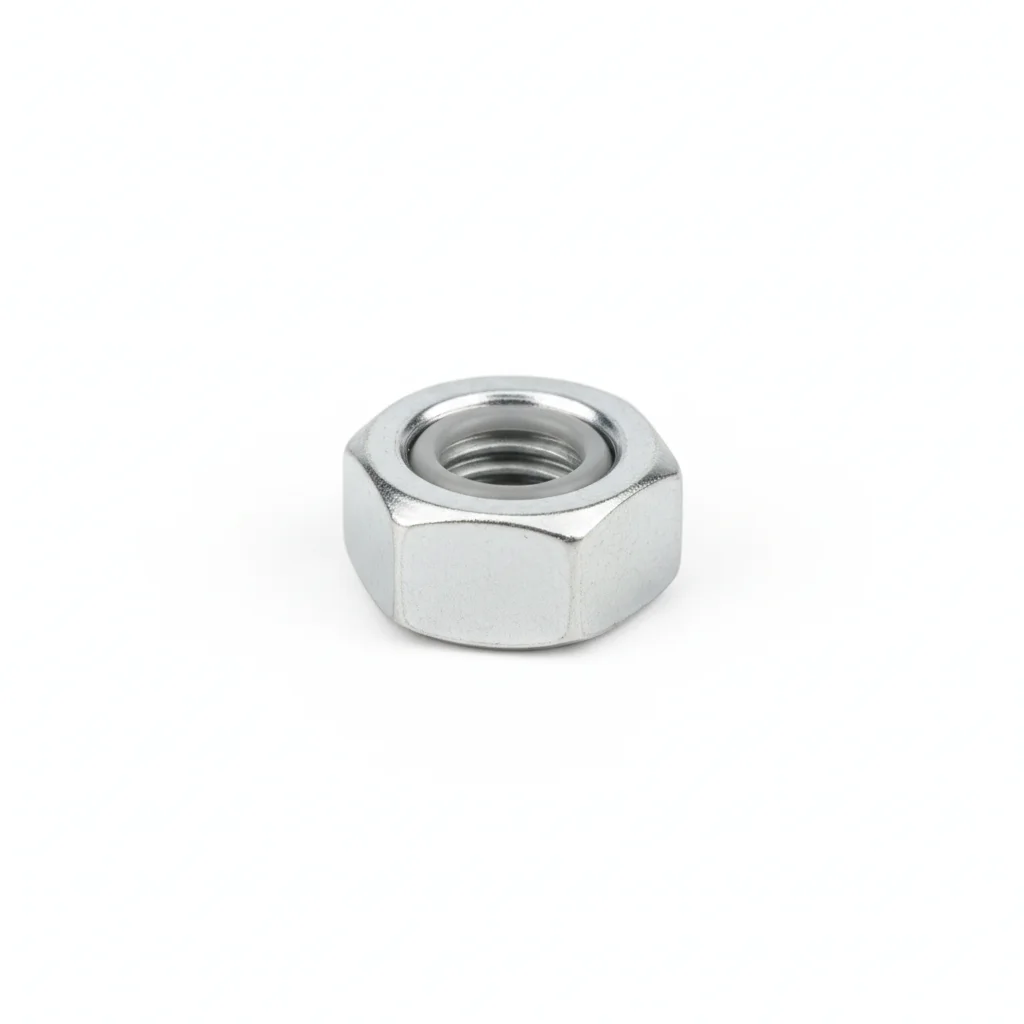
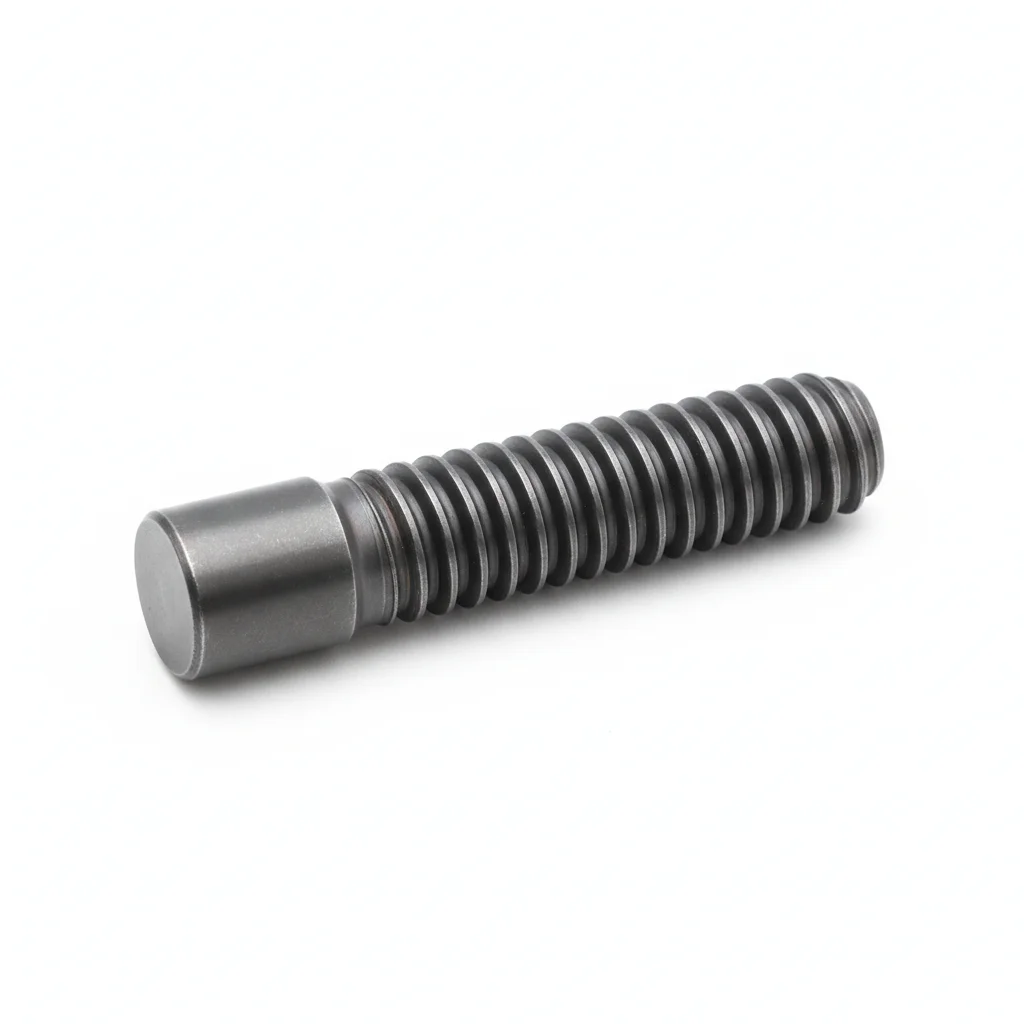
| Self-Locking Pin Nut | Trapezoidal Thread Tensioner Screw | |
|---|---|---|
| SPEC | M12-M20 | Tr30×6 |
| MATERIAL | Carbon Steel Grade 8 | 45# Steel Quenched and Tempered |
| GRADE | Nylon Insert | HB220-250 |
| FINISH | HDG >=55um per ISO 1461 | HDG >=55um per ISO 1461 |
| CORROSION | C3 (ISO 12944-2) | C3 (ISO 12944-2) |
| TEMP | -20°C to +80°C | -20°C to +80°C |
| WEIGHT | ~0.5 kg/piece | ~0.5 kg/piece |
| MOQ | 100 pcs | 100 pcs |
| PACK | VCI paper + carton | VCI paper + carton |
| STD | ISO 898-1, GB/T 3098.1 | ISO 898-1, GB/T 3098.1 |
| USE | Chain Pin Locking | Belt Tensioning Device |
PROCEDURE
- Clean the pin and link plate holes with isopropyl alcohol, and verify the pin surface is free of burrs before assembly.
- Slide the pin through the link plates, fit the nylon insert lock nut, and hand-tighten until snug.
- Tighten the lock nut to the specified torque using a calibrated wrench, then align the cotter pin hole and insert the cotter pin, bending its ends securely.
- For the tensioner screw, clean the trapezoidal thread and apply molybdenum disulfide grease before threading into the tensioner housing.
- Adjust the screw to achieve the required belt tension, then lock the position with the lock nut—do not rely on thread self-locking alone.
COMMON ERRORS
| ✕ WRONG | CONSEQUENCE | ✓ CORRECT |
|---|---|---|
| Tightening the lock nut without a cotter pin, relying solely on the nylon insert. | Under cyclic tension pulses, the nut can loosen over time, leading to pin ejection and chain separation. | Always install the cotter pin as a secondary locking mechanism to prevent nut back-off. |
| Adjusting the tensioner screw and leaving it without a lock nut, assuming the trapezoidal thread will self-lock. | Vibration and thread wear can cause the screw to rotate backward, reducing belt tension and causing slippage. | After setting the screw position, always tighten the lock nut against the housing to secure the adjustment. |
MAINTENANCE
Inspect pin lock nuts and cotter pins at each scheduled maintenance window. Tap each pin and check for axial movement; if movement exceeds 1mm, replace the nut and pin. Verify belt tension each shift; if slippage is visible on the drive roller, re-adjust the tensioner screw and re-lock the nut. Replace the chain when pin wear exceeds 5% of original diameter.
B·Heavy Duty
C4 Harsh per ISO 12944-2
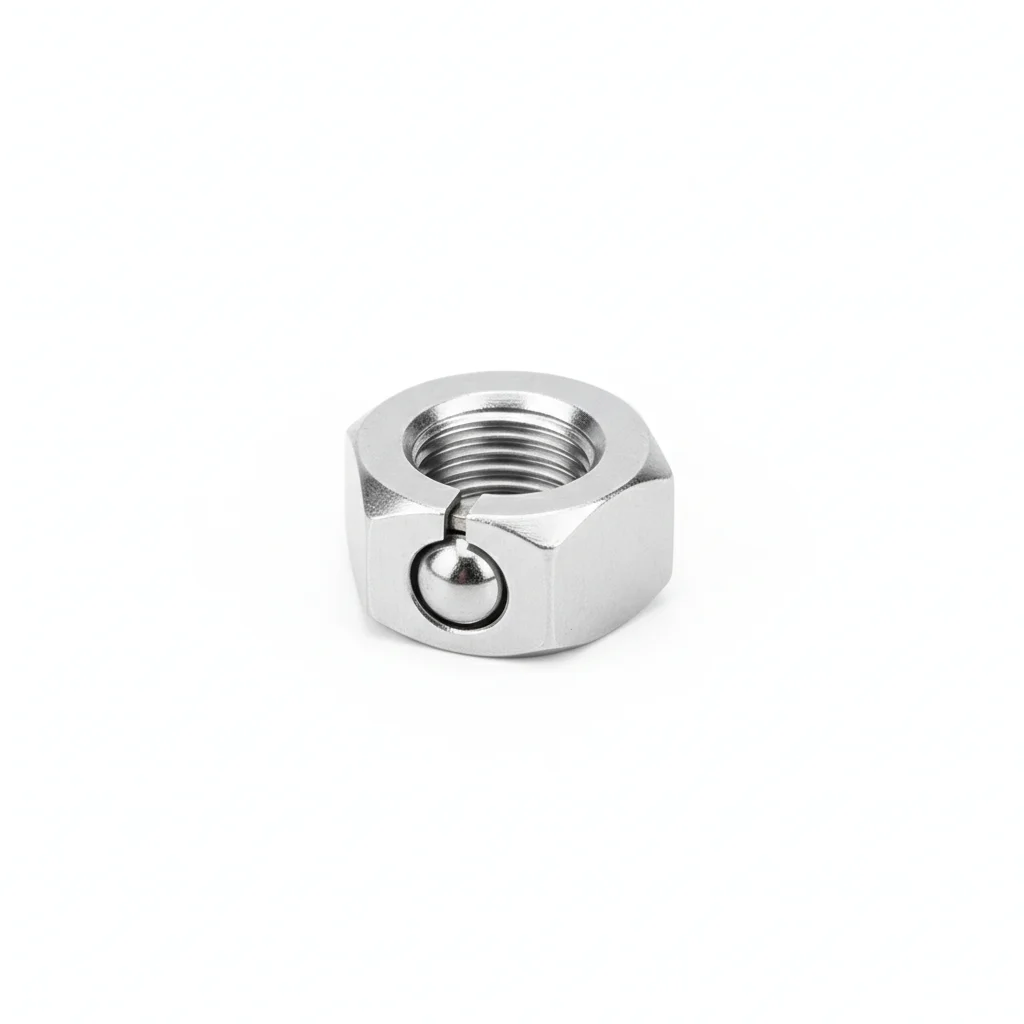
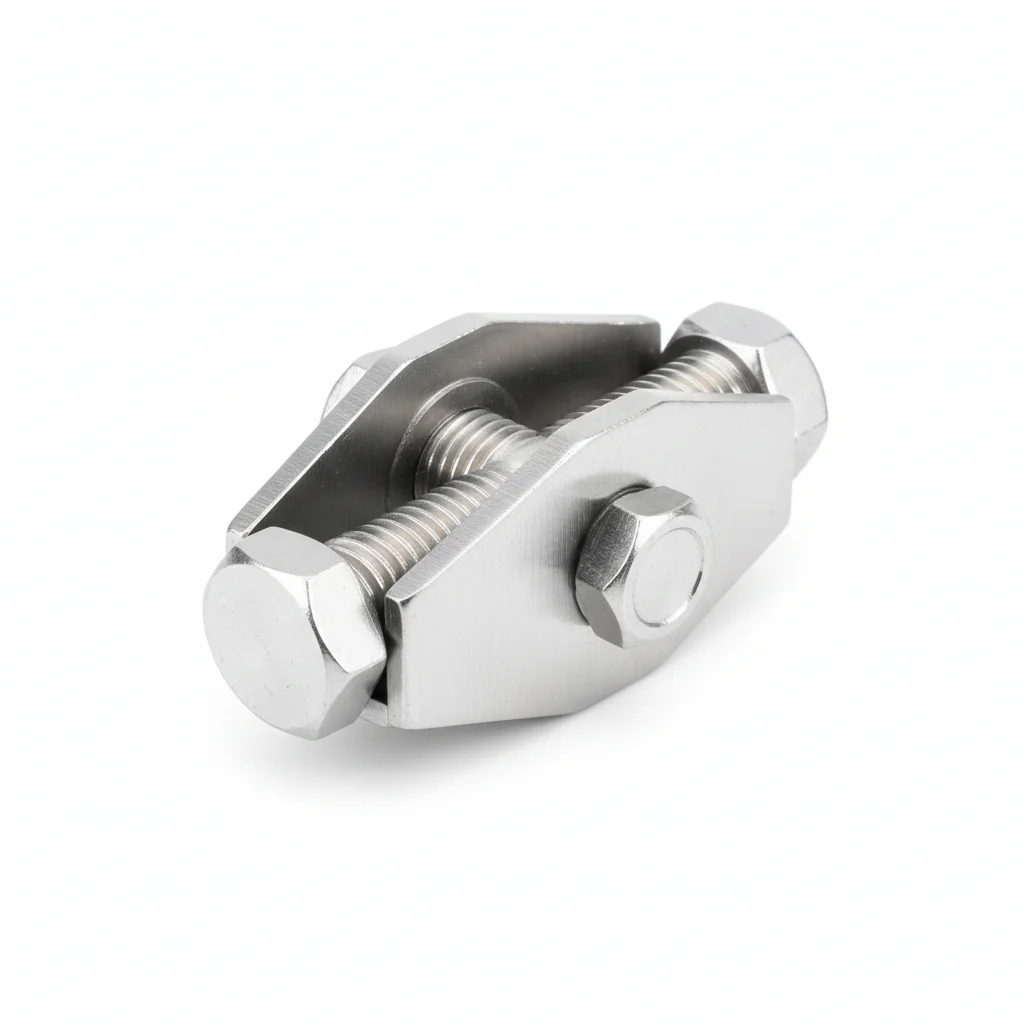
| Metal Locking Pin Nut | Tensioner Screw | |
|---|---|---|
| SPEC | M16-M24 | Tr36×6 |
| MATERIAL | 40Cr | 304 |
| GRADE | Grade 10 | A2-70 |
| FINISH | HDG >=55um per ISO 1461 | HDG >=55um per ISO 1461 |
| CORROSION | C3 (ISO 12944-2) | C3 (ISO 12944-2) |
| TEMP | -20°C to +80°C | -20°C to +80°C |
| WEIGHT | ~0.5 kg/piece | ~0.5 kg/piece |
| MOQ | 100 pcs | 100 pcs |
| PACK | VCI paper + carton | VCI paper + carton |
| STD | ISO 898-1, GB/T 3098.1 | ISO 898-1, GB/T 3098.1 |
| USE | Heavy Duty Chain | Food/Chemical Environment |
PROCEDURE
- Clean the M16-M24 metal locking pin nut and Tr36×6 screw bearing surfaces with acetone to remove all oil and debris before assembly.
- Apply a zinc-rich anti-seize compound to the trapezoidal thread of the Tr36×6 screw and to the nut seating face to prevent galling during tensioning.
- Position the chain pin with the cotter-pin hole aligned, thread the metal locking nut onto the pin, and hand-tighten until the nut seats against the link plate.
- Using a calibrated torque wrench, tighten the metal locking nut to the torque specified in the conveyor OEM manual—do not guess values from other applications.
- Verify the cotter pin is fully inserted through the pin hole and spread open against the nut face to provide secondary retention if the nut loosens from fretting.
- After tensioner adjustment, lock the trapezoidal screw nut securely against the frame while maintaining the set tension, then mark the nut and screw position for visual monitoring.
COMMON ERRORS
| ✕ WRONG | CONSEQUENCE | ✓ CORRECT |
|---|---|---|
| Reusing a nylon-insert self-locking nut on a heavy-duty chain pin where vibration and temperature exceed the nylon's rating | Nylon insert degrades and loses locking torque, allowing the nut to back off and the pin to eject, leading to chain separation. | Use a metal locking pin nut (all-metal prevailing torque) rated for the heavy-duty service and temperature range. |
| Tightening the tensioner screw without locking the nut afterward, relying on thread self-locking alone | Thread wear increases the helix angle, self-locking is lost, and the screw rotates backward under vibration, causing belt tension loss and slippage. | Always secure the tensioner screw with its lock nut after adjustment; never depend on self-locking for long-term retention. |
MAINTENANCE
At each overhaul window, inspect the metal locking pin nuts for axial movement; replace any nut that shows signs of loosening or thread damage. For the Tr36×6 tensioner screw, check belt tension and look for visible slippage on the drive roller; verify the lock nut remains tight. Apply molybdenum disulfide lithium grease to the trapezoidal thread quarterly to keep dust out and reduce wear.
Plan C · Heavy Duty/Dusty Environment
C5-M Extreme per ISO 12944-2
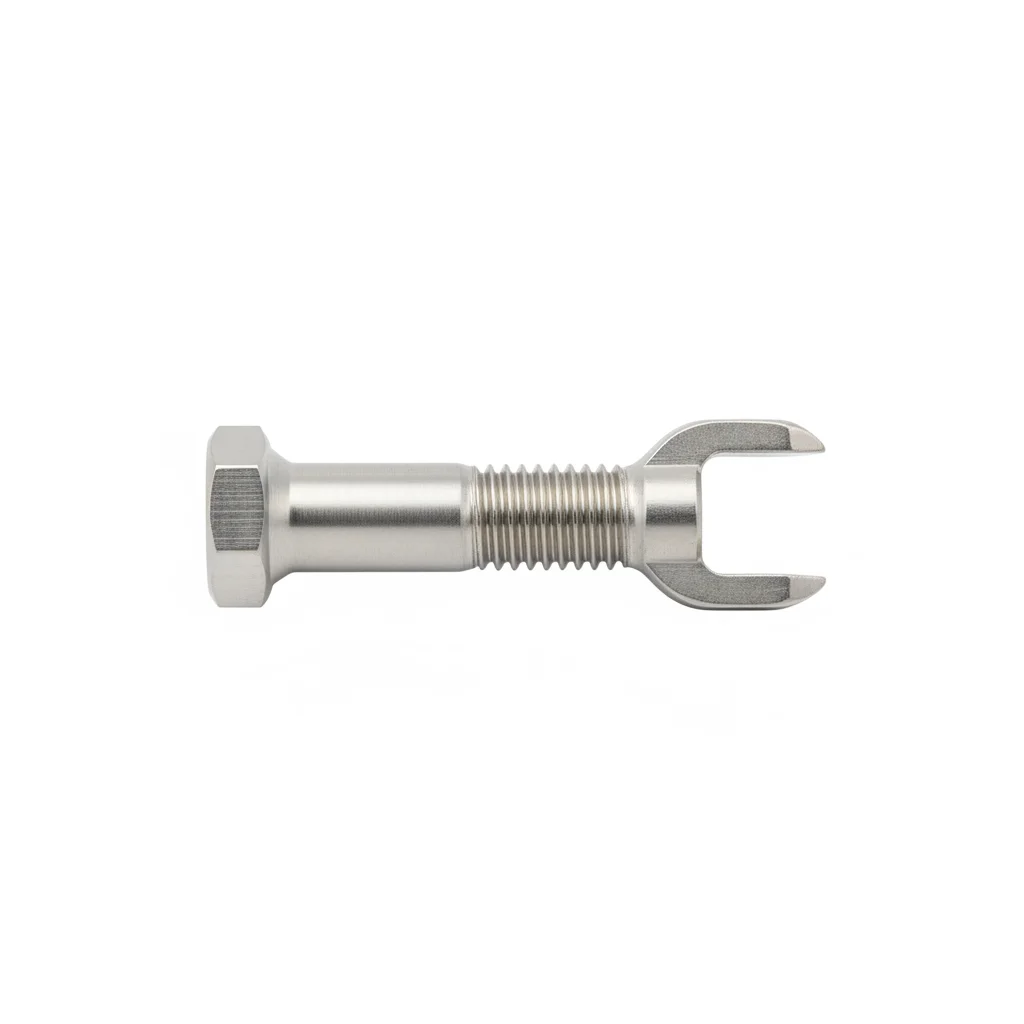
| Metal Locking Pin Nut | Tensioner Screw | |
|---|---|---|
| SPEC | M16-M24 | Tr36×6 |
| MATERIAL | 40Cr | 316L |
| GRADE | Grade 10 | A2-70 |
| FINISH | HDG >=55um per ISO 1461 | HDG >=55um per ISO 1461 |
| CORROSION | C3 (ISO 12944-2) | C3 (ISO 12944-2) |
| TEMP | -20°C to +80°C | -20°C to +80°C |
| WEIGHT | ~0.5 kg/piece | ~0.5 kg/piece |
| MOQ | 100 pcs | 100 pcs |
| PACK | VCI paper + carton | VCI paper + carton |
| STD | ISO 898-1, GB/T 3098.1 | ISO 898-1, GB/T 3098.1 |
| USE | Extreme Conditions / Maximum Protection | Extreme Conditions / Maximum Protection |
PROCEDURE
- Degrease the 40Cr metal locking nut and the 316L Tr36×6 screw with MEK solvent, and verify surface roughness is suitable for the extreme environment.
- Apply a marine-grade anti-seize compound rated for high chloride and temperature conditions to all threads and seating surfaces.
- Install the chain pin with the cotter-pin hole aligned, thread the 40Cr metal locking nut, and torque to the value specified by the conveyor OEM for Grade 10 nuts.
- Secure the cotter pin through the pin hole and bend its ends to lock against the nut, providing a secondary mechanical lock against fretting-induced loosening.
- For the tensioner screw, adjust to the required belt tension and lock the nut firmly; verify the screw does not rotate under load.
- Apply a protective coating such as DLC to the exposed pin ends and screw threads if specified for the corrosive environment, and ensure drainage holes are clear.
COMMON ERRORS
| ✕ WRONG | CONSEQUENCE | ✓ CORRECT |
|---|---|---|
| Using a lower-grade nut (e.g., Grade 8) on a heavy-duty chain pin in a corrosive environment | The nut may strip or fail under high preload, and corrosion accelerates, leading to premature loosening and chain failure. | Specify Grade 10 metal locking nuts of 40Cr material, and confirm the nut grade matches the pin strength. |
| Omitting the cotter pin because the metal locking nut seems secure | Fretting wear from cyclic tension pulses can reduce preload and cause the nut to loosen, with no secondary retention, risking pin ejection. | Always install the cotter pin as a secondary lock, even with metal locking nuts, in heavy-duty and extreme environments. |
MAINTENANCE
Inspect the 316L tensioner screw and 40Cr locking nuts at each overhaul window for signs of corrosion fatigue, such as pits or striations, especially in chloride environments. Check cotter pins for integrity and replace any that are damaged. Re-torque any nut found loose, and replace fasteners showing more than 5% surface corrosion or pitting. Grease the trapezoidal thread seasonally with a dust-sealing lubricant.
REFERENCED STANDARDS
References
SUPPLIER CAPABILITY
Quality, Delivery & Customization
Quality Control
- ✓MTC material certificates with every batch
- ✓Key parts sampled for hardness/salt spray/torque coefficient
- ✓100% inspection or AQL sampling before shipment
Delivery
- ✓Standard parts made to order: 7-15 days
- ✓Custom parts: 25-45 days
- ✓FOB/CIF/DDP supported
Customization
- ✓Drawing review and material matching
- ✓Non-standard sizes/heads/threads
- ✓Small-batch prototyping supported
Certification
- ✓Material certificates (MTC)
- ✓Spectrographic analysis reports
- ✓Salt spray test reports (on request)
MOQ: No MOQ for standard parts; custom parts assessed by process complexity
FAQ
FAQ
RELATED READING
Keep Reading & Next Step
BEYOND TECHNICAL SPECS
Finding the right factory, controlling quality, delivering on time — that's the real challenge. We cover fasteners, rubber, plastics, industrial textiles. One team, end to end.
SEE CAPABILITIES →