Conveyor Skirt Board and Chain Fastener Failure Analysis and Selection
Skirt board clamp bolts and chain pin circlips are critical for preventing material spillage and chain breakage. This page compares standard carbon steel (Grade 8.8 Dacromet) and heavy-duty stainless steel (304) options, focusing on loosening under side pressure, circlip pop-out, and corrosion resistance
RISK AUDIT // ENGINEERING DIAGNOSIS
Procurement Pitfall Guide
"When skirt clamps loosen and circlips pop, the line stops—here's how to prevent it."
QC-AUDIT // REV.5
SCALE 1:1 · 03 ITEMS
RISK-01
Skirt Board Clamp Bolts Loosen Under Material Side Pressure
Corrective Measures
RISK-02
Chain Pin Circlips Pop Out Under Cyclic Tension
Corrective Measures
RISK-03
Skirt Board Impact and Wear from High-Temperature Material
Corrective Measures
FIELD-SPECIFIC INSIGHT
Key Differences Between Standard and Heavy-Duty Skirt Clamps
The choice between carbon steel and stainless steel skirt clamps affects not only corrosion resistance but also the risk of loosening and chain failure. Standard M12 Grade 8.8 bolts with Dacromet coating are suitable for C3 environments, while 304 stainless steel is recommended for C4 harsh or food/chemical conveyors. For chain pins, 65Mn circlips are standard, but 50CrVA offers higher fatigue strength for heavy-duty chains
WHAT TO CHECK
- 1M12 Grade 8
- 2304 stainless steel bolts: better corrosion resistance for C4 harsh environments, but lower tensile strength than Grade 8.8; verify torque specifications
- 365Mn pin circlips: standard for moderate loads; prone to pop-out under cyclic tension if groove wear occurs
- 450CrVA pin circlips: higher fatigue strength for heavy-duty chains; reduces risk of chain disintegration
- 5Replace if corrosion affects >5% surface area or pitting depth >0
| Check | Why it matters | What to specify |
|---|---|---|
| Material and coating | Determines corrosion resistance and risk of loosening | Specify carbon steel Dacromet for C3, 304 for C4, or 316L for C5-M extreme |
| Clamp spacing | — | Specify clamp spacing ≤300mm |
| Locking mechanism | Nylon lock nuts prevent loosening under vibration | Specify nylon lock nuts or wedge lock washers |
| Circlip material | 65Mn may pop out under cyclic tension; 50CrVA offers higher fatigue strength | Specify 50CrVA for heavy-duty chains |
| Inspection interval | Regular inspection prevents catastrophic chain breakage | — |
All torque and inspection values are based on standard maintenance guidelines. Actual intervals should be adjusted based on operating conditions and manufacturer recommendations
Evidence level: source-page-only
INDUSTRY TECH REFERENCE
Two Ways a Skirt Board Wears the Belt Cover: Over-Clamped, or Leaking
The skirt clamp is the sealing edge of the transfer chute, and how tight it is set decides how fast the belt cover wears. Two paths — an over-pressed skirt, and trapped spillage — end at the same bill: a worn-out cover means a belt change and stopped production.
- 1Path A — over-clamped: the clamp presses the skirt's lower edge onto the belt, and the top cover carries a continuous rubbing load. The instinct "clamp it tighter so nothing leaks" is wrong here — an over-pressed skirt means premature top-cover wear
- 2Path B — clamp/seal failure: the clamp bolts loosen under material side pressure, or the rubber wears past its limit, and a gap opens between skirt and belt — fines escape through the gap and get trapped between the belt and the idlers. Skirt spillage trapped under the belt is one of the leading causes of bottom-cover wear
- 3The paths meet: top and bottom covers wear together. The cover is the belt's first line of protection — once it thins down to the exposed carcass, the belt is moving toward replacement
- 4The belt-change bill: a conveyor is the throat of continuous production, and a belt change stops the line for days — on Vale's 68 km S11D conveyor corridor, the ST8000 belt carries an expected service life of around 15 years, and cover wear eats that life asset directly
- 5Intervention: set the clamp so the skirt's lower edge just touches the belt; inspect the skirt gap and idler condition in the same round; check clamp-bolt preload as soon as spillage appears
No order-of-magnitude estimates are used in this slot.
INDUSTRY TECH REFERENCE
Skirt Posture Guide: How the Belt Cover Responds, and What to Check
The skirt clamp is the sealing edge of the transfer chute, and its posture decides where belt-cover wear goes. Four rows align the state, the belt-side consequence, and the check-and-fix line so inspection and installation acceptance can match directly.
| Skirt / feed state | Belt-side consequence | Check-and-fix line |
|---|---|---|
| Skirt pressed onto the belt (over-clamped at install) | Premature top-cover wear | Set the lower edge to just touch the belt; re-check contact at installation — no room for "clamp it tight so nothing leaks" |
| Skirt gap widened / clamp bolts loosened by side load | Fines escape and get trapped → one of the main bottom-cover wear causes | Check build-up and spillage at the skirt edge; put clamp bolts on the routine re-tightening round |
| Off-center feed (chute misalignment) | Belt runs off → edges grind the structure | First correct the idlers and retighten the frame/clamp bolts — do not rush to replace the belt |
| Cover already thinned / carcass exposed | Chronic wear moving the belt toward replacement | List it for change once exposed; in the same inspection pass trace the top and bottom inputs — cleaner pressure, skirt squeeze, dirty idlers, trapped spillage |
No order-of-magnitude estimates are used in this slot.
INDUSTRY TECH REFERENCE
Skirt Boards and Their Bolts: Three Lines — Install, Feed Point, Inspect
Skirt clamp bolts and frame bolts cost little per piece, but they are inputs to belt-cover life. Three lines with numbers go onto the RFQ and into the work procedure.
- Install line: the skirt's lower edge only needs to touch the belt — pressing it down means premature top-cover wear; put clamp bolts on the routine re-tightening round alongside idler-frame bolts
- Feed-point line: densify impact-idler spacing to 0.3 m with roller diameter ≥6 in — the impact base the skirt life rests on, written into the feed-point BOM together with the skirt-gap check
- Inspection line: the skirt seal and the idler bearing seal are one dust line — dust/water ingress is the leading cause of idler-bearing failure, and a seized idler is the most common ignition source in conveyor fires; when spillage shows at the skirt edge, check clamp-bolt preload and rubber wear
No order-of-magnitude estimates are used in this slot.
PLAN COMPARISON
Three-Plan Core Parameter Comparison
Compare row by row. Click column headers to jump to plan details.
| A · A · Standard | B · B · Heavy Duty/High Capacity | C · Plan C · Heavy Duty/Dusty Environment | |
|---|---|---|---|
| 1. SKIRT BOARD CLAMP BOLT | |||
| SPEC | M12 Grade 8.8 | M12-M16 | M12-M16 |
| MATERIAL | Carbon Steel Dacromet | 304 | 316L |
| GRADE | Grade 8.8 | — | — |
| FINISH | HDG >=55um per ISO 1461 | HDG >=55um per ISO 1461 | HDG >=55um per ISO 1461 |
| 2. PIN CIRCLIP | |||
| SPEC | Per Chain Pitch | Per Chain Pitch | Per Chain Pitch |
| MATERIAL | 65Mn | 50CrVA | 50CrVA |
| FINISH | HDG >=55um per ISO 1461 | HDG >=55um per ISO 1461 | HDG >=55um per ISO 1461 |
SELECTION GUIDE
Choose Your Skirt & Chain Fastener Plan
| Operating condition | Recommended option | Key basis |
|---|---|---|
| General duty — dusty environment with general corrosion requirements | Plan A · Standard: skirt board clamp bolt M12 (carbon steel Dacromet, grade 8.8) + chain pin circlip 65Mn (per chain pitch) | C3 per ISO 12944-2; ISO 898-1 fasteners; ISO 1977 plate chains |
| Heavy duty / high capacity — food or chemical conveyors | Plan B · Heavy Duty: skirt board clamp M12-M16 (304 stainless steel) + pin circlip 50CrVA (per chain pitch) | C4 per ISO 12944-2; ISO 1977 plate chains; 50CrVA offers higher fatigue strength than 65Mn for heavy-duty chains |
| Extreme — mining/port heavy duty + dust (C5-M per ISO 12944-2) | Plan C: skirt board clamp M12-M16 (316L) + pin circlip 50CrVA (per chain pitch) + 12.9 grade with wedge anti-loosening washers + IP65 sealed bearings | C5-M per ISO 12944-2; ISO 1977 plate chains; maximum protection |
| Material side pressure on the skirt board (lateral pressure of several kN/m²; gap widens from 1-2mm to 5-10mm and fine material sprays out) | Use M12 or larger clamp bolts + nylon lock nuts, clamp spacing ≤300mm; weekly feeler-gauge check of the skirt board-to-belt gap — adjust the clamp if >3mm | CEMA 350 screw conveyors; ISO 5048 belt conveyors; GB/T 10595 |
| Chain pin circlips under cyclic slack-tight tension and high-temperature skirt board wear (material temperature 100-150°C, impact pressure 0.5MPa, corrosive dust) | Circlip open end faces opposite to the chain running direction; quarterly visual check of each link circlip; full chain replacement every 2-3 years; use high-temperature resistant polyurethane composite skirt board (200°C) with metal skeleton — wear rate 0.1mm/week and life 8 months vs 0.8mm/week and 2 months for rubber | ISO 1977 plate chains; GB/T 10595 belt conveyors |
A · Standard
C3 Standard per ISO 12944-2
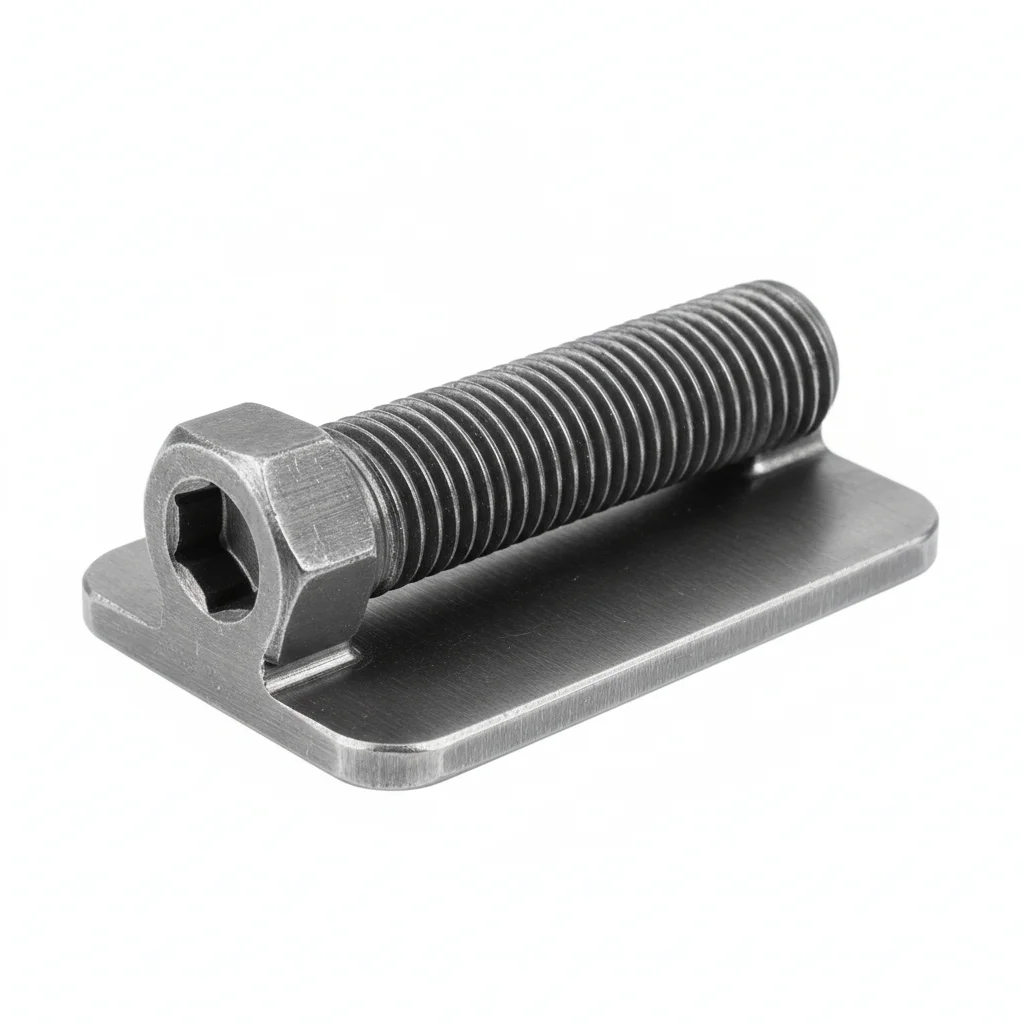
| Skirt Board Clamp Bolt | Pin Circlip | |
|---|---|---|
| SPEC | M12 Grade 8.8 | Per Chain Pitch |
| MATERIAL | Carbon Steel Dacromet | 65Mn |
| GRADE | Grade 8.8 | — |
| FINISH | HDG >=55um per ISO 1461 | HDG >=55um per ISO 1461 |
| CORROSION | C3 (ISO 12944-2) | C3 (ISO 12944-2) |
| TEMP | -20°C to +80°C | -20°C to +80°C |
| WEIGHT | ~0.5 kg/piece | ~0.5 kg/piece |
| MOQ | 100 pcs | 100 pcs |
| PACK | VCI paper + carton | VCI paper + carton |
| STD | ISO 898-1, GB/T 3098.1 | ISO 898-1, GB/T 3098.1 |
| USE | Skirt Board Clamping | Chain Pin Positioning |
PROCEDURE
- Set skirt board lower edge to lightly contact the belt; use a feeler gauge to confirm a 1-2mm gap, adjusting clamp bolts as needed.
- Space M12 Grade 8.8 clamp bolts at intervals no greater than 300mm along the skirt board, aligning each with the support structure.
- Tighten each clamp bolt with nylon lock nuts, applying torque in a star pattern to achieve uniform clamping without over-compressing the skirt.
- Orient the open end of each 65Mn pin circlip opposite to the chain running direction so centrifugal force seats it tighter.
- After chain assembly, rotate the chain manually through one full loop to confirm circlips remain seated and pins do not shift axially.
COMMON ERRORS
| ✕ WRONG | CONSEQUENCE | ✓ CORRECT |
|---|---|---|
| Overtightening clamp bolts so the skirt board presses hard against the belt | Accelerates wear on both skirt board and belt, widening the effective gap over time and increasing spillage. | Tighten only until the skirt edge lightly contacts the belt; verify with a feeler gauge that the gap stays within 1-2mm. |
| Installing the pin circlip with its open end facing the chain running direction | Centrifugal force can pry the circlip open, causing it to pop out and the pin to slide out, leading to chain separation. | Mount the circlip so the open end points opposite to chain travel, ensuring operational forces close it tighter. |
MAINTENANCE
Inspect skirt-to-belt gap weekly with a feeler gauge; if gap exceeds 3mm, re-tighten clamps. Quarterly, visually check every chain pin circlip for deformation or loss, replacing any missing or deformed 65Mn circlips immediately. Plan full chain replacement every 2-3 years based on observed wear.
B · Heavy Duty/High Capacity
C4 Harsh per ISO 12944-2
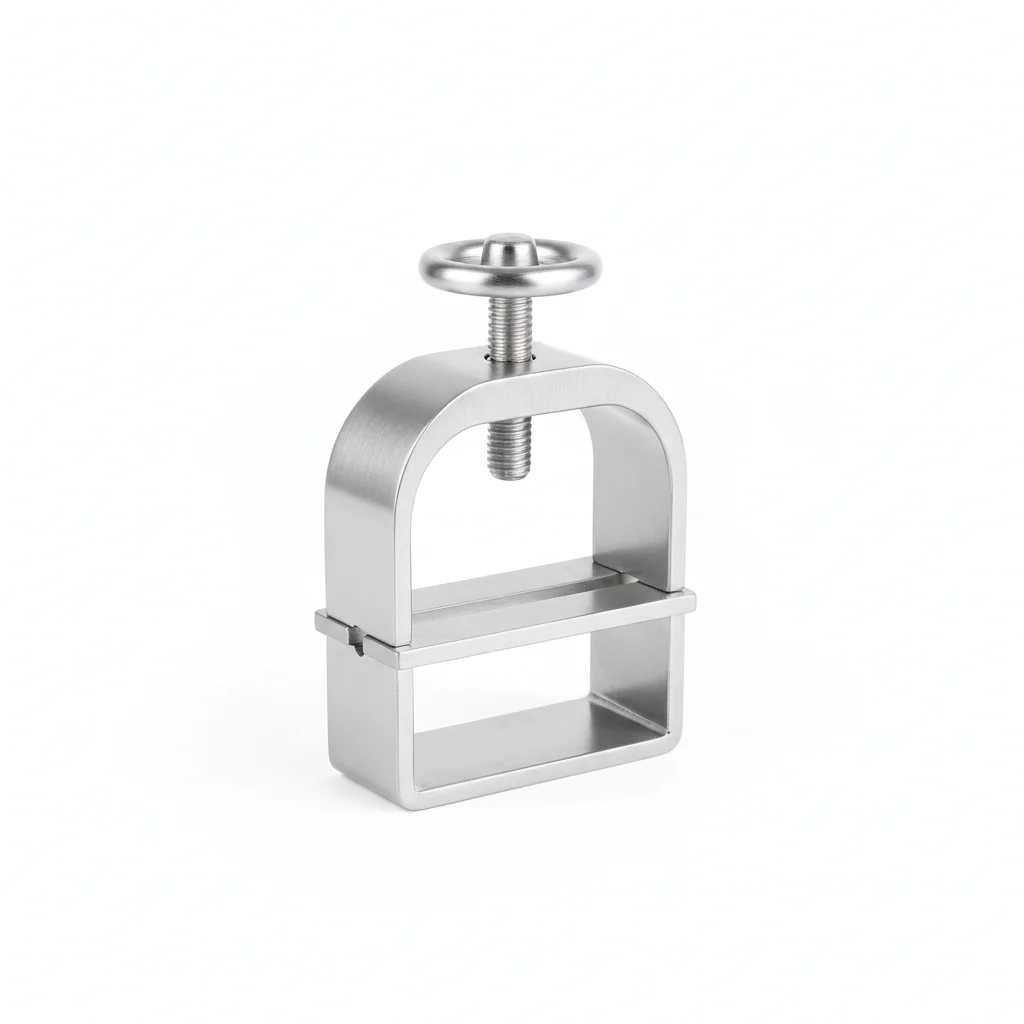
| Skirt Board Clamp | Pin Circlip | |
|---|---|---|
| SPEC | M12-M16 | Per Chain Pitch |
| MATERIAL | 304 | 50CrVA |
| GRADE | — | — |
| FINISH | HDG >=55um per ISO 1461 | HDG >=55um per ISO 1461 |
| CORROSION | C3 (ISO 12944-2) | C3 (ISO 12944-2) |
| TEMP | -20°C to +80°C | -20°C to +80°C |
| WEIGHT | ~0.5 kg/piece | ~0.5 kg/piece |
| MOQ | 100 pcs | 100 pcs |
| PACK | VCI paper + carton | VCI paper + carton |
| STD | ISO 898-1, GB/T 3098.1 | ISO 898-1, GB/T 3098.1 |
| USE | Food/Chemical Conveyors | Heavy Duty Chains |
PROCEDURE
- Clean the skirt board contact area and bolt threads with acetone to remove grease and dust, ensuring a dry surface for proper seating.
- Position the 304 stainless steel skirt board clamp over the skirt, aligning the M12-M16 bolt holes; insert bolts with PTFE-coated washers to reduce friction and prevent galling.
- Tighten the clamp bolts in a cross-pattern sequence to distribute load evenly, using a calibrated torque wrench to achieve the specified torque for 304 stainless steel (avoid over-torquing to prevent thread stripping).
- For pin circlips made of 50CrVA, orient the open end opposite to the chain running direction so centrifugal force presses it closed during operation.
- After installation, verify that each circlip is fully seated in its groove and that the skirt board lower edge lightly contacts the belt; adjust if the gap exceeds 3mm.
- Document installation date, torque values, and batch numbers for traceability in food or chemical conveyor maintenance logs.
COMMON ERRORS
| ✕ WRONG | CONSEQUENCE | ✓ CORRECT |
|---|---|---|
| Using carbon steel bolts instead of 304 stainless in a food or chemical conveyor | Corrosion from washdown chemicals or acidic products leads to bolt weakening and loosening, causing skirt gaps and material spillage. | Specify 304 stainless steel clamps for C4 harsh or food/chemical environments, and verify material grade before installation. |
| Overtightening the skirt clamp to stop leaks | Excessive force accelerates wear on the skirt board and belt, and can strip 304 threads, leading to premature failure. | Tighten so the skirt lightly contacts the belt; use a feeler gauge to maintain a gap ≤3mm and re-tighten only if the gap exceeds 3mm. |
MAINTENANCE
Inspect skirt board gaps and circlips seasonally or at each overhaul window; check for corrosion on 304 surfaces (pitting >0.3mm or >5% area requires replacement). For heavy-duty chains with 50CrVA circlips, verify circlip condition quarterly and replace any that are deformed or missing; follow the chain replacement schedule of every 2-3 years based on wear.
Plan C · Heavy Duty/Dusty Environment
C5-M Extreme per ISO 12944-2
| Skirt Board Clamp | Pin Circlip | |
|---|---|---|
| SPEC | M12-M16 | Per Chain Pitch |
| MATERIAL | 316L | 50CrVA |
| GRADE | — | — |
| FINISH | HDG >=55um per ISO 1461 | HDG >=55um per ISO 1461 |
| CORROSION | C3 (ISO 12944-2) | C3 (ISO 12944-2) |
| TEMP | -20°C to +80°C | -20°C to +80°C |
| WEIGHT | ~0.5 kg/piece | ~0.5 kg/piece |
| MOQ | 100 pcs | 100 pcs |
| PACK | VCI paper + carton | VCI paper + carton |
| STD | ISO 898-1, GB/T 3098.1 | ISO 898-1, GB/T 3098.1 |
| USE | Extreme Conditions / Maximum Protection | Extreme Conditions / Maximum Protection |
PROCEDURE
- Degrease the skirt board frame and bolt holes with MEK solvent to remove all contaminants, and verify surface roughness Ra <1.6um for optimal seating.
- Apply a marine-grade anti-corrosion compound rated for -50°C to 200°C to the 316L clamp bolts and threads, and use PTFE-encapsulated washers to prevent galvanic corrosion in dusty, high-humidity environments.
- Align the 316L skirt board clamp precisely (within 0.3mm) and tighten using a hydraulic tensioner to achieve controlled preload, avoiding damage to the 316L threads.
- For the 50CrVA pin circlips, ensure the open end faces opposite to chain travel and that each circlip is fully seated in the groove; use a magnifying glass to check for hairline cracks in the circlip or groove wear.
- Apply a protective sealant over the bolt heads and circlips to shield against abrasive dust ingress, and install condition monitoring sensors to track vibration and temperature for early fault detection.
- Record installation parameters and perform a 10% PMI (Positive Material Identification) verification on 316L components to confirm material grade for compliance audits.
COMMON ERRORS
| ✕ WRONG | CONSEQUENCE | ✓ CORRECT |
|---|---|---|
| Using 304 stainless steel clamps in a C5-M mining environment with high chloride dust | 304 is susceptible to pitting and stress corrosion cracking in chloride-rich dust, leading to premature failure and unplanned downtime. | Select 316L stainless steel for extreme C5-M conditions, and verify material certification before installation. |
| Failing to protect the skirt clamp bolts from abrasive dust ingress | Dust packs into threads, causing galling and making torque readings unreliable; bolts may loosen or seize, risking skirt misalignment. | Use protective sealant over bolt heads and consider dust covers; clean threads before each re-torque and reapply sealant after inspection. |
MAINTENANCE
Inspect skirt board clamps and circlips at each overhaul window or when condition monitoring indicates abnormal vibration; check 316L surfaces for pitting (depth >0.3mm or >5% area requires replacement). For 50CrVA circlips, perform dye penetrant testing on a 10% sample annually to detect fatigue cracks; adhere to the 2-3 year chain replacement schedule and document all findings in CMMS.
REFERENCED STANDARDS
References
SUPPLIER CAPABILITY
Quality, Delivery & Customization
Quality Control
- ✓MTC material certificates with every batch
- ✓Key parts sampled for hardness/salt spray/torque coefficient
- ✓100% inspection or AQL sampling before shipment
Delivery
- ✓Standard parts made to order: 7-15 days
- ✓Custom parts: 25-45 days
- ✓FOB/CIF/DDP supported
Customization
- ✓Drawing review and material matching
- ✓Non-standard sizes/heads/threads
- ✓Small-batch prototyping supported
Certification
- ✓Material certificates (MTC)
- ✓Spectrographic analysis reports
- ✓Salt spray test reports (on request)
MOQ: No MOQ for standard parts; custom parts assessed by process complexity
FAQ
Frequently Asked Questions
RELATED READING
Keep Reading & Next Step
BEYOND TECHNICAL SPECS
Finding the right factory, controlling quality, delivering on time — that's the real challenge. We cover fasteners, rubber, plastics, industrial textiles. One team, end to end.
SEE CAPABILITIES →