Anti-Corrosion Washers & Bolts for Factory Bracing
In steel structure factories, bracing connection bolts form the seismic skeleton. Galvanic corrosion between aluminum roof panels and steel purlins can cause bolt cross-section loss, leading to fracture during typhoons. Nylon insulation gaskets and Dacromet coatings block the galvanic circuit and extend fastener life
RISK AUDIT // ENGINEERING DIAGNOSIS
Procurement Pitfall Guide
"Steel bracing bolts fail silently when aluminum panels meet steel purlins."
QC-AUDIT // REV.5
SCALE 1:1 · 03 ITEMS
RISK-01
Aluminum-Steel Galvanic Corrosion Rapidly Erodes Connection Bolts
Corrective Measures
RISK-02
Aluminum-Steel Galvanic Corrosion Rapidly Erodes Connection Bolts
Corrective Measures
RISK-03
Chloride Stress Corrosion Cracking of Stainless Steel Fasteners
Corrective Measures
FIELD-SPECIFIC INSIGHT
Galvanic Corrosion Prevention Checklist
The most overlooked risk in factory roof structures is galvanic corrosion between aluminum-magnesium-manganese panels and steel purlins. The potential difference drives rapid anode corrosion of steel connection bolts. Proper isolation and coating selection are critical
WHAT TO CHECK
- 1Aluminum-steel galvanic couple: Al vs steel → steel bolt corrodes as anode in C5 environment
- 2Nylon insulation gasket thickness required to break galvanic circuit; thinner gaskets risk dielectric breakdown
- 3Wedge lock washers prevent loosening under seismic vibration; standard flat washers may allow bolt relaxation
- 4Stainless steel fasteners (304) risk chloride stress corrosion cracking in pickling workshops
| Check | Why it matters | What to specify |
|---|---|---|
| Galvanic potential difference between roof panel and purlin | Potential drives rapid corrosion of anode (steel bolt) | Use nylon insulation gasket + nylon bolt sleeve to isolate metals |
| Coating salt spray resistance | C5 environment requires high salt spray resistance to prevent red rust | Dacromet per ISO 10683 or zinc-aluminum coating per ASTM F1136 |
| Bolt grade and material for seismic zones | Grade 12.9 bolts provide higher strength but are susceptible to hydrogen embrittlement if not properly coated | Grade 12.9 with Dacromet; avoid HDG for high-strength bolts in seismic applications |
| Wedge lock washer presence at critical nodes | Vibration can loosen standard washers, reducing bolt preload and joint stiffness | Wedge lock washers at all bracing connection nodes |
Data based on page content: galvanic corrosion rates and bolt cross-section loss are typical values for C5 coastal environments. Actual performance depends on specific environmental conditions and maintenance schedule
Evidence level: source-page-only
INDUSTRY TECH REFERENCE
Anti-Corrosion Selection Chain for Bracing Bolts: Grade and Coating Are Bound
The corrosion plan for bracing-connection bolts is not a standalone coating pick: strength grade, surface finish and hydrogen-embrittlement risk are decided together. That binding is exactly why the inland and coastal/seismic plans split the way they do.
- 1High-strength bolts in bracing and frame connections work under high preload — design preload for Grade 10.9 M20–M30 is 155–355 kN (Table 11.4.2-2 of GB 50017-2017), so the bolt serves in the high-stress range and the coating pick must start from the grade
- 2The higher the grade, the more hydrogen-sensitive it is: quenched-and-tempered bolts of Grade 10.9 and above, once exposed to hydrogen through electroplating or pickling, sit under high preload (working near yield) — a breeding ground for delayed fracture that often strikes within hours of installation, without warning
- 3The surface finish is bound to the grade, not a free choice: US practice pins this down — in the F3125 family, Grade A325 (about Grade 8.8) may be hot-dip galvanized, while Grade A490 (about Grade 10.9) forbids hot-dip and mechanical galvanizing, leaving zinc-aluminum coating as the only allowed finish
- 4The Chinese side faces the same constraint: hydrogen control and dehydrogenation for HDG 10.9S follow the GB/T 5267 series, with exact parameters per the current standard text — the coastal/seismic switch to Dacromet or zinc-aluminum coatings is precisely a way around the HDG dehydrogenation problem
- 5So the split "inland 10.9S hot-dip galvanized vs coastal/seismic 12.9 Dacromet" follows from the codes, not from marketing: when seismic duty pushes the grade up, the corrosion route converges on non-acid, non-HDG coatings
- 6Interception points: state strength grade, finish and dehydrogenation-process requirements together on the inquiry and drawing; the supplier must back them with process and reports, and mismatched combinations such as Grade 10.9 with mechanical galvanizing go straight to exclusion
A325 corresponds roughly to Grade 8.8 and A490 to Grade 10.9. No order-of-magnitude estimates are used in this slot.
INDUSTRY TECH REFERENCE
The Friction-Surface Restricted Zone: Coatings Can Cut the Slip Coefficient by Nearly 3×
Friction-type high-strength connections carry slip resistance through the friction-surface slip coefficient μ, not through bolt shank shear. The most misunderstood step in corrosion protection is painting the friction surfaces as well — once μ drops, the slip acceptance fails.
- "Paint the plate, then torque the high-strength bolts" is the classic site error — coated friction surfaces run far below bare steel: alkyd iron-red primer is just 0.15 and inorganic zinc-rich 0.35, versus 0.45 for grit-blasted steel, a difference of nearly 3× (Table 11.4.2-1 of GB 50017-2017 / Table 3.2.4-2 of JGJ 82-2011)
- The measured minimum of μ must be ≥ the design value, or the friction surface is re-treated and re-tested (JGJ 82-2011 §6.3.3) — the fabricator's pre-delivery friction-surface treatment and inspection is where this red line is guarded
- The slip-coefficient test and its re-verification are a mandatory clause of GB 50205-2020 (§6.3.1), assumed by GB 55006-2021 from 2022-01-01 with no reduction in requirements — acceptance cannot dodge it
- Field re-grinding of friction surfaces follows hard rules: the ground area must extend at least 4× the bolt-hole diameter, and the grinding direction runs perpendicular to the load direction (commentary to §6.3.1 of GB 50205-2020)
- The installation window is locked down too: friction surfaces must stay dry, and work stops in rain (JGJ 82-2011 §6.4.10)
- When ordering, separate two requirement sets: the anti-corrosion finish on the bolting assembly and the friction-surface treatment on the joint are different things — every extra coating layer on a friction surface must be re-checked against the μ table for the design value; do not add an unplanned coat
No order-of-magnitude estimates are used in this slot.
INDUSTRY TECH REFERENCE
Acceptance & Re-Tightening Rhythm: Tighten Static Nodes Once, Service Dynamic Spots Repeatedly
Within one factory building, fastener life after acceptance diverges completely: frame nodes such as columns, beams and bracing are maintenance-free for life after final tightening, while crane-runway rails need year-round inspection and re-tightening. Place your bolts in the right row before planning maintenance.
| Location | Fasteners | Acceptance & maintenance rhythm | Key parameters |
|---|---|---|---|
| Rigid frame joints and splices in columns, beams, bracing | Grade 10.9S hex assemblies or torque-shear type (M20-M30, P=155-355 kN) | Final-tightening check within 1 h to 48 h after final tightening; then maintenance-free for the full service life, with no in-service re-tightening clause | Construction preload Pc=1.1P compensates loss in one step; snug/retightening pass = 50% of final tightening torque |
| Crane runway rail (rail clips / hook bolts) | Rail-clip bolts Grade 8.8 (economic default) / Grade 10.9 | Periodic inspection and re-tightening are mandatory — slack, elongation and rail creep all need checking | Longitudinal rail creep stretches the hook bolts; misalignment / wheel-rail gouging worsens the wheel-load distribution |
| Column base (exposed anchor bolts + secondary grouting) | Q235B anchor bolts (non-load-bearing anchors) | A cracked grout layer letting water in is a corrosion hazard — a long-term watch item | At installation: center offset ≤2.0 mm, no negative deviation allowed on exposed length / thread length; grout must be cementitious Class II (28-day compressive strength ≥60 MPa) |
No order-of-magnitude estimates are used in this slot.
INDUSTRY TECH REFERENCE
Incoming Lot Verification: The Test Items That Decide a Full Reject
Structural bolting runs on lot-based verification — a lot that fails incoming verification is rejected as a whole, a master-control item of GB 50205-2020. What gets verified differs between the two assembly types, so ask the supplier to show the report list before ordering.
- The verification items differ by type: hex-head assemblies are tested for torque coefficient + wedge load + nut proof load; torque-shear (tension-control) assemblies for tightening force + wedge load — a failing lot is rejected in full (master-control item of GB 50205-2020)
- The torque-coefficient target: mean 0.110–0.150 with standard deviation ≤0.0100 (Table 6.3.1 of JGJ 82-2011) — the origin of the "0.01 off, reject the whole lot" rule; from GB/T 1231-2024 the scatter index changes to coefficient of variation (CV), so new assemblies are verified to the new-standard basis
- Lot discipline: bolts, nuts and washers are packed by matching batch, drawn on the site for the day's use, and batches must not be mixed (JGJ 82-2011 §6.4.6) — the supplier's batch-management capability is a hard requirement
- High-strength bolts must not double as temporary erection bolts — a load history changes the torque coefficient (commentary to JGJ 82-2011 §6.4.5), so sequence the erection accordingly
- One-use logic: the code system has no in-service re-tightening clause — selling "maintenance-free" is right, selling "re-tightenable" is wrong; get that into the contract and the after-sales position is clear
No order-of-magnitude estimates are used in this slot.
INDUSTRY TECH REFERENCE
Product & Acceptance Standards for Structural Bolting: Follow the New Numbers After 2025
The standards over factory structural bolting went through a major consolidation in 2025: the four-part hex-bolt assembly merged into one new number. Whether the standard numbers cited on drawings, contracts and inquiries are current decides procurement compliance.
No order-of-magnitude estimates are used in this slot.
PLAN COMPARISON
Three-Plan Core Parameter Comparison
Compare row by row. Click column headers to jump to plan details.
| A · A · Inland Standard | B · B · Coastal/Seismic | C · Plan C · Coastal/Seismic Enhanced | |
|---|---|---|---|
| 1. BRACING BOLT | |||
| SPEC | M20-M30 | M24-M36 | M24-M36 |
| MATERIAL | 35VB | 42CrMoA | 42CrMoA |
| GRADE | 10.9S Hot-Dip Galvanized | Grade 12.9 Dacromet | Grade 12.9 Dacromet |
| FINISH | HDG >=55um per ISO 1461 | HDG >=55um per ISO 1461 | HDG >=55um per ISO 1461 |
| 2. NYLON INSULATION GASKET | |||
| SPEC | Thickness 0.5mm, per bolt spec | M20-M30 | M20-M30 |
| MATERIAL | EPDM Rubber | 45# Steel | 45# Steel |
| GRADE | — | Dacromet, Salt Spray 720h | Dacromet, Salt Spray 720h |
| FINISH | HDG >=55um per ISO 1461 | HDG >=55um per ISO 1461 | HDG >=55um per ISO 1461 |
SELECTION GUIDE
Choose Your Corrosion-Protection Level
| Operating condition | Recommended option | Key basis |
|---|---|---|
| Inland, non-coastal low corrosion environment (C3 per ISO 12944-2) | Plan A · Inland Standard: bracing bolt M20-M30 (35VB, Grade 10.9S hot-dip galvanized) + nylon insulation gasket (thickness 0.5mm) for aluminum-steel galvanic blocking | GB 50011 (connection overstrength factor ≥1.2); ISO 12944-2 environmental classification |
| Coastal or seismic zone (C4 Harsh per ISO 12944-2) | Plan B · Coastal/Seismic: bracing bolt M24-M36 (42CrMoA, Grade 12.9 Dacromet) + Dacromet anti-corrosion washer M20-M30 (45# steel, salt spray 720h) + wedge lock washer (carbon steel quenched + Dacromet) | ISO 10683 Dacromet coating; ASTM F1136 zinc-aluminum coating; coastal galvanic corrosion rate 5-10 times atmospheric |
| Extreme conditions — C5 coastal corrosion / seismic fortification intensity 8 (C5-M per ISO 12944-2) | Plan C · Coastal/Seismic Enhanced: full-range Dacromet + 304 stainless steel + wedge lock washers (bracing bolt M24-M36, Grade 12.9 Dacromet) | C5 environment corrosion rate 0.1-0.2mm/year; M12 bolts lose 20-30% cross-section after 3 years; ISO 10683; ASTM F1136 |
| Aluminum-steel hybrid roof: rainwater couples aluminum-magnesium-manganese panel with steel purlin | Fit nylon insulation gaskets (thickness ≥0.5mm) + nylon bolt sleeves at every connection bolt to block the galvanic circuit; inspect every 2 years and spot-check 10% of connections | Galvanic potential difference 1.22V (aluminum -1.66V anode, steel -0.44V cathode); ISO 3506 stainless steel fasteners |
| Pickling workshop environment (temperature 50-80°C, chloride concentration >200ppm) | Replace 304 stainless steel with C-276 Hastelloy or titanium alloy fasteners; nitriding treatment on bolt surface + PTFE gaskets to isolate the corrosive medium | 304 bolts micro-crack within 3 months and fracture within 1 year (10-year design life); ISO 3506 |
A · Inland Standard
C3 per ISO 12944-2, inland, non-coastal
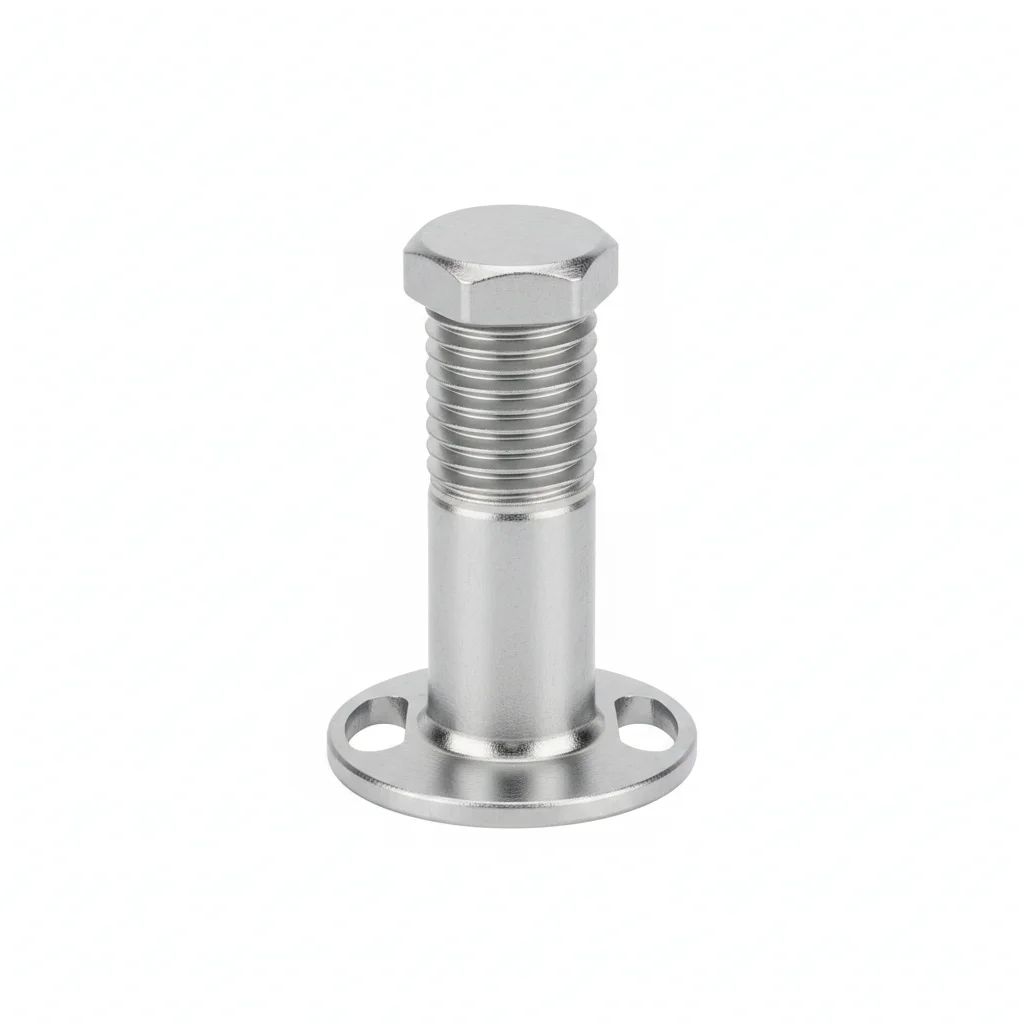
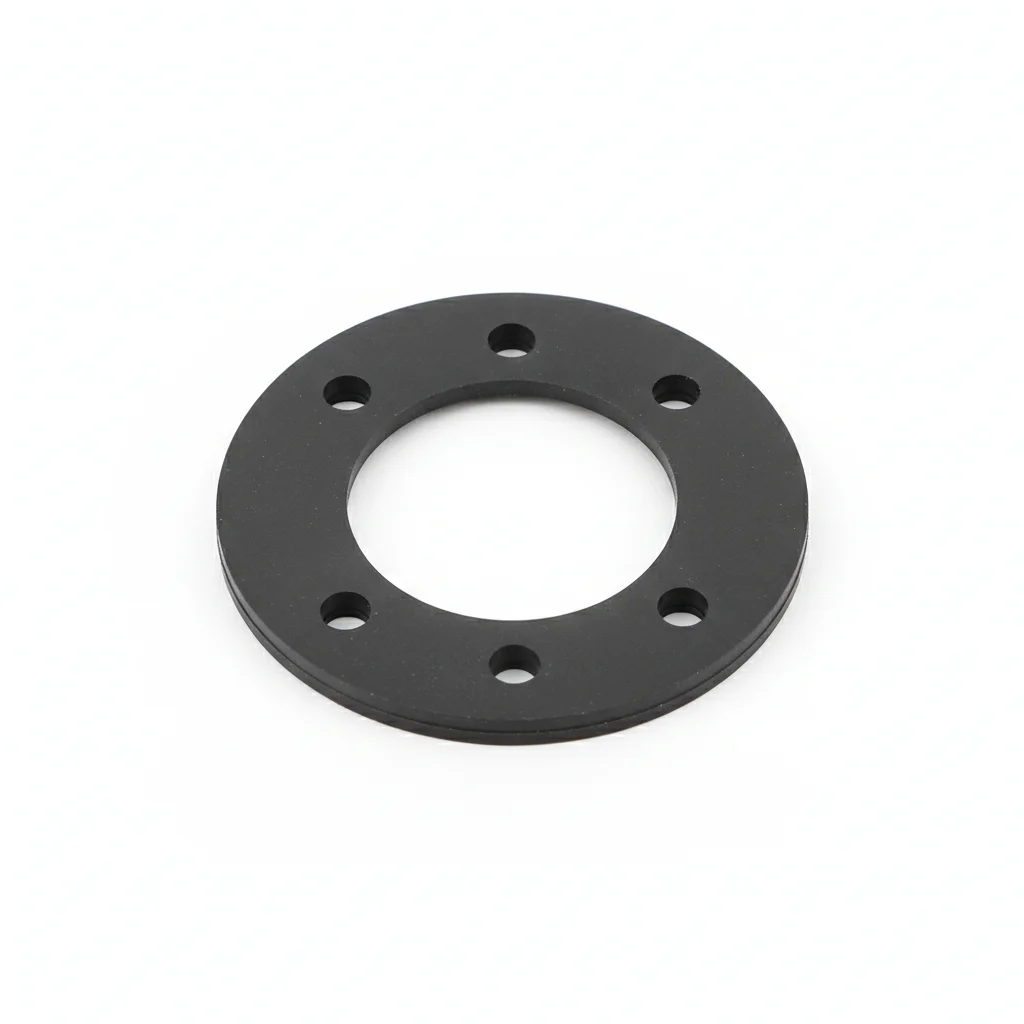
| Bracing Bolt | Nylon Insulation Gasket | |
|---|---|---|
| SPEC | M20-M30 | Thickness 0.5mm, per bolt spec |
| MATERIAL | 35VB | EPDM Rubber |
| GRADE | 10.9S Hot-Dip Galvanized | — |
| FINISH | HDG >=55um per ISO 1461 | HDG >=55um per ISO 1461 |
| CORROSION | C3 (ISO 12944-2) | Not applicable (polymer) |
| TEMP | -20°C to +80°C | -20°C to +80°C |
| WEIGHT | ~0.5 kg/piece | ~0.5 kg/piece |
| MOQ | 100 pcs | 100 pcs |
| PACK | VCI paper + carton | VCI paper + carton |
| STD | ISO 898-1, GB/T 3098.1 | ISO 898-1, GB/T 3098.1 |
| USE | Bracing Connection | Aluminum-Steel Galvanic Blocking |
PROCEDURE
- Clean bracing connection surfaces with acetone to remove oil and debris; verify flatness within 0.1mm/100mm.
- Place nylon insulation gasket (≥0.5mm thick) between aluminum panel and steel purlin; insert nylon sleeve over bolt shank.
- Align bolt holes within 0.5mm; use 10.9S hot-dip galvanized bracing bolt (M20-M30) with washer under head and nut.
- Tighten in star pattern with calibrated torque wrench; apply final torque to spec and mark nut with paint for visual inspection.
- Check 20% of connections by re-torquing; record torque values in QA log for construction acceptance.
COMMON ERRORS
| ✕ WRONG | CONSEQUENCE | ✓ CORRECT |
|---|---|---|
| Using plain steel washer without nylon insulation at aluminum-steel interface | Galvanic circuit completes; steel bolt corrodes faster, losing cross-section and risking fracture during typhoon. | Always use nylon insulation gasket (≥0.5mm) and nylon sleeve to block galvanic contact. |
| Overtightening M20-M30 bolt beyond spec to compensate for galvanic corrosion | Bolt may yield or break; connection loses ductility, failing 'non-yielding' seismic requirement. | Tighten with torque wrench to specified torque; verify with 20% random check. |
MAINTENANCE
Inspect gaskets and bolts every 2 years; randomly disassemble 10% of connections to check gasket integrity. Replace any gasket that is damaged or displaced immediately.
B · Coastal/Seismic
C4 Harsh per ISO 12944-2
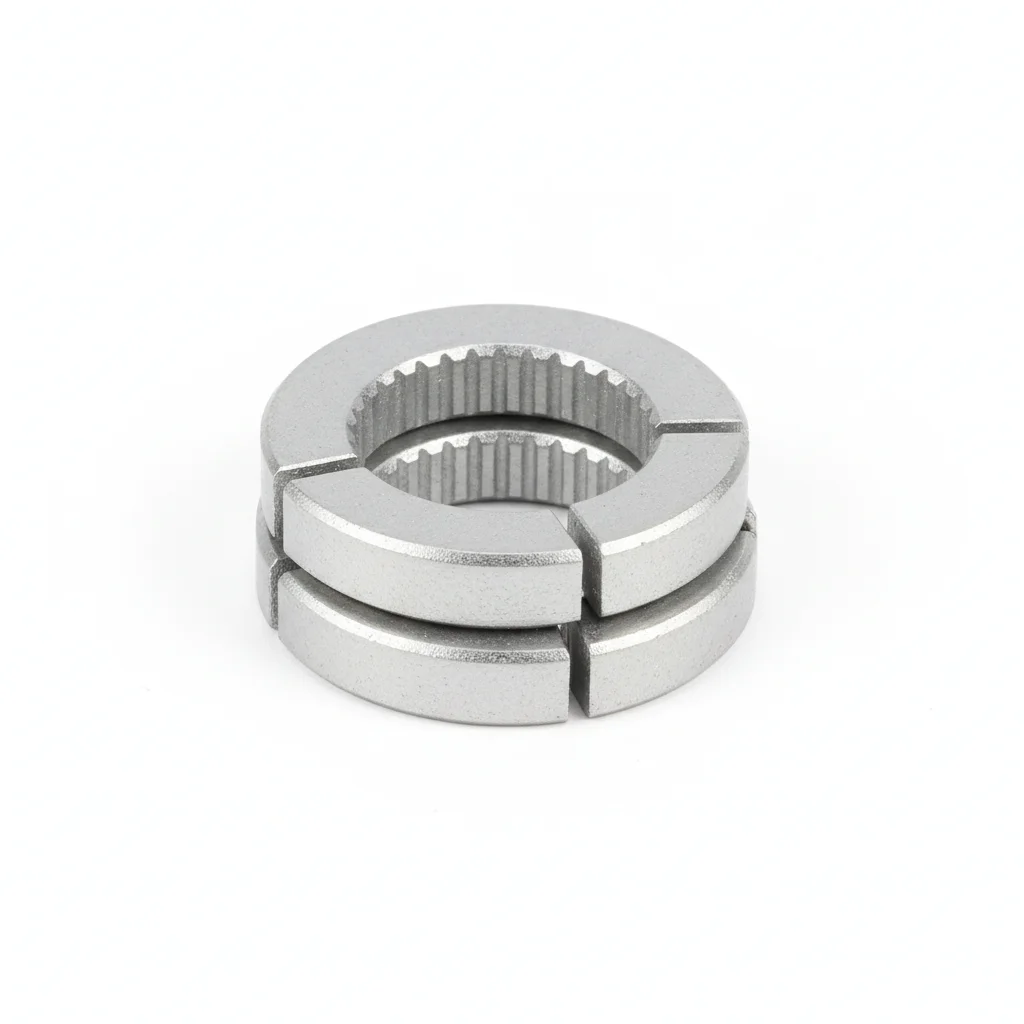
| Bracing Bolt | Dacromet Anti-Corrosion Washer | Wedge Lock Washer | |
|---|---|---|---|
| SPEC | M24-M36 | M20-M30 | NL20-NL30 |
| MATERIAL | 42CrMoA | 45# Steel | Carbon Steel Quenched + Dacromet |
| GRADE | Grade 12.9 Dacromet | Dacromet, Salt Spray 720h | Dacromet |
| FINISH | HDG >=55um per ISO 1461 | HDG >=55um per ISO 1461 | HDG >=55um per ISO 1461 |
| CORROSION | C3 (ISO 12944-2) | C3 (ISO 12944-2) | C3 (ISO 12944-2) |
| TEMP | -20°C to +80°C | -20°C to +80°C | -20°C to +80°C |
| WEIGHT | ~0.5 kg/piece | ~0.5 kg/piece | ~0.5 kg/piece |
| MOQ | 100 pcs | 100 pcs | 100 pcs |
| PACK | VCI paper + carton | VCI paper + carton | VCI paper + carton |
| STD | ISO 898-1, GB/T 3098.1 | ISO 898-1, GB/T 3098.1 | ISO 898-1, GB/T 3098.1 |
| USE | Seismic Reinforcement | C5 Grade Anti-Corrosion | Anti-Loosening for Critical Bracing Nodes |
PROCEDURE
- Clean bolt holes and faying surfaces with acetone to remove oil and debris; confirm surface roughness Ra < 3.2 μm.
- Assemble the M24–M36 Dacromet bolts with Dacromet washers and wedge lock washers; ensure the wedge lock washer's serrated face contacts the nut.
- Snug all bolts in a crisscross pattern, then final-tighten to the specified torque using a calibrated wrench; verify 10% with a torque audit tool and log results.
- For critical bracing nodes, perform a pull-test on 5% of installed bolts to 80% of proof load and replace any that slip.
- Apply a weatherproof sealant around exposed bolt heads and nuts, and attach corrosion coupons at representative joints for ongoing monitoring.
COMMON ERRORS
| ✕ WRONG | CONSEQUENCE | ✓ CORRECT |
|---|---|---|
| Reusing bolts that were previously tensioned or that show signs of corrosion. | Reused or corroded bolts may have reduced ductility and can fracture during a seismic event, compromising the bracing connection. | Use new Grade 12.9 Dacromet bolts from sealed packaging; discard any bolts with surface damage or rust. |
| Overtightening the Dacromet bolts beyond the specified torque to 'make sure' they are secure. | Over-torquing can cause bolt yield or premature failure, and may damage the Dacromet coating, reducing corrosion protection. | Tighten to the torque specified for Dacromet-coated bolts (different from HDG), using a calibrated wrench; never exceed the specified value. |
MAINTENANCE
Inspect bracing nodes seasonally and after any seismic event; check for loosening of wedge lock washers and signs of red rust on Dacromet surfaces. If corrosion affects more than 5% of the bolt surface or pitting exceeds 0.3 mm, replace the fastener. At each major overhaul, disassemble a random 20% sample of connections to verify gasket and washer integrity, and document findings.
Plan C · Coastal/Seismic Enhanced
C5-M Extreme per ISO 12944-2
| Bracing Bolt | Dacromet Anti-Corrosion Washer | Wedge Lock Washer | |
|---|---|---|---|
| SPEC | M24-M36 | M20-M30 | NL20-NL30 |
| MATERIAL | 42CrMoA | 45# Steel | Carbon Steel Quenched + Dacromet |
| GRADE | Grade 12.9 Dacromet | Dacromet, Salt Spray 720h | Dacromet |
| FINISH | HDG >=55um per ISO 1461 | HDG >=55um per ISO 1461 | HDG >=55um per ISO 1461 |
| CORROSION | C3 (ISO 12944-2) | C3 (ISO 12944-2) | C3 (ISO 12944-2) |
| TEMP | -20°C to +80°C | -20°C to +80°C | -20°C to +80°C |
| WEIGHT | ~0.5 kg/piece | ~0.5 kg/piece | ~0.5 kg/piece |
| MOQ | 100 pcs | 100 pcs | 100 pcs |
| PACK | VCI paper + carton | VCI paper + carton | VCI paper + carton |
| STD | ISO 898-1, GB/T 3098.1 | ISO 898-1, GB/T 3098.1 | ISO 898-1, GB/T 3098.1 |
| USE | Extreme Conditions / Maximum Protection | Extreme Conditions / Maximum Protection | Extreme Conditions / Maximum Protection |
PROCEDURE
- Degrease all components with MEK solvent; verify surface roughness Ra < 1.6 μm to ensure proper coating adhesion.
- Lay out the Grade 12.9 Dacromet bolts with matching Dacromet washers and wedge lock washers; apply a thread lubricant compatible with Dacromet to achieve consistent torque.
- Align the bracing members precisely, then tighten bolts in a cross-pattern sequence using a hydraulic tensioner to reach the specified preload.
- Perform PMI verification on 10% of bolts to confirm material grade (42CrMoA) and document for compliance audit.
- Conduct dye penetrant testing on 10% of installed bolts to detect surface cracks; replace any bolts with indications.
- Seal exposed fastener assemblies with a marine-grade sealant and install permanent corrosion monitoring sensors at critical nodes.
COMMON ERRORS
| ✕ WRONG | CONSEQUENCE | ✓ CORRECT |
|---|---|---|
| Using standard steel washers instead of Dacromet-coated or PTFE-encapsulated washers at the aluminum-steel interface. | Galvanic corrosion between the aluminum panel and steel bolt accelerates, leading to cross-section loss and premature bolt fracture. | Always use the specified Dacromet-coated washers and nylon insulation gaskets to break the galvanic circuit. |
| Skipping the torque verification step because the bolts are high-strength and 'unlikely' to loosen. | Inadequate preload can allow joint slippage and bolt loosening under cyclic seismic loading, reducing connection stiffness. | Verify torque on 10% of installed bolts using a calibrated torque wrench and re-tighten any that are below the specified range. |
MAINTENANCE
Inspect critical bracing connections at each overhaul window and after any significant seismic activity; look for signs of coating wear, rust, or loosening. Replace any fastener with corrosion affecting more than 5% of its surface or pitting depth exceeding 0.3 mm. Periodically (e.g., every 5 years) perform a full disassembly inspection of a 20% sample to check for hidden corrosion or fatigue cracks, and document findings.
SUPPLIER CAPABILITY
Quality, Delivery & Customization
Quality Control
- ✓MTC material certificates with every batch
- ✓Key parts sampled for hardness/salt spray/torque coefficient
- ✓100% inspection or AQL sampling before shipment
Delivery
- ✓Standard parts made to order: 7-15 days
- ✓Custom parts: 25-45 days
- ✓FOB/CIF/DDP supported
Customization
- ✓Drawing review and material matching
- ✓Non-standard sizes/heads/threads
- ✓Small-batch prototyping supported
Certification
- ✓Material certificates (MTC)
- ✓Spectrographic analysis reports
- ✓Salt spray test reports (on request)
MOQ: No MOQ for standard parts; custom parts assessed by process complexity
FAQ
FAQ
RELATED READING
Keep Reading & Next Step
BEYOND TECHNICAL SPECS
Finding the right factory, controlling quality, delivering on time — that's the real challenge. We cover fasteners, rubber, plastics, industrial textiles. One team, end to end.
SEE CAPABILITIES →