Purlin Clips: Carbon Steel vs Stainless Steel
Purlin bolts and turnbuckles are critical secondary fasteners. Loosening or corrosion can trigger progressive collapse. This page compares Plan A (Q235B HDG) for inland C3 environments and Plan B (304 stainless steel) for coastal C4 zones, focusing on preload retention, corrosion resistance, and maintenance requirements
RISK AUDIT // ENGINEERING DIAGNOSIS
Purchasing Pitfall Guide
"Wind uplift, slack bracing, zinc corrosion—these are the realities on factory roofs."
QC-AUDIT // REV.5
SCALE 1:1 · 03 ITEMS
RISK-01
Fatigue loosening of purlin bolts under wind uplift
Corrective Measures
RISK-02
Insufficient tension in cross bracing leads to low roof horizontal stiffness
Corrective Measures
RISK-03
Accelerated corrosion in high-temperature, high-humidity environments
Corrective Measures
FIELD-SPECIFIC INSIGHT
Critical Differences in Purlin Clip Selection
While both carbon steel HDG and stainless steel purlin bolts meet strength requirements, the key differentiators are corrosion resistance and preload retention under cyclic loading. In coastal environments, zinc coating corrosion can reduce effective cross-section over time. Stainless steel eliminates this risk but requires careful torque control to avoid galling
WHAT TO CHECK
- 1Inspect every 6 months and replace if corrosion affects >5% surface area or pitting depth exceeds acceptable limits per project standard
- 2For coastal C4 zones, 304 stainless steel (A2-70) purlin bolts resist corrosion but require anti-seize lubricant during installation to prevent thread galling
- 3Preload loss of M12 grade 8.8 bolts after many cycles; reduce bolt spacing to 600 mm in roof edge zones and use nylon lock nuts to extend fastener life
- 4Cross bracing turnbuckles must be tensioned to design load; hand-tight installation results in insufficient horizontal stiffness, leading to roof sway and ridge cover deformation
- 5In seismic zones, use 316L stainless steel with Dacromet coating and wedge lock washers for maximum anti-loosening; full disassembly inspection every 3 years and replacement every 5 years
| Check | Why it matters | What to specify |
|---|---|---|
| Corrosion environment classification | Determines base material and coating requirements; C3 inland vs C4 coastal vs C5 extreme | Specify ISO 12944-2 corrosivity category in project specs; select material accordingly |
| Preload retention under cyclic loading | Wind uplift cycles cause preload loss; edge zones are highest risk | Specify nylon lock nuts or wedge lock washers |
| Cross bracing tension verification | Insufficient tension reduces roof horizontal stiffness to a fraction of design | Specify turnbuckle tensioning procedure and acceptance criteria (e. G. , torque or elongation) |
| Maintenance interval and replacement criteria | Corrosion and fatigue accumulate over time; timely replacement prevents failure | Define inspection frequency, torque re-check threshold, and replacement triggers (corrosion area or pitting depth per project standard) |
All maintenance intervals and replacement criteria are based on the page's Plan A/B maintenance schedule. Actual values should be verified against project-specific design codes and environmental conditions
Evidence level: source-page-only
INDUSTRY TECH REFERENCE
Purlin Bolts Under Wind-Uplift Cycling: +25% Stress Amplitude, Half the Life
Roof purlins take repeated tension from wind uplift and pressure — one of the few long-term cyclic-load loops in a factory. Life is set by the cyclic stress amplitude, so read this S-N relationship before deciding whether to upgrade the grade.
Purlin-bolt fatigue life is sensitive to the stress amplitude, not to the maximum strength: a 25% rise in stress amplitude cuts fatigue life by about half (S-N slope m≈3, the typical order for steel fatigue). The reverse holds too — trim the amplitude a little and the life comes back by multiples. So the design order is amplitude first, grade second: reduce connection eccentricity and warping restraint, push down the stress concentration at the thread root, and even out the tension amplitudes across the connection points — all rank above a bare strength upgrade, because upgrading the grade only raises the stress ceiling and does nothing about the amplitude that is already there. The erection side works the same way: loosening means the bolt keeps taking blows at the tight-loose boundary, which effectively enlarges the applied amplitude — preload retention and locking are part of the fatigue life, not an option.
The +25%-amplitude → -50%-life relationship and the S-N slope m≈3 are typical steel-fatigue values; "amplitude first, grade second" and "loosening enlarges the applied amplitude" are engineering reasoning. No order-of-magnitude estimates are used in this slot.
INDUSTRY TECH REFERENCE
Purlin Connections Are Not Friction-Type Joints: Two Sets of Rules
Secondary-structure connections like purlins and bracing sit on a different code baseline — ordinary bolts in bearing, not friction-type high-strength joints. Identify the joint type first, then apply the matching rule set to the RFQ and to acceptance.
| Item | Secondary-structure connection (purlin / bracing) | Friction-type high-strength joint (reference) |
|---|---|---|
| Load transfer | Bearing, not friction — no preload-based slip resistance; the shank bears against the hole wall | Friction-surface slip resistance — preload clamps the faying surfaces; shear capacity per 0.9·k·n_f·μ·P |
| Typical grade | Ordinary grade C bolts 4.6/4.8 (code baseline); 8.8 for wind-reinforced duty | 8.8S/10.9S large-hexagon assemblies or twist-off type; 10.9 M20-M30 preload 155-355 kN |
| Hole size | d+1.0~1.5 mm (ordinary grade C bolts) | Standard holes about shank +2~3 mm (M20=22, M24=26, M30=33); bearing-type not over nominal diameter +2 mm |
| Preload control | No design preload — tension relies on erection quality and thread condition | Torque method T=k·1.1P·d; torque coefficient 0.110-0.150, standard deviation ≤0.0100; initial/re-tightening = 50% of final torque; Pc=1.1P |
| Acceptance | Accepted with the main structure (maintenance follows the frame) | Final-tightening checks within 1-48 h; assemblies re-tested in batches on arrival — any failed batch is returned in full |
No order-of-magnitude estimates are used in this slot.
INDUSTRY TECH REFERENCE
The Turnbuckle Tension-Fidelity Chain: Change the Thread, Lose the Axial Force
Cross bracing gets its tension from turnbuckles, and the rotation-to-tension conversion depends entirely on the thread condition. Rust, dirt, lubricant, damage — change any of them and the same wrench no longer lands the intended force.
- 1The principle: tension is built by threading the turnbuckle — the rotation-to-axial-force conversion presupposes a known thread friction state; this is the same conversion logic as the torque method T=k·P·d: change the state and the conversion is off
- 2Corrosion products fill the threads, dirt, and shop-added lubricant or anti-seize — thread damage or contamination shifts the conversion substantially, and so does lubrication (a fitter's first question on site is 'what is on these threads? lube changes the torque value')
- 3A distorted conversion → the real tension for a given rotation becomes unknowable → bracing ends up under-tensioned → the purlin lateral support fails → lateral deflection grows under wind and seismic load
- 4Forcing a seized thread during maintenance → impact and overload → torsional fracture — a seized thread is not 'take more effort', it is a failure precursor
- 5Interception: verify thread condition and batches at receiving (assemblies re-tested in batches, matched sets not mixed) plus calibrated wrenches on site, no private lubrication, and guarding against counterfeits — field case: A325 bolts snapped at 1-2% under a Skidmore-calibrated wrench, with over-torque, lubrication-shifted conversion, and counterfeits among the suspected causes
The 1-2% snap rate is an order-of-magnitude estimate, for trend judgment; "seized thread → forced rotation → torsional fracture" and "under-tension → insufficient lateral stiffness" are engineering reasoning without independent figures.
INDUSTRY TECH REFERENCE
The Purlin and Bracing RFQ: What a Fastener Supplier Can Actually Cover
Draw the can-do / cannot-do boundary before the RFQ goes out, so fabrication, chemical, and coating work never leaks into a fastener order.
Can do: purlin bolts, turnbuckles, and bracing-system hardware (including washers and locking elements) — supplied as standard parts, inside the 'bracing and purlin system fasteners' supply scope, sharing the same standard and part system as the main frame. Cannot do: steel fabrication (H-section columns and beams, gusset plates, the purlin steel itself), complete cranes and rails, grout materials (chemical products), and anti-corrosion painting works. The point for the RFQ list: a fastener quotation must not carry vague items like 'including purlin fabrication' or 'paint included' — fabrication, chemical, and coating scope should be contracted separately, so a supplier never swallows work they cannot deliver and responsibility stays clear at acceptance.
No order-of-magnitude estimates are used in this slot.
PLAN COMPARISON
Three-Plan Core Parameter Comparison
Compare row by row. Click column headers to jump to plan details.
| A · A · General Factory | B · B · Coastal/Typhoon Zone | C · Plan C · Coastal/Seismic Reinforced | |
|---|---|---|---|
| 1. PURLIN BOLT | |||
| SPEC | M12-M16 | M12-M16 | M12-M16 |
| MATERIAL | Carbon Steel | 304 | 316L |
| GRADE | Grade 8.8 Hot-Dip Galvanized | A2-70 | A2-70 |
| FINISH | HDG >=55um per ISO 1461 | HDG >=55um per ISO 1461 | HDG >=55um per ISO 1461 |
| 2. TURNBUCKLE | |||
| SPEC | M12-M16 | M12-M16 | M12-M16 |
| MATERIAL | Q235B Hot-Dip Galvanized | 304 | 316L |
| GRADE | — | A2-70 | A2-70 |
| FINISH | HDG >=55um per ISO 1461 | HDG >=55um per ISO 1461 | HDG >=55um per ISO 1461 |
SELECTION GUIDE
Choose Your Plan
| Operating condition | Recommended option | Key basis |
|---|---|---|
| Inland general factory (C3 per ISO 12944-2) | Option A · 8.8 Hot-Dip Galvanized: purlin bolt grade 8.8 hot-dip galvanized (M12-M16, carbon steel) + spring washer + nylon lock nut for purlin connection; turnbuckle (M12-M16, Q235B hot-dip galvanized) for cross bracing tensioning | ISO 12944-2 C3 inland; GB 50017; GB 51022; nylon lock nut counters fatigue loosening (preload loss of M12 grade 8.8 can exceed 40% after 10^5 cycles) |
| Coastal / typhoon zone (C4 per ISO 12944-2) | Option B · 304 Stainless Steel Full Range: purlin bolt and turnbuckle (M12-M16, 304, A2-70); use anti-seize lubricant during installation to prevent thread galling | ISO 12944-2 C4; 304 (A2-70) cuts corrosion rate from 0.05mm/year (zinc at 35°C / 85% RH) to ≤0.01mm/year, extending service life to over 20 years |
| Coastal / seismic extreme (C5-M per ISO 12944-2) | Plan C · Coastal/Seismic Reinforced: 316L stainless steel purlin bolt and turnbuckle (M12-M16, A2-70) + Dacromet coating + wedge lock washer for anti-loosening; full disassembly inspection every 3 years, replacement every 5 years | ISO 12944-2 C5-M extreme; wedge lock washers for maximum anti-loosening in seismic zones |
| Roof edge zones (highest wind uplift) | Tighten purlin connections by reducing bolt spacing from the standard 900mm to 600mm, combined with nylon lock nuts, to extend fastener life to 10+ years | Wind uplift cycles cause preload loss >40% after 10^5 cycles; roof edge zone is the high-risk area for loosening |
| Cross bracing tensioning (hand-tight risk) | Tighten turnbuckles with a wrench until the bracing emits a crisp 'taut' sound when struck; lock both ends with double nuts; during annual inspections use a tension gauge to check bracing tension (should be ≥80% of design pre-tension) | Hand-tight installation leaves roof horizontal stiffness at only 30-40% of design value → roof sway and ridge cover deformation → leakage |
A · General Factory
C3 inland per ISO 12944-2
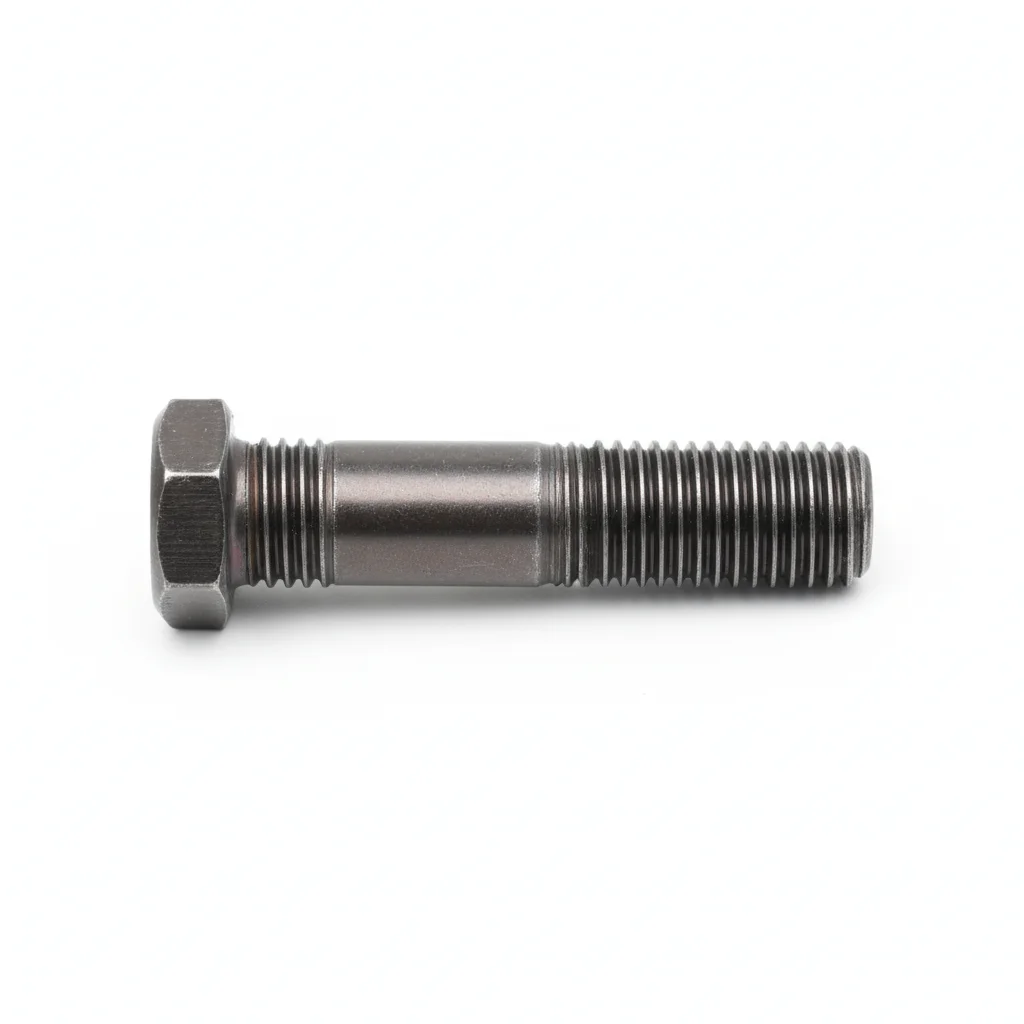
| Purlin Bolt | Turnbuckle | |
|---|---|---|
| SPEC | M12-M16 | M12-M16 |
| MATERIAL | Carbon Steel | Q235B Hot-Dip Galvanized |
| GRADE | Grade 8.8 Hot-Dip Galvanized | — |
| FINISH | HDG >=55um per ISO 1461 | HDG >=55um per ISO 1461 |
| CORROSION | C3 (ISO 12944-2) | C3 (ISO 12944-2) |
| TEMP | -20°C to +80°C | -20°C to +80°C |
| WEIGHT | ~0.5 kg/piece | ~0.5 kg/piece |
| MOQ | 100 pcs | 100 pcs |
| PACK | VCI paper + carton | VCI paper + carton |
| STD | ISO 898-1, GB/T 3098.1 | ISO 898-1, GB/T 3098.1 |
| USE | Purlin Connection | Cross Bracing Tensioning |
PROCEDURE
- Clean the purlin and bracing contact surfaces to bare metal; verify flatness within 0.1 mm per 100 mm.
- Position the M12–M16 grade 8.8 hot-dip galvanized purlin bolt with a spring washer under the nut; for edge-zone connections, also fit a nylon insert lock nut.
- Tighten in a criss-cross pattern to the torque specified in the design (refer to GB 50017); avoid over-tightening that could prevent purlin slip.
- For turnbuckles on cross bracing, tension with a wrench until the bracing sounds taut when struck, then lock both ends with double nuts.
- Mark the tightened fasteners with torque seal paint and record the installation date and torque values in the QA log.
COMMON ERRORS
| ✕ WRONG | CONSEQUENCE | ✓ CORRECT |
|---|---|---|
| Hand-tightening turnbuckles on cross bracing | Bracing remains slack, roof horizontal stiffness drops to 30–40% of design, and the roof sways visibly in wind, deforming ridge covers and causing leaks. | Tension each turnbuckle with a wrench until the bracing emits a crisp 'taut' sound when struck, then lock the ends with double nuts. |
| Using plain nuts instead of nylon lock nuts in roof edge zones | Wind uplift cycles cause preload loss of over 40% on M12 grade 8.8 bolts, leading to loosening and a slapping sound from purlins. | Fit nylon insert lock nuts (and spring washers) on purlin connection bolts, especially in edge zones where bolt spacing is reduced to 600 mm. |
MAINTENANCE
Inspect annually: tap purlin connection plates with a hammer and listen for loose areas; check bracing tension with a gauge to ensure it is at least 80% of design pre-tension. Replace any fastener showing corrosion over 5% of surface area or pitting deeper than 0.3 mm.
B · Coastal/Typhoon Zone
C4 Harsh per ISO 12944-2
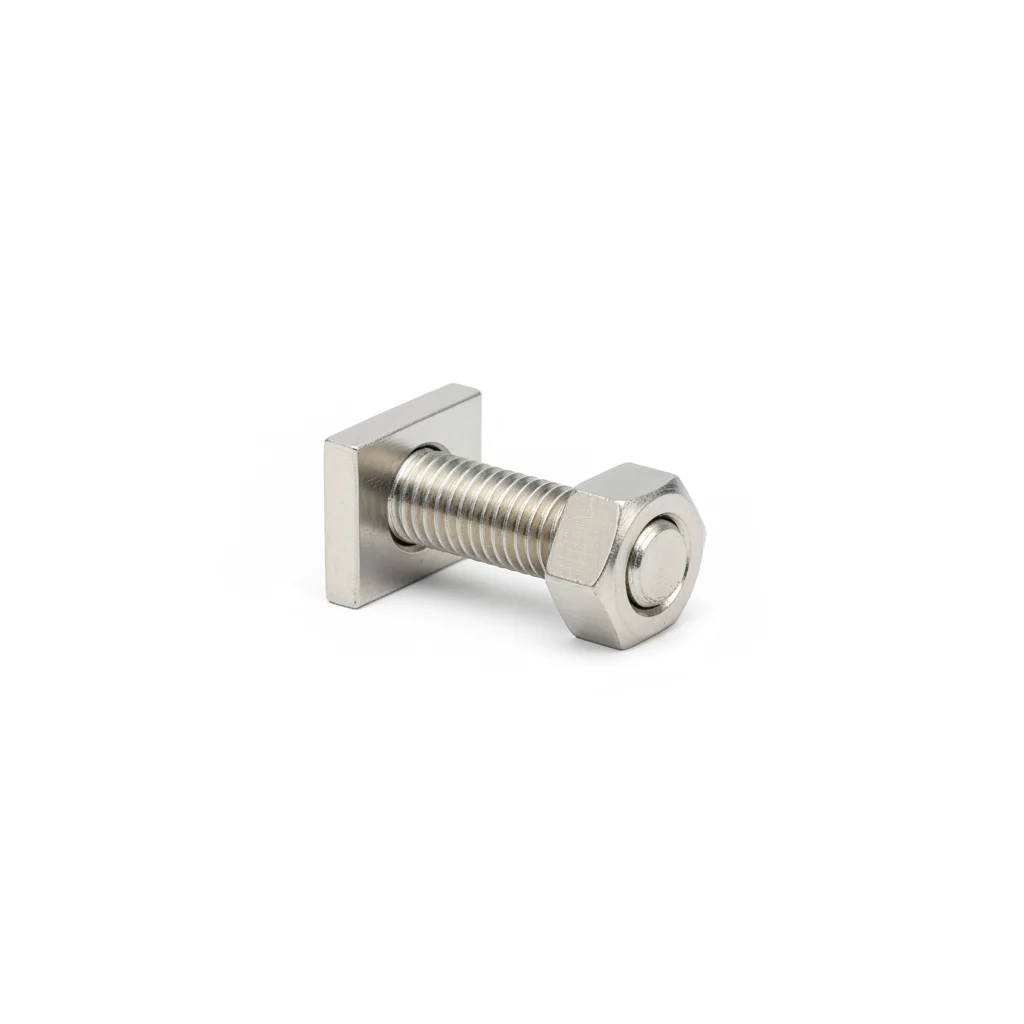
| Purlin Bolt | Turnbuckle | |
|---|---|---|
| SPEC | M12-M16 | M12-M16 |
| MATERIAL | 304 | 304 |
| GRADE | A2-70 | A2-70 |
| FINISH | HDG >=55um per ISO 1461 | HDG >=55um per ISO 1461 |
| CORROSION | C3 (ISO 12944-2) | C3 (ISO 12944-2) |
| TEMP | -20°C to +80°C | -20°C to +80°C |
| WEIGHT | ~0.5 kg/piece | ~0.5 kg/piece |
| MOQ | 100 pcs | 100 pcs |
| PACK | VCI paper + carton | VCI paper + carton |
| STD | ISO 898-1, GB/T 3098.1 | ISO 898-1, GB/T 3098.1 |
| USE | C5 Zone Purlin | Coastal Bracing Tensioning |
PROCEDURE
- Degrease threads with acetone and verify surface roughness Ra <3.2um before assembly.
- Apply anti-seize lubricant to 304 stainless threads to prevent galling during torque-up.
- Tighten purlin bolts in cross-pattern sequence to the specified torque for M12-M16 A2-70.
- Check 10% of installed fasteners with a calibrated torque verification tool and log environmental conditions.
- Pull-test 5% random sample to 80% of proof load, replacing any fasteners that slip.
- Apply weatherproof sealant over exposed stainless fasteners and install corrosion coupons near critical joints.
COMMON ERRORS
| ✕ WRONG | CONSEQUENCE | ✓ CORRECT |
|---|---|---|
| Tightening 304 stainless bolts without anti-seize lubricant | Threads gall and seize, preventing proper preload and risking bolt fracture during installation. | Coat threads with anti-seize lubricant before assembly and use slow, steady torque to avoid galling. |
| Using carbon steel washers with stainless bolts in a coastal C4 zone | Galvanic corrosion accelerates at the washer interface, leading to premature failure. | Use stainless steel washers (A2) and verify material compatibility before installation. |
MAINTENANCE
Inspect at each overhaul window, re-torque any fastener below 80% of specified torque, and replace fasteners with corrosion affecting >5% of surface area or pitting depth >0.3mm. Full disassembly inspection of 20% sample every 3 years and replacement every 5 years.
Plan C · Coastal/Seismic Reinforced
C5-M Extreme per ISO 12944-2
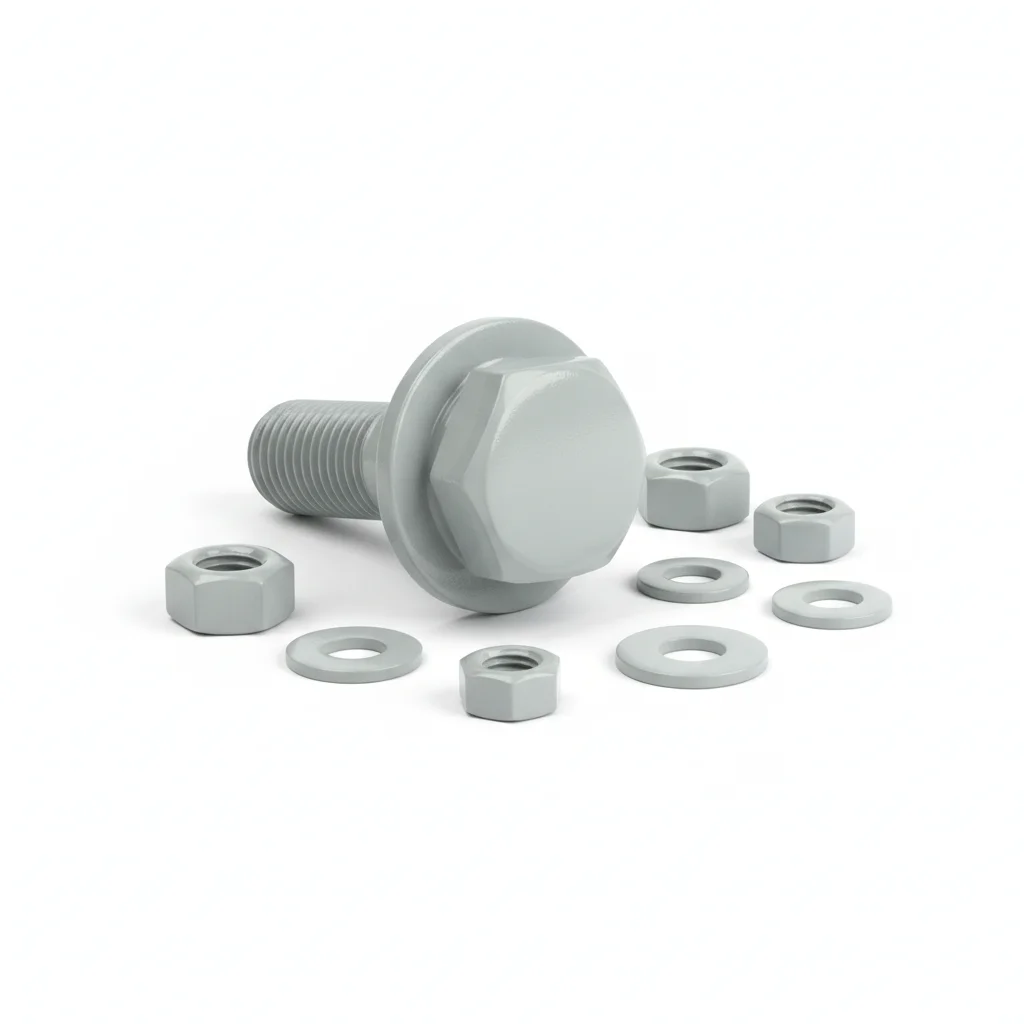
| Purlin Bolt | Turnbuckle | |
|---|---|---|
| SPEC | M12-M16 | M12-M16 |
| MATERIAL | 316L | 316L |
| GRADE | A2-70 | A2-70 |
| FINISH | HDG >=55um per ISO 1461 | HDG >=55um per ISO 1461 |
| CORROSION | C3 (ISO 12944-2) | C3 (ISO 12944-2) |
| TEMP | -20°C to +80°C | -20°C to +80°C |
| WEIGHT | ~0.5 kg/piece | ~0.5 kg/piece |
| MOQ | 100 pcs | 100 pcs |
| PACK | VCI paper + carton | VCI paper + carton |
| STD | ISO 898-1, GB/T 3098.1 | ISO 898-1, GB/T 3098.1 |
| USE | Extreme Conditions / Maximum Protection | Extreme Conditions / Maximum Protection |
PROCEDURE
- Degrease with MEK solvent and verify surface roughness Ra <1.6um for 316L components.
- Apply marine-grade anti-seize compound rated for -50 to 200C on all threads.
- Tighten with hydraulic tensioner to achieve specified preload for M12-M16 A2-70 bolts.
- Perform PMI verification on 10% sample to confirm 316L material grade.
- Conduct dye penetrant NDT on 10% sample, replacing any fasteners with crack indications.
- Apply protective sealant and install permanent condition monitoring instrumentation.
COMMON ERRORS
| ✕ WRONG | CONSEQUENCE | ✓ CORRECT |
|---|---|---|
| Substituting 304 stainless for 316L in a C5-M environment | Pitting corrosion occurs in chloride-rich coastal air, reducing fastener life before the 25-year design life. | Verify material certificates confirm 316L (with molybdenum) before installation and use PMI testing on site. |
| Over-torquing M12 bolts beyond design values (e.g., using a cheater bar) | Purlin holes deform or bolts yield, causing stress concentrations and premature fatigue failure. | Use a calibrated torque wrench set to the specified N·m range and never extend with a cheater bar. |
MAINTENANCE
Inspect at each overhaul window, re-torque any fastener below 80% of specified torque, and replace fasteners with corrosion affecting >5% of surface area or pitting depth >0.3mm. Full disassembly inspection of 20% sample every 3 years and replacement every 5 years.
REFERENCED STANDARDS
References
SUPPLIER CAPABILITY
Quality, Delivery & Customization
Quality Control
- ✓MTC material certificates with every batch
- ✓Key parts sampled for hardness/salt spray/torque coefficient
- ✓100% inspection or AQL sampling before shipment
Delivery
- ✓Standard parts made to order: 7-15 days
- ✓Custom parts: 25-45 days
- ✓FOB/CIF/DDP supported
Customization
- ✓Drawing review and material matching
- ✓Non-standard sizes/heads/threads
- ✓Small-batch prototyping supported
Certification
- ✓Material certificates (MTC)
- ✓Spectrographic analysis reports
- ✓Salt spray test reports (on request)
MOQ: No MOQ for standard parts; custom parts assessed by process complexity
FAQ
Frequently Asked Questions
RELATED READING
Keep Reading & Next Step
BEYOND TECHNICAL SPECS
Finding the right factory, controlling quality, delivering on time — that's the real challenge. We cover fasteners, rubber, plastics, industrial textiles. One team, end to end.
SEE CAPABILITIES →