Insulation Fasteners: Nylon vs Metal for Thermal Break
Metal bolts penetrating insulation create thermal bridges—local heat loss up to 100 times normal, causing condensation and mold. Nylon PA66-GF30 fasteners (λ≈0.25 W/m·K) reduce thermal bridge effect to 1/200. Compare self-tapping insulation pins, cold bridge sleeves, and full nylon nails for general factory vs cold storage applications
RISK AUDIT // ENGINEERING DIAGNOSIS
Procurement Pitfall Guide
"Thermal bridges, adhesive failures, and sagging insulation—common pitfalls that undermine factory energy efficiency."
QC-AUDIT // REV.5
SCALE 1:1 · 03 ITEMS
RISK-01
Metal Bolts Penetrating Insulation Create Thermal Bridges
Corrective Measures
RISK-02
Metal Bolts Penetrating Insulation Create Thermal Bridges
Corrective Measures
RISK-03
Insulation Pin Adhesive Softens and Falls Off at High Temperatures
Corrective Measures
FIELD-SPECIFIC INSIGHT
Thermal Bridge Check: 3 Critical Points for Insulation Fastener Selection
The most overlooked engineering difference in insulation fasteners is the thermal conductivity of the fastener material. A single metal bolt can reduce the effective R-value of the entire insulation layer by half. Use this checklist to specify fasteners that maintain insulation integrity
WHAT TO CHECK
- 1Metal bolts (λ≈50 W/m·K) through 100mm insulation (λ≈0.04 W/m·K) create local heat transfer over 100 times normal—specify PA66-GF30 nylon (λ≈0.25 W/m·K) to reduce thermal bridge to 1/200
- 2In cold storage, full nylon insulation nails (metal-free) eliminate thermal bridge entirely; for general factory, carbon steel self-tapping pins with plastic base are acceptable if cold bridge sleeves are used
- 3Adhesive base of insulation pins can soften at 60-70°C in summer—use acrylic structural adhesive (rated -40~120°C) instead of ordinary double-sided tape to prevent sagging after 2-3 years
| Check | Why it matters | What to specify |
|---|---|---|
| Fastener thermal conductivity | Metal fasteners create thermal bridges, causing condensation and energy loss | PA66-GF30 nylon for bolts through insulation; carbon steel + plastic base for self-tapping pins |
| Cold bridge sleeve wall thickness | Thicker sleeve increases thermal path length, reducing heat transfer | 2mm for general factory (M8-M12); 3mm for cold storage/constant temp workshop |
| Adhesive temperature rating | Low-grade adhesive softens in summer, causing insulation sag and energy cost spike | Acrylic structural adhesive, temperature range -40~120°C |
Thermal conductivity values are typical for materials; actual performance depends on installation and environmental conditions. Verify with supplier test reports
Evidence level: source-page-only
INDUSTRY TECH REFERENCE
Insulation Pins Are Not Structural Bolts: The Envelope Attachment and Its Acceptance Line
Insulation pins self-tap into purlins and wall girts, yet many buyers quiz them against high-strength bolt specs. Sort out how the host structure is joined and which acceptance line applies, then talk selection.
- The host of insulation pins is the purlin/girt system — secondary members whose bolted connections are designed as C-grade ordinary bolts (grades 4.6/4.8), hole diameter d+1.0-1.5 mm, bearing-type rather than friction-type (GB 50017-2017)
- High-strength friction-type joints resist slip through preload clamping the faying surfaces; C-grade ordinary bolts bear on the hole wall; a self-tapping insulation pin is envelope fixing, which matches neither model — do not demand structural-joint strength logic from a pin
- Do not misapply the acceptance line: torque coefficient, wedge-load and nut proof load are the incoming-test main-control items for high-strength assemblies, and any failed batch is rejected in full (GB 50205-2020) — none of them applies to insulation pins; asking the pin supplier for a torque-coefficient report applies a structural-assembly acceptance line to an envelope fixing
- What insulation pins should actually be checked are envelope fit items: self-tapping length matched to the build-up thickness (purlin + insulation + panel), plastic base matched to the pin body's corrosion finish, and sleeve wall thickness and low-temperature toughness chosen for the service environment — fix the fixing method (mechanical drive vs pure adhesive) before installation
No order-of-magnitude estimates are used in this slot.
INDUSTRY TECH REFERENCE
Envelope Fasteners Do Not Get a 50-Year Maintenance-Free Pass
The steel structure is designed for a 50-year maintenance-free working life, but insulation pins and thermal break sleeves do not get that pass — they serve outdoors, and the code system gives them no re-tightening clause. Durability has to be bought once, at selection.
Steel structures for ordinary buildings and structures are designed to a 50-year design working life (GB 55001-2021 Table 3.1.16; per GB 50068-2018). Structural joints are designed maintenance-free for their full life after final tightening — the reliability comes from an acceptance-verified preload, and there is no re-tightening clause in service. Envelope insulation pins and break sleeves sit outside that system: they serve outdoors on roofs and outer walls under UV, temperature cycling, wind and rain; they are absent from the incoming-test main-control list for structural assemblies; and the code system gives them no in-service inspection or re-tightening provision. The consequence: degradation of fixing strength or thermal-break performance either gets resolved once, inside the installation window, or is buried in a 50-year life as ongoing heat loss, moisture and corrosion. Selection therefore has to buy the margin once — allow corrosion allowance for exposed locations per the environment (GB 50017-2017 §12.7.5 commentary), shield the UV ageing of exterior-wall nylon break sleeves with a metal cap or equivalent, and fix the fixing method (mechanical drive vs pure adhesive) and material grade (full nylon or weatherable-modified nylon) before work starts. In one line: a structural joint earns its maintenance-free status through an acceptance-verified preload; an envelope fastener earns it through a selection-verified weather resistance.
No order-of-magnitude estimates are used in this slot.
PLAN COMPARISON
Three-Plan Core Parameter Comparison
Compare row by row. Click column headers to jump to plan details.
| A · A·General Factory | B · B·Cold Storage/Constant Temperature Workshop | C · Plan C · Coastal/Seismic Reinforced Type | |
|---|---|---|---|
| 1. SELF-TAPPING INSULATION NAIL | |||
| SPEC | φ4.8mm Length 80-200mm | φ6mm | φ6mm |
| MATERIAL | Carbon Steel Galvanized + Plastic Base | PA66-GF30 | PA66-GF30 |
| GRADE | — | Metal-Free Full Nylon | Metal-Free Full Nylon |
| FINISH | HDG >=55um per ISO 1461 | HDG >=55um per ISO 1461 | HDG >=55um per ISO 1461 |
| 2. NYLON COLD BRIDGE BREAK SLEEVE | |||
| SPEC | Wall Thickness 2mm M8-M12 | Wall Thickness 3mm | Wall Thickness 3mm |
| MATERIAL | PA66-GF30 | PA66-GF30 | PA66-GF30 |
| GRADE | -40°C Low Temperature Impact Qualified | -60°C Low Temperature Impact | -60°C Low Temperature Impact |
| FINISH | HDG >=55um per ISO 1461 | HDG >=55um per ISO 1461 | HDG >=55um per ISO 1461 |
SELECTION GUIDE
Insulation Fastener Selection
| Operating condition | Recommended option | Key basis |
|---|---|---|
| General factory (C3 per ISO 12944-2, service temperature -20°C to +80°C) | Option A · Carbon steel + nylon sleeve: self-tapping insulation nail (φ4.8mm, length 80-200mm, carbon steel galvanized + plastic base) for mechanical fixing of insulation + nylon cold bridge break sleeve (wall thickness 2mm, M8-M12, PA66-GF30) + nylon washers for bolts through insulation | PA66-GF30 nylon λ≈0.25 W/m·K reduces thermal bridge to 1/200 vs steel ≈50 W/m·K; GB 50189; ASTM C518 |
| Cold storage / constant temperature workshop (C4 per ISO 12944-2) | Option B · All nylon + thickened sleeve: full nylon insulation nail (φ6mm, PA66-GF30, metal-free) + thickened cold bridge break sleeve (wall thickness 3mm, PA66-GF30, -60°C low temperature impact) | Metal-free full nylon eliminates thermal bridge entirely; -60°C low temperature impact; GB 50189 |
| Coastal / seismic extreme conditions (C5-M per ISO 12944-2) | Plan C · Coastal/Seismic Reinforced: full nylon insulation nail (φ6mm, PA66-GF30, metal-free) + thickened cold bridge break sleeve (wall thickness 3mm, -60°C low temperature impact) | ISO 12944-2 C5-M extreme; -60°C low temperature impact |
| Summer wall surface temperature 60-70°C (adhesive softening risk) | Prefer mechanical fixing of insulation pins (self-tapping screws through the base into the purlin); if adhesive must be used, choose acrylic structural adhesive (temperature resistance -40~120°C, shear strength >1MPa) and clean oil and dust from the wall surface before installation | Ordinary adhesive softens at 60-70°C → insulation sags after 2-3 years and winter heating costs spike by 20-30% |
A·General Factory
C3 corrosion category per ISO 12944-2, service temperature -20°C to +80°C
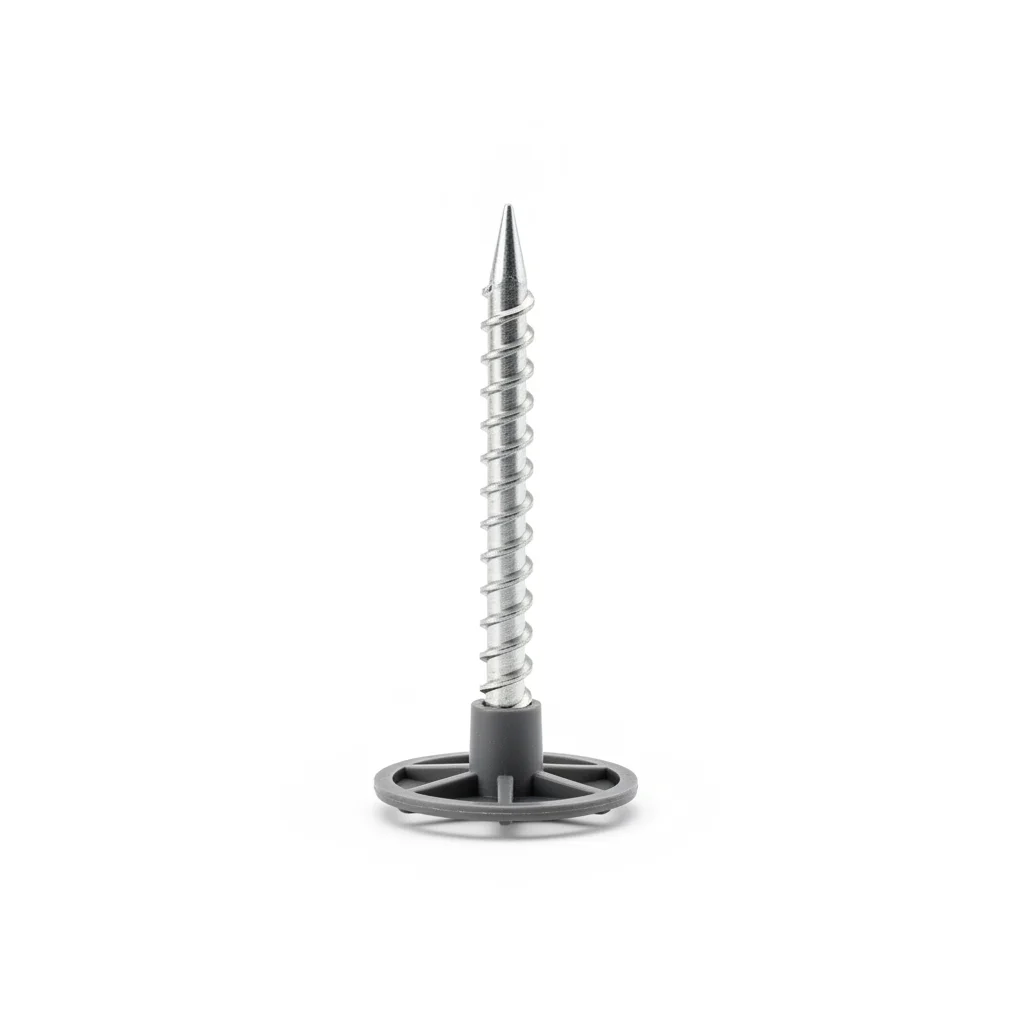
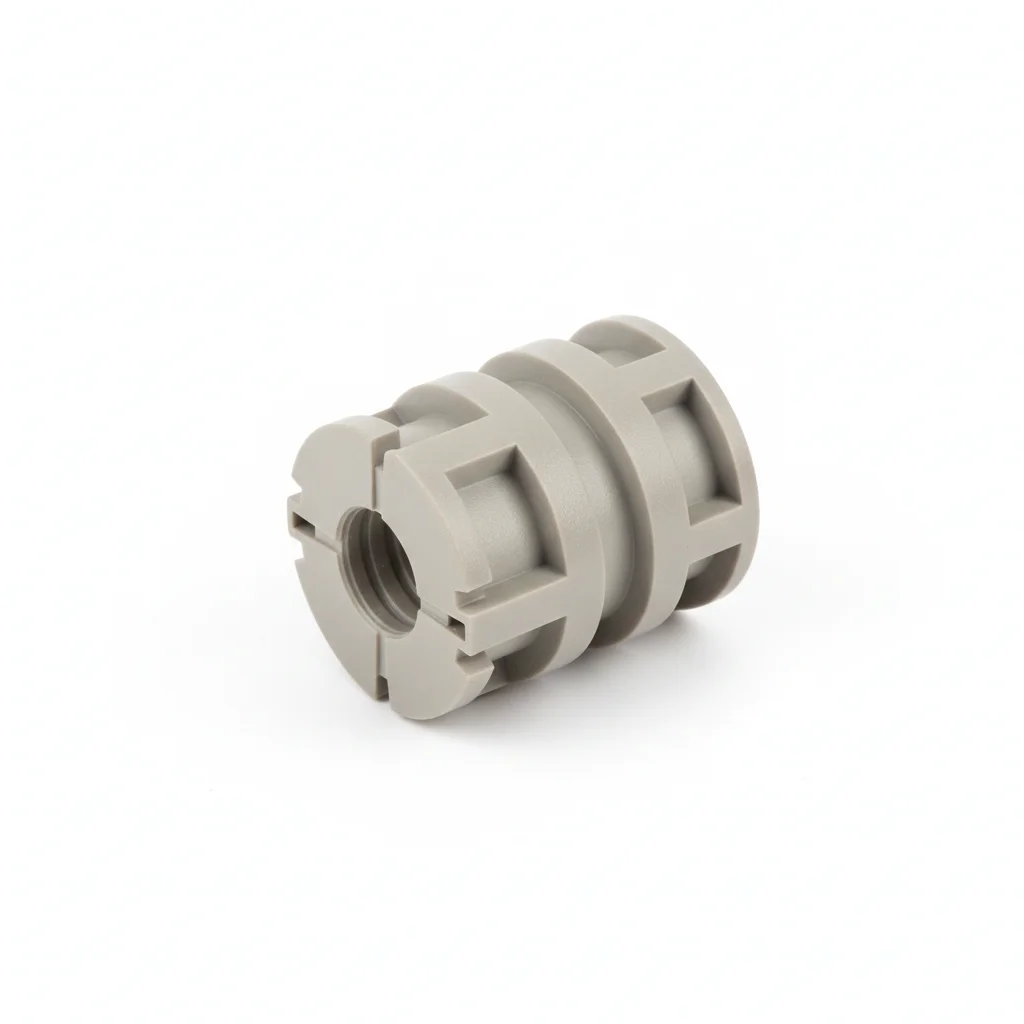
| Self-Tapping Insulation Nail | Nylon Cold Bridge Break Sleeve | |
|---|---|---|
| SPEC | φ4.8mm Length 80-200mm | Wall Thickness 2mm M8-M12 |
| MATERIAL | Carbon Steel Galvanized + Plastic Base | PA66-GF30 |
| GRADE | — | -40°C Low Temperature Impact Qualified |
| FINISH | HDG >=55um per ISO 1461 | HDG >=55um per ISO 1461 |
| CORROSION | C3 (ISO 12944-2) | C3 (ISO 12944-2) |
| TEMP | -20°C to +80°C | -20°C to +80°C |
| WEIGHT | ~0.5 kg/piece | ~0.5 kg/piece |
| MOQ | 100 pcs | 100 pcs |
| PACK | VCI paper + carton | VCI paper + carton |
| STD | ISO 898-1, GB/T 3098.1 | ISO 898-1, GB/T 3098.1 |
| USE | Mechanical Fixing of Insulation | Bolts Through Insulation Layer |
PROCEDURE
- Clean the purlin surface and drill pilot holes for the φ4.8mm self-tapping insulation nail, ensuring depth matches the 80-200mm length.
- Place the nylon cold bridge break sleeve (wall thickness 2mm) over the bolt before it passes through the insulation layer, and add a nylon washer under the head.
- Drive the self-tapping nail through the insulation into the purlin using a suitable driver, ensuring the plastic base seats flush and the nail is perpendicular to the surface.
- For bolts with sleeves, tighten to a snug fit avoiding over-compression of the insulation; verify the sleeve fully covers the bolt shank within the insulation.
- Check alignment and seating of all fasteners; ensure no gaps between the base and wall that could admit moisture.
COMMON ERRORS
| ✕ WRONG | CONSEQUENCE | ✓ CORRECT |
|---|---|---|
| Using a metal bolt without a nylon cold bridge break sleeve through the insulation layer | Creates a thermal bridge with local heat transfer over 100 times normal, leading to condensation, mold growth, and halved effective thermal resistance. | Fit a nylon cold bridge break sleeve (wall thickness ≥2mm) and nylon washers on every bolt that penetrates the insulation to reduce thermal bridge effect to 1/200. |
| Relying on adhesive fixing for insulation pins without mechanical fastening | In summer, wall temperatures of 60-70°C soften the adhesive, causing the insulation to sag after 2-3 years and increasing heating costs by 20-30%. | Use self-tapping insulation nails (φ4.8mm) screwed into the purlin for mechanical fixing; if adhesive is necessary, use acrylic structural adhesive rated -40~120°C. |
| Ignoring thermal bridge detection after installation | Undetected thermal bridges cause persistent condensation and energy loss, with bolt head temperatures approaching outdoor levels in winter. | Perform infrared thermal scanning of the interior wall; a temperature difference >2°C between bolt head and surrounding surface indicates a thermal bridge requiring remediation. |
MAINTENANCE
Inspect insulation fasteners seasonally with infrared thermal scanning, checking for temperature differences >2°C at bolt heads; verify adhesive integrity if used, especially after summer heat; replace any fastener where the sleeve is cracked or missing.
B·Cold Storage/Constant Temperature Workshop
Cold storage/constant temp workshop, C4 per ISO 12944-2
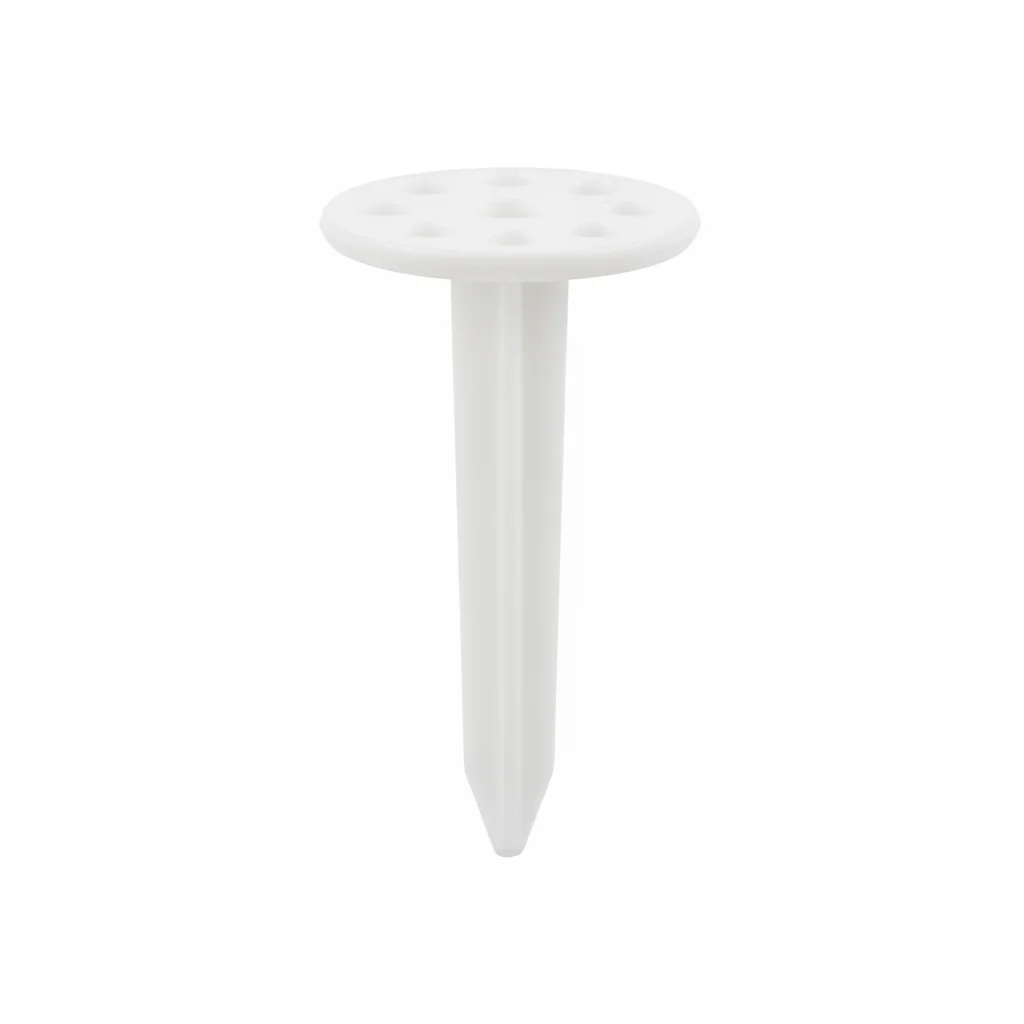
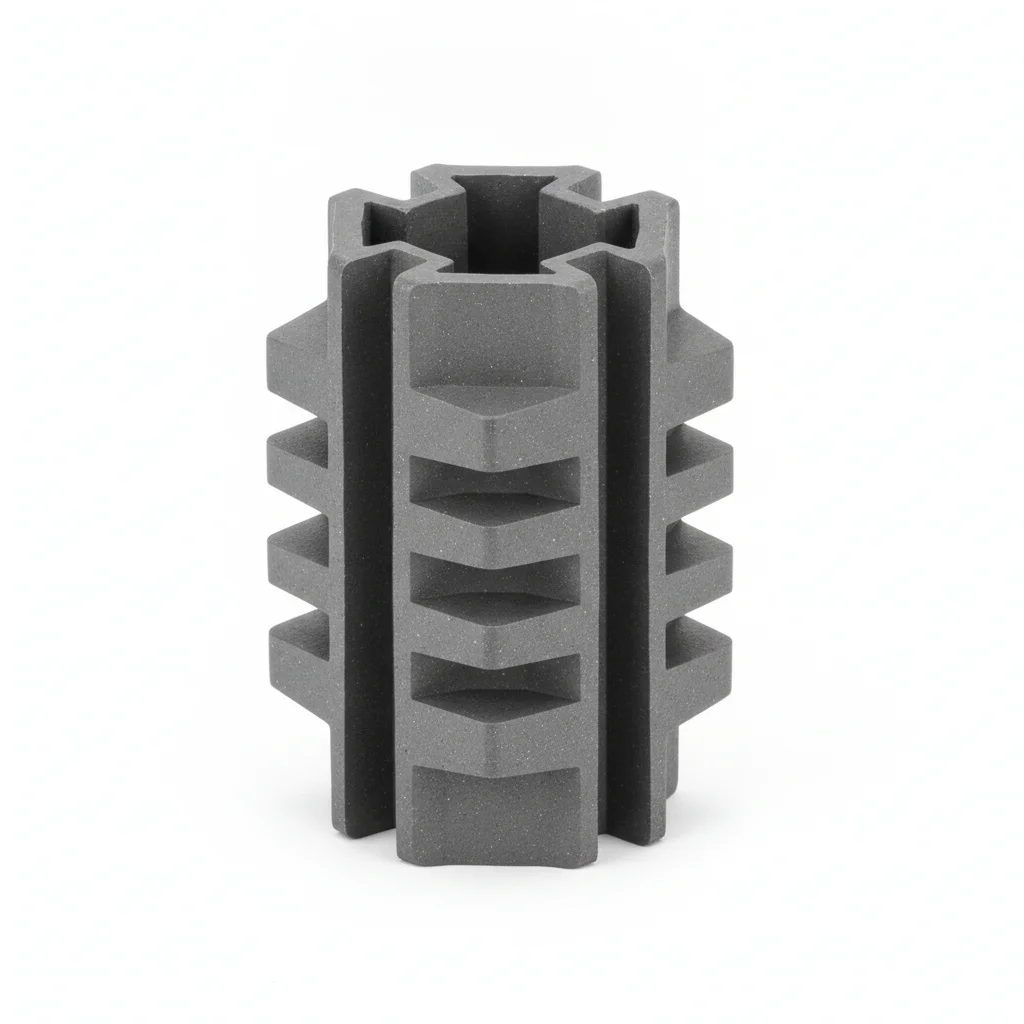
| Full Nylon Insulation Nail | Thickened Cold Bridge Break Sleeve | |
|---|---|---|
| SPEC | φ6mm | Wall Thickness 3mm |
| MATERIAL | PA66-GF30 | PA66-GF30 |
| GRADE | Metal-Free Full Nylon | -60°C Low Temperature Impact |
| FINISH | HDG >=55um per ISO 1461 | HDG >=55um per ISO 1461 |
| CORROSION | C3 (ISO 12944-2) | C3 (ISO 12944-2) |
| TEMP | -20°C to +80°C | -20°C to +80°C |
| WEIGHT | ~0.5 kg/piece | ~0.5 kg/piece |
| MOQ | 100 pcs | 100 pcs |
| PACK | VCI paper + carton | VCI paper + carton |
| STD | ISO 898-1, GB/T 3098.1 | ISO 898-1, GB/T 3098.1 |
| USE | Strict Insulation Requirements | Bolts Through Cold Storage Wall |
PROCEDURE
- Clean the purlin surface with acetone to remove oil and dust; ensure the insulation layer is dry and free of moisture.
- Drill pilot holes through the insulation and purlin, spacing them evenly (approx. 4 per m²) to secure the full nylon nail.
- Insert the PA66-GF30 full nylon nail (φ6mm) through the insulation into the purlin, ensuring the nail head sits flush with the insulation surface.
- For bolts passing through the wall, slide the thickened cold bridge sleeve (wall thickness 3mm) over the bolt before insertion.
- Tighten bolts with a calibrated torque wrench to the specified value, avoiding over-torque that could crush the sleeve.
- Seal the penetration points with a cold-resistant sealant rated for -60°C to prevent moisture ingress.
COMMON ERRORS
| ✕ WRONG | CONSEQUENCE | ✓ CORRECT |
|---|---|---|
| Using a metal fastener without a cold bridge sleeve in the cold storage wall | Thermal bridge forms, causing condensation and ice buildup inside the cold storage, leading to energy loss and potential structural damage. | Always use a full nylon nail or a thickened cold bridge sleeve (wall thickness 3mm) for any penetration through the insulation. |
| Over-tightening the bolt, compressing the thickened sleeve | The sleeve wall thickness reduces, increasing heat transfer and potentially cracking the nylon under low temperature. | Tighten to the specified torque value and verify with a torque wrench; avoid excessive force. |
MAINTENANCE
Seasonally inspect the insulation surface for signs of condensation or ice. Use an infrared thermal camera to scan for temperature anomalies; if a bolt head temperature difference exceeds 2°C, replace the thermal break component. Check the integrity of the full nylon nails and thickened sleeves at each overhaul window.
Plan C · Coastal/Seismic Reinforced Type
Coastal/seismic zone, C5-M extreme per ISO 12944-2
| Full Nylon Insulation Nail | Thickened Cold Bridge Break Sleeve | |
|---|---|---|
| SPEC | φ6mm | Wall Thickness 3mm |
| MATERIAL | PA66-GF30 | PA66-GF30 |
| GRADE | Metal-Free Full Nylon | -60°C Low Temperature Impact |
| FINISH | HDG >=55um per ISO 1461 | HDG >=55um per ISO 1461 |
| CORROSION | C3 (ISO 12944-2) | C3 (ISO 12944-2) |
| TEMP | -20°C to +80°C | -20°C to +80°C |
| WEIGHT | ~0.5 kg/piece | ~0.5 kg/piece |
| MOQ | 100 pcs | 100 pcs |
| PACK | VCI paper + carton | VCI paper + carton |
| STD | ISO 898-1, GB/T 3098.1 | ISO 898-1, GB/T 3098.1 |
| USE | Extreme Conditions / Maximum Protection | Extreme Conditions / Maximum Protection |
PROCEDURE
- Clean the substrate with MEK to remove all contaminants; verify surface roughness is suitable for the specified sealant.
- Apply a marine-grade anti-corrosion compound to the bolt threads and under the head to prevent galvanic corrosion.
- Insert the full nylon insulation nail (φ6mm) through the insulation, ensuring it is perpendicular to the purlin.
- For bolt penetrations, use the thickened cold bridge sleeve (3mm wall) and add a wedge lock washer to prevent loosening under seismic vibration.
- Tighten bolts to the specified preload using a calibrated wrench; check 10% of fasteners with a torque audit.
- Apply a protective sealant over the fastener heads to guard against salt spray and moisture ingress.
COMMON ERRORS
| ✕ WRONG | CONSEQUENCE | ✓ CORRECT |
|---|---|---|
| Using carbon steel fasteners without proper coating in a coastal environment | Rapid corrosion due to salt spray, leading to fastener failure and potential structural compromise within a short period. | Use full nylon fasteners or stainless steel with appropriate corrosion protection (e.g., Dacromet) and ensure all penetrations are sealed. |
| Ignoring seismic loosening of fasteners | Vibrations during an earthquake can loosen fasteners, causing insulation panels to detach and fall. | Incorporate wedge lock washers and periodically check torque at each inspection interval. |
MAINTENANCE
Inspect fasteners at each overhaul window for signs of corrosion or loosening, especially after seismic events. Use infrared thermography to detect thermal bridges; any temperature deviation above 3°C from the surrounding surface indicates a problem. Replace any fastener showing corrosion or damage immediately, and reapply protective sealant as needed.
SUPPLIER CAPABILITY
Quality, Delivery & Customization
Quality Control
- ✓MTC material certificates with every batch
- ✓Key parts sampled for hardness/salt spray/torque coefficient
- ✓100% inspection or AQL sampling before shipment
Delivery
- ✓Standard parts made to order: 7-15 days
- ✓Custom parts: 25-45 days
- ✓FOB/CIF/DDP supported
Customization
- ✓Drawing review and material matching
- ✓Non-standard sizes/heads/threads
- ✓Small-batch prototyping supported
Certification
- ✓Material certificates (MTC)
- ✓Spectrographic analysis reports
- ✓Salt spray test reports (on request)
MOQ: No MOQ for standard parts; custom parts assessed by process complexity
FAQ
Frequently Asked Questions
RELATED READING
Keep Reading & Next Step
BEYOND TECHNICAL SPECS
Finding the right factory, controlling quality, delivering on time — that's the real challenge. We cover fasteners, rubber, plastics, industrial textiles. One team, end to end.
SEE CAPABILITIES →