Excavator Cylinder Pin & Slewing Ring Bolt Failure Prevention
A single pin bolt fatigue fracture can cause the boom to collapse into the cab. Slewing ring bolt loosening spreads progressively, leading to upper structure overturn. This page compares 12.9 grade pin bolts and 10.9 grade slewing ring bolts with wedge lock washers, and outlines inspection intervals and replacement criteria to mitigate these risks
RISK AUDIT // ENGINEERING DIAGNOSIS
Procurement Pitfall Guide
"Pin bolt fatigue fractures and slewing ring loosening are the two failure chains that most often put an excavator out of service."
QC-AUDIT // REV.5
SCALE 1:1 · 03 ITEMS
RISK-01
Fatigue Fracture of Pin Locking Bolts Under Alternating Tension and Compression
Corrective Measures
RISK-02
Progressive Loosening of Slewing Ring Mounting Bolts Under Overturning Moment
Corrective Measures
RISK-03
Pin Dust Seal Failure in Muddy Water Operations
Corrective Measures
FIELD-SPECIFIC INSIGHT
Critical Inspection Points for Pin & Slewing Ring Bolts
Fatigue fracture and progressive loosening are the two dominant failure modes. The table below summarizes key checks to include in your procurement and maintenance specifications
WHAT TO CHECK
- 1Pin locking bolts (12.9 grade) under alternating tension-compression: fatigue cracks initiate at thread root after ~10^6 cycles; mandatory replacement every 5000 operating hours regardless of appearance
- 2Slewing ring bolts (10.9 grade) under overturning moment: loosening of one bolt overloads adjacent bolts by 20-30%; chain reaction can spread to 10+ bolts within six months
- 3Wedge lock washers (hardened carbon steel + Dacromet) reduce loosening risk; specify for mining excavator critical bolts
- 4Corrosion limit: replace fasteners with >5% surface area affected or pitting depth >0.3mm; HDG >=55µm per ISO 1461 provides baseline protection
- 5Inspection interval: every 250 operating hours or 6 months; re-torque if below 80% of specified torque; document in CMMS
| Check | Why it matters | What to specify |
|---|---|---|
| Bolt grade and material | 12.9 grade 42CrMoA required for pin bolts to withstand fatigue; 10.9 grade for slewing ring bolts | Specify 12.9 grade per ISO 898-1 for pin bolts; 10.9 grade for slewing ring bolts; material certificate required |
| Surface finish and corrosion protection | HDG >=55µm per ISO 1461 prevents corrosion that accelerates fatigue; Dacromet coating on wedge lock washers adds protection | Specify HDG thickness per ISO 1461; for extreme conditions, add Dacromet coating on washers |
| Preload and torque verification | Re-torque if below 80% of specified torque | Specify torque values and re-torque criteria; include torque audit in maintenance plan |
| Replacement schedule | Fatigue life limited; full replacement every 5 years for all critical fasteners | Specify replacement intervals in operating hours or calendar time; include in CMMS |
Data based on typical excavator duty cycles. Actual fatigue life depends on load spectrum and environmental conditions. Verify with OEM recommendations
Evidence level: source-page-only
INDUSTRY TECH REFERENCE
Pin-Type Joints: Which Figures Are Verifiable, Which Are Gaps
Public parameter-level data on cylinder-eye pins and hinge pins is thin: material, clearance, and replacement intervals mostly follow OEM drawings. Sort out which figures are checkable and which are claims before ordering, so acceptance does not run on air.
| Parameter | Public traceability | Procurement / acceptance stance |
|---|---|---|
| Pin material and hardness (boom/arm hinge pins, cylinder eye pins) | No public parameter-level source (registered gap) | Custom parts — accept per OEM drawing/spec; state the alloy grade in the spec and hold the supplier to the drawing |
| Pin clearance limits, replacement intervals | No parameter-level public source found (registered gap) | Follow the OEM service manual and its inspection regime; ignore circulating figures without a source |
| Fixed re-torque intervals such as "every 250 hours" | No OEM public source found (registered gap — not cited) | Re-tighten to the OEM guide: for the track-type connection Caterpillar's basis is a check 50-100 hours after install/reinstall, then as needed |
| Bucket tooth-pin material/hardness | 40Cr/42CrMo is the mainstream forged tooth-body material; tooth-pin material and hardness have no independent public source | Do not accept pins against unsourced hardness ranges |
Pin material, clearance limits and replacement intervals have no public parameter-level basis; this slot identifies and avoids such unsupported figures rather than supplying substitute values. No order-of-magnitude estimates are used in this slot.
INDUSTRY TECH REFERENCE
The Upstream of Pin-Bolt Acceptance: Machine-Level and Maintenance Standards
Line up these upstream references when quoting and accepting: machine technical conditions, machine test methods, and slewing-bearing installation and maintenance practice — cite layer by layer from assembly down to part, not the part standard alone.
The listed GB/T standards (GB/T 9139-2018, GB/T 7586-2018, GB/T 3098.1-2010) are current national standards; verify ASME SRB-1 against the original document when relying on it. Standard numbers are for acceptance navigation only — acceptance values follow the current standard texts. No order-of-magnitude estimates are used in this slot.
INDUSTRY TECH REFERENCE
Four Questions: The Papers That Answer "Will It Fracture?"
Fracture prevention lives in the paperwork, not the warehouse: each of the four links — material, grade, assembly, recheck — has something verifiable. Write all four into the RFQ and acceptance can tick them off line by line.
- Material test report: alloy structural steel judged per GB/T 3077-2015 — answers "is the material right?"; but compliant material only rules out manufacturing defects, it does not prove the bolt cannot fatigue-fracture
- Strength-grade marking: verify 8.8/10.9/12.9 against GB/T 3098.1-2010 — answers "is the grade enough?"; once the grade is met, the real life under alternating load depends on the load spectrum and the assembly quality
- Drawing torque and assembly instructions: preload to the drawing, verify anaerobic adhesive coverage and clean thread holes against the drawing — answers "is it assembled right?"; the failure-analysis record shows a bolt group with compliant material and grade can still fracture completely on assembly faults
- Inspection and re-torque rhythm: schedule per the OEM service manual and its inspection regime, not against fixed intervals without a public source — answers "when to recheck?"; fatigue cracks show no visible external sign before fracture, so a scheduled recheck is the one intervention that can catch it early
GB/T 3077-2015 and GB/T 3098.1-2010 are current standards; replacement intervals have no public basis and no interval figures are given. No order-of-magnitude estimates are used in this slot.
INDUSTRY TECH REFERENCE
Fasteners In, Machines Out: Draw the Line Before You Order
Draw the in-scope / out-of-scope line once, and the RFQ stays off whole machines — pins and bolts are accepted against drawings, while machines and assemblies stay with the OEM.
In scope are drawing-defined fasteners and pins: cylinder eye pins, boom and arm hinge pins, slewing-ring connection bolts, bucket tooth pins, plus the track-side track-shoe bolts with self-locking nuts, end-cover retaining bolts, and split drive-sprocket bolts — the full range of drawing-defined high-strength fasteners and pins. Out of scope: complete excavators, bulldozers, loaders and mining trucks; track assemblies (chain links and shoe bodies); slewing-bearing rings themselves; and bucket or boom structural parts. Leave the machine and assembly technical conditions to the OEM, accept the fasteners and pins against drawings, and each side stays in its lane.
"Drawing-defined" means no dedicated GB/JB/ASTM standard applies — acceptance follows the OEM drawing/specification. No order-of-magnitude estimates are used in this slot.
PLAN COMPARISON
Three-Plan Core Parameter Comparison
Compare row by row. Click column headers to jump to plan details.
| A · A · Medium Excavator | B · B · Large Mining Excavator | C · Plan C · Mining/Extreme Conditions | |
|---|---|---|---|
| 1. 12.9 GRADE PIN LOCKING BOLT | |||
| SPEC | M20-M30 Fine Thread | M30-M42 Fine Thread | M30-M42 Fine Thread |
| MATERIAL | 42CrMoA | 42CrMoA | 42CrMoA |
| GRADE | 12.9 Grade | 12.9 Grade | 12.9 Grade |
| FINISH | HDG >=55um per ISO 1461 | HDG >=55um per ISO 1461 | hot-dip galvanized >=55μm per ISO 1461 |
| 2. 10.9 GRADE SLEWING RING BOLT | |||
| SPEC | M20-M30 | M20-M36 | M20-M36 |
| MATERIAL | 42CrMo | Carbon Steel Hardened + Dacromet | Carbon Steel Hardened + Dacromet |
| GRADE | 10.9 Grade Dacromet | Dacromet | Dacromet |
| FINISH | HDG >=55um per ISO 1461 | HDG >=55um per ISO 1461 | hot-dip galvanized >=55μm per ISO 1461 |
SELECTION GUIDE
Choose Your Excavator Fastener Plan
| Operating condition | Recommended option | Key basis |
|---|---|---|
| Medium excavator, C3 per ISO 12944-2 (pin sees 2000 cycles/day, ~700,000 cycles/year) | Option A · 12.9 + 10.9: 12.9 grade pin locking bolt M20-M30 fine thread (42CrMoA) + 10.9 grade slewing ring bolt M20-M30 (42CrMo, Dacromet) | ISO 898-1 (12.9/10.9 grade); mandatory replacement every 5000 operating hours or 1 year |
| Large mining excavator, C4 harsh per ISO 12944-2 | Option B · larger specs + wedge lock washers: 12.9 grade heavy-duty pin bolt M30-M42 fine thread (42CrMoA) + wedge lock washer M20-M36 (hardened carbon steel + Dacromet) | ISO 898-1 (12.9 grade); re-check each bolt with a torque wrench every 500 operating hours; replace the entire set if torque decay >15% is found three consecutive times |
| Fatigue fracture of pin locking bolts under alternating tension and compression (2000 cycles/day, ~700,000 cycles/year) | 12.9 grade + fine thread (increases engagement length) + mandatory replacement every 5000 operating hours or 1 year regardless of appearance; check bolt preload (torque wrench) at installation; apply anti-seize compound between bolt head and eye; maintain a replacement log | Fatigue cracks appear at the thread root after ~10^6 alternating cycles; crack propagation rate ~0.01mm/1000 cycles → sudden fracture when remaining cross-section is insufficient; ISO 898-1 |
| Progressive loosening of slewing ring mounting bolts under overturning moment (bolts in the digging direction see the highest tensile load) | 10.9 grade + Dacromet coating + wedge lock washers; tighten symmetrically and crosswise in 2-3 stages; re-check each bolt with a torque wrench every 500 operating hours; if torque decay >15% is found three consecutive times, replace the entire set of bolts | Loosening transfers the support load to the two adjacent bolts → 20-30% overload → faster loosening → chain reaction: within six months loosening spreads from 1 bolt to 10+ → slewing ring lifts → upper structure tilts |
| Pin dust seal failure in muddy water operations: sealing lip worn by sand particles, muddy water enters the pin-bushing gap | Use Fluoroelastomer (FKM) dust seals (abrasion resistance 3-5 times higher than NBR); inspect the seal every 250 hours; replace immediately if the lip has a groove >0.5mm; automatic pin lubrication system (greasing every 8 hours) expels muddy water from the gap | Wear grooves >0.5mm deep on the sealing lip within 3-6 months → abrasive wear accelerates 10x+ → pin and bushing wear severely within hundreds of hours → gap >2mm → bucket shakes during digging |
A · Medium Excavator
C3 (ISO 12944-2)
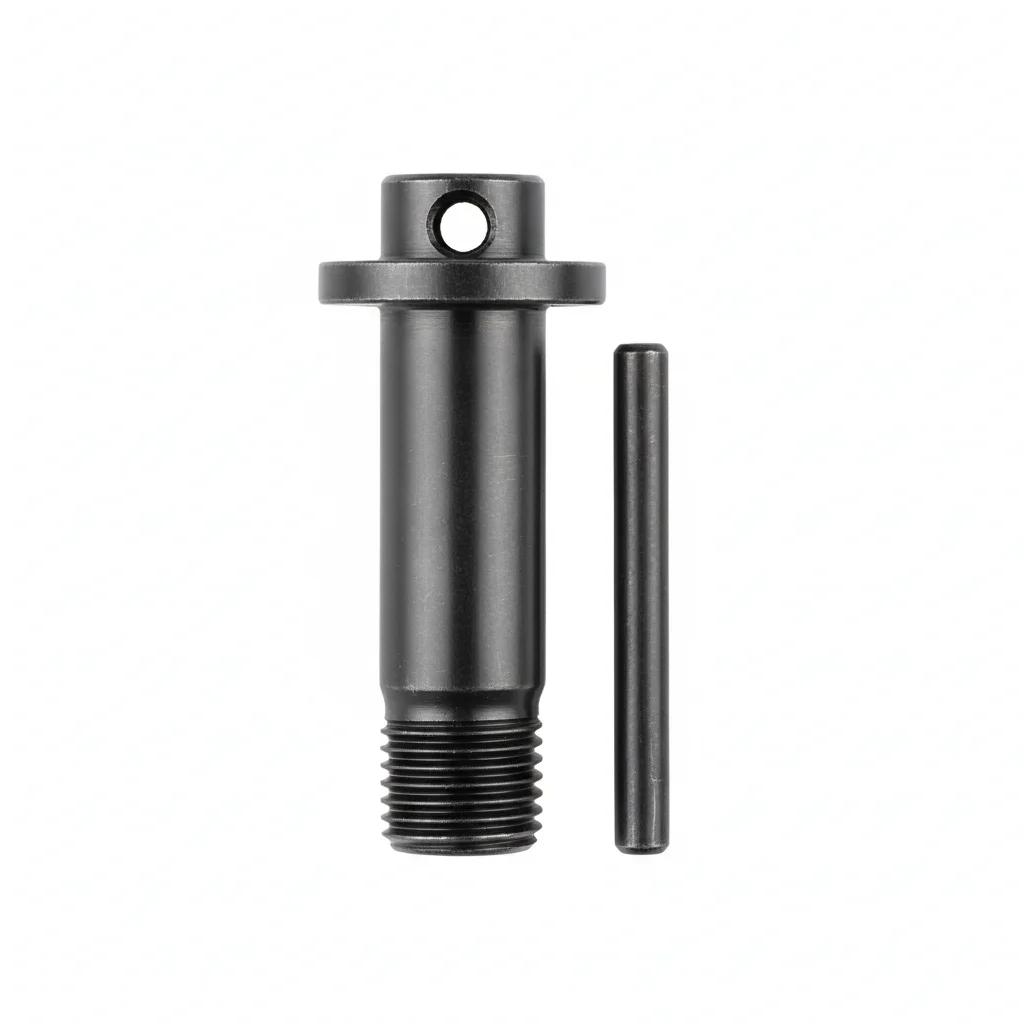
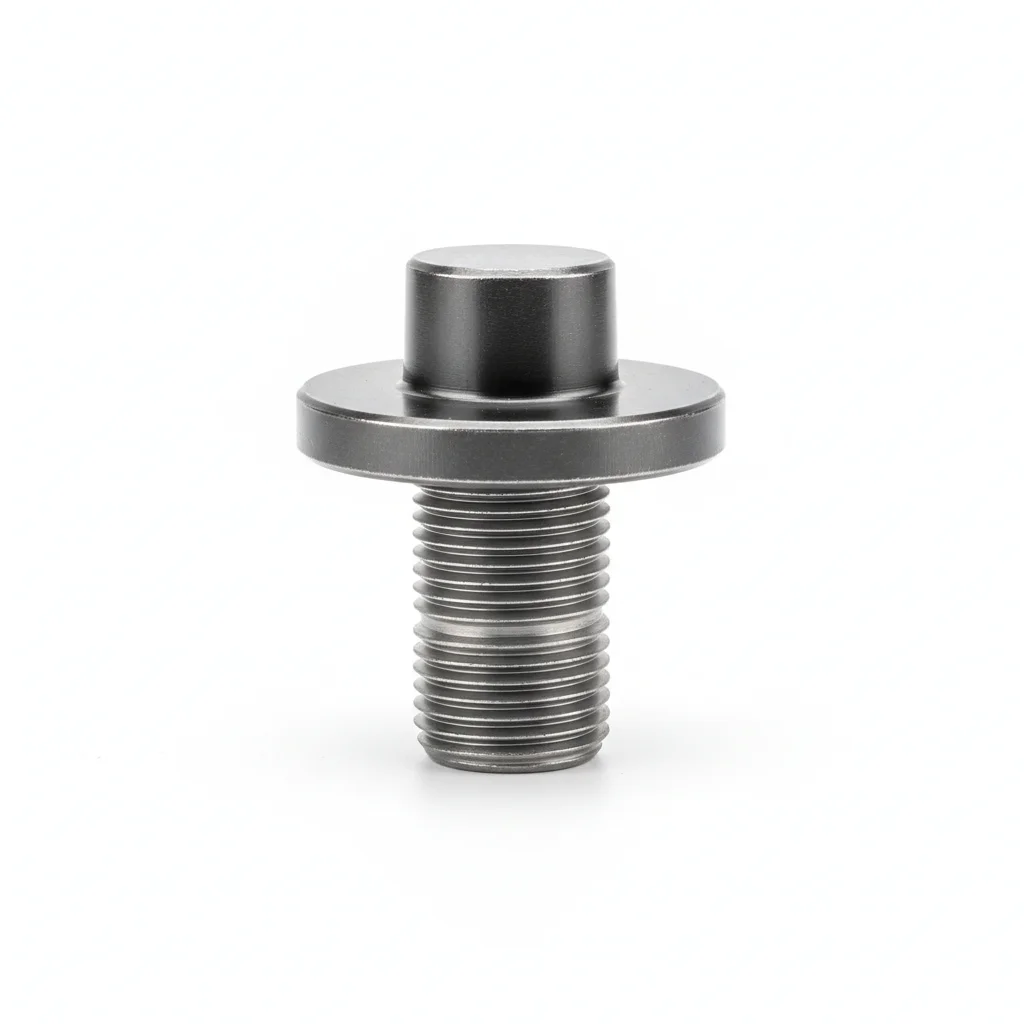
| 12.9 Grade Pin Locking Bolt | 10.9 Grade Slewing Ring Bolt | |
|---|---|---|
| SPEC | M20-M30 Fine Thread | M20-M30 |
| MATERIAL | 42CrMoA | 42CrMo |
| GRADE | 12.9 Grade | 10.9 Grade Dacromet |
| FINISH | HDG >=55um per ISO 1461 | HDG >=55um per ISO 1461 |
| CORROSION | C3 (ISO 12944-2) | C3 (ISO 12944-2) |
| TEMP | -20°C to +80°C | -20°C to +80°C |
| WEIGHT | ~0.5 kg/piece | ~0.5 kg/piece |
| MOQ | 100 pcs | 100 pcs |
| PACK | VCI paper + carton | VCI paper + carton |
| STD | ISO 898-1, GB/T 3098.1 | ISO 898-1, GB/T 3098.1 |
| USE | Cylinder Eye Pin | Slewing Ring Mounting |
PROCEDURE
- Clean the cylinder eye pin bore and bolt threads with a solvent, then verify surface flatness against the mating face using a straightedge.
- Apply anti-seize compound to the bolt threads and under the head, then insert the 12.9 grade fine-thread bolt and tighten by hand.
- Torque the bolt in a crosswise pattern using a calibrated torque wrench, following the two-stage tightening sequence specified for the M20-M30 size.
- Mark each bolt head and the surrounding structure with a paint stripe after final torquing to reveal any loosening during operation.
- Log the torque values and bolt serial numbers in the replacement log for traceability against the 5000-hour mandatory replacement schedule.
COMMON ERRORS
| ✕ WRONG | CONSEQUENCE | ✓ CORRECT |
|---|---|---|
| Reusing a pin bolt that has already served one full 5000-hour service interval | Fatigue cracks at the thread root remain invisible until sudden fracture, which can drop the boom into the cab and cause extensive damage. | Fit a new 12.9 grade 42CrMoA fine-thread bolt at each scheduled replacement, and record the installation date in the maintenance log. |
| Tightening the slewing ring bolts with an impact wrench instead of a controlled torque wrench | Preload varies between bolts, allowing progressive loosening to start at the most heavily loaded position and spread to adjacent bolts, risking upper structure overturn. | Use a hydraulic torque wrench and tighten symmetrically and crosswise in 2-3 stages to the recommended torque values for the 10.9 grade bolts. |
MAINTENANCE
At every 500 operating hours, re-check slewing ring bolt torque with a wrench; if torque decay exceeds 15% on three consecutive checks, replace the full set. For pin bolts, follow the mandatory replacement every 5000 operating hours or 1 year regardless of appearance, and maintain a replacement log for each critical pin.
B · Large Mining Excavator
C4 Harsh per ISO 12944-2
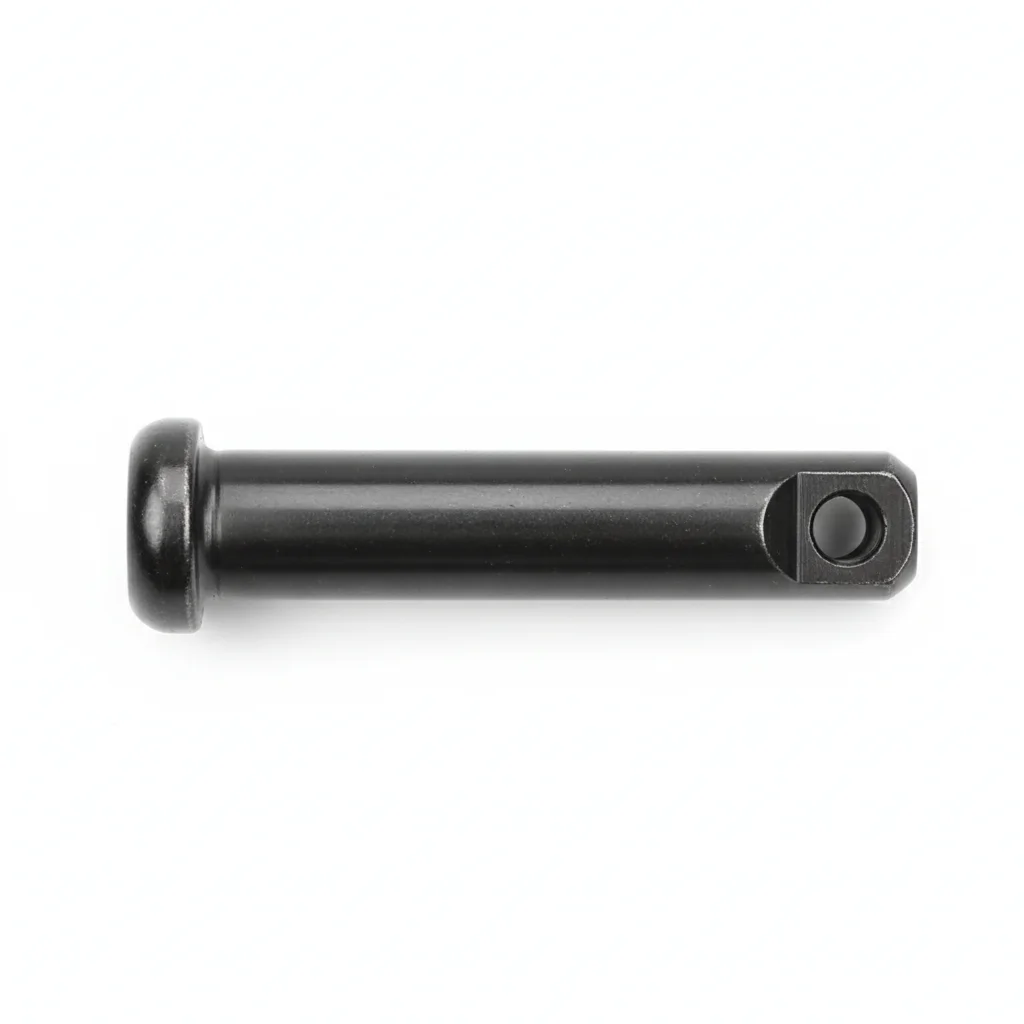
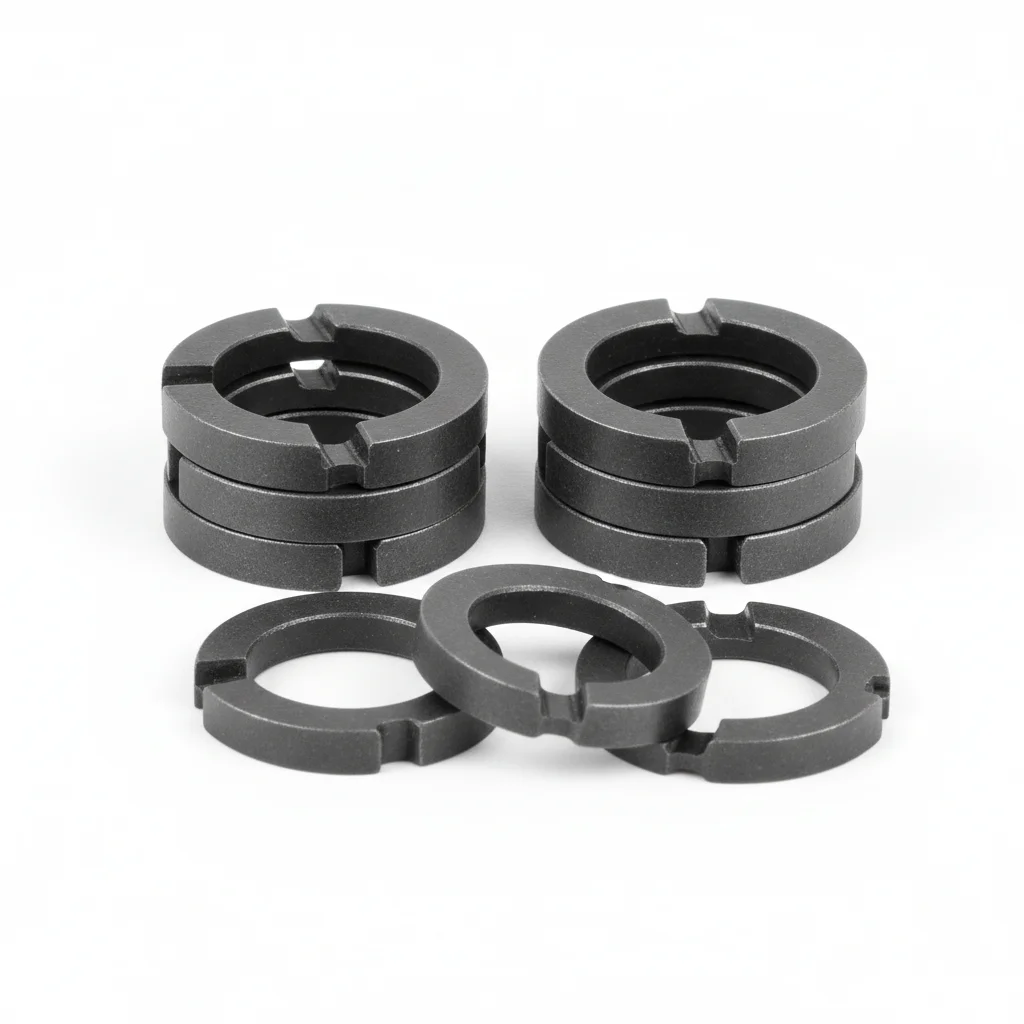
| 12.9 Grade Heavy-Duty Pin Bolt | Wedge Lock Washer (M20-M36) | |
|---|---|---|
| SPEC | M30-M42 Fine Thread | M20-M36 |
| MATERIAL | 42CrMoA | Carbon Steel Hardened + Dacromet |
| GRADE | 12.9 Grade | Dacromet |
| FINISH | HDG >=55um per ISO 1461 | HDG >=55um per ISO 1461 |
| CORROSION | C3 (ISO 12944-2) | C3 (ISO 12944-2) |
| TEMP | -20°C to +80°C | -20°C to +80°C |
| WEIGHT | ~0.5 kg/piece | ~0.5 kg/piece |
| MOQ | 100 pcs | 100 pcs |
| PACK | VCI paper + carton | VCI paper + carton |
| STD | ISO 898-1, GB/T 3098.1 | ISO 898-1, GB/T 3098.1 |
| USE | Mining Excavator Pin | All Critical Bolts |
PROCEDURE
- Degrease all mating surfaces with acetone and verify surface roughness Ra <3.2μm using a profilometer before assembly.
- Apply anti-corrosion joint compound rated for the service temperature range of -20°C to +80°C to the threads and bearing faces of the 12.9 grade heavy-duty pin bolts.
- Position the wedge lock washers (M20-M36, hardened carbon steel with Dacromet) under the bolt heads or nuts, ensuring the wedge faces orient correctly to resist loosening.
- Tighten the slewing ring bolts symmetrically and crosswise in 2-3 stages using a calibrated torque wrench, targeting the specified preload for 10.9 grade Dacromet-coated bolts.
- Verify preload on 10% of the bolts with a torque audit and log the results with environmental data; replace any bolt that does not meet the acceptance threshold.
COMMON ERRORS
| ✕ WRONG | CONSEQUENCE | ✓ CORRECT |
|---|---|---|
| Overtightening the M30-M42 fine-thread pin bolts with an impact wrench instead of a torque wrench | Excessive preload can yield the 12.9 grade bolt, reducing fatigue life and risking immediate fracture under the alternating tension-compression cycles of the mining excavator. | Use a calibrated torque wrench and follow the specified tightening sequence; never use impact tools for critical pin bolts. |
| Installing wedge lock washers on painted or contaminated surfaces without proper cleaning | Contaminants prevent the wedge lock from engaging fully, allowing progressive loosening of the slewing ring bolts under overturning moment—leading to load transfer to adjacent bolts and chain-reaction loosening. | Clean contact surfaces with acetone and verify roughness before installation; ensure the wedge lock washers sit flush on bare metal. |
MAINTENANCE
Inspect all slewing ring bolts and pin bolts every 250 operating hours or at each scheduled service interval. Re-torque any bolt that has fallen below 80% of specified torque. Replace fasteners with corrosion affecting more than 5% of surface area or pitting deeper than 0.3mm. At each major overhaul, perform a full disassembly inspection of a 20% sample and replace all critical fasteners if torque decay exceeds 15% on any bolt.
Plan C · Mining/Extreme Conditions
C5-M Extreme per ISO 12944-2
| 12.9 Grade Heavy-Duty Pin Bolt | Wedge Lock Washer (M20-M36) | |
|---|---|---|
| SPEC | M30-M42 Fine Thread | M20-M36 |
| MATERIAL | 42CrMoA | Carbon Steel Hardened + Dacromet |
| GRADE | 12.9 Grade | Dacromet |
| FINISH | hot-dip galvanized >=55μm per ISO 1461 | hot-dip galvanized >=55μm per ISO 1461 |
| CORROSION | C3 (ISO 12944-2) | C3 (ISO 12944-2) |
| TEMP | -20°C to +80°C | -20°C to +80°C |
| WEIGHT | ~0.5 kg/piece | ~0.5 kg/piece |
| MOQ | 100 pcs | 100 pcs |
| PACK | VCI paper + carton | VCI paper + carton |
| STD | ISO 898-1, GB/T 3098.1 | ISO 898-1, GB/T 3098.1 |
| USE | Extreme Conditions / Maximum Protection | Extreme Conditions / Maximum Protection |
PROCEDURE
- Degrease all components with MEK solvent and verify surface roughness Ra <1.6μm to ensure proper seating of the 12.9 grade heavy-duty pin bolts.
- Apply marine-grade anti-corrosion compound rated for -50°C to +200°C to all threads and bearing surfaces; use PTFE-encapsulated washers where specified to prevent galling.
- Align the cylinder eye and slewing ring within 0.3mm tolerance, then tighten the M30-M42 fine-thread bolts using a hydraulic tensioner to achieve the precise preload required for 12.9 grade.
- Perform PMI verification on 10% of the bolts to confirm material grade 42CrMoA, and document results for compliance audit.
- Conduct NDT dye penetrant testing on 10% of the installed bolts to detect any surface cracks; replace any bolt showing indications immediately.
COMMON ERRORS
| ✕ WRONG | CONSEQUENCE | ✓ CORRECT |
|---|---|---|
| Using standard carbon steel washers instead of the specified wedge lock washers with Dacromet coating | Without the wedge lock mechanism, the slewing ring bolts are vulnerable to progressive loosening under the extreme overturning moment, which can lead to upper structure overturn in mining operations. | Always use the specified wedge lock washers (M20-M36, hardened carbon steel + Dacromet) and verify their orientation during installation. |
| Skipping the NDT inspection after installation to save time | Undetected cracks from the high preload or material defects can propagate under fatigue cycles, leading to sudden bolt fracture and catastrophic boom collapse. | Perform the required dye penetrant testing on the 10% sample and document results; do not proceed without NDT sign-off. |
MAINTENANCE
Inspect all critical bolts at each overhaul window or every 250 operating hours. Re-torque any bolt below 80% of specified torque. Replace fasteners showing corrosion on more than 5% of surface area or pitting deeper than 0.3mm. At 5-year intervals, replace all critical fasteners regardless of apparent condition, and maintain a full documentation log in CMMS.
REFERENCED STANDARDS
References
SUPPLIER CAPABILITY
Quality, Delivery & Customization
Quality Control
- ✓MTC material certificates with every batch
- ✓Key parts sampled for hardness/salt spray/torque coefficient
- ✓100% inspection or AQL sampling before shipment
Delivery
- ✓Standard parts made to order: 7-15 days
- ✓Custom parts: 25-45 days
- ✓FOB/CIF/DDP supported
Customization
- ✓Drawing review and material matching
- ✓Non-standard sizes/heads/threads
- ✓Small-batch prototyping supported
Certification
- ✓Material certificates (MTC)
- ✓Spectrographic analysis reports
- ✓Salt spray test reports (on request)
MOQ: No MOQ for standard parts; custom parts assessed by process complexity
FAQ
FAQ
RELATED READING
Keep Reading & Next Step
BEYOND TECHNICAL SPECS
Finding the right factory, controlling quality, delivering on time — that's the real challenge. We cover fasteners, rubber, plastics, industrial textiles. One team, end to end.
SEE CAPABILITIES →