Mining Material-Handling Hardware — Stop the Belt for an Hour, Stop the Mine for a Day
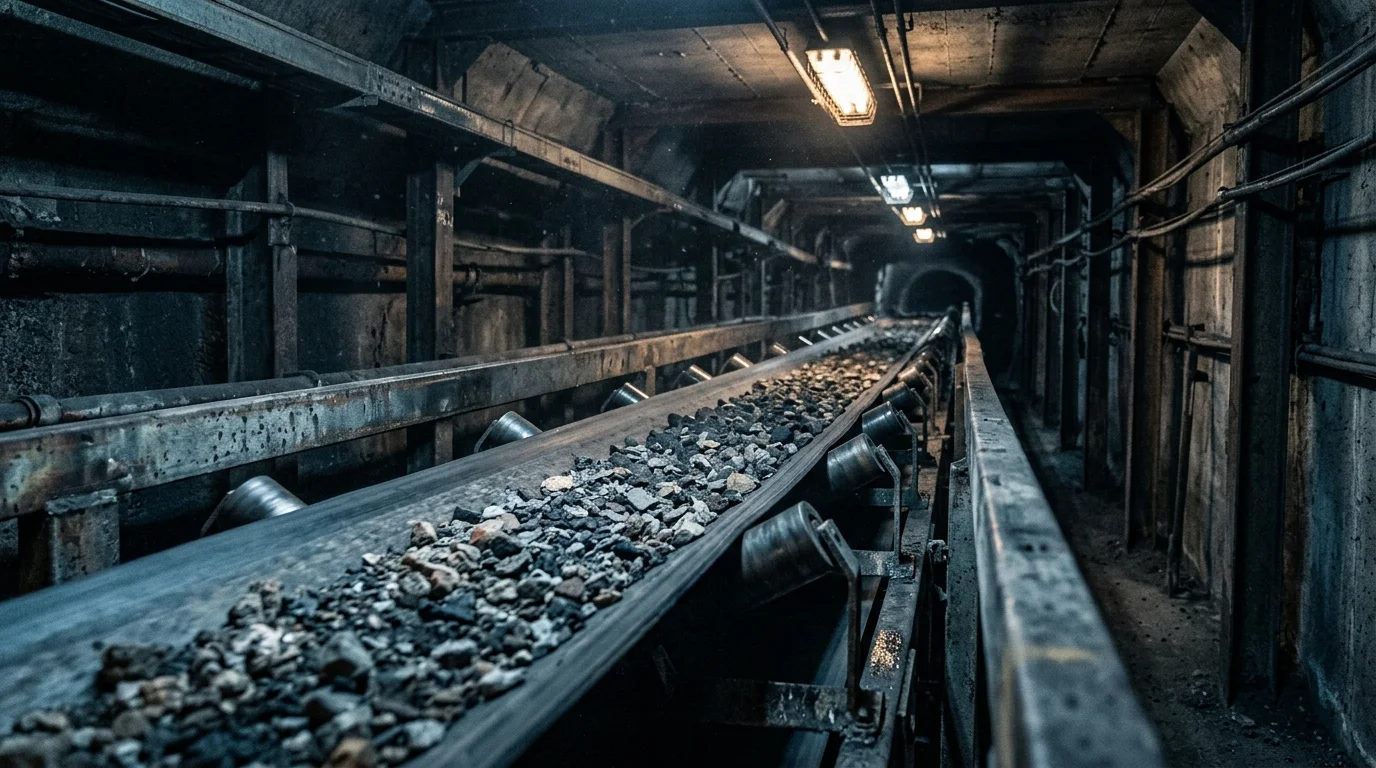
An iron ore mine's main conveyor went down at 2 a.m. when a belt fastener joint failed — the ore pass choked, the plant starved, and the site lost 11 production hours. Root cause: fastener material mismatched to a steel-cord belt, compounded by repeated flexing over an under-supported impact zone. The splice is the weakest point of any conveyor: mechanical fastener joints typically retain 35–60% of belt strength, so fastener grade must match the belt rating. We supply a complete package — high-strength mechanical fasteners, impact beds, ceramic/rubber pulley lagging and skirt clamps — with MT 668 flame-retardant, anti-static options for underground, and overall design reference to ISO 5048.
SOLUTION COMPARISON
Belt Splice Options Compared
The splice method sets your availability and maintenance rhythm.
| Option | Best for | Joint strength | Installation time | Cost | Recommendation |
|---|---|---|---|---|---|
| Mechanical fasteners ⭐ Recommended (repair standby) | Underground, emergency repair, short belts | Medium: 35–60% of belt rating | Low | Fastest: 1–2 h on site, no heavy equipment | Essential emergency kit; permanent option for lower-strength belts |
| Hot vulcanized splice TOP PICK | Steel-cord main haulage, long overland belts | Highest: up to 85–90% of belt rating | High | Slow: vulcanizer required, 6–12 h | The formal splice for main conveyors |
| Cold-bond splice | Fabric belts, no-power or gas-restricted areas | Medium-high: ~70–80% | Medium | Medium: 2–4 h, adhesive-dependent | Alternative where hot splicing isn't feasible |
Underground coal: belt and accessories must meet MT 668 flame-retardant + anti-static ('dual-resistance') requirements regardless of splice type.
SELECTION DECISION
3-Step Selection Flow
1. Define the belt — rating (EP/ST), width, tonnage 2. Define the duty — surface/underground, drop height, lump size 3. Match splice & impact support — beds at loading zones, splice per path
01
Path A · Surface, General Duty
For: processing plants, stockyards, surface crushing lines
- Fabric belt + mechanical/cold-bond splices + rubber lagging + standard impact idlers. Corrosion protection per C3 (hot-dip galvanized ≥65 µm, ISO 1461).
- Surface-optimized cost, hot-dip galvanized ≥65 µm matches maintenance cycles, fabric belt + mechanical splice fast
Path A · Surface, General DutySolutions →
02
Path B · Underground, Flame-Retardant
For: coal-mine gate roads and main roadways
- MT 668 dual-resistance belt + copper/alloy splicing tools + impact beds + anti-static skirt clamps. Replace impact idlers with beds at loading points — less belt damage, fewer friction-spark risks.
- MT 668 dual-resistance, impact beds eliminate idler-spark risk, anti-static throughout
Path B · Underground, Flame-RetardantSolutions →
03
Path C · Long-Distance, High-Tonnage
For: steel-cord trunk belts (ST2000+)
- Hot-vulcanized splices + high-strength fasteners as emergency spares + ceramic lagging on drive pulleys + heavy-duty skirt sealing. Ceramic lagging: higher friction, sheds water and fines, built for high-power drives.
- 85%+ belt strength retention, ceramic lagging no-slip, emergency fastener spares included
Path C · Long-Distance, High-TonnageSolutions →
ENGINEERING CASES
Typical Configuration Reference
Based on ISO 5048, MT 668 and mainstream conveyor OEM practice. For reference only.
| Item | Typical Specs / Requirements | Design Basis / Source |
|---|---|---|
| Mechanical fasteners | Graded by belt rating (EP630–ST5400); carbon steel or stainless steel hinge pins | Fastener type series, ISO 5048 |
| Impact beds | Flame-retardant bars (underground) / UHMW-PE top surface, continuous at loading points | MT 668, OEM practice |
| Pulley lagging | Ceramic or diamond-groove rubber on drives, ≥12 mm | ISO 5048 friction drive |
| Skirt clamps | Quick-release clamp + dual-seal skirting (rubber + PU) | OEM practice |
| Idlers | Sealed bearing housings; FR/AS type underground | MT 668 |
| Take-up hardware | 8.8-grade bolts for gravity/screw take-ups | GB/T 3098.1 |
Conveyor systems must be engineered by the OEM for tonnage, speed and lift.
Final selection must be verified by the conveyor OEM for specific site conditions.
Free BOM Service
Send the conveyor layout or belt data (rating/width/speed) — we'll organize a free hardware BOM: fasteners, impact beds, lagging and skirt clamps with specifications and quantities.
Free BOM Preparation →Related Hardware
Combine in one RFQ for bundled pricing.
Can be included in the inquiry list to enjoy combined procurement discounts.
TECHNICAL BASIS
Standards & References
Parameters compiled from public standards; consult a professional engineer for project design.
Conveying
- ISO 5048:1989 — Belt conveyor design calculations
Applicable Scope:Power & tension - MT 668 — Flame-retardant conveyor belting for coal mines
Applicable Scope:Underground dual-resistance - GB/T 7984 — Fabric conveyor belts for general use
Applicable Scope:EP belt selection
Fasteners & corrosion
- GB/T 3098.1 / ISO 898-1 — Fastener mechanical properties
Applicable Scope:8.8-grade bolts - ISO 1461:2022 — Hot-dip galvanizing
Applicable Scope:≥65 µm environmental grading
Parameters compiled from public standards; consult a professional engineer for project design.
FAQ
FAQ
Explore Our Supply Chain Capabilities
From factory QC to global logistics, one team, end to end
Explore Capabilities →About Yaxiio
Yaxiio is an industrial hardware sourcing company based in China. We help global buyers find technically compliant, cost-controlled hardware suppliers — from drawing review and material matching to factory audits and pre-shipment inspection. In mining material handling, we understand splice-strength matching, loading-zone impact and underground flame-retardant requirements. Our team works to ISO 5048, MT 668 and GB/T 7984, and matches conveying hardware to your belt data and duty conditions.