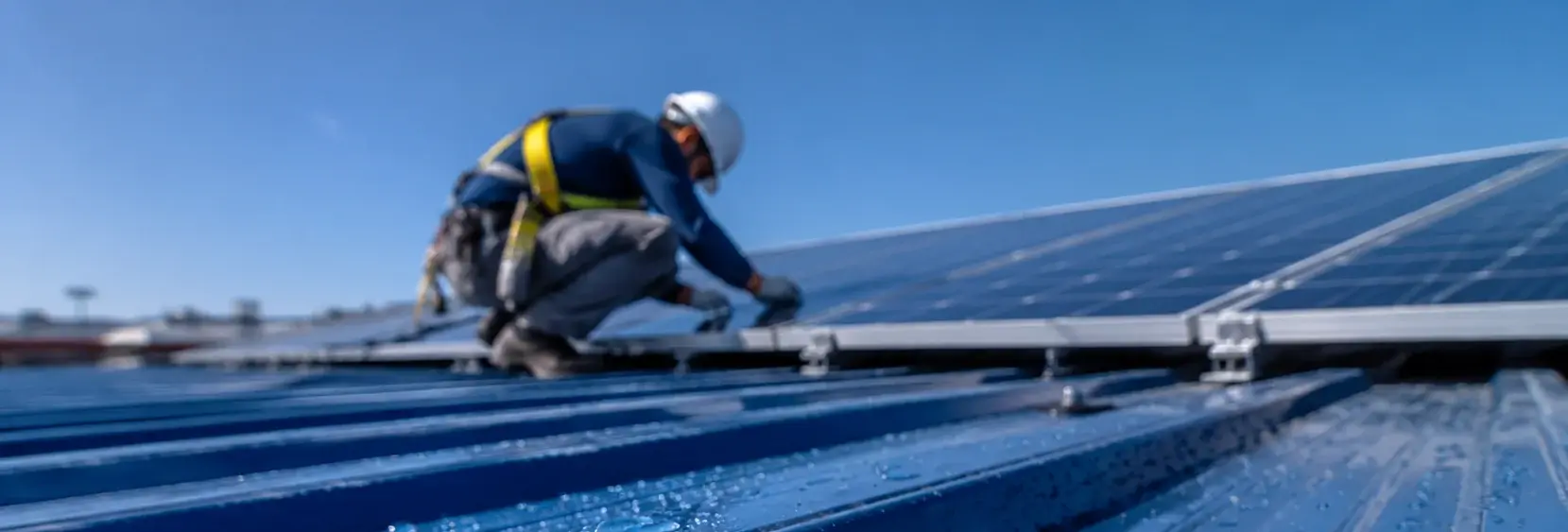
Rooftop Solar Waterproof Seal Selection
After roof penetration for solar installation, waterproof sealing is critical to prevent leaks. This page compares EPDM washers, butyl tape, and sealant options for color steel tile and concrete roofs, focusing on material durability and installation conditions
RISK AUDIT // ENGINEERING DIAGNOSIS
Procurement Pitfall Guide
"These things happen on construction sites every day."
QC-AUDIT // REV.5
SCALE 1:1 · 03 ITEMS
RISK-01
EPDM washer aging causes bolt hole leakage
Corrective Measures
RISK-02
Butyl tape fails in low-temperature installation
Corrective Measures
RISK-03
Galvanic corrosion at dissimilar metal contact
Corrective Measures
FIELD-SPECIFIC INSIGHT
Seal Material Selection Checklist for Solar Roof Penetrations
The most overlooked factor in rooftop solar sealing is the interaction between seal material and installation environment. EPDM washers perform well under UV but lose elasticity over time; butyl tape fails below 5°C; and silicone sealant may not bond to certain roof coatings. Use this checklist to specify the right seal for your project
WHAT TO CHECK
- 1EPDM washer without UV stabilizer: compression set up to 40% after 1000h UV exposure per ISO 188, leading to bolt hole leakage
- 2Butyl tape installed below 5°C: adhesion drops sharply, edges lift after spring thaw; GB 50207 requires construction temperature ≥5°C
- 3Aluminum clamp on galvanized steel roof: galvanic corrosion accelerates when rainwater ingress occurs; aluminum (-1. 66V) corrodes faster in ISO 9223 C3 environment
- 4For C4-C5 coastal environments: upgrade to EPDM + silicone dual protection or use 316 stainless steel bolts to reduce corrosion risk
| Check | Why it matters | What to specify |
|---|---|---|
| Seal material UV resistance | UV exposure on roof (up to 70°C) causes EPDM hardening and cracking | Require UV stabilizers in EPDM; verify via ISO 188 accelerated aging test report |
| Low-temperature installation limit | Butyl tape fails to bond below 5°C, causing leaks after thaw | Specify minimum installation temperature; use cold-weather grade tape if needed |
| Galvanic compatibility | Dissimilar metal contact leads to accelerated corrosion of aluminum clamps | Use isolation gasket or specify same metal pair; for steel roof, use stainless steel clamps |
| Sealant adhesion to roof coating | Silicone sealant may not bond to certain PVDF or polyurethane coatings | Test adhesion per ASTM C794; specify primer if needed |
All performance data from public standards and manufacturer datasheets. Actual service life depends on site-specific UV index, temperature range, and maintenance frequency
Evidence level: source-page-only
INDUSTRY TECH REFERENCE
Drilled-Roof Sealing, Three Tiers: Life and Torque Specs
When a roof penetration is unavoidable, pick from these three sealing tiers — life and torque specs aligned up front.
| Solution | Expected life | Key spec |
|---|---|---|
| Expansion bolt + butyl tape (economy) | 3–5 years | UV + thermal-cycling aging; plan periodic re-gluing |
| Chemical anchor + EPDM washer (standard) | 10–15 years | Torque M8 ≤15 / M10 ≤25 N·m — overtightening crushes the washer and leaks instead |
| Stainless waterproof flange + silicone (premium) | 15–20 years | Flange spreads the pressure plus adhesive for double waterproofing |
All three life spans are magnitude estimates (KB §6 classifies waterproofing life as such); torque specs follow the KB values (M8 ≤15 / M10 ≤25 N·m).
INDUSTRY TECH REFERENCE
The Drilled-Roof Leak Chain: From Over-Torque to Rainy-Season Ingress
Example: chemical-anchor bolt holes sealed with EPDM washers.
- 1Installation torque blows past the limit — chemical-anchor spec is M8 ≤15 / M10 ≤25 N·m
- 2Overtightening crushes the EPDM washer, and sealing force is compromised on day one
- 3With the washer no longer sealing, rain creeps down the bolt hole and thread gap
- 4Two years in, about 15% of the holes start leaking in the rainy season (illustrative case)
- 5Repair and claims cost far more than the non-penetration solution was worth — washer and torque are the two lifelines that keep a drilled plan dry
The ~15% bolthole leak rate two rainy seasons in is an illustrative case (mechanism kept, project details untraceable); the M8 ≤15 / M10 ≤25 N·m limits follow the KB.
INDUSTRY TECH REFERENCE
Drilled Roofs: Three Recheck Milestones
A drilled plan is not a one-time install — hit these three milestones and most leak traps surface early.
- Before the rainy season two years after installation, sweep all bolt holes — leaks mostly show up in the second rainy season (illustrative line: ~15% of holes)
- Plan re-gluing for butyl-tape tiers at 3–5 years (magnitude estimate) — clean the substrate and roll out trapped air first, never just re-layer
- Re-torque inside the limits: M8 ≤15 / M10 ≤25 N·m — a higher reading does not mean a drier seal; a crushed washer leaks
The 3–5 year re-gluing cycle is a magnitude estimate (KB §6); the ~15% leak figure after two years is an illustrative case.
INDUSTRY TECH REFERENCE
Standards Behind Roof Seals
Frame the operating conditions and acceptance specs with these three standards.
PLAN COMPARISON
Three-Plan Core Parameter Comparison
Compare row by row. Click column headers to jump to plan details.
| A · Plan A · Standard for Color Steel Tile Roof | B · Plan B · Concrete Roof Type | C · Plan C · Reinforced for Concrete Roof | |
|---|---|---|---|
| 1. WATERPROOF WASHER | |||
| SPEC | M8/M10/M12 | M8/M10/M12 | M8/M10/M12 |
| MATERIAL | EPDM + UV Resistant | EPDM + UV Resistant | EPDM + UV Resistant |
| FINISH | HDG >=55um per ISO 1461 | HDG >=55um per ISO 1461 | HDG >=55um per ISO 1461 |
| 2. BUTYL SEAL TAPE | |||
| SPEC | Width 30mm × Thickness 2mm | Width 30mm × Thickness 2mm | Width 30mm × Thickness 2mm |
| MATERIAL | EPDM Rubber | EPDM Rubber | EPDM Rubber |
| FINISH | HDG >=55um per ISO 1461 | HDG >=55um per ISO 1461 | HDG >=55um per ISO 1461 |
| 3. BOLT SET | |||
| SPEC | M10×25 | M10×25 | M10×25 |
| MATERIAL | 304 Stainless Steel | 316 Stainless Steel | 316L Stainless Steel |
| GRADE | A2-70 | A4-70 | A4-80 |
| FINISH | HDG >=55um per ISO 1461 | HDG >=55um per ISO 1461 | HDG >=55um per ISO 1461 |
Plan A · Standard for Color Steel Tile Roof
C3 per ISO 12944-2 for profiled steel sheet roofs
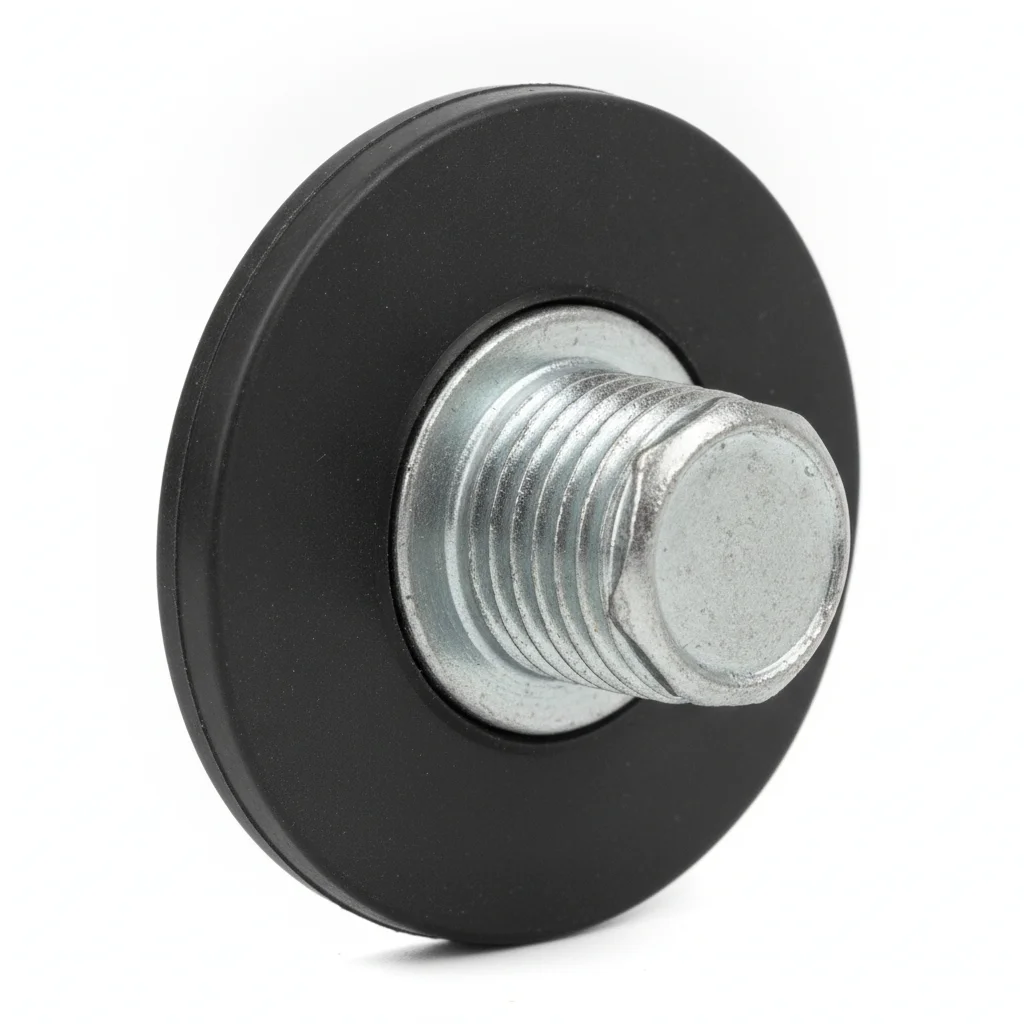
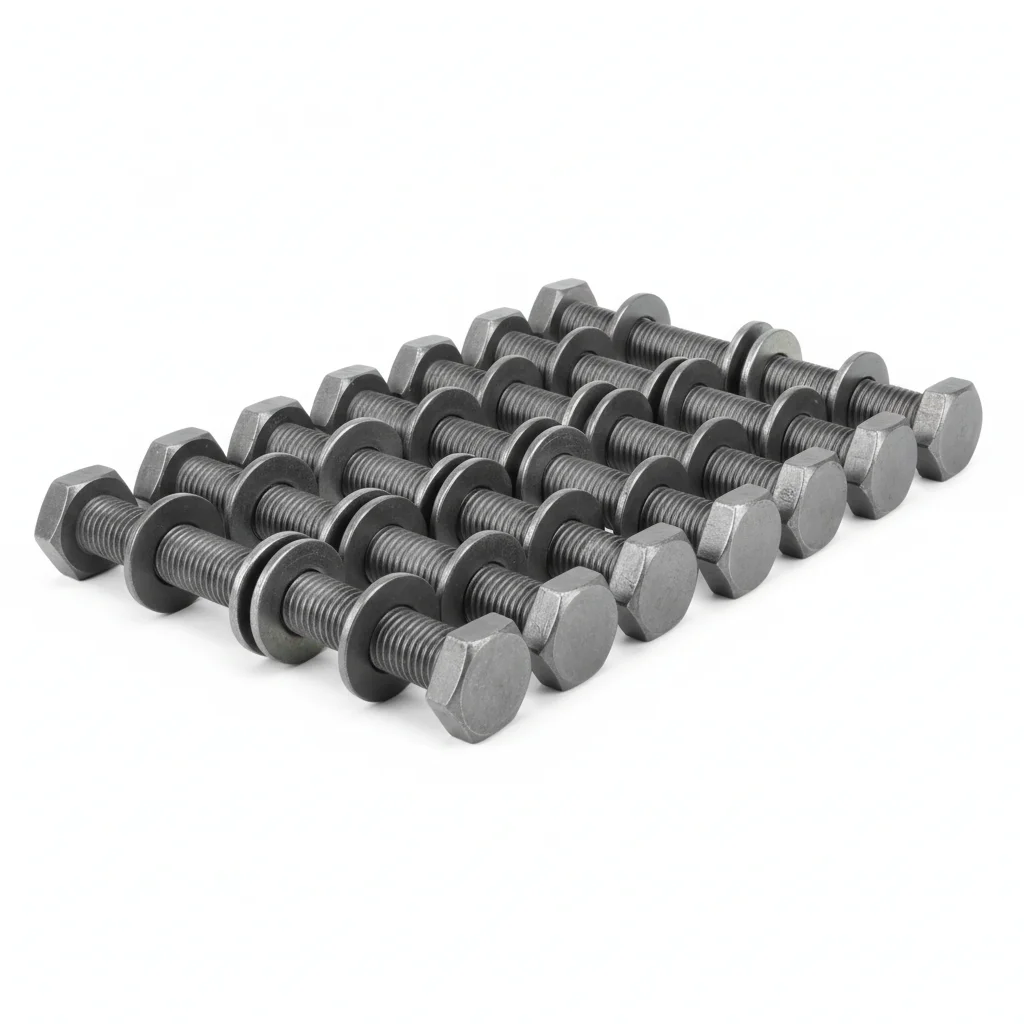
| Waterproof Washer | Butyl Seal Tape | Bolt Set | |
|---|---|---|---|
| SPEC | M8/M10/M12 | Width 30mm × Thickness 2mm | M10×25 |
| MATERIAL | EPDM + UV Resistant | EPDM Rubber | 304 Stainless Steel |
| GRADE | — | — | A2-70 |
| FINISH | HDG >=55um per ISO 1461 | HDG >=55um per ISO 1461 | HDG >=55um per ISO 1461 |
| CORROSION | C3 (ISO 12944-2) | Not applicable (polymer) | C3 (ISO 12944-2) |
| TEMP | -20°C to +80°C | -20°C to +80°C | -20°C to +80°C |
| WEIGHT | ~0.5 kg/piece | ~0.5 kg/piece | ~0.5 kg/piece |
| MOQ | 100 pcs | 100 pcs | 100 pcs |
| PACK | VCI paper + carton | VCI paper + carton | VCI paper + carton |
| STD | ISO 898-1, GB/T 3098.1 | ISO 898-1, GB/T 3098.1 | ISO 898-1, GB/T 3098.1 |
| USE | Bolt penetration point sealing | Between clamp base and roof | Clamp fastening |
PROCEDURE
- Sweep the trapezoidal sheet clean and dry the seam area; wipe the clamp footprint with a lint-free cloth wetted with isopropyl alcohol to remove release agents.
- Lay the 30mm × 2mm butyl tape along the clamp base footprint, peel the liner, and press the clamp onto the rib so the tape fully wets the paint surface.
- Center the M10×25 A2-70 bolt through the EPDM washer and the pre-drilled hole; hold the washer flat so its compression stays between 25-30% as you snug the nut.
- Tighten the bolt in two passes with a calibrated torque wrench—first to 50% of the target, then to the full value—keeping the EPDM washer from twisting.
- Trim any butyl tape that squeezes out beyond the clamp edge with a plastic scraper; wipe the excess away so it does not trap water.
- Spray the sealed area with water for 15 minutes and inspect the underside of the roof for any drip path before declaring the joint watertight.
COMMON ERRORS
| ✕ WRONG | CONSEQUENCE | ✓ CORRECT |
|---|---|---|
| Using a standard EPDM washer without UV stabilizers on a roof that can reach 70°C | The washer hardens and loses elasticity, compression set rises toward 40% after 1000h UV exposure, and the bolt hole starts leaking within 5-8 years. | Specify an EPDM washer with UV stabilizers and carbon black meeting ASTM D2000 M4AA, and verify compression set ≤25% (70°C×22h) before installation. |
| Installing butyl tape when the roof surface is below 5°C | The tape cannot bond fully, edges lift after the spring thaw, and water seeps under the clamp base into the bolt hole. | For winter work, preheat the roof contact area above 15°C with a heat gun and use a low-temperature butyl tape rated for -10°C, or switch to silicone sealant rated for -20°C. |
| Letting the aluminum clamp sit directly on the galvanized steel sheet without an isolating layer | With rainwater ingress, a galvanic cell forms (aluminum -1.66V acts as anode) and white aluminum corrosion appears within 3 years in a C3 environment. | Place an EPDM isolation gasket between the clamp and the steel roof, and use nylon insulating washers and sleeves at every bolt fixing point. |
MAINTENANCE
Inspect each clamp and washer at the start of every season and after any hail or high-wind event; re-torque any bolt that has loosened, keeping the washer compression in the 25-30% range. Replace any EPDM washer that shows hardening or cracks, and re-apply butyl tape if edges lift. After severe UV seasons, check for washer compression set beyond 25% (70°C×22h) and replace as needed.
Plan B · Concrete Roof Type
C4 Harsh per ISO 12944-2
| Waterproof Washer | Butyl Seal Tape | Bolt Set | |
|---|---|---|---|
| SPEC | M8/M10/M12 | Width 30mm × Thickness 2mm | M10×25 |
| MATERIAL | EPDM + UV Resistant | EPDM Rubber | 316 Stainless Steel |
| GRADE | — | — | A4-70 |
| FINISH | HDG >=55um per ISO 1461 | HDG >=55um per ISO 1461 | HDG >=55um per ISO 1461 |
| CORROSION | C3 (ISO 12944-2) | Not applicable (polymer) | C3 (ISO 12944-2) |
| TEMP | -20°C to +80°C | -20°C to +80°C | -20°C to +80°C |
| WEIGHT | ~0.5 kg/piece | ~0.5 kg/piece | ~0.5 kg/piece |
| MOQ | 100 pcs | 100 pcs | 100 pcs |
| PACK | VCI paper + carton | VCI paper + carton | VCI paper + carton |
| STD | ISO 898-1, GB/T 3098.1 | ISO 898-1, GB/T 3098.1 | ISO 898-1, GB/T 3098.1 |
| USE | Bolt penetration point sealing | Between clamp base and roof | Clamp fastening |
PROCEDURE
- Clean the concrete roof substrate with a stiff brush and acetone to remove laitance and grease, ensuring a dry, frost-free surface before applying the EPDM washer and butyl tape.
- Position the 316 stainless steel A4-70 bolt set through the EPDM washer and butyl tape, aligning the clamp over the pre-drilled hole in the concrete roof.
- Tighten the bolts in a cross-pattern sequence to the specified torque, compressing the EPDM washer by 25-30% to form a watertight seal around the penetration.
- Apply a bead of silicone sealant around the washer edge and over the bolt head to provide a secondary moisture barrier against coastal salt spray.
- Allow the sealant to cure for the manufacturer's specified time before subjecting the joint to water exposure or load.
COMMON ERRORS
| ✕ WRONG | CONSEQUENCE | ✓ CORRECT |
|---|---|---|
| Installing butyl tape when the roof surface temperature is below 5°C | The tape fails to bond properly, leading to edge lifting and water ingress after freeze-thaw cycles, as noted in GB 50207 construction requirements. | Preheat the roof contact area to above 15°C with a heat gun before applying the tape, or use a low-temperature grade butyl tape rated for -10°C. |
| Using galvanized steel bolts instead of 316 stainless steel in a C4 coastal environment | Accelerated corrosion of the bolt and potential galvanic corrosion with aluminum clamps, leading to premature fastener failure within a few years. | Use the specified 316 stainless steel A4-70 bolts and ensure an EPDM isolation gasket separates dissimilar metals to prevent galvanic corrosion. |
MAINTENANCE
Conduct visual inspections of the seal area seasonally and after major storms, checking for EPDM hardening, tape edge lifting, or corrosion. Re-torque any loosened bolts to specification. Replace washers showing compression set exceeding 25% (per ASTM D395) or visible cracks. In the coastal C4 environment, inspect for pitting on stainless steel bolts at each maintenance window.
Plan C · Reinforced for Concrete Roof
C5-M Extreme per ISO 12944-2
| Waterproof Washer | Butyl Seal Tape | Bolt Set | Inspection Tool Kit | |
|---|---|---|---|---|
| SPEC | M8/M10/M12 | Width 30mm × Thickness 2mm | M10×25 | Set |
| MATERIAL | EPDM + UV Resistant | EPDM Rubber | 316L Stainless Steel | — |
| GRADE | — | — | A4-80 | — |
| FINISH | HDG >=55um per ISO 1461 | HDG >=55um per ISO 1461 | HDG >=55um per ISO 1461 | HDG >=55um per ISO 1461 |
| CORROSION | C3 (ISO 12944-2) | Not applicable (polymer) | C3 (ISO 12944-2) | C3 (ISO 12944-2) |
| TEMP | -20°C to +80°C | -20°C to +80°C | -20°C to +80°C | -20°C to +80°C |
| WEIGHT | ~0.5 kg/piece | ~0.5 kg/piece | ~0.5 kg/piece | ~0.5 kg/piece |
| MOQ | 100 pcs | 100 pcs | 100 pcs | 100 pcs |
| PACK | VCI paper + carton | VCI paper + carton | VCI paper + carton | VCI paper + carton |
| STD | ISO 898-1, GB/T 3098.1 | ISO 898-1, GB/T 3098.1 | ISO 898-1, GB/T 3098.1 | ISO 898-1, GB/T 3098.1 |
| USE | Bolt penetration point sealing | Between clamp base and roof | Clamp fastening | Periodic torque inspection |
PROCEDURE
- Prepare the concrete roof surface by grinding to achieve a roughness of Ra <1.6um, then degrease with MEK solvent to ensure optimal adhesion for the EPDM washer and butyl tape.
- Install the 316L stainless steel A4-80 bolt set with the EPDM washer and butyl tape, using a torque wrench to achieve the specified preload and 25-30% washer compression.
- After torquing, apply a marine-grade silicone sealant over the entire fastener head and washer periphery, tooling it to form a smooth, void-free seal.
- Perform a water spray test for 15 minutes over the installed seal area to verify no leaks, as recommended for on-site waterproofing verification.
- Document installation parameters including torque values, ambient temperature, and sealant batch numbers in the QA log for traceability in this extreme environment.
COMMON ERRORS
| ✕ WRONG | CONSEQUENCE | ✓ CORRECT |
|---|---|---|
| Applying butyl tape on a damp or contaminated concrete surface | Poor adhesion leads to seal failure and water ingress, especially in the C5-M coastal environment where salt and moisture accelerate degradation. | Ensure the surface is completely dry and clean; if necessary, use a primer recommended by the tape manufacturer to enhance bonding. |
| Overtorquing the bolts, causing excessive compression of the EPDM washer beyond 30% | The washer may extrude or lose its elastic recovery, leading to premature seal failure and leakage at the bolt hole. | Use a calibrated torque wrench and follow the specified torque range; measure washer compression with a feeler gauge to ensure it stays within 25-30%. |
MAINTENANCE
Perform detailed inspections of the seal and fastener assembly at each scheduled overhaul window, checking for any signs of UV degradation, corrosion, or sealant cracking. Replace washers that show compression set exceeding 25% or any loss of elasticity. In this C5-M environment, verify the integrity of the 316L bolts using non-destructive testing methods periodically, and document all findings for the asset log.
SELECTION GUIDE
Not sure which solution?
| Operating condition | Recommended option | Key basis |
|---|---|---|
| Color steel tile roof (trapezoidal/angle profile profiled steel sheet, C3) | Plan A: Standard for Color Steel Tile Roof - clamp + EPDM washer (M8/M10/M12 EPDM + UV) + butyl tape (30mm x 2mm) + A2-70 bolt | Three-layer clamp + washer + tape combination keeps it simple and leak-tight |
| Concrete flat roof, C4-C5 coastal environment | Plan B/C: EPDM + UV washer, butyl tape (30mm x 2mm), 316 (A4-70) or 316L (A4-80) M10x25 bolts; Plan C adds inspection tool kit | C4-C5 corrosivity calls for higher-grade stainless fasteners |
| C3 environment and below | Standard EPDM washer with UV stabilizers and carbon black; compression set <=25% (70C x 22h) | Meets ASTM D2000 M4AA; EPDM aging per ISO 188 |
| C4 and above (coastal) | EPDM + silicone dual protection; use 316 stainless steel bolts to reduce corrosion risk | Dual protection with 316 stainless reduces galvanic and corrosion risk |
| Winter construction (below 5C) | Use low-temperature butyl tape (for -10C) or silicone sealant (for -20C); preheat roof contact surface above 15C with heat gun | Butyl tape adhesion drops below 5C; GB 50207 requires waterproofing construction temperature >=5C |
| Summer construction / strong UV | Protect EPDM surface from sun exposure; use UV-stabilized formulation | UV + roof temperature (up to 70C) hardens and cracks unprotected EPDM |
REFERENCED STANDARDS
Technical Standards
SUPPLIER CAPABILITY
Quality, Delivery & Customization
Quality Control
- ✓MTC material certificates with every batch
- ✓Key parts sampled for hardness/salt spray/torque coefficient
- ✓100% inspection or AQL sampling before shipment
Delivery
- ✓Standard parts made to order: 7-15 days
- ✓Custom parts: 25-45 days
- ✓FOB/CIF/DDP supported
Customization
- ✓Drawing review and material matching
- ✓Non-standard sizes/heads/threads
- ✓Small-batch prototyping supported
Certification
- ✓Material certificates (MTC)
- ✓Spectrographic analysis reports
- ✓Salt spray test reports (on request)
MOQ: No MOQ for standard parts; custom parts assessed by process complexity
FAQ
FAQ
RELATED READING
Keep Reading & Next Step
NEXT: SELECTION & RFQ
Rooftop Cable ManagementFollow this page's selection path to the same-scenario RFQ page.
BEYOND TECHNICAL SPECS
Finding the right factory, controlling quality, delivering on time — that's the real challenge. We cover fasteners, rubber, plastics, industrial textiles. One team, end to end.
SEE CAPABILITIES →