Pipe Gaskets & High-Strength Bolts: Compare Materials and Grades
Gasket failure can cause leaks costing millions in downtime. PTFE gaskets offer chemical stability but suffer cold flow (sealing pressure drops from 30MPa to below 10MPa over 3-5 years). Spiral wound gaskets resist high temperature but can unravel if mishandled. 35CrMoA studs without anti-seize seize during disassembly, requiring cutting. Compare Plan A (PTFE + Grade 8.8) vs Plan B (spiral wound + Grade 10.9 + anti-seize) for your piping project
RISK AUDIT // ENGINEERING DIAGNOSIS
Procurement Pitfall Guide
"PTFE cold flow, stud seizing, and gasket unraveling are the recurring failures piping engineers face on the line."
QC-AUDIT // REV.5
SCALE 1:1 · 03 ITEMS
RISK-01
PTFE Gasket Cold Flow Causes Annual Sealing Pressure Decay
Corrective Measures
RISK-02
Double-End Studs Without Anti-Seize Cause Seizing During Disassembly
Corrective Measures
RISK-03
Spiral Wound Gasket 'Unraveling' During Installation
Corrective Measures
FIELD-SPECIFIC INSIGHT
Gasket & Bolt Selection Checklist for Piping Engineers
The cost of gaskets is less than 0. The key differences between PTFE and spiral wound gaskets, and between Grade 8.8 and 10.9 studs, are often overlooked in procurement. Use this checklist to specify the right hardware for your operating conditions
WHAT TO CHECK
- 1PTFE envelope gaskets are suitable for <PN16 low pressure; for >PN25, switch to spiral wound gaskets (304+Graphite) to avoid cold flow leakage
- 2Spiral wound gaskets require a centering ring or outer ring per ASME B16. 20 to prevent unraveling during handling and installation
- 335CrMoA double-end studs operating at 400°C form an oxide layer that causes seizing; specify nickel anti-seize compound to avoid cutting during disassembly
- 4For high temperature/pressure flanges, use Grade 10.9 studs with anti-seize; for medium/low pressure, Grade 8.8 is sufficient
- 5Perform cold tightening 24h after initial startup to compensate for initial compression of PTFE gaskets
| Check | Why it matters | What to specify |
|---|---|---|
| Operating pressure and temperature | PTFE gaskets fail above PN16 due to cold flow; spiral wound gaskets handle >PN25 and high temperature | Select gasket type based on max pressure and temperature: PTFE for <PN16, spiral wound for >PN25 |
| Gasket handling and storage | Spiral wound gaskets can unravel if bumped, leading to leakage | Require centering ring or outer ring per ASME B16. 20; inspect for damage before installation |
| Bolt material and coating | 35CrMoA studs without anti-seize seize at high temperature, requiring cutting | Specify 35CrMoA studs with nickel anti-seize coating for high-temperature flanges |
| Bolt grade and torque | Grade 8.8 is adequate for medium/low pressure; Grade 10.9 needed for high pressure | Use Grade 8.8 for <PN16, Grade 10.9 for >PN25; follow EN 1515-4 for torque calculation |
| Post-installation re-torque | PTFE gaskets compress over time, reducing sealing pressure | Perform cold tightening 24h after startup; re-torque if bolt tension drops below 80% of specified value |
All specifications must be verified against project-specific design conditions. Material certificates and torque records should be documented
Evidence level: source-page-only
INDUSTRY TECH REFERENCE
The High-Temperature Bolt Timeline: 66% Relaxation in 100 Hours — Is 'Re-Tighten When Hot' Right?
Most high-temperature flange leaks are not a sudden gasket failure — bolt stress decays quietly with time, and ASTM A193 Supplement S8 allows up to about 66% relaxation in 100 h at 454°C. In the EPA LDAR accounting, valves plus connectors carry over 90% of fugitive leak emissions, and a flange joint is sold on one promise: no leaks. Joint life is set by time, temperature, and the first reaction after a leak.
- 1Match the temperature spectrum first: grade 8.8 material coverage stops at +300°C, 35CrMo at +525°C, 25Cr2MoV at +575°C (HG/T 20613 material-temperature coverage) — beyond the limit, relaxation just happens sooner
- 2Tightening is only the start: with elongation held constant, bolt stress decays over time and the relaxation rate rises exponentially with temperature (Nechache & Bouzid, ASME PVP) — a high-temperature joint is a time account, not a one-shot tightening
- 3The quantification anchor: ASTM A193 Supplement S8 relaxation test — 454°C × 100 h, 345 MPa initial, ≥117 MPa residual passes, i.e. the standard allows up to roughly 66% relaxation in 100 h
- 4The gasket side fades with it: residual gasket stress is set jointly by bolt relaxation, gasket creep relaxation, and flange rotation — the EN 1591-1 method works back from gasket parameters to the required bolt load, designing 'how much it loosens' into the calculation up front
- 5The first reaction after a leak decides the outcome: field 're-tighten while hot' — hot torque values are nearly undocumented, 'tighten until it stops leaking' crushes the gasket, and differential cooling shrinkage overloads it further; live working has cost lives (the 2022 Maoming 6·8 incident: live disassembly of bolted fasteners, 2 dead, 1 injured, direct loss RMB 9.26 million)
- 6The correct path is controlled hot retightening: flanges above 350°C get hot retightening at commissioning — first pass at 350°C, second at operating temperature, after 2 h at temperature, internal pressure capped at 0.3 MPa (design ≤6.0 MPa) or 0.5 MPa (design >6.0 MPa) (GB 50235-2010 §7.3.7); and ASME PCC-1 dropped the term 'hot torque' in favor of 'startup retorque' — the term changed because it means a procedure, not 'tighten it again when hot'
No order-of-magnitude estimates are used in this slot.
INDUSTRY TECH REFERENCE
Flange-Bolt Assembly: Lubrication & Coating Specs — Friction Scatter, Anti-Seize, and Target Stress
When tightening flange bolts, 'feels right' is not acceptance — 85-95% of applied torque is consumed by thread and bearing-face friction, and once lubrication varies, the same torque wrench can produce preload spread of more than 30%. For a gasket-bolt system, assembly friction is the most controllable variable in leakage — lock the lubrication and coating spec first, then talk torque values.
- Friction is the first obstacle in torque control: 85-95% of applied torque goes into thread and bearing-face friction (Bolt Science/Bickford system) — preload is not 'torque × constant' but 'torque − friction loss'
- Lubrication state sets the scatter: an unlubricated bolt can consume roughly 50% more torque — under the same torque wrench, preload can spread by more than 30%; the best field torque equipment still lands in a 5-15% band (Valve World 2014)
- Mandated coating (GB 50235-2010 §7.3.6): stainless/alloy steel bolts, design temperature above 100°C or below 0°C, or outdoor/corrosive service — threads must get molybdenum disulfide or graphite coating; 'stainless does not rust, so no coating needed' is the wrong instinct, and high-temperature seizure concentrates exactly there
- Fix the target stress before the torque: bolt installation target stress may reach 50-70% of yield (TSG 31-2025 note 3-9); about 75% of yield as direct stress, or 90% counting torsional combined stress (Bolt Science practice)
- Assembly acceptance spec: verify the coating/anti-seize has been applied per §7.3.6 and recorded; GC1/severe-cycling duty makes maximum bolt-installation-load control mandatory (TSG 31-2025), and large sizes use hydraulic tensioning for direct load control, bypassing friction scatter — torque control compromises with friction; tensioning is immune to it
No order-of-magnitude estimates are used in this slot.
INDUSTRY TECH REFERENCE
Flange Bolts by Temperature Spectrum: Grade Limits and Assembly Duty
Pick the gasket by medium and the bolts by temperature spectrum — material limits precede sizes: the temperature tier decides the grade, the assembly procedure, and the retightening regime. The table lays out four duty tiers for process-pipe flanges, with a closing-row warning that 'listed temperature ≠ practically usable'.
| Temperature tier & duty | Bolt material (temperature limit) | Assembly & retightening duty |
|---|---|---|
| ≤300°C medium/low pressure: water, compressed air, low-pressure steam, oil products | Grade 8.8 commercial (GB/T 901 studs + GB/T 6170 nuts); A2-70/A4-70 (-196 to +400°C) | Target stress 50-70% of yield (TSG 31 note 3-9); above 100°C or outdoor/corrosive service: MoS₂/graphite thread coating (GB 50235 §7.3.6) |
| >350°C steam/thermal oil: high-pressure weld-neck flanges | 35CrMo (-100 to +525°C), 25Cr2MoV (-20 to +575°C; turbine practice ≤510°C); export items B16 (a ~537°C grade, B7 practical ceiling ~450°C) | Full-thread studs + type II heavy nuts (HG/T 20613); hot retightening (350°C first / operating temperature second, 2 h at temperature, pressure ≤0.3/0.5 MPa); creep-range allowable stress carries relaxation reduction (B31.3 note 15) |
| <-70°C cryogenic: LNG/air-separation low-temperature flanges | Stainless full-thread studs: 0Cr18Ni9/0Cr17Ni12Mo2 (-196°C capable) | Cold retightening: -70°C first / operating temperature second, after depressurization (GB 50235 §7.3.7) |
| GC1 / severe cycling / frequent temperature change | Full-thread studs with controlled assembly; grade per temperature tier | Weld-neck or integral flanges (socket-weld flanges prohibited, TSG 31 §3.2.2.1); maximum bolt-installation-load control mandatory, procedures per GB/T 20801 and GB/T 32270; hydraulic tensioning for large sizes; assembly records kept |
| Material-coverage ceiling memo | 0Cr18Ni9/0Cr17Ni12Mo2 listed to +800°C; the B31.3 stress tables list B7/B16 to 593°C/621°C, both under relaxation note (15) | A table value is not freedom from relaxation — 'listed temperature' ≠ practically usable; select on practical limits, not table ceilings |
No order-of-magnitude estimates are used in this slot.
INDUSTRY TECH REFERENCE
Process-Pipe Flanges: Who Owns Design, Material, and Assembly
Line up the standards before quoting and accepting: which one sets design stress, which one material and testing, which one assembly procedure, which one the regulatory floor — several codes each own one stretch of the same stud.
The standards listed in this slot — ASME B31.3-2024, A193/A193M-23, A194, PCC-1-2022, GB 50235-2010, HG/T 20613-2009, TSG 31-2025, EN 1591-1:2024, and EN 13555:2021 — are all public standards; only the standard numbers and scope of application are given for procurement navigation, while acceptance values are governed by the current editions of the standards. No order-of-magnitude estimates are used in this slot.
INDUSTRY TECH REFERENCE
Buying High-Temp Flange Bolts: Heat Numbers, Grade Systems, and Controlled Assembly
Flange bolts are not won on a price sheet but on compliance of 'grade + standard + quality documents': who traces by heat number, who handles both grade systems, who follows controlled assembly — these three decide how a high-temperature joint comes apart ten years later.
Design discipline comes first and the selection right sits with the engineering firm: petrochemical flange fasteners go into data sheets under the HG/T 20592-20635 system (PN series via HG/T 20613, Class series via HG/T 20634), EPC/owner buy to the sheet and reorder at MRO. Know the shape of the regulatory gate: studs are piping components but sit outside the pressure-piping-component manufacturing licence (TS) catalogue — flange makers need the TS certificate, stud makers do not; yet studs must be Charpy-tested per heat number with mill certificates supplied, so the buyer's acceptance handle is material certificates plus heat-number traceability, not a licence. Two grade systems run in parallel: Chinese projects write 35CrMo/25Cr2MoV/0Cr18Ni9, foreign/export projects write A193 B7/B16/B8M — B7≈42CrMo and B16≈25Cr2MoV are market approximations with no official cross-reference, and quotes must handle both systems. Downtime is the price background: average unplanned downtime runs about $125,000 per hour (2023 survey of 3,215 maintenance decision-makers, all-industry basis) — flange leaks are billed in stopped production, which is the economic base for the premium on 'controlled assembly + traceable fasteners'. The trend opportunity: TSG 31-2025 makes maximum bolt-installation-load control mandatory for GC1/severe cycling, pushing the industry from 'selling bolts' to 'selling bolts + tightening procedure + torque/tensioning service', aligned with the PCC-1 ecosystem. Supply boundary: the full range of flange-connection fasteners (commercial studs/hex bolts/nuts, special full-thread studs/heavy nuts — carbon, alloy, stainless, under both GB and ASTM grade systems), pipe-support connectors, and gaskets; pipe bodies, valves, flanges, bellows expansion joints, and spring-support assemblies are out of scope.
No order-of-magnitude estimates are used in this slot.
PLAN COMPARISON
Three-Plan Core Parameter Comparison
Compare row by row. Click column headers to jump to plan details.
| A · A · Medium/Low Pressure | B · B · High Temperature/High Pressure | C · Plan C · High/Ultra-High Pressure | |
|---|---|---|---|
| 1. ENVELOPE GASKET | |||
| SPEC | DN15-DN300 PN16 | DN15-DN600 PN25-PN100 | DN15-DN600 PN25-PN100 |
| MATERIAL | EPDM Rubber | EPDM Rubber | EPDM Rubber |
| FINISH | HDG >=55um per ISO 1461 | HDG >=55um per ISO 1461 | HDG >=55um per ISO 1461 |
| 2. DOUBLE-END STUD | |||
| SPEC | M12-M24 Grade 8.8 | M20-M36 Grade 10.9 | M20-M36 Grade 10.9 |
| MATERIAL | 35CrMoA | 35CrMoA+Nickel Anti-Seize | 35CrMoA+Nickel Anti-Seize |
| GRADE | Grade 8.8 | Grade 10.9 | Grade 10.9 |
| FINISH | HDG >=55um per ISO 1461 | HDG >=55um per ISO 1461 | HDG >=55um per ISO 1461 |
A · Medium/Low Pressure
C3 (ISO 12944-2)
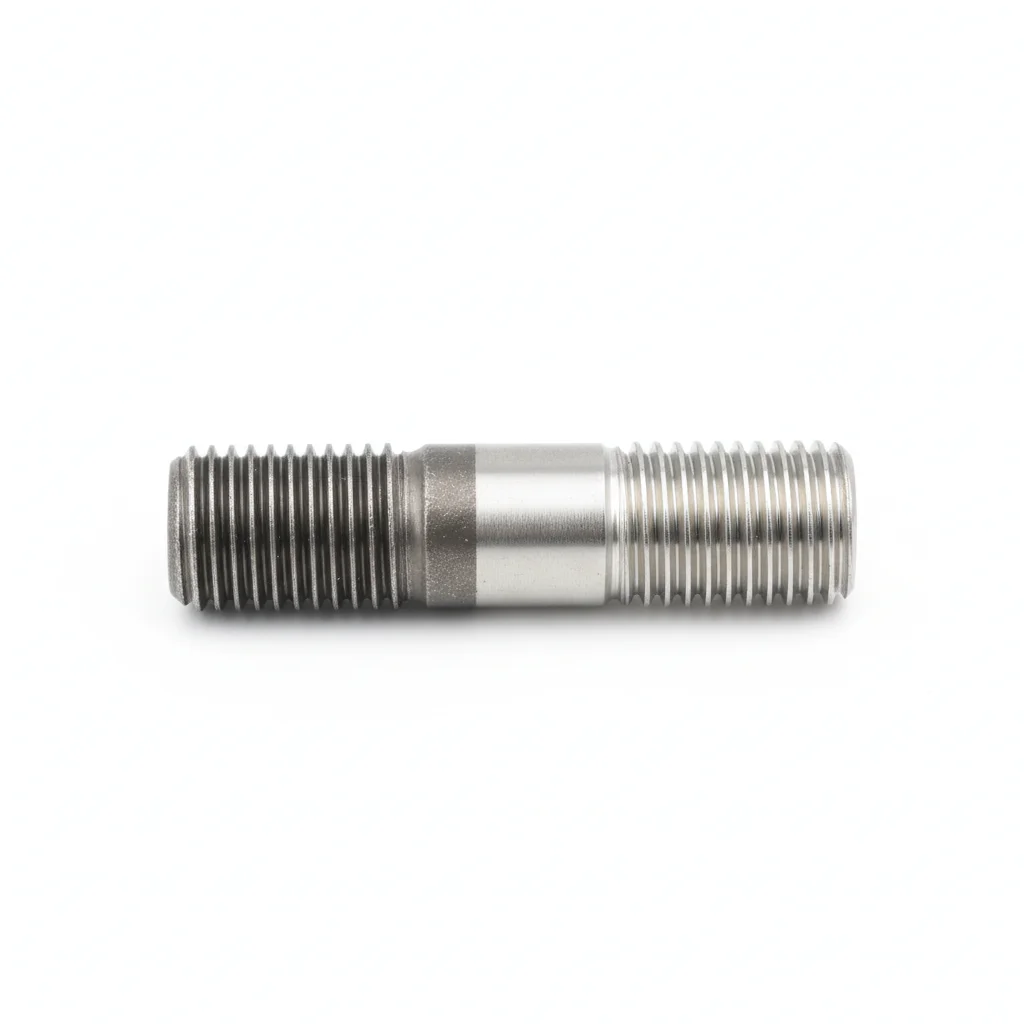
| Envelope Gasket | Double-End Stud | |
|---|---|---|
| SPEC | DN15-DN300 PN16 | M12-M24 Grade 8.8 |
| MATERIAL | EPDM Rubber | 35CrMoA |
| GRADE | — | Grade 8.8 |
| FINISH | HDG >=55um per ISO 1461 | HDG >=55um per ISO 1461 |
| CORROSION | Not applicable (polymer) | C3 (ISO 12944-2) |
| TEMP | -20°C to +80°C | -20°C to +80°C |
| WEIGHT | ~0.5 kg/piece | ~0.5 kg/piece |
| MOQ | 100 pcs | 100 pcs |
| PACK | VCI paper + carton | VCI paper + carton |
| STD | ISO 898-1, GB/T 3098.1 | ISO 898-1, GB/T 3098.1 |
| USE | <1.6MPa Water/Acid/Alkali | Medium/Low Pressure Flanges |
PROCEDURE
- Clean flange faces with isopropyl alcohol (99.9%) and verify flatness within 0.1mm per 100mm.
- Center the EPDM envelope gasket on the flange; misalignment can squeeze the gasket out of position.
- Lubricate 35CrMoA Grade 8.8 stud threads with anti-seize compound to prevent seizing during disassembly.
- Tighten nuts in a star pattern using a calibrated torque wrench to the torque specified in EN 1515-4; document values.
- Perform cold tightening 24h after initial startup to compensate for gasket compression.
COMMON ERRORS
| ✕ WRONG | CONSEQUENCE | ✓ CORRECT |
|---|---|---|
| Reusing a PTFE gasket after removal | Permanent compression deformation reduces sealing pressure below the design value, leading to leakage. | Always install a new gasket whenever a flange is opened. |
| Misaligning the gasket during installation | The gasket can be squeezed out of the flange, causing uneven sealing pressure and leakage. | Center the gasket carefully within the bolt circle before tightening. |
MAINTENANCE
Inspect flanged joints at each scheduled overhaul window: re-torque bolts if tension drops below 80% of specified value. Replace gaskets showing compression set or damage. For bolts, check for corrosion or thread damage; clean and reapply anti-seize if needed. Replace bolts after 8-10 years of service as recommended.
B · High Temperature/High Pressure
C4 Harsh per ISO 12944-2
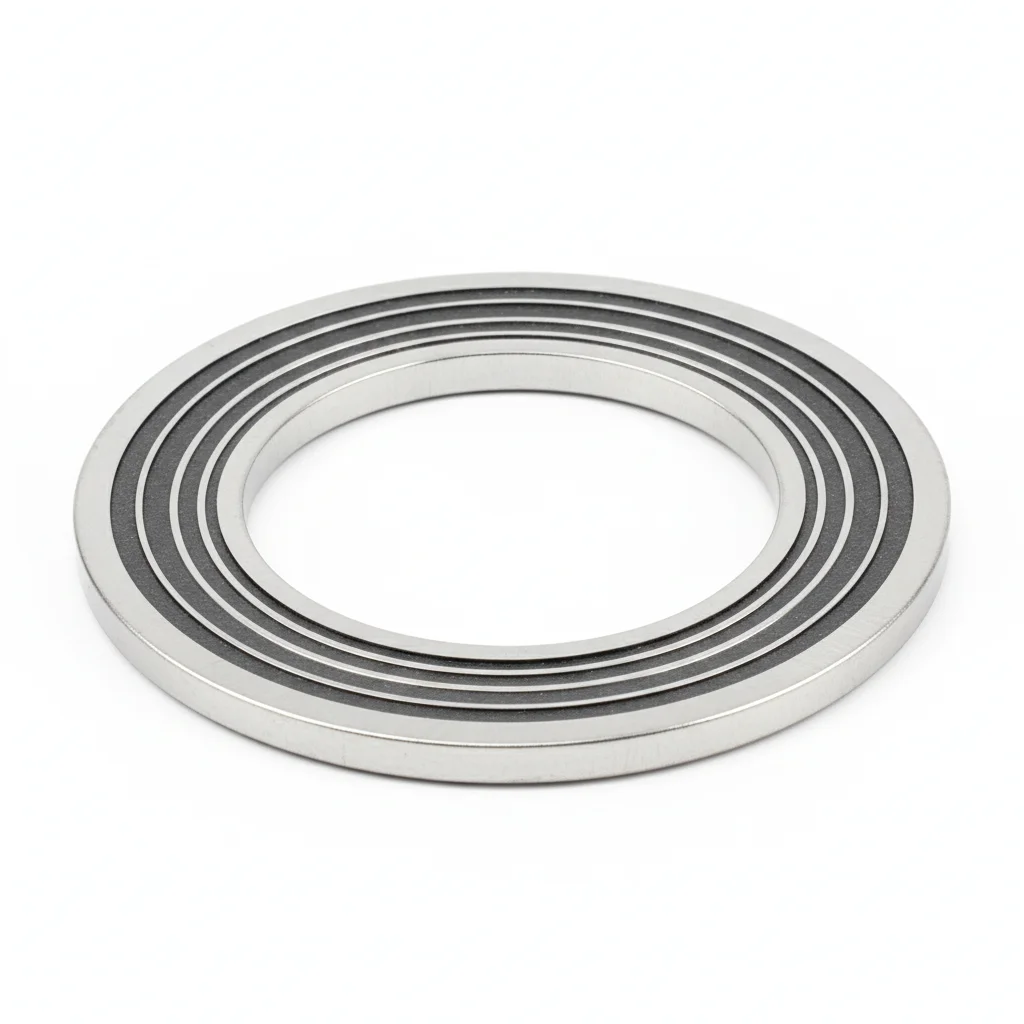
| 304 Spiral Wound Gasket | Double-End Stud | |
|---|---|---|
| SPEC | DN15-DN600 PN25-PN100 | M20-M36 Grade 10.9 |
| MATERIAL | EPDM Rubber | 35CrMoA+Nickel Anti-Seize |
| GRADE | — | Grade 10.9 |
| FINISH | HDG >=55um per ISO 1461 | HDG >=55um per ISO 1461 |
| CORROSION | Not applicable (polymer) | C3 (ISO 12944-2) |
| TEMP | -20°C to +80°C | -20°C to +80°C |
| WEIGHT | ~0.5 kg/piece | ~0.5 kg/piece |
| MOQ | 100 pcs | 100 pcs |
| PACK | VCI paper + carton | VCI paper + carton |
| STD | ISO 898-1, GB/T 3098.1 | ISO 898-1, GB/T 3098.1 |
| USE | High Temp/Pressure Steam/Chemicals | >PN25 High Temp Flanges |
PROCEDURE
- Degrease flange faces with acetone; verify surface roughness Ra <3.2 µm using a profilometer.
- Apply nickel-based anti-seize compound to stud threads before installation; this prevents oxide-layer diffusion welding at high temperatures.
- Center the spiral wound gasket (with centering ring per ASME B16.20) between flanges; avoid any bumping that could cause unraveling.
- Tighten nuts in a cross-pattern sequence to the torque calculated per EN 1515-4 for Grade 10.9 studs; verify 10% with a calibrated torque wrench.
- Perform a pull-test on a 5% random sample at 80% of proof load; replace any stud that fails.
- Apply torque seal paint across nut and stud for visual verification; document installation parameters.
COMMON ERRORS
| ✕ WRONG | CONSEQUENCE | ✓ CORRECT |
|---|---|---|
| Handling spiral wound gasket carelessly, causing it to unravel | The steel strip unwinds, leading to uneven sealing pressure and localized leakage upon pressurization. | Inspect gasket under bright light for looseness; place flat into flange with both hands; discard any unraveled gasket. |
| Overtightening studs without considering anti-seize effect | Anti-seize reduces thread friction, so standard torque produces excessive preload, risking bolt overload or gasket crushing. | Reduce installation torque by 15–20% per manufacturer's recommendation when using anti-seize. |
MAINTENANCE
Inspect flange joints at each major overhaul window (2-3 years) for signs of leakage or bolt loosening; re-torque any bolt below 80% of specified torque. Check for black oxide on threads; clean with wire brush and reapply anti-seize. Replace studs every 8-10 years as recommended.
Plan C · High/Ultra-High Pressure
C5-M Extreme per ISO 12944-2
| 316L Spiral Wound Gasket | Double-End Stud | |
|---|---|---|
| SPEC | DN15-DN600 PN25-PN100 | M20-M36 Grade 10.9 |
| MATERIAL | EPDM Rubber | 35CrMoA+Nickel Anti-Seize |
| GRADE | — | Grade 10.9 |
| FINISH | HDG >=55um per ISO 1461 | HDG >=55um per ISO 1461 |
| CORROSION | Not applicable (polymer) | C3 (ISO 12944-2) |
| TEMP | -20°C to +80°C | -20°C to +80°C |
| WEIGHT | ~0.5 kg/piece | ~0.5 kg/piece |
| MOQ | 100 pcs | 100 pcs |
| PACK | VCI paper + carton | VCI paper + carton |
| STD | ISO 898-1, GB/T 3098.1 | ISO 898-1, GB/T 3098.1 |
| USE | Extreme Conditions/Maximum Protection | Extreme Conditions/Maximum Protection |
PROCEDURE
- Degrease flange faces with MEK; verify surface roughness Ra <1.6 µm using a profilometer.
- Apply copper-based anti-seize compound to 316L stud threads; this withstands temperatures up to 1000°C.
- Align flanges within 0.3mm; use a hydraulic tensioner to achieve precise preload for Grade 10.9 studs.
- Perform 100% NDT (dye penetrant or ultrasonic) on gasket seating surfaces and studs to detect any cracks.
- Install the 316L spiral wound gasket with centering ring; ensure it is centered and flat.
- Tighten in cross-pattern to the torque per EN 1515-4; document torque values and PMI results for compliance.
COMMON ERRORS
| ✕ WRONG | CONSEQUENCE | ✓ CORRECT |
|---|---|---|
| Reusing a spiral wound gasket after flange disassembly | The gasket has permanent compression set, leading to inadequate sealing pressure and leakage. | Always replace with a new gasket; inspect for any damage before installation. |
| Skipping NDT on high-pressure joints | Undetected cracks in gasket or studs can lead to catastrophic failure under extreme pressure. | Perform 100% NDT as per plan C requirements; document results in compliance report. |
MAINTENANCE
Perform full inspection at each overhaul cycle (every 8-10 years as recommended for studs); replace all gaskets and studs regardless of condition. Monitor for any signs of leakage or corrosion; re-torque if tension drops below 80% of specified value. Maintain compliance documentation per regulatory standards.
SELECTION GUIDE
Which Gasket and Stud Combination Fits Your Piping Duty?
| Operating condition | Recommended option | Key basis |
|---|---|---|
| Medium/low-pressure water, acid or alkali (<1.6MPa, <PN16) | Plan A — PTFE envelope gasket (DN15-DN300, PN16) + Grade 8.8 double-end studs (35CrMoA, M12-M24) | EN 1514 flange gaskets; PTFE recommended for service below PN16 |
| High-temperature / high-pressure steam or chemicals (>PN25) | Plan B — spiral wound gasket (304 strip + flexible graphite, DN15-DN600, PN25-PN100) + Grade 10.9 double-end studs (35CrMoA + nickel anti-seize, M20-M36) | ASME B16.20 pipe gaskets; graphite winding compensates for PTFE cold flow above PN25 |
| 35CrMoA double-end studs operating long-term at 400°C | Apply high-temperature anti-seize compound (nickel or copper-based, resistant 600-1000°C) at installation; inspect threads every 2-3 years; replace bolt sets every 8-10 years | Oxide-layer diffusion welding raises disassembly torque to 3-5× installation torque (up to 3000-5000 N·m for M36), forcing bolt cutting |
| Spiral wound gasket handling, transport and storage | Require a centering ring or outer ring per ASME B16.20; inspect under bright light before installation; discard any unraveled gasket immediately | Bumping causes the 304 strip to unwind → uneven sealing pressure → localized leakage |
| Joints with PTFE envelope gaskets after initial startup | Perform cold tightening 24h after startup to compensate for initial gasket compression; re-torque if bolt tension drops below 80% of the specified value | Cold flow reduces sealing pressure from 25-30 MPa to 10-15 MPa over 3-5 years → leakage |
REFERENCED STANDARDS
References
SUPPLIER CAPABILITY
Quality, Delivery & Customization
Quality Control
- ✓MTC material certificates with every batch
- ✓Key parts sampled for hardness/salt spray/torque coefficient
- ✓100% inspection or AQL sampling before shipment
Delivery
- ✓Standard parts made to order: 7-15 days
- ✓Custom parts: 25-45 days
- ✓FOB/CIF/DDP supported
Customization
- ✓Drawing review and material matching
- ✓Non-standard sizes/heads/threads
- ✓Small-batch prototyping supported
Certification
- ✓Material certificates (MTC)
- ✓Spectrographic analysis reports
- ✓Salt spray test reports (on request)
MOQ: No MOQ for standard parts; custom parts assessed by process complexity
FAQ
FAQ
RELATED READING
Keep Reading & Next Step
BEYOND TECHNICAL SPECS
Finding the right factory, controlling quality, delivering on time — that's the real challenge. We cover fasteners, rubber, plastics, industrial textiles. One team, end to end.
SEE CAPABILITIES →