
Solar Washers & Gaskets: Material and Design Comparison
Selecting the wrong washer combination risks water ingress, grounding failure, and bolt loosening. This page compares EPDM vs FFKM rain washers, 304 vs 316 stainless steel, and spring vs wedge lock washers for inland, coastal, and offshore solar farms.
RISK AUDIT // ENGINEERING DIAGNOSIS
Purchasing Pitfall Avoidance Guide
"Common Washer Failures in Solar Farms and How to Avoid Them"
QC-AUDIT // REV.5
SCALE 1:1 · 03 ITEMS
RISK-01
Bolt Hole Water Seepage Accelerates Module PID Degradation
Corrective Measures
RISK-02
Grounding Washer Failure Leads to Grounding System Disconnection
Corrective Measures
RISK-03
Wave Spring Washer Anti-Loosening Effect Overestimated in Vibration Environments
Corrective Measures
FIELD-SPECIFIC INSIGHT
Washer Selection Checkpoints for Solar Farm Reliability
In solar farms, washers serve three critical functions: sealing bolt holes against water ingress, ensuring electrical grounding continuity, and maintaining clamp load under vibration. The choice between EPDM and FFKM, 304 and 316, and spring vs wedge lock washers depends on environmental corrosivity, vibration levels, and grounding requirements.
WHAT TO CHECK
- 1EPDM rain washers seal best at 25-30% compression; torque deviation of ±10% reduces sealing pressure from 0.8MPa to 0.3MPa, risking water ingress and PID acceleration.
- 2Toothed grounding washers must have tooth hardness ≥HV200 to pierce anodized module frames; soft teeth lead to contact resistance >5Ω after six months.
- 3Spring washers lose >50% preload after 10³ cycles under vibration >10Hz; wedge lock washers maintain preload under alternating loads.
- 4316 stainless steel is required for C4-C5 environments; 304 is suitable for C3 inland sites. FFKM rain washers offer IP68 and 5000h salt spray resistance for offshore.
| Check | Why it matters | What to specify |
|---|---|---|
| Rain Washer Material | EPDM compression set per ASTM D395-18 affects long-term sealing; FFKM offers superior chemical and temperature resistance for offshore. | Specify EPDM for C3-C4, FFKM for C5-M/offshore. Request compression set test report per ASTM D395-18. |
| Flat Washer Grade | 304 stainless steel corrodes in coastal C4-C5; 316/316L provides pitting resistance equivalent to PREN ≥25. | Specify 304 for inland (C3), 316 for coastal (C4), 316L for offshore (C5-M). Require material certificate per ISO 3506-1. |
| Anti-Loosening Washer Type | Spring washers fail under vibration >10Hz; wedge lock washers (NL8-NL16) maintain preload under alternating loads. | Specify wedge lock washers for tracking brackets and high-vibration nodes. For static nodes, spring washers may suffice. |
| Grounding Washer Tooth Hardness | Tooth hardness <HV200 fails to penetrate anodized layer, causing contact resistance >5Ω and grounding system disconnection. | Specify tooth hardness ≥HV200 and UL 467 listing. Verify with supplier test report. |
| Installation Torque Control | Torque deviation of ±10% causes sealing pressure drop from 0.8MPa to 0.3MPa, risking water ingress and PID. | Specify torque tolerance ±5% for rain washers. Use calibrated torque wrench and document values. |
All data and thresholds are based on the page content. For project-specific conditions, consult engineering team.
Evidence level: source-page-only
INDUSTRY TECH REFERENCE
From a Loose Inverter Base to a Burned MC4
The failure trail for base hardware runs off the racking beams — at the cabinet-to-cable boundary.
- 1Combiner-box / inverter base fixing bolts (M8-M12) under-torqued or with failed locking — loosening → the unit tilts → internal busbars loosen → overheating burnout
- 2Inverter base M12 expansion bolts go to 50-60 N·m (stainless product spec) — under-torque lets the unit shift under vibration
- 3Shifting tugs the cables and pulls MC4 joints loose: contact resistance up → heat → oxidation → more heat → meltdown
- 4Meltdown becomes a DC arc — no zero crossing, so it does not self-extinguish; a typical fire source on 400-1500 V DC strings
- 5Countermeasure: 304 hardware with nylon-insert lock nuts on base fixings; MC4 joints clicked home and hand-checked, inspected twice a year
50-60 N·m is the stainless expansion-bolt product spec (distinct from the 96-110 N·m 8.8 steel value); the failure chain traces to the KB.
INDUSTRY TECH REFERENCE
Beyond the Racking: Mount-Base and Grounding-Washer Specs
The other high-value homes for washers and lock nuts in a plant are mount bases and grounding — specs follow.
| Node | Size / material | Mating lock hardware | Spec / risk |
|---|---|---|---|
| Combiner-box fixing bolts | M8-M12 / 304 | Nylon-insert lock nuts | Loosening → tilt → loose internal busbars → burnout (failure path) |
| Inverter base expansion bolts | M12 / stainless | Nylon-insert lock nuts | Torque 50-60 N·m (product spec) — under-torque → shift → cable tug → loose MC4 → arcing |
| Toothed grounding washer | M6-M8 / 304 + copper piercing tip | Teeth pierce the anodized layer | Array ground resistance ≤4 Ω (GB 50169) |
50-60 N·m is a stainless expansion-bolt product spec; ≤4 Ω follows GB 50169; no magnitude-estimate figures here.
INDUSTRY TECH REFERENCE
Inspection Rhythm for Mount-Base Locking
Base fixings carry no racking load, but wind vibration does not spare them — keep inspection on this rhythm.
- Annual IR scan of base and combiner-box fixings: a hot spot above 10°C is abnormal (recommended)
- When IR flags a point, disassemble and check that base bolt: under-torque → vibration shift → cable tug → loose MC4 — loosening shows before the shift does
- Re-torque against the product spec: inverter base M12 expansion bolts at 50-60 N·m — do not go by the 96-110 N·m 8.8 steel value
- Base bolts and mating lock hardware in 304 with nylon-insert lock nuts — do not downgrade to zinc-coated parts for coastal or offshore sites
The >10°C hot-spot threshold is recommended; 50-60 N·m is the stainless product spec (96-110 N·m is the 8.8 steel comparison).
PLAN COMPARISON
Three-Plan Core Parameter Comparison
Compare row by row. Click column headers to jump to plan details.
| A · Plan A · Standard Waterproof & Anti-Loosening Configuration | B · Plan B · Enhanced Corrosion & Anti-Loosening Configuration | C · Plan C · Extreme Environment / Maximum Anti-Loosening | |
|---|---|---|---|
| 1. RAIN WASHER | |||
| SPEC | M8/M10/M12/M16 | M8-M16 | M8-M16 |
| MATERIAL | EPDM rubber + 304 stainless steel core | EPDM + 316 stainless steel core | FFKM + 316L stainless steel core |
| GRADE | IP65 Black | C5 environment IP66 | IP68 Salt spray resistant 5000h |
| FINISH | HDG >=55um per ISO 1461 | HDG >=55um per ISO 1461 | HDG >=55um per ISO 1461 |
| 2. FLAT WASHER | |||
| SPEC | M8-M16 | M8-M16 | M8-M16 |
| MATERIAL | 304 Stainless Steel | 316 Stainless Steel | 316L Stainless Steel |
| GRADE | Plain | Plain | Electropolished |
| FINISH | HDG >=55um per ISO 1461 | HDG >=55um per ISO 1461 | HDG >=55um per ISO 1461 |
| 3. SPRING WASHER | |||
| SPEC | M8-M16 | M8-M16 | NL8-NL16 |
| MATERIAL | 304 Stainless Steel | 316 Stainless Steel | Carbon Steel Hardened + Dacromet / 316L |
| GRADE | Plain | GB/T 94.2 | Dacromet |
| FINISH | HDG >=55um per ISO 1461 | HDG >=55um per ISO 1461 | HDG >=55um per ISO 1461 |
| 4. TOOTHED GROUNDING WASHER | |||
| SPEC | M8/M10 | M8/M10 | M8/M10 |
| MATERIAL | 304 Stainless Steel | 316 Stainless Steel Toothed | 316L Stainless Steel Toothed |
| GRADE | Tooth surface hardness ≥HV200 | UL 467 | UL 467 + DNV |
| FINISH | HDG >=55um per ISO 1461 | HDG >=55um per ISO 1461 | HDG >=55um per ISO 1461 |
| 5. RAIL GROUNDING CLIP | |||
| SPEC | Fits C-channel rail | 6mm²/10mm² | 50g/tube |
| MATERIAL | 304 Stainless Steel | T2 Copper Tinned | Silver-Based Conductive Grease |
| GRADE | Plain | Tinned | Contact resistance <1μΩ·cm² |
| FINISH | HDG >=55um per ISO 1461 | HDG >=55um per ISO 1461 | HDG >=55um per ISO 1461 |
SELECTION GUIDE
Choosing the Right Washer for Your Solar Farm
| Operating condition | Recommended option | Key basis |
|---|---|---|
| Inland power station, C3, wind speed <25m/s | Plan A: standard waterproof & anti-loosening — EPDM+304 core rain washer (IP65) + 304 flat washer + spring washer (GB/T 93) + 304 toothed grounding washer (tooth hardness ≥HV200, UL 467) | C3 (ISO 12944-2); EPDM seals bolt holes; spring washer suffices for static nodes |
| Coastal C4-C5 zone / high wind / large ground-mounted plant | Plan B: enhanced corrosion & anti-loosening — EPDM+316 core rain washer (IP66) + 316 flat washer + 316 wave spring washer (GB/T 94.2) + 316 toothed grounding washer (UL 467) | C4 (ISO 12944-2); 316 resists coastal corrosion; wave washer better than spring under alternating load |
| Offshore C5-M / typhoon-prone / tracking bracket | Plan C: extreme — FFKM+316L core rain washer (IP68, salt spray 5000h) + 316L electropolished flat washer + wedge lock washer (NL8-NL16, Dacromet) + 316L toothed grounding washer (UL 467 + DNV) | C5-M (ISO 12944-2); FFKM seals offshore; wedge lock maintains preload under high vibration |
| Bolt-hole water sealing / PID prevention | Use EPDM rain washer with metal-sleeve compression limit at recommended torque (EPDM compression 25-30%); torque tolerance ±5% | Torque deviation of ±10% drops sealing pressure from 0.8MPa to 0.3MPa → water ingress accelerates PID, raising annual module degradation from 0.5% to 3% |
| Anti-loosening & grounding reliability | Use wedge lock washers at critical vibration nodes (tracking/inverter brackets); grounding washer teeth ≥HV200 to pierce the anodized module frame; verify frame-to-bus bar contact resistance <0.1Ω | Spring washers lose >50% preload after 10³ cycles at vibration >10Hz; soft/insufficient teeth raise contact resistance from <0.1Ω to >5Ω, equivalent to grounding disconnection |
Plan A · Standard Waterproof & Anti-Loosening Configuration
C3 Standard per ISO 12944-2
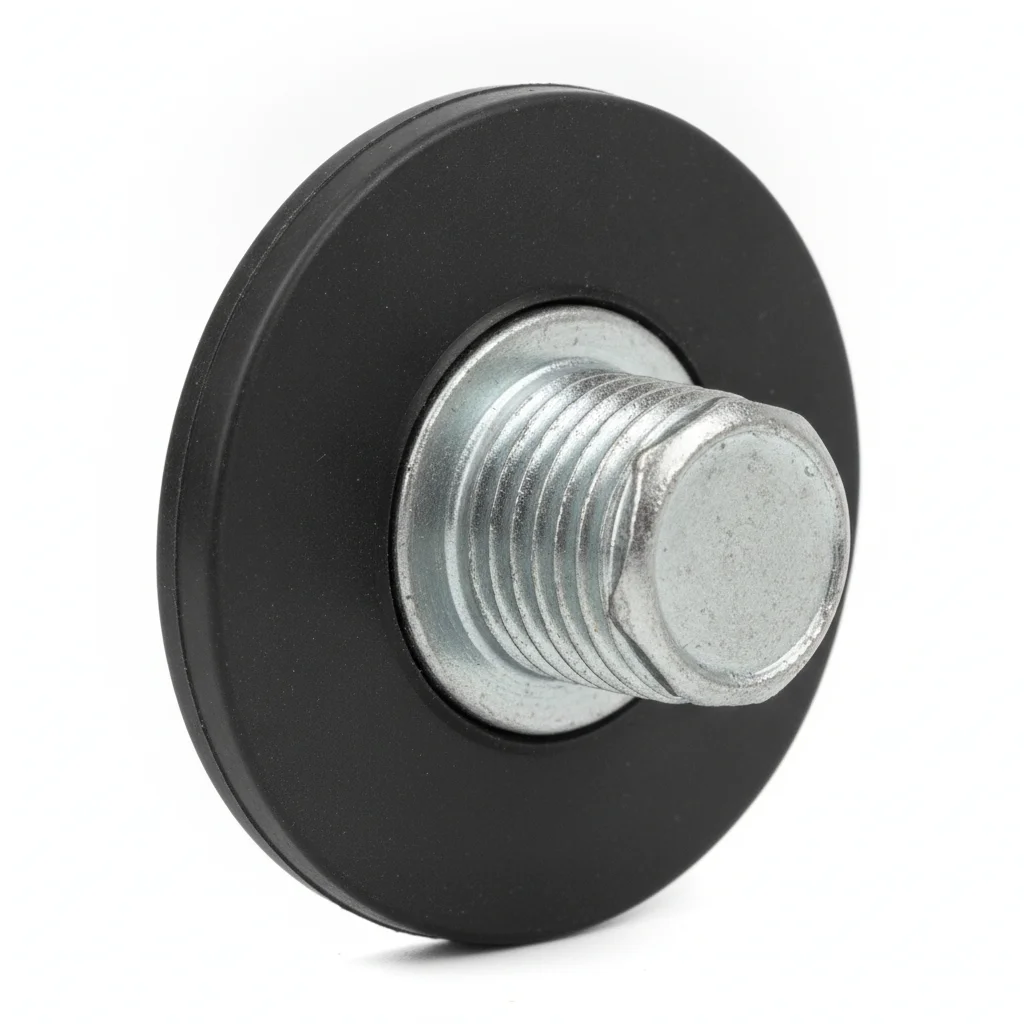
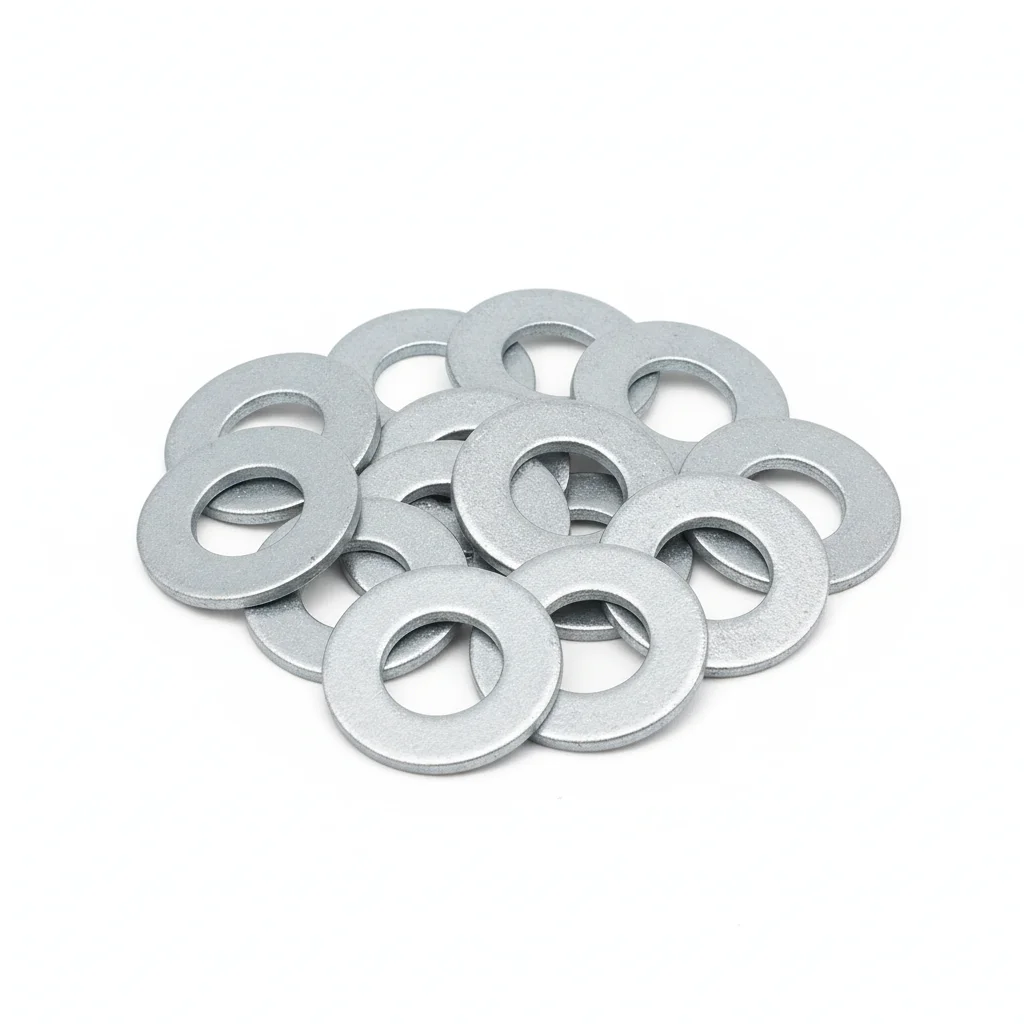
| Rain Washer | Flat Washer | Spring Washer | Toothed Grounding Washer | Rail Grounding Clip | |
|---|---|---|---|---|---|
| SPEC | M8/M10/M12/M16 | M8-M16 | M8-M16 | M8/M10 | Fits C-channel rail |
| MATERIAL | EPDM rubber + 304 stainless steel core | 304 Stainless Steel | 304 Stainless Steel | 304 Stainless Steel | 304 Stainless Steel |
| GRADE | IP65 Black | Plain | Plain | Tooth surface hardness ≥HV200 | Plain |
| FINISH | HDG >=55um per ISO 1461 | HDG >=55um per ISO 1461 | HDG >=55um per ISO 1461 | HDG >=55um per ISO 1461 | HDG >=55um per ISO 1461 |
| CORROSION | C3 (ISO 12944-2) | C3 (ISO 12944-2) | C3 (ISO 12944-2) | C3 (ISO 12944-2) | C3 (ISO 12944-2) |
| TEMP | -20°C to +80°C | -20°C to +80°C | -20°C to +80°C | -20°C to +80°C | -20°C to +80°C |
| WEIGHT | ~0.5 kg/piece | ~0.5 kg/piece | ~0.5 kg/piece | ~0.5 kg/piece | ~0.5 kg/piece |
| MOQ | 100 pcs | 100 pcs | 100 pcs | 100 pcs | 100 pcs |
| PACK | VCI paper + carton | VCI paper + carton | VCI paper + carton | VCI paper + carton | VCI paper + carton |
| STD | ISO 898-1, GB/T 3098.1 | ISO 898-1, GB/T 3098.1 | ISO 898-1, GB/T 3098.1 | ISO 898-1, GB/T 3098.1 | ISO 898-1, GB/T 3098.1 |
| USE | Waterproof sealing at bolt penetration points | Distribute bolt head pressure, protect connected surface | Anti-loosening for static load nodes | Module frame grounding, UL 467 listed | Connection between rail and ground wire, alternative to grounding washer solution |
PROCEDURE
- Clean the bolt hole area on module frames and rails with isopropyl alcohol to remove any debris or moisture before placing the EPDM rain washer.
- Position the rain washer with the EPDM side facing the bolt head or nut and the stainless steel core facing the connected part, ensuring the hole aligns with the M8 or M10 bolt penetration point.
- Hand-tighten the bolt, then use a calibrated torque wrench to tighten to the recommended torque (per project spec) to achieve 25-30% EPDM compression for optimal sealing.
- For grounding washers, orient the toothed side toward the module frame and tighten until the teeth visibly penetrate the anodized surface by at least 0.1mm, verifying with a feeler gauge or visual check.
- After all fasteners are torqued, use a milliohm meter to measure contact resistance between the frame and ground bus bar at each grounding point, confirming readings below 0.1Ω as per UL 467 requirements.
COMMON ERRORS
| ✕ WRONG | CONSEQUENCE | ✓ CORRECT |
|---|---|---|
| Installing the EPDM rain washer with the stainless steel core facing the bolt head and EPDM facing the connected part, or omitting the washer entirely at bolt penetration points. | Water seeps along the threads via capillary action, leading to module frame corrosion and accelerated PID degradation, with annual power loss rising from 0.5% to 3%. | Always place the EPDM side toward the bolt head/nut and the stainless steel core toward the connected part, as specified in the product instructions. |
| Using an ordinary flat washer or a soft toothed grounding washer with hardness below HV200 for grounding connections. | The teeth fail to penetrate the anodized layer, causing contact resistance to rise from <0.1Ω to >5Ω within six months, effectively disconnecting the grounding system. | Specify toothed grounding washers with tooth hardness ≥HV200 and UL 467 listing, and tighten to achieve ≥0.1mm tooth penetration. |
MAINTENANCE
At each seasonal inspection, check that EPDM rain washers maintain 25-30% compression (no visible gaps) and that grounding washers show tooth penetration ≥0.1mm; measure contact resistance with a milliohm meter to ensure it stays below 0.1Ω, and replace any washer showing signs of corrosion or compression set beyond the ASTM D395-18 limit.
Plan B · Enhanced Corrosion & Anti-Loosening Configuration
C4 Harsh per ISO 12944-2
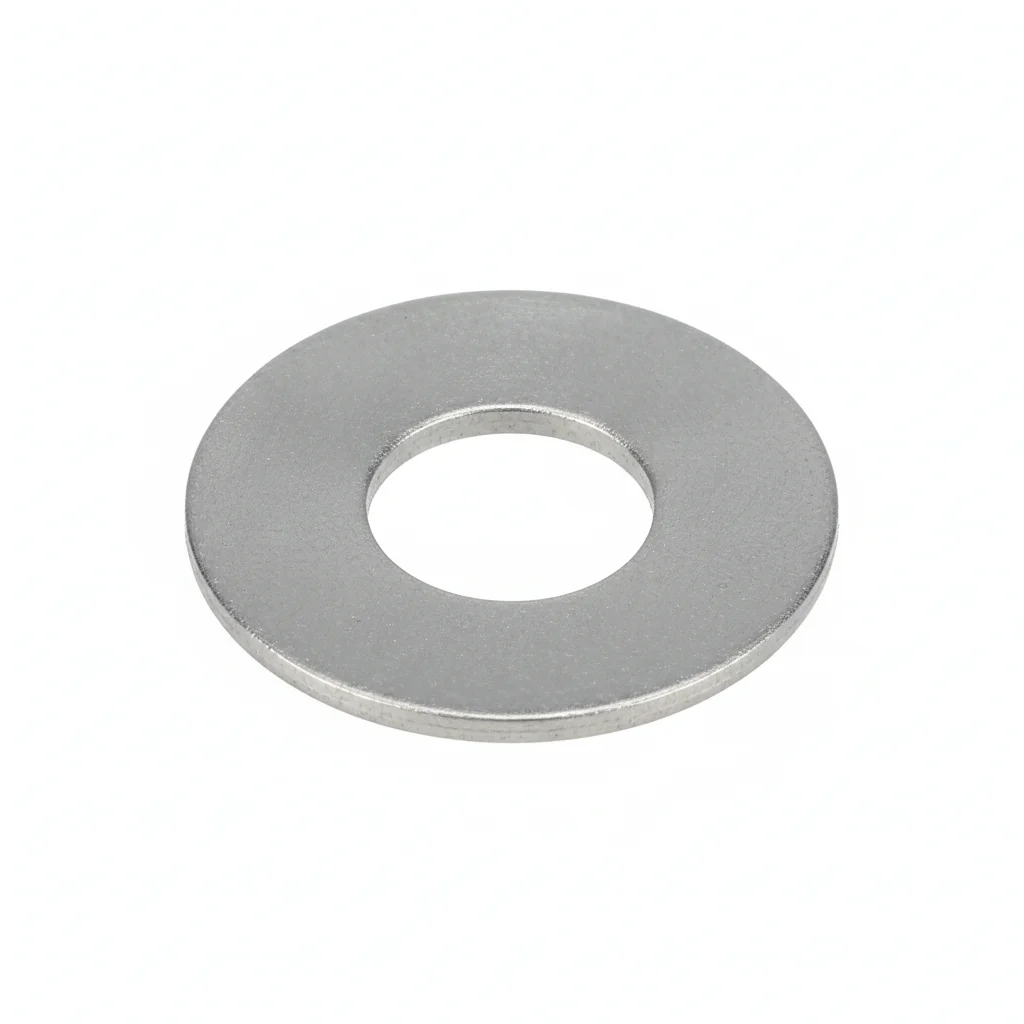
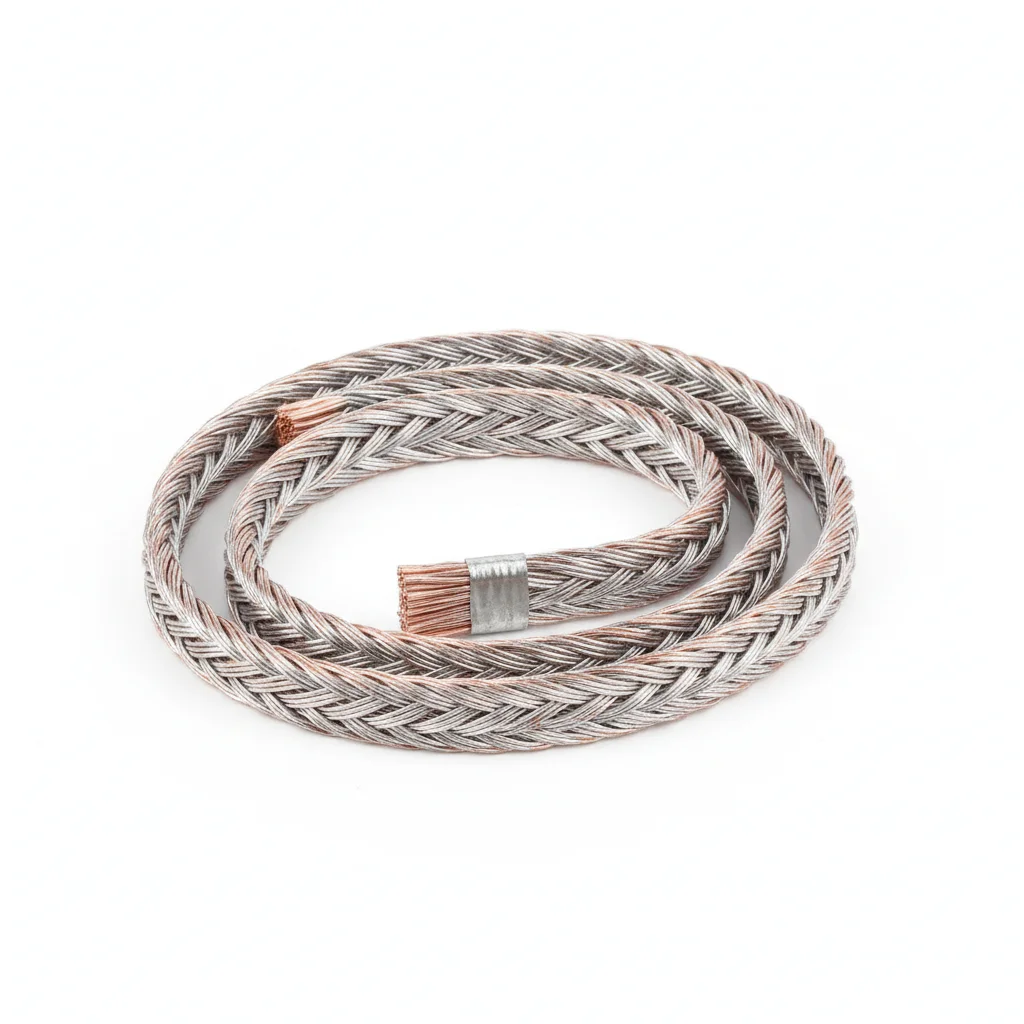
| Rain Washer | Flat Washer | Wave Spring Washer | Grounding Washer | Copper Braid Grounding Strap | |
|---|---|---|---|---|---|
| SPEC | M8-M16 | M8-M16 | M8-M16 | M8/M10 | 6mm²/10mm² |
| MATERIAL | EPDM + 316 stainless steel core | 316 Stainless Steel | 316 Stainless Steel | 316 Stainless Steel Toothed | T2 Copper Tinned |
| GRADE | C5 environment IP66 | Plain | GB/T 94.2 | UL 467 | Tinned |
| FINISH | HDG >=55um per ISO 1461 | HDG >=55um per ISO 1461 | HDG >=55um per ISO 1461 | HDG >=55um per ISO 1461 | HDG >=55um per ISO 1461 |
| CORROSION | C3 (ISO 12944-2) | C3 (ISO 12944-2) | C3 (ISO 12944-2) | C3 (ISO 12944-2) | C3 (ISO 12944-2) |
| TEMP | -20°C to +80°C | -20°C to +80°C | -20°C to +80°C | -20°C to +80°C | -20°C to +80°C |
| WEIGHT | ~0.5 kg/piece | ~0.5 kg/piece | ~0.5 kg/piece | ~0.5 kg/piece | ~0.5 kg/piece |
| MOQ | 100 pcs | 100 pcs | 100 pcs | 100 pcs | 100 pcs |
| PACK | VCI paper + carton | VCI paper + carton | VCI paper + carton | VCI paper + carton | VCI paper + carton |
| STD | ISO 898-1, GB/T 3098.1 | ISO 898-1, GB/T 3098.1 | ISO 898-1, GB/T 3098.1 | ISO 898-1, GB/T 3098.1 | ISO 898-1, GB/T 3098.1 |
| USE | Rainproof sealing for coastal power stations | Bolt connection in C4-C5 environment | Alternating load nodes, anti-loosening superior to standard spring washers | Module grounding for coastal power stations | Connection: Module frame → Rail → Ground bus bar |
PROCEDURE
- Clean the mounting surfaces with a marine-grade solvent to remove salt deposits and grease, ensuring a dry, contamination-free interface for the 316 stainless steel hardware.
- Place the EPDM rain washer with the 316 stainless steel core facing the bolted part; orient the wave spring washer (GB/T 94.2) under the nut to handle alternating wind loads.
- Hand-tighten the M8-M16 bolts, then use a calibrated torque wrench in a cross-pattern sequence to reach the specified torque, verifying each pass with a torque audit tool on 10% of connections.
- For grounding points, install the 316 toothed grounding washer with teeth biting into the module frame, then measure contact resistance with a milliohm meter to confirm <0.1Ω per UL 467.
- Secure rail-to-busbar bonds using the 6mm² or 10mm² tinned copper braid strap, torquing the connection and applying a corrosion-preventive compound over the exposed joint.
- Log installation torque values and environmental conditions (humidity, temperature) for each fastener in the QA record.
COMMON ERRORS
| ✕ WRONG | CONSEQUENCE | ✓ CORRECT |
|---|---|---|
| Using 304 stainless steel flat washers in a C4 coastal environment | Pitting corrosion initiates on the washer surface within months, weakening the clamping load and contaminating the EPDM seal, leading to water ingress. | Specify 316 stainless steel flat washers for all coastal C4-C5 zones, as they offer superior pitting resistance per ISO 3506-1. |
| Overtightening the EPDM rain washer beyond the recommended compression | EPDM compression exceeds 30%, causing the rubber to extrude or take a permanent set, reducing sealing pressure and allowing capillary water seepage along the bolt threads. | Torque to the specified value that achieves 25-30% EPDM compression; use a torque wrench with ±5% accuracy and verify with a compression gauge on a sample. |
| Installing the toothed grounding washer with teeth facing away from the frame | Teeth fail to penetrate the anodized layer, leaving contact resistance above 5Ω and effectively disconnecting the module from ground. | Orient the grounding washer so the teeth face the module frame; after tightening, inspect that teeth have penetrated at least 0.1mm. |
MAINTENANCE
At each seasonal inspection, check a 10% sample of fasteners for torque loss using a calibrated wrench, re-torquing any that fall below 80% of specified value. Replace 316 washers showing pitting depth >0.3mm or surface corrosion over 5% of area. Annually, verify grounding continuity on all straps and toothed washers with a milliohm meter, ensuring <0.1Ω. Every 5 years, perform a full disassembly and inspection of a 20% sample of critical joints.
Plan C · Extreme Environment / Maximum Anti-Loosening
C5-M Extreme per ISO 12944-2
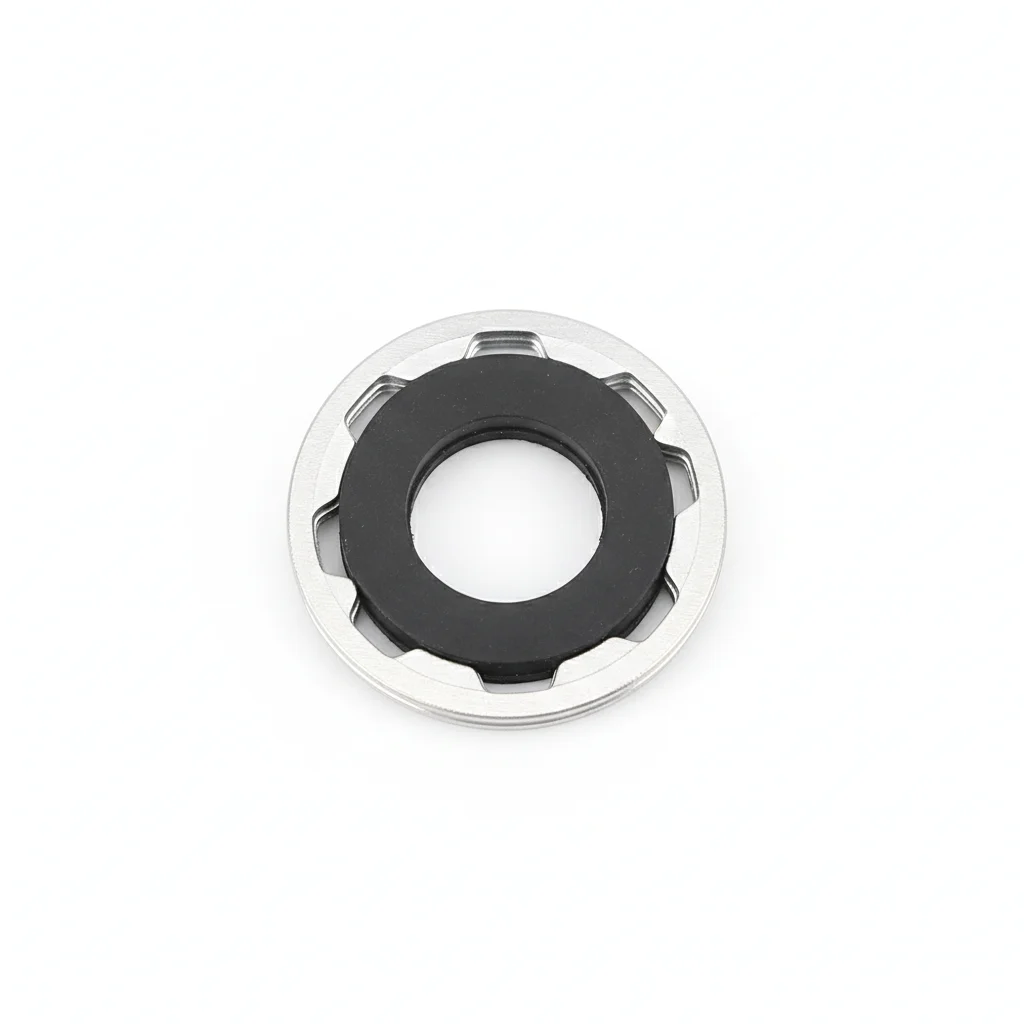
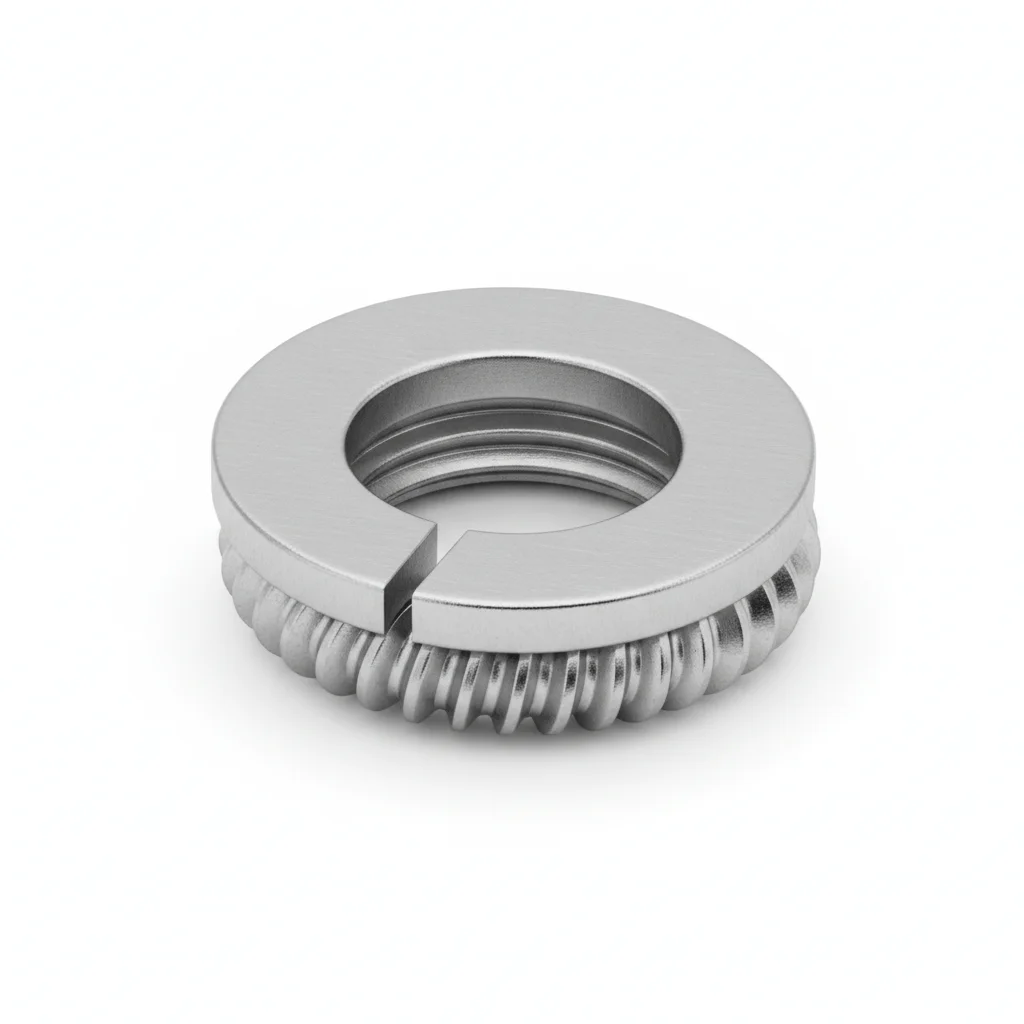
| Rain Washer | Flat Washer | Wedge Lock Washer | Grounding Washer | Silver-Based Conductive Grease | |
|---|---|---|---|---|---|
| SPEC | M8-M16 | M8-M16 | NL8-NL16 | M8/M10 | 50g/tube |
| MATERIAL | FFKM + 316L stainless steel core | 316L Stainless Steel | Carbon Steel Hardened + Dacromet / 316L | 316L Stainless Steel Toothed | Silver-Based Conductive Grease |
| GRADE | IP68 Salt spray resistant 5000h | Electropolished | Dacromet | UL 467 + DNV | Contact resistance <1μΩ·cm² |
| FINISH | HDG >=55um per ISO 1461 | HDG >=55um per ISO 1461 | HDG >=55um per ISO 1461 | HDG >=55um per ISO 1461 | HDG >=55um per ISO 1461 |
| CORROSION | C3 (ISO 12944-2) | C3 (ISO 12944-2) | C3 (ISO 12944-2) | C3 (ISO 12944-2) | C3 (ISO 12944-2) |
| TEMP | -20°C to +80°C | -20°C to +80°C | -20°C to +80°C | -20°C to +80°C | -20°C to +80°C |
| WEIGHT | ~0.5 kg/piece | ~0.5 kg/piece | ~0.5 kg/piece | ~0.5 kg/piece | ~0.5 kg/piece |
| MOQ | 100 pcs | 100 pcs | 100 pcs | 100 pcs | 100 pcs |
| PACK | VCI paper + carton | VCI paper + carton | VCI paper + carton | VCI paper + carton | VCI paper + carton |
| STD | ISO 898-1, GB/T 3098.1 | ISO 898-1, GB/T 3098.1 | ISO 898-1, GB/T 3098.1 | ISO 898-1, GB/T 3098.1 | ISO 898-1, GB/T 3098.1 |
| USE | Bolt sealing for offshore solar | Highest corrosion protection level | Critical nodes for tracking brackets, inverter brackets | Module grounding on offshore platforms | Apply to all grounding connection points |
PROCEDURE
- Degrease all mating surfaces with MEK and verify surface roughness Ra <1.6μm to ensure a clean base for the 316L hardware and FFKM seal.
- Mount the FFKM rain washer (IP68, 5000h salt spray resistant) with the 316L core facing the bolted part; for grounding, install the 316L toothed washer with teeth toward the frame.
- Position the wedge lock washer (NL8-NL16) under the bolt head and nut, ensuring the cam faces are properly engaged; hand-tighten before final torquing.
- Tighten using a hydraulic tensioner to the specified preload, following a cross-pattern sequence; verify 10% of connections with a torque wrench and document for compliance.
- Apply silver-based conductive grease to all grounding interfaces, then measure contact resistance with a milliohm meter to confirm <0.1Ω per UL 467 and DNV requirements.
- Seal the entire joint with a marine-grade protective sealant, and label each connection for traceability in the maintenance log.
COMMON ERRORS
| ✕ WRONG | CONSEQUENCE | ✓ CORRECT |
|---|---|---|
| Substituting 316L flat washers with standard 316 in an offshore C5-M environment | 316 is more susceptible to crevice corrosion in chloride-rich salt spray, leading to washer degradation and loss of clamping force within a shorter period. | Use only 316L stainless steel washers (electropolished) for offshore applications, as they offer enhanced pitting resistance suitable for C5-M per ISO 12944-2. |
| Using a standard spring washer instead of a wedge lock washer on tracking bracket pivots | Under vibration frequencies >10Hz, the spring washer loses over 50% preload after 10³ cycles, causing bolt loosening and potential structural failure. | Install wedge lock washers (NL8-NL16) on all critical vibration nodes; they maintain preload under alternating loads as per SS-EN 14399. |
| Failing to apply conductive grease on grounding connections in a salt-laden environment | Oxidation increases contact resistance above 5Ω, disconnecting the grounding system and posing an electrical safety hazard. | Apply silver-based conductive grease (contact resistance <1μΩ·cm²) to all grounding points before tightening, and verify with a milliohm meter. |
MAINTENANCE
Inspect critical joints at each overhaul window, checking wedge lock washers for proper seating and re-torquing any fastener below 80% of specified preload. Replace FFKM washers showing signs of compression set or chemical attack; verify IP68 integrity. Annually, perform dye penetrant testing on a 10% sample of welds and fasteners, and measure grounding resistance on all connections. Every 5 years, replace all wedge lock washers and FFKM seals regardless of condition, and conduct a full 20% disassembly inspection.
REFERENCED STANDARDS
Referenced Standards & Authoritative References
Evaluation standard for compression recovery performance of EPDM sealing washers.
Technical Conditions for Spring Washers – Wave WashersDimension and performance standard for wave spring washers.
Grounding and Bonding EquipmentUL listing standard for grounding washers and grounding clips.
High-Strength Preloaded Bolt Assemblies for Steel StructuresEuropean standard reference for wedge lock washers.
Mechanical Properties of Corrosion-Resistant Stainless Steel FastenersMaterial standard for 304/316/316L stainless steel washers.
Classification System for Rubber ProductsSUPPLIER CAPABILITY
Quality, Delivery & Customization
Quality Control
- ✓MTC material certificates with every batch
- ✓Key parts sampled for hardness/salt spray/torque coefficient
- ✓100% inspection or AQL sampling before shipment
Delivery
- ✓Standard parts made to order: 7-15 days
- ✓Custom parts: 25-45 days
- ✓FOB/CIF/DDP supported
Customization
- ✓Drawing review and material matching
- ✓Non-standard sizes/heads/threads
- ✓Small-batch prototyping supported
Certification
- ✓Material certificates (MTC)
- ✓Spectrographic analysis reports
- ✓Salt spray test reports (on request)
MOQ: No MOQ for standard parts; custom parts assessed by process complexity
FAQ
FAQ
RELATED READING
Keep Reading & Next Step
BEYOND TECHNICAL SPECS
Finding the right factory, controlling quality, delivering on time — that's the real challenge. We cover fasteners, rubber, plastics, industrial textiles. One team, end to end.
SEE CAPABILITIES →