
High-Strength Lock Washers for Wind Turbines
Wind turbines subject bolted joints to extreme alternating loads and vibration. Standard spring washers lose preload in Junker tests. Wedge lock washers provide positive locking for critical flanges and bearings; conical spring washers offer elastic compensation for thermal expansion; serrated washers suit general joints. Choose based on joint criticality, temperature, and maintenance access
RISK AUDIT // ENGINEERING DIAGNOSIS
Procurement Pitfall Guide
"The hidden costs of choosing the wrong lock washer on a wind turbine"
QC-AUDIT // REV.5
SCALE 1:1 · 03 ITEMS
RISK-01
Standard spring washers have almost zero locking effect under wind turbine vibration
Corrective Measures
RISK-02
Stress relaxation of disc spring washers at high temperature
Corrective Measures
RISK-03
'Over-locking' caused by incorrect lock washer selection
Corrective Measures
FIELD-SPECIFIC INSIGHT
Lock Washer Selection Checklist for Wind Turbine Joints
The primary failure mode for wind turbine bolted joints is loosening under alternating loads. Lock washers must be selected based on joint criticality, temperature, and vibration frequency. Standard spring washers are ineffective under vibration. Wedge lock washers require higher removal torque, which may hinder maintenance
WHAT TO CHECK
- 1Critical joints (tower flange, yaw/pitch bearing, main shaft): Use wedge lock washers (carbon steel quenched + Dacromet) to prevent loosening under alternating loads
- 2Important joints inside nacelle (brackets, auxiliary equipment): Conical spring washers (65Mn) combined with nylon lock nuts offer reliable locking for vibration frequencies
- 3General joints (cable trays, louvers): Serrated lock washers (spring steel) are sufficient for static or low-vibration applications
- 4Offshore wind farms: Use wedge lock washers in 316L or disc spring washers in Inconel 718 for corrosion resistance and high-temperature capability
| Check | Why it matters | What to specify |
|---|---|---|
| Joint criticality | Critical joints require positive locking; general joints only need basic anti-loosening | Identify joint category per VDI 2230-1: critical (tower flange, bearing), important (nacelle interior), general (accessories) |
| Vibration frequency and amplitude | Standard spring washers fail under vibration; wedge lock washers maintain preload | Request Junker test data (DIN 65151) for the lock washer at expected vibration spectrum |
| Operating temperature range | Disc spring washers lose spring force at high temperature; Inconel 718 retains properties to high temperature | Select material based on maximum operating temperature |
| Corrosion environment | Dacromet coating provides standard protection; 316L for offshore extreme | Select coating per ISO 12944-2: C3 standard, C4 harsh, C5-M extreme |
| Maintenance accessibility | Wedge lock washers require higher removal torque; may be impractical for frequent inspection joints | For joints requiring periodic re-torque, use conical spring washers with nylon lock nuts instead of wedge lock |
All lock washer performance data is based on standard test conditions. Actual field performance may vary with installation torque, surface finish, and bolt grade. Always verify with supplier test reports
Evidence level: source-page-only
INDUSTRY TECH REFERENCE
Four Facts for Choosing Wind-Turbine Lock Washers
Lock washers are not generic parts in wind turbines — vibration, fretting, size matching, and offshore materials all matter.
INDUSTRY TECH REFERENCE
The Hydrogen-Embrittlement Chain: From Pickling to Delayed Fracture
Grade 10.9 fasteners fear hydrogen embrittlement most — it fractures them under high preload, and the defense sits at the coating step.
- 1If the bolt or washer goes through hot-dip galvanizing, the pickling step picks up hydrogen
- 2Under high preload in service, hydrogen atoms gather at stress concentrations
- 3Delayed fracture: a brittle break without warning
- 4Prevention: wind-turbine fasteners skip hot-dip zinc and use Dacromet/Delta non-electrolytic coatings (no hydrogen pickup); if plating is required, dehydrogenate at 200°C for 4 h or more
INDUSTRY TECH REFERENCE
Lock Washers Are 20-Year Consumables: A New Set at Every Retightening
Lock washers sit on the consumables ledger: continuous re-ordering for 20 years, procured in step with retightening cycles.
- Type: wedge lock washers (Nord-Lock type), flange sizes, alloy steel — one set consumed at every retightening
- Volume: 800–1200 high-strength bolts per onshore 3–6 MW turbine (magnitude figure) — critical flanges are replaced in full rings with each retightening cycle
- Rhythm: consumables run for 20 years — lock washers are replaced at every retightening, seals every 3–5 years
- Offshore: corrosion-grade small parts carry high unit prices (2205/316L) — budget consumables over the full cycle, not per piece
The 800–1200 bolts-per-turbine figure is a magnitude figure.
INDUSTRY TECH REFERENCE
Four Failure Modes Locking Must Handle
Locking is not about picking a brand — identify which failure mode you are guarding against, then choose the washer form.
| Failure mode | Mechanism / symptom | Countermeasure |
|---|---|---|
| Embedding relaxation | Preload drops 10–15% in the first 100 h after installation (magnitude estimate) | Retighten 72–100 h after installation (recommended) |
| Vibration loosening | Transverse vibration backs the nut off (Junker mechanism) | Wedge lock washers replace plain spring washers |
| Fretting wear | Micron-level sliding on the flange face → pits → stress concentration | Flange roughness control plus lock washer selection |
| Hydrogen embrittlement | Pickling hydrogen pickup → delayed brittle fracture under high preload | No hot-dip zinc; use Dacromet/Delta; dehydrogenate 200°C × 4 h or more |
The 10–15% embedding relaxation is a magnitude estimate; retightening timing is a recommended value.
PLAN COMPARISON
Three-Plan Core Parameter Comparison
Compare row by row. Click column headers to jump to plan details.
| A · Solution A · Wedge Lock Washer for Critical Joints | B · Solution B · Conical Spring Washer for Important Joints | C · Solution C · Standard Solution for General Joints | |
|---|---|---|---|
| 1. WEDGE LOCK WASHER | |||
| SPEC | M8-M48 | M8-M30 | NL8-NL48 |
| MATERIAL | Carbon steel quenched + Dacromet | 65Mn | 316L |
| GRADE | Dacromet | Dacromet | Electropolished |
| FINISH | HDG >=55um per ISO 1461 | HDG >=55um per ISO 1461 | HDG >=55um per ISO 1461 |
| 2. DISC SPRING WASHER | |||
| SPEC | M8-M48 DIN 2093 | M8-M30 | M8-M48 |
| MATERIAL | 50CrVA | Carbon steel + Nylon insert | Inconel 718 |
| GRADE | Dacromet | Grade 8 | Temperature resistant 600°C |
| FINISH | HDG >=55um per ISO 1461 | HDG >=55um per ISO 1461 | HDG >=55um per ISO 1461 |
| 3. TORQUE WRENCH | |||
| SPEC | Calibration Service | M8-M20 | M8-M20 |
| MATERIAL | / | Spring steel | 316L |
| GRADE | / | Dacromet | — |
| FINISH | HDG >=55um per ISO 1461 | HDG >=55um per ISO 1461 | HDG >=55um per ISO 1461 |
SELECTION GUIDE
Which joint are you securing?
| Operating condition | Recommended option | Key basis |
|---|---|---|
| Critical joints (tower flange, yaw/pitch bearing, main shaft) | Solution A: wedge lock washer (M8-M48, carbon steel quenched + Dacromet) with disc spring washer (50CrVA) for high-temperature/thermal-expansion nodes | Junker transverse vibration test: preload loss <10% after 1000 cycles, best mechanical locking method |
| Important vibrating joints (nacelle interior, ladder/auxiliary brackets) | Solution B: conical spring washer (65Mn, M8-M30) + nylon insert lock nut (Grade 8) + serrated lock washer (spring steel) | C4 (ISO 12944-2); reliable locking for moderate vibration frequencies |
| General/static joints (cable trays, louvers, non-load-bearing accessories) | Solution C: standard — serrated lock washer or spring washer + nylon nut is sufficient; offshore use 316L wedge lock (electropolished) + Inconel 718 disc spring (600°C) | C5-M (ISO 12944-2); positive locking unnecessary for static/low-vibration nodes |
| High-temperature stress relaxation (>150°C areas, e.g. gearbox zone) | Upgrade disc spring material to 50CrVA (up to 300°C) or Inconel 718 (600°C+); calculate preload per VDI 2230; keep deflection within 75% of recommended range; check critical-node force every 5 years | Disc spring (60Si2Mn) stress-relaxes ~15-20% after 500h at 200°C; local nacelle temperatures reach 100-150°C |
| Over-locking risk / cost control | Grade locking by node criticality — do not use wedge lock at nodes not needing it (removal torque is 2× installation); for frequent-inspection joints use conical spring washer + nylon nut instead | Wedge lock removal torque is 2× installation torque, may force maintenance staff to destroy the bolt; wedge cost is 15-20× a spring washer |
Solution A · Wedge Lock Washer for Critical Joints
C3 Standard per ISO 12944-2
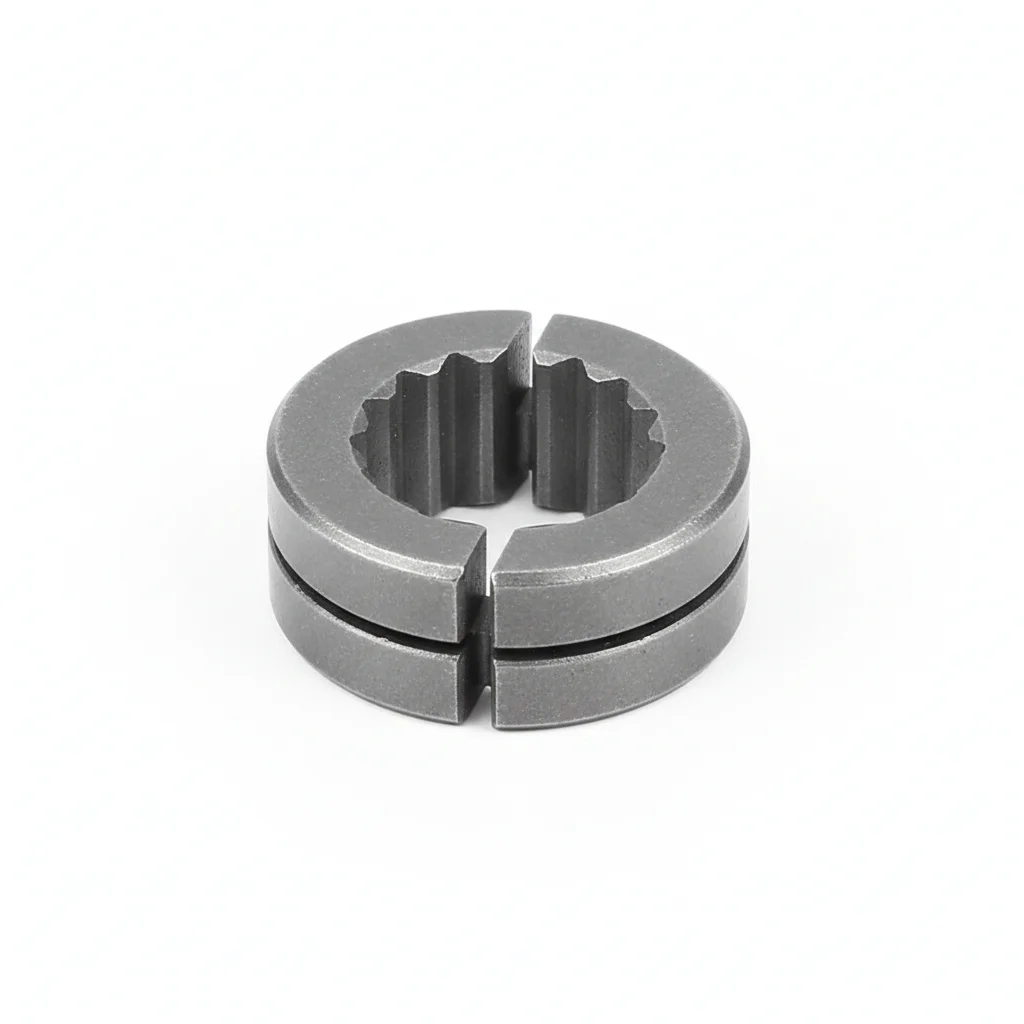
| Wedge Lock Washer | Disc Spring Washer | Torque Wrench | |
|---|---|---|---|
| SPEC | M8-M48 | M8-M48 DIN 2093 | Calibration Service |
| MATERIAL | Carbon steel quenched + Dacromet | 50CrVA | / |
| GRADE | Dacromet | Dacromet | / |
| FINISH | HDG >=55um per ISO 1461 | HDG >=55um per ISO 1461 | HDG >=55um per ISO 1461 |
| CORROSION | C3 (ISO 12944-2) | C3 (ISO 12944-2) | C3 (ISO 12944-2) |
| TEMP | -20°C to +80°C | -20°C to +80°C | -20°C to +80°C |
| WEIGHT | ~0.5 kg/piece | ~0.5 kg/piece | ~0.5 kg/piece |
| MOQ | 100 pcs | 100 pcs | 100 pcs |
| PACK | VCI paper + carton | VCI paper + carton | VCI paper + carton |
| STD | ISO 898-1, GB/T 3098.1 | ISO 898-1, GB/T 3098.1 | ISO 898-1, GB/T 3098.1 |
| USE | Critical joints: Tower flange, Yaw/Pitch bearing, Main shaft | Elastic compensation for high temperature/thermal expansion joints | Installation accessory |
PROCEDURE
- Clean flange contact faces with isopropyl alcohol; verify flatness within 0.1 mm per 100 mm per the joint spec.
- Stack the wedge lock washer pair under the bolt head and nut so the wedge faces mate; for thermal expansion nodes, add a 50CrVA disc spring washer beneath the nut.
- Hand-tighten, then torque in a star pattern to the value from the VDI 2230 calculation for the M8–M48 size; record each bolt's torque in the QA log.
- After full tightening, mark each nut with torque seal paint and photograph the flange from three angles for the documentation package.
- Check a 5% sample of the tightened joints with a feeler gauge to confirm no gap remains between the washer pair.
COMMON ERRORS
| ✕ WRONG | CONSEQUENCE | ✓ CORRECT |
|---|---|---|
| Mixing wedge washers from different batches on one flange | Wedge angle mismatch can reduce the locking effect, allowing preload loss under vibration and risking joint separation. | Use wedge washers from a single production batch per flange; verify batch numbers before installation. |
| Reusing wedge washers that show wear or plastic deformation on the wedge teeth | Worn teeth lose grip, causing the joint to loosen under alternating loads and possibly leading to bolt fatigue failure. | Inspect wedge teeth for dulling or deformation; replace with new washers for critical joints like the tower flange. |
MAINTENANCE
At each overhaul window, verify that no fastener has loosened beyond the preload loss threshold; replace any wedge washer with visible wear or corrosion, and follow the 25-year design life with periodic inspections.
Solution B · Conical Spring Washer for Important Joints
C4 Harsh per ISO 12944-2
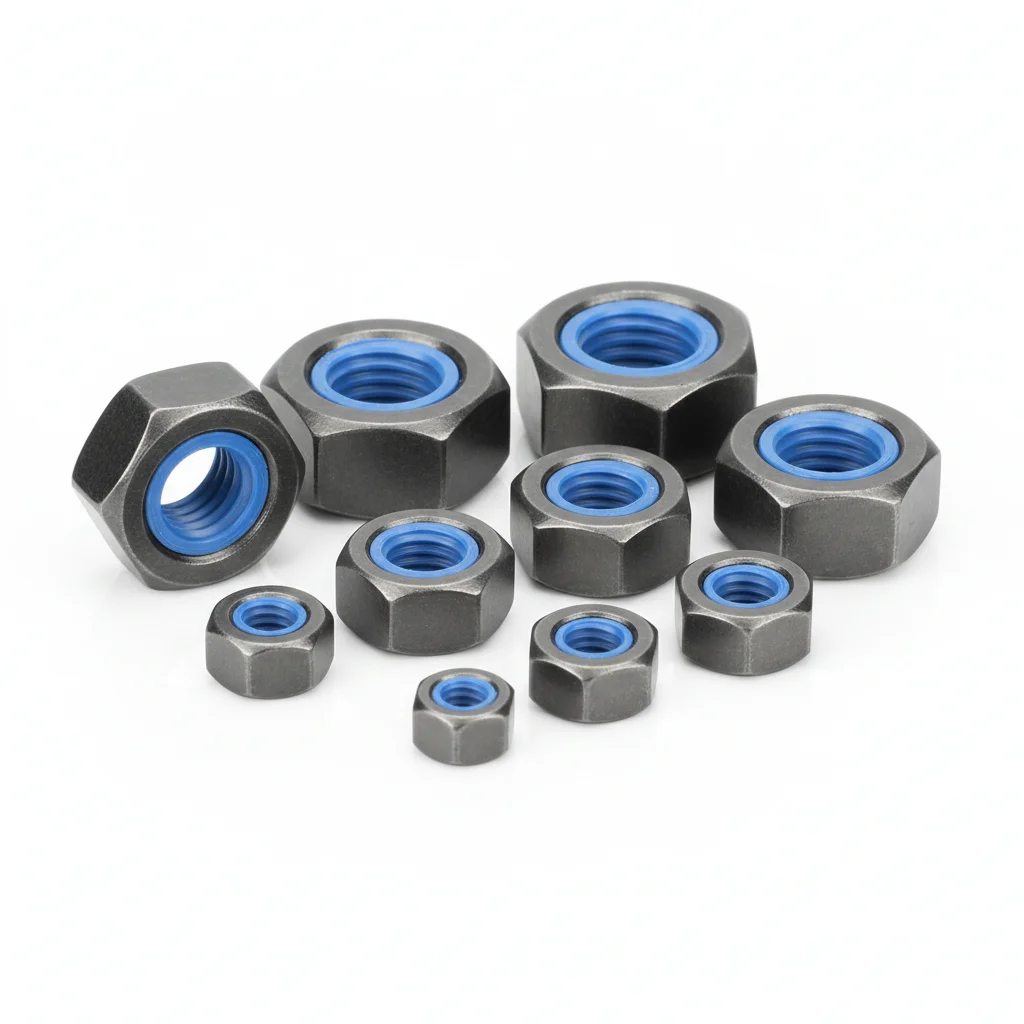
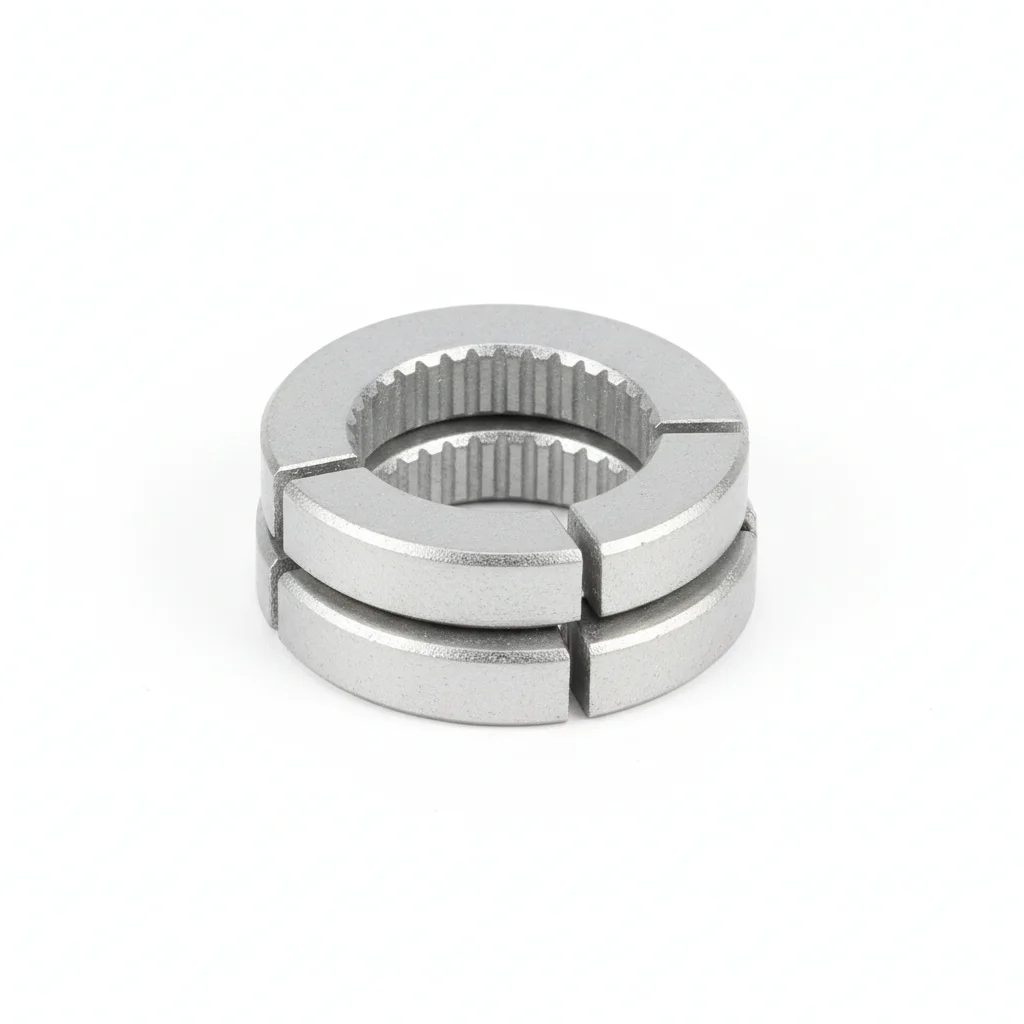
| Conical Spring Washer | nylon insert lock nut | Serrated Lock Washer | |
|---|---|---|---|
| SPEC | M8-M30 | M8-M30 | M8-M20 |
| MATERIAL | 65Mn | Carbon steel + Nylon insert | Spring steel |
| GRADE | Dacromet | Grade 8 | Dacromet |
| FINISH | HDG >=55um per ISO 1461 | HDG >=55um per ISO 1461 | HDG >=55um per ISO 1461 |
| CORROSION | C3 (ISO 12944-2) | C3 (ISO 12944-2) | C3 (ISO 12944-2) |
| TEMP | -20°C to +80°C | -20°C to +80°C | -20°C to +80°C |
| WEIGHT | ~0.5 kg/piece | ~0.5 kg/piece | ~0.5 kg/piece |
| MOQ | 100 pcs | 100 pcs | 100 pcs |
| PACK | VCI paper + carton | VCI paper + carton | VCI paper + carton |
| STD | ISO 898-1, GB/T 3098.1 | ISO 898-1, GB/T 3098.1 | ISO 898-1, GB/T 3098.1 |
| USE | Important joints inside nacelle | Used with spring washer | Locking for general joints |
PROCEDURE
- Wipe the nacelle bracket mounting faces with acetone to remove oil and dirt, then check flatness with a straightedge.
- Lay a 65Mn conical spring washer (Dacromet) on the bracket, followed by the nylon insert lock nut; confirm the washer's convex side faces the nut.
- Hand-tighten the M8-M30 bolt, then use a torque wrench in a cross-pattern sequence to reach the torque specified in the maintenance manual.
- After tightening, attempt to turn the nylon insert lock nut by hand—it should not rotate freely; if it does, replace the nut.
- Mark the nut and bolt with a paint pen after final torque, and log the torque value and installer ID for traceability.
COMMON ERRORS
| ✕ WRONG | CONSEQUENCE | ✓ CORRECT |
|---|---|---|
| Reusing a conical spring washer that has been flattened or over-compressed from a previous installation | The washer loses its elastic range, so it can no longer compensate for thermal expansion or vibration, leading to preload loss and loosening of the bracket joint. | Inspect the washer's free height before use; discard any that are visibly flattened or deformed, and always install a fresh washer. |
| Installing the conical spring washer with the concave side facing the nut instead of the convex side | The washer's spring action is reversed, reducing its ability to maintain tension, and it may not seat properly, causing uneven load. | Place the washer so its convex side contacts the nut or bolt head, ensuring the spring force acts to maintain preload. |
MAINTENANCE
At each scheduled maintenance window, check the torque of nacelle bracket bolts with a torque wrench; if any bolt has lost more than 20% of its specified torque, retighten it. Inspect the conical spring washers for cracks or permanent set; replace any that show signs of over-compression. Every major overhaul, disassemble a sample of 10% of the joints to verify the washers have not lost their spring characteristics.
Solution C · Standard Solution for General Joints
C5-M Extreme per ISO 12944-2
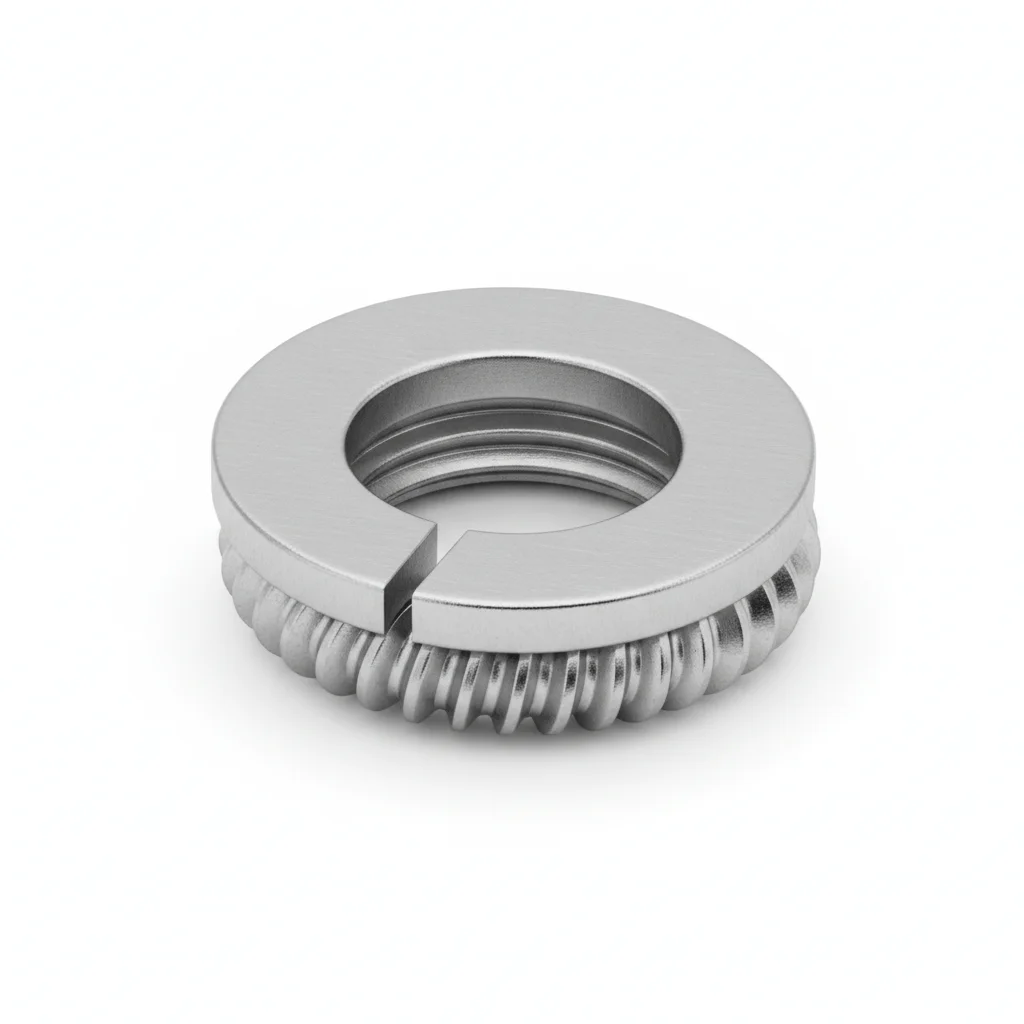
| Wedge Lock Washer | Disc Spring Washer | Serrated Lock Washer | |
|---|---|---|---|
| SPEC | NL8-NL48 | M8-M48 | M8-M20 |
| MATERIAL | 316L | Inconel 718 | 316L |
| GRADE | Electropolished | Temperature resistant 600°C | — |
| FINISH | HDG >=55um per ISO 1461 | HDG >=55um per ISO 1461 | HDG >=55um per ISO 1461 |
| CORROSION | C3 (ISO 12944-2) | C3 (ISO 12944-2) | C3 (ISO 12944-2) |
| TEMP | -20°C to +80°C | -20°C to +80°C | -20°C to +80°C |
| WEIGHT | ~0.5 kg/piece | ~0.5 kg/piece | ~0.5 kg/piece |
| MOQ | 100 pcs | 100 pcs | 100 pcs |
| PACK | VCI paper + carton | VCI paper + carton | VCI paper + carton |
| STD | ISO 898-1, GB/T 3098.1 | ISO 898-1, GB/T 3098.1 | ISO 898-1, GB/T 3098.1 |
| USE | Full-system locking for offshore wind farms | High temperature joints | General joints offshore |
PROCEDURE
- Clean the cable tray and louver mounting surfaces with MEK to remove all contaminants, and verify surface roughness is below Ra 1.6 μm.
- Place a 316L wedge lock washer pair on the bolt, ensuring the wedge faces are oriented correctly (cams facing each other).
- For high-temperature joints (e.g., near the gearbox), use an Inconel 718 disc spring washer instead of the wedge lock washer, positioned under the bolt head.
- Tighten the M8-M48 bolt using a hydraulic tensioner to the preload specified in the design calculation, following the cross-pattern sequence.
- After tensioning, verify the wedge lock washer halves are fully engaged by checking that the outer edges are flush; apply a protective sealant over the bolt head and washer for offshore corrosion protection.
COMMON ERRORS
| ✕ WRONG | CONSEQUENCE | ✓ CORRECT |
|---|---|---|
| Mixing 316L wedge lock washers with carbon steel bolts or nuts in offshore environment | Galvanic corrosion between dissimilar metals accelerates, leading to premature failure of the joint and potential loss of preload. | Use matching 316L or other corrosion-resistant fasteners for all components in the joint, or isolate dissimilar metals with appropriate coatings. |
| Overtightening the Inconel disc spring washer beyond its recommended deflection range | The disc spring may take a permanent set, losing its elastic compensation ability, and could crack under high stress, leading to joint failure. | Follow the manufacturer's deflection limits (e.g., 75% of maximum) and torque to the specified preload, not exceeding the calculated value. |
MAINTENANCE
During routine offshore inspections, visually check the 316L wedge lock washers and disc springs for signs of corrosion or cracking. Use dye penetrant testing on a 10% sample of critical joints at each major service interval. Replace any washers showing pitting deeper than 0.3 mm or any crack indications, and re-torque any bolt found to have lost more than 15% of its specified preload.
SUPPLIER CAPABILITY
Quality, Delivery & Customization
Quality Control
- ✓MTC material certificates with every batch
- ✓Key parts sampled for hardness/salt spray/torque coefficient
- ✓100% inspection or AQL sampling before shipment
Delivery
- ✓Standard parts made to order: 7-15 days
- ✓Custom parts: 25-45 days
- ✓FOB/CIF/DDP supported
Customization
- ✓Drawing review and material matching
- ✓Non-standard sizes/heads/threads
- ✓Small-batch prototyping supported
Certification
- ✓Material certificates (MTC)
- ✓Spectrographic analysis reports
- ✓Salt spray test reports (on request)
MOQ: No MOQ for standard parts; custom parts assessed by process complexity
FAQ
FAQ
RELATED READING
Keep Reading & Next Step
BEYOND TECHNICAL SPECS
Finding the right factory, controlling quality, delivering on time — that's the real challenge. We cover fasteners, rubber, plastics, industrial textiles. One team, end to end.
SEE CAPABILITIES →